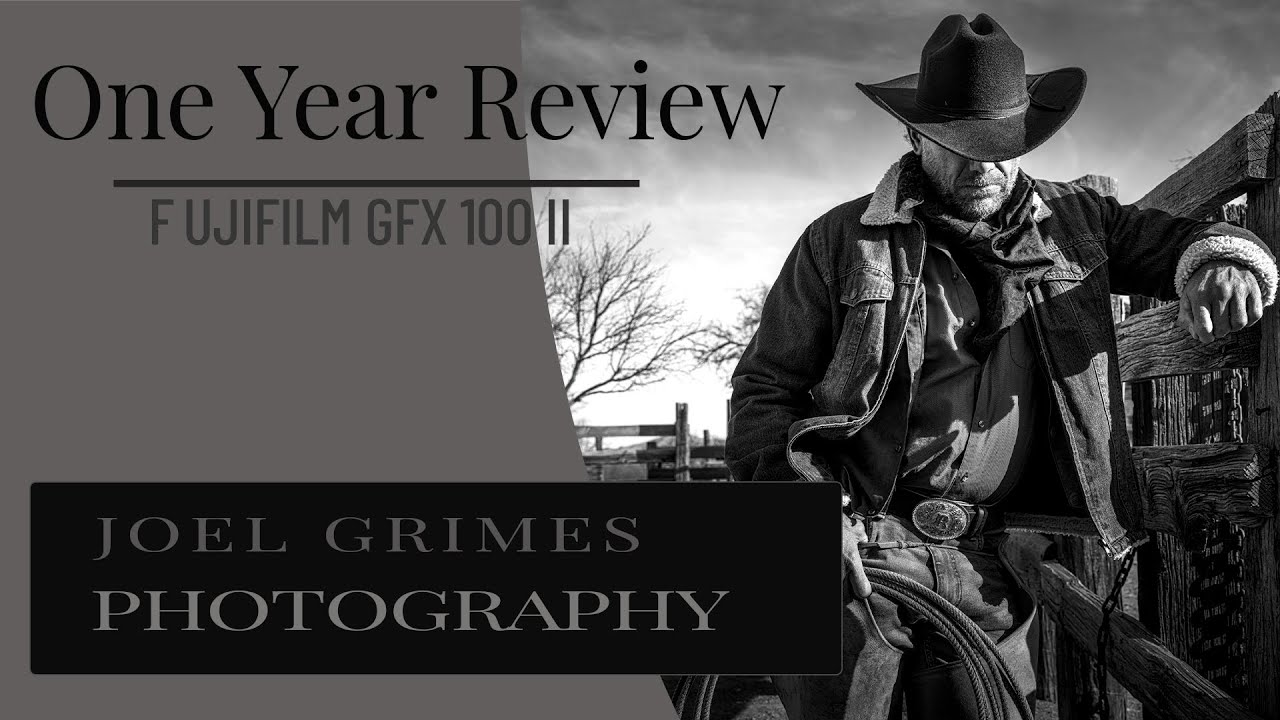
I’ll be straight with you: medium format has always felt like the gear world’s velvet rope. Expensive enough to keep most of us out, hyped enough to make us feel like we’re missing something. I’ve spent years arguing that the gap between a good APS-C shooter and a medium format system is smaller than the price difference suggests. So when Joel Grimes, a working commercial photographer with real client work on the line, drops a full year of honest field experience with the Fujifilm GFX 100 II, I’m paying attention. Not because I’m ready to spend $7,500, but because someone finally cut through the launch-day enthusiasm and gave us the unfiltered version.
What a Year of Real Use Reveals That a Spec Sheet Never Will
In this Joel Grimes tutorial, he isn’t reviewing a camera he borrowed for two weeks. He’s reporting back after a full year of commercial shooting, which changes everything about how useful the information is. His verdict is measured, which I respect. The GFX 100 II earns genuine praise from him, but it’s not a love letter. The 102 megapixel sensor delivers what you’d expect: incredible detail, dynamic range that gives you real latitude in post, and a rendering quality that he describes as distinctly different from full frame. That last point is the one worth unpacking, because it’s not just marketing language when it comes from someone actually billing clients with it.
The tonal graduation in the shadows and highlights behaves differently at this sensor size. Grimes points to portrait and commercial work specifically, where that medium format rendering creates a three-dimensional quality in skin tones that full frame systems struggle to replicate at the same level. Is it worth the price premium for that quality alone? That’s the question he actually wrestles with rather than dodging.
The Lens Lineup: Where Fujifilm Gets It Right and Where It Gets Complicated
Grimes walks through his preferred GFX lenses with specifics. His top picks lean toward the GF 110mm f/2 and the GF 80mm f/1.7, both of which he uses heavily for portraiture and commercial work. The 110mm in particular gets high marks for its rendering wide open, producing smooth background separation with a quality that he says justifies the native lens investment. The 80mm f/1.7 earns points for being the faster option when you need every bit of light.
He’s honest that the GFX native lens system is expensive, full stop. The bodies are just the beginning. If you’re building this system from scratch, the glass will cost you as much as or more than the camera body. That’s the conversation that often gets buried under spec comparisons and sample images on photography forums.
The Canon Lens Adapter Approach: Practical Cost Control on a $7,500 System
Here’s where Grimes makes a genuinely useful practical point for anyone considering this system. He has adapted several of his Canon lenses to the GFX body using third-party adapters, and he spends real time in the video showing how those lenses perform. The results are usable, sometimes impressive, but he’s clear about the trade-offs: autofocus behavior changes, some lenses vignette noticeably on the larger sensor, and the rendering character shifts compared to native GFX glass.
His approach is to use adapted Canon glass for specific situations where the limitations don’t matter, and to reach for native lenses when the job demands the full medium format character. That’s a realistic workflow, not a workaround sold as a solution. If you already own a set of Canon L lenses, this makes the GFX system somewhat more financially approachable as an entry point, though I’d temper that optimism slightly.
Where I’d Push Back: The Value Equation for Non-Commercial Shooters
Grimes is a commercial photographer. His clients pay rates that make a $7,500 body a legitimate business tool with real ROI. My world is different. Most of the people reading this site are enthusiasts, semi-pros, or photographers who haven’t yet built the client base that turns gear like this into a write-off.
His biggest takeaway from the year is that the GFX 100 II changed the way he thinks about what a digital file can look like, and I believe him. But that benefit lives at the top end of printing large, delivering to high-end commercial clients, and working in conditions where the dynamic range headroom actually gets used in post. For a photographer shooting family portraits at $300 a session or building a travel photography portfolio, the Fujifilm X-T5 at a third of the price gives you 40 megapixels and that same Fujifilm color science. The ceiling is lower, but most working photographers aren’t hitting the X-T5’s ceiling yet anyway.
That’s not a knock on Grimes’ conclusion. It’s a reminder that the best camera is the one that matches your actual output requirements, not the aspirational ones.
The Single Thing Worth Taking From This Review
The most honest line in Grimes’ entire video is when he says the GFX 100 II didn’t make him a better photographer. It made certain kinds of work easier to deliver at the highest level. That distinction matters more than any spec comparison I’ve seen written about this system.
If your work is genuinely bumping up against what your current system can deliver, and you have the commercial pipeline to support the investment, Grimes makes a compelling case that the GFX 100 II is worth serious consideration. If you’re not there yet, watching this video is still worth your time because it gives you the clearest picture of what medium format actually buys you in practice, not just on paper.
Watch the full video to see Grimes’ actual sample images and his side-by-side comparisons with adapted lenses. The visual component is where his year of experience really shows.
Comments (2)
Finally someone explains this in a way that actually makes sense.
Just used this on a wedding shoot edit. Client was thrilled.
Leave a Comment