Every year around this time, my inbox turns into a wall of “DEAL ALERT” emails and my deal-tracker spreadsheet gets about thirty new rows before I’ve finished my first coffee. I love it. But I also know how easy it is to buy something just because it’s discounted, not because it’s actually the right tool for where you are in your photography. That’s the trap Black Friday sets for photographers specifically, because the gear is expensive enough that a 15% discount feels significant even when the base product isn’t worth owning at full price.
That’s why I found this Tony and Chelsea Northrup breakdown genuinely useful. In this Tony & Chelsea Northrup tutorial - Watch the full tutorial on YouTube - they run through deals across Canon, Nikon, Sony, Fuji, DJI, and a few adjacent categories at a pace that respects your time. What I’m doing here is slowing that down, adding some context from my own testing, and flagging where I agree or where I’d steer you differently based on what I’ve actually shot with.
Step 1: Start With Canon’s Entry-Level Full-Frame Options
 Canon RP deal slide with $900 price displayed
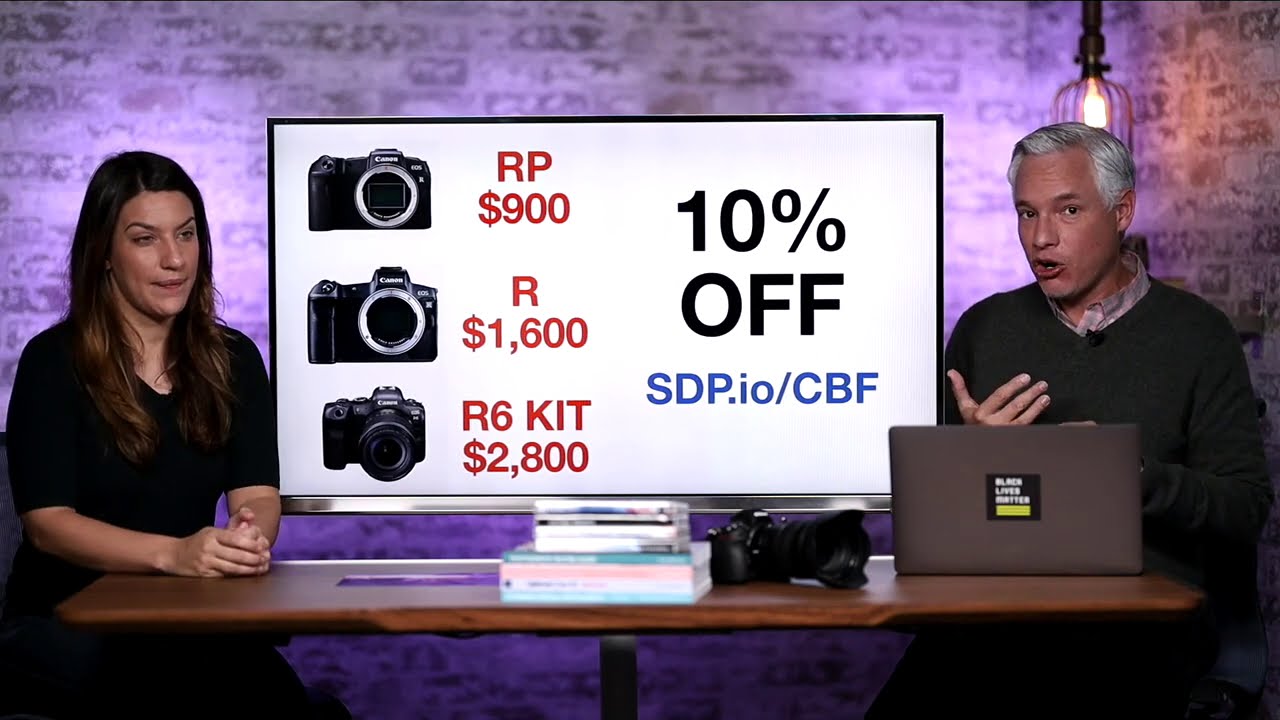
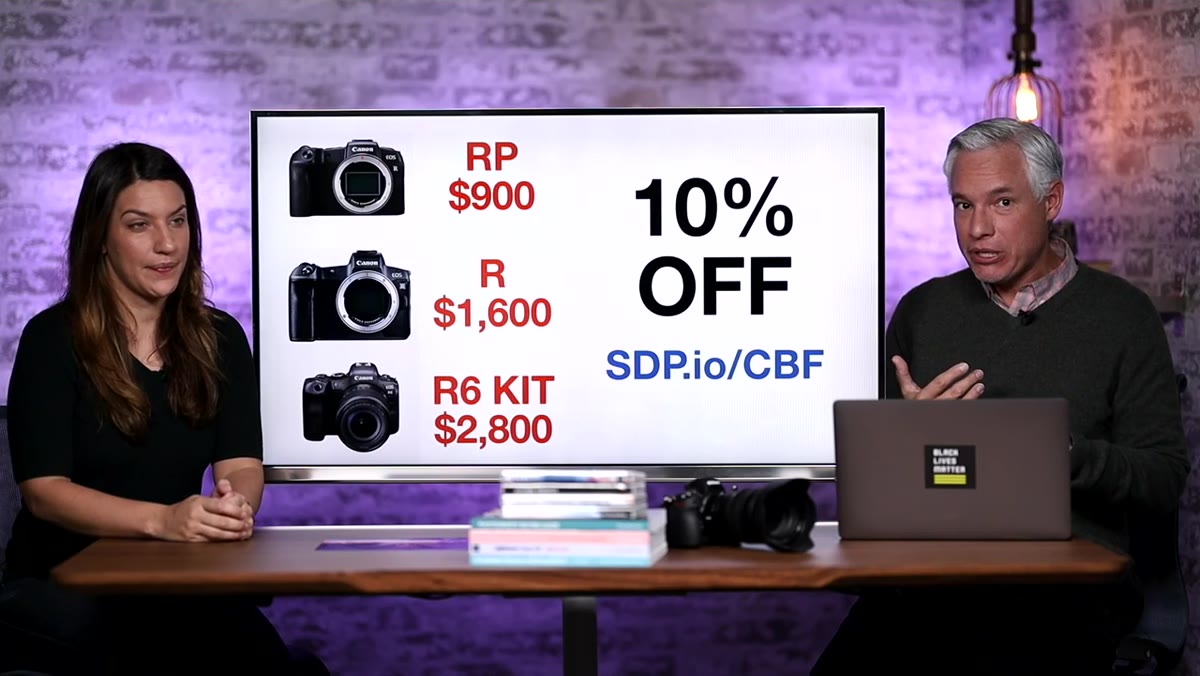
Chelsea opens with the Canon RP at $900, and she’s not wrong to lead with it. For anyone who wants to shoot full-frame without committing to a $2,000-plus body, the RP is the honest answer. It handles well, the color science is easy to work with straight out of camera, and the RF lens ecosystem is genuinely strong even if the native glass runs expensive. At $900 during a sale, you’re getting a capable portrait and travel camera. If your budget stretches further, they mention the EOS R as a step up with higher resolution, and the R6 kit with a lens bundled in around $2,800 for photographers who need serious wildlife autofocus.
Canon RP deal slide with $900 price displayed
Chelsea opens with the Canon RP at $900, and she’s not wrong to lead with it. For anyone who wants to shoot full-frame without committing to a $2,000-plus body, the RP is the honest answer. It handles well, the color science is easy to work with straight out of camera, and the RF lens ecosystem is genuinely strong even if the native glass runs expensive. At $900 during a sale, you’re getting a capable portrait and travel camera. If your budget stretches further, they mention the EOS R as a step up with higher resolution, and the R6 kit with a lens bundled in around $2,800 for photographers who need serious wildlife autofocus.
The practical move here is to decide which of those three tiers fits your actual shooting before the sale ends. Don’t buy the R6 because it sounds better. Buy it if you’re regularly shooting birds, sports, or fast-moving subjects where eye-tracking autofocus changes your keeper rate in a real way.
Step 2: Check Used Gear Marketplaces Before Buying New
 KEH website with Black Friday discount code shown
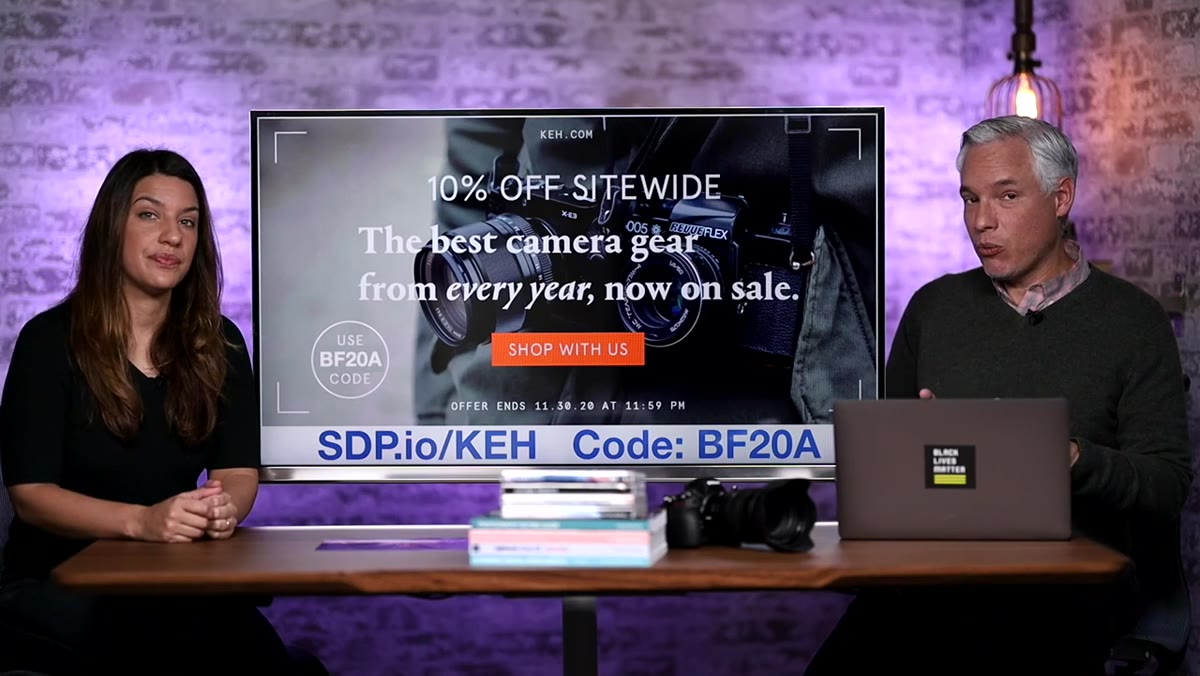
Tony and Chelsea flag KEH as their go-to for buying and selling used gear, and they mention a sitewide discount that’s notable because KEH rarely runs deep promotions. This is worth pausing on. If you’re trying to stretch a Black Friday budget, buying used from a graded, reputable seller like KEH often beats buying new on sale. A camera graded “Excellent” from KEH ships with a warranty and has been inspected, and you can frequently land a body that’s one generation behind current at 40 to 50 percent off what new costs.
KEH website with Black Friday discount code shown
Tony and Chelsea flag KEH as their go-to for buying and selling used gear, and they mention a sitewide discount that’s notable because KEH rarely runs deep promotions. This is worth pausing on. If you’re trying to stretch a Black Friday budget, buying used from a graded, reputable seller like KEH often beats buying new on sale. A camera graded “Excellent” from KEH ships with a warranty and has been inspected, and you can frequently land a body that’s one generation behind current at 40 to 50 percent off what new costs.
The deal they mention expires quickly, so if used gear is your strategy, move on it early in the sale window and check their inventory for the specific body or lens you want before the stock thins out.
Step 3: Evaluate the Sony Options by Use Case, Not by Hype
 Sony A7 III deal listing at $1700
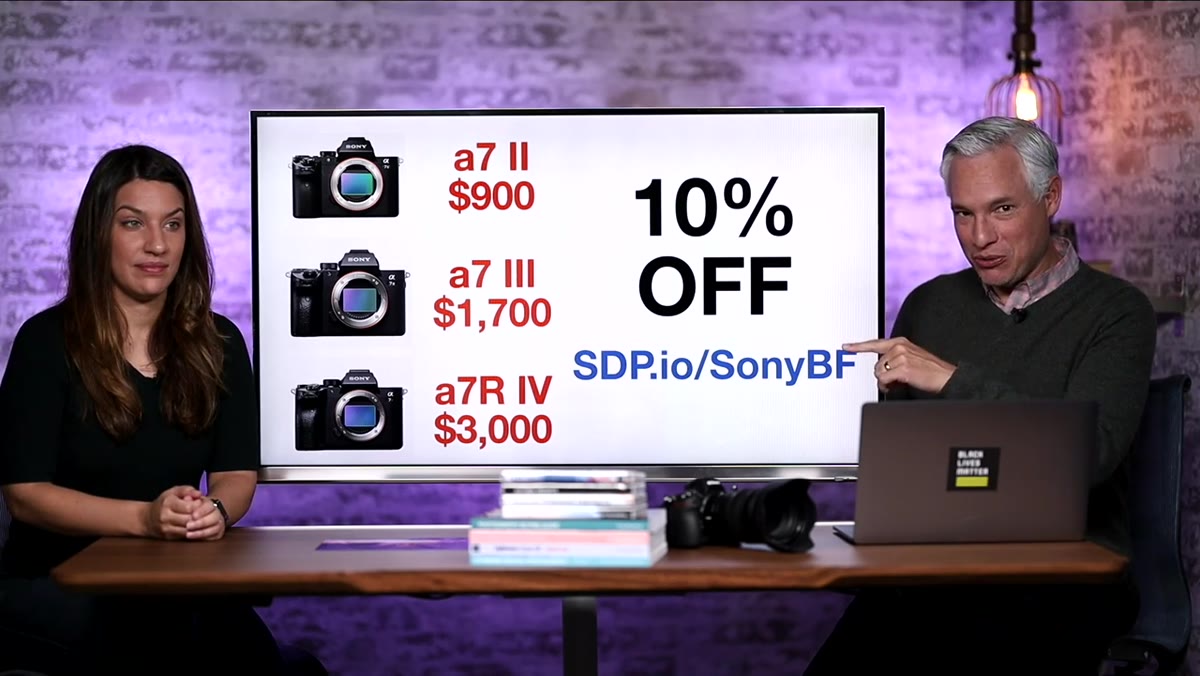
Here’s where Tony makes a take I respect: he actively steers people away from the Sony A7 Mark II and toward the Canon RP instead, even though the A7 II is a Sony and Sony has a devoted fanbase. That kind of honest cross-brand comparison is rare in deal roundups. The A7 III at $1,700 is the Sony he does recommend, calling it a proven professional body for portraits and landscapes. The A7R IV at $3,000 with 60 megapixels comes up as the landscape shooter’s ultimate option at roughly 10 percent off.
Sony A7 III deal listing at $1700
Here’s where Tony makes a take I respect: he actively steers people away from the Sony A7 Mark II and toward the Canon RP instead, even though the A7 II is a Sony and Sony has a devoted fanbase. That kind of honest cross-brand comparison is rare in deal roundups. The A7 III at $1,700 is the Sony he does recommend, calling it a proven professional body for portraits and landscapes. The A7R IV at $3,000 with 60 megapixels comes up as the landscape shooter’s ultimate option at roughly 10 percent off.
For most people reading a budget photography site, the A7R IV is probably not the conversation. But the A7 III at a historic low price is worth serious consideration if you’re already in the Sony ecosystem or planning to invest in Sony glass.
Step 4: Look at Fuji for the Best Entry-Level Experience
 Fuji XT30 deal page with discount highlighted
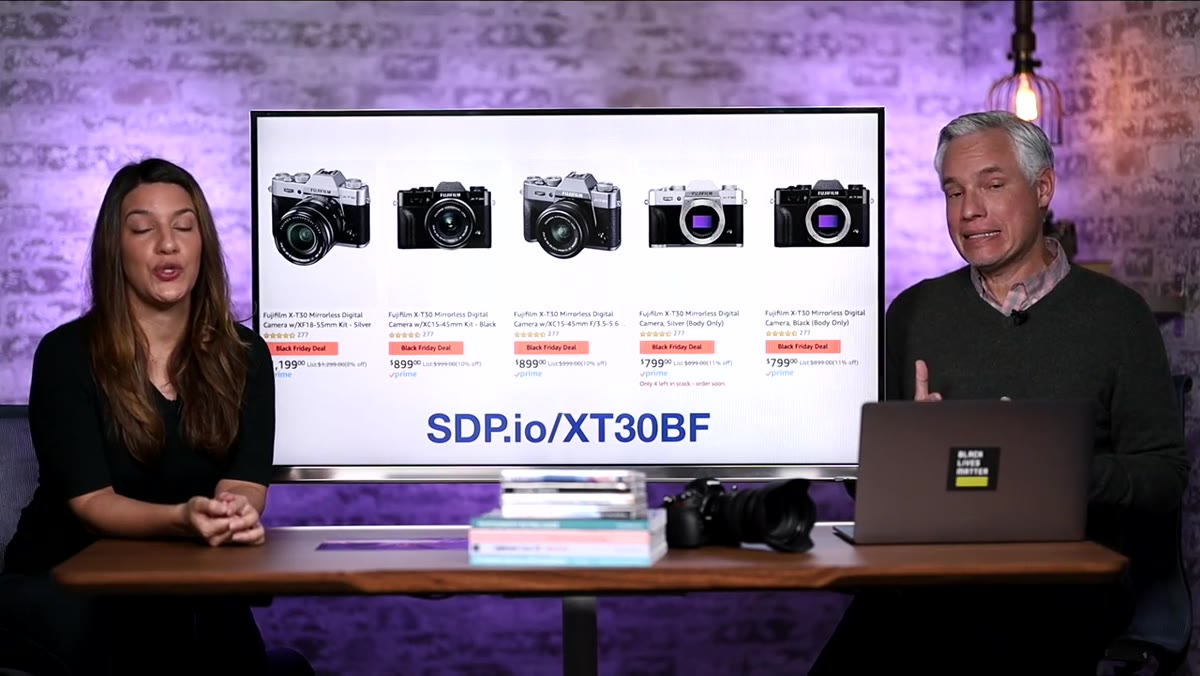
Chelsea’s Fuji recommendation is the XT30, and I think this is one of the cleaner calls in the whole video. If you’re buying a camera for someone who’s just getting into photography, or if you want a lightweight second body, the XT30 punches hard. The film simulations alone give beginners beautiful SOOC JPEGs without having to learn Lightroom on day one, which lowers the barrier to actually shooting and enjoying it.
Fuji XT30 deal page with discount highlighted
Chelsea’s Fuji recommendation is the XT30, and I think this is one of the cleaner calls in the whole video. If you’re buying a camera for someone who’s just getting into photography, or if you want a lightweight second body, the XT30 punches hard. The film simulations alone give beginners beautiful SOOC JPEGs without having to learn Lightroom on day one, which lowers the barrier to actually shooting and enjoying it.
The discount they reference is substantial enough to make this one of the better entry points in the mirrorless market right now. Don’t sleep on it if APS-C fits your needs.
Step 5: Buy the Right Memory Cards While They’re Cheap
 256GB memory card deal at 43% off on screen
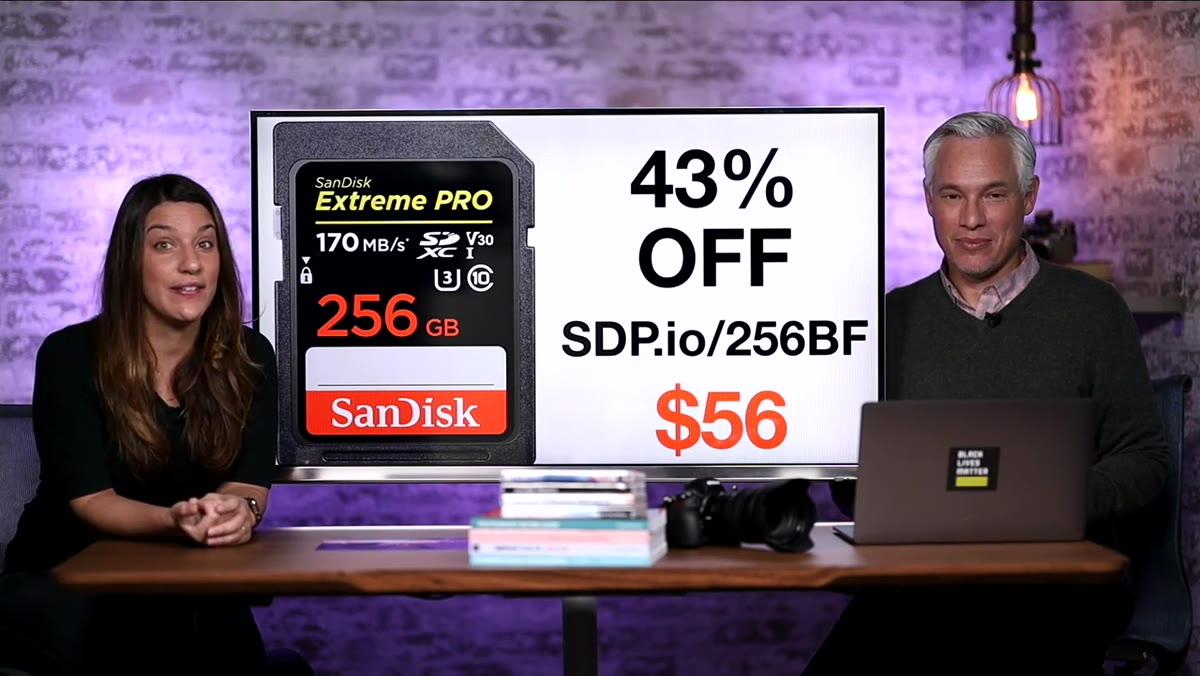
A 256GB card at 43 percent off is one of those deals that sounds boring but actually matters. Chelsea’s logic for using high-capacity cards as a passive backup while traveling is something I do myself. If your photos live on the card until you’re home and processed, you’ve got a redundant copy without any extra effort. At $56 for 256GB on a card from a reliable brand, this is the kind of accessory buy that’s worth grabbing multiples of.
256GB memory card deal at 43% off on screen
A 256GB card at 43 percent off is one of those deals that sounds boring but actually matters. Chelsea’s logic for using high-capacity cards as a passive backup while traveling is something I do myself. If your photos live on the card until you’re home and processed, you’ve got a redundant copy without any extra effort. At $56 for 256GB on a card from a reliable brand, this is the kind of accessory buy that’s worth grabbing multiples of.
Don’t get distracted by ultra-fast cards unless you’re shooting 4K video or high-speed bursts. For most stills work, a reliable mid-tier card beats an expensive one you only half-fill.
Step 6: Consider Editing Hardware If Your Workflow Is Bottlenecked
 MacBook Pro M1 pricing shown on screen
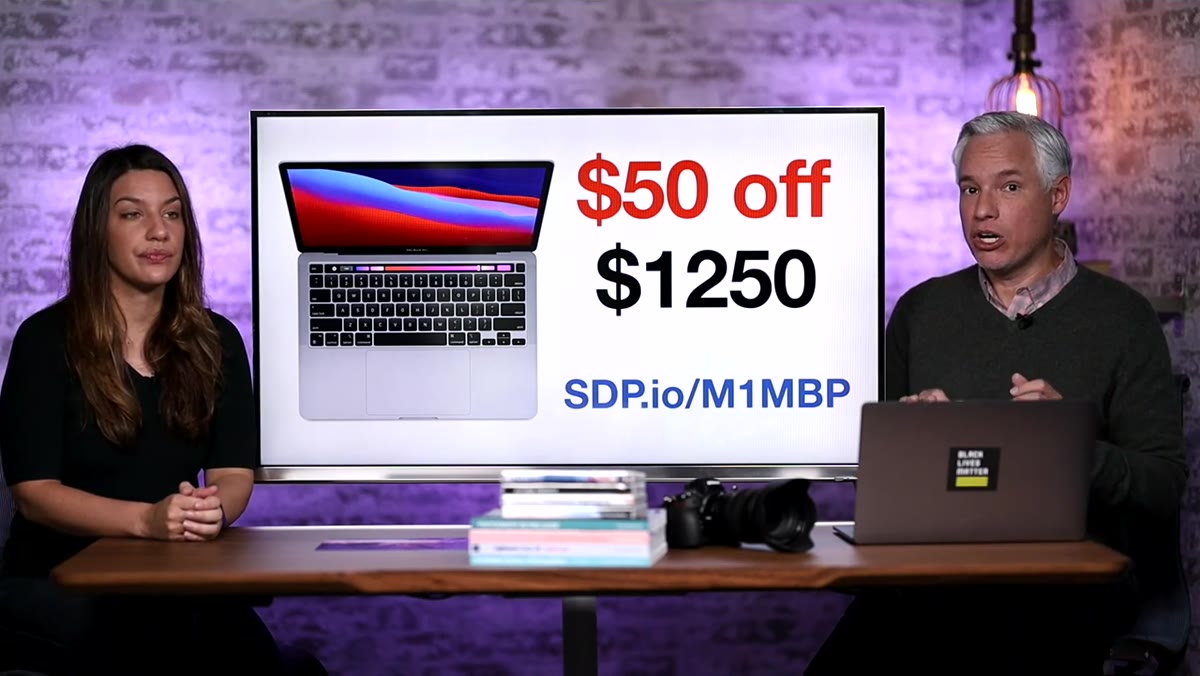
Tony briefly mentions the M1 MacBook Pro at $1,250 with a modest discount, and his render time comparison is telling: a 2019 high-end MacBook took 12 minutes on a video export while the M1 did it in four. If your current machine is slowing down your editing sessions, that’s a real cost measured in time and frustration. This isn’t a photography-specific deal, but it belongs in a photography gear conversation because post-processing is half the job.
MacBook Pro M1 pricing shown on screen
Tony briefly mentions the M1 MacBook Pro at $1,250 with a modest discount, and his render time comparison is telling: a 2019 high-end MacBook took 12 minutes on a video export while the M1 did it in four. If your current machine is slowing down your editing sessions, that’s a real cost measured in time and frustration. This isn’t a photography-specific deal, but it belongs in a photography gear conversation because post-processing is half the job.
The discount is small, but the performance-per-dollar on the M1 chips is genuinely strong for photo and video editing workloads.
My Take: Ignore the Discount Percentage, Focus on the Final Price
I got into deals content because I noticed I was spending more time researching prices than actually shooting. That’s still a trap I have to actively avoid. The number that matters on Black Friday isn’t the percentage off. It’s whether the final price clears the bar for what you need the tool to do.
A 10 percent discount on a $3,000 camera is $300 off. That’s real money. But if you don’t need 60 megapixels, you didn’t save $300 - you spent $2,700 on the wrong thing. Run every deal through that filter first. What problem does this solve? Does it solve mine specifically? Then decide.
The best move from this entire roundup, in my opinion, is pairing one of the discounted camera bodies with used lenses from a vetted marketplace. That’s where you actually build a capable kit without financing it for two years.
Watch the full tutorial on YouTube to catch all the specific links and coupon codes Tony and Chelsea reference - some of those sales close fast and the inventory on certain deals won’t last through the weekend.
Comments
Leave a Comment