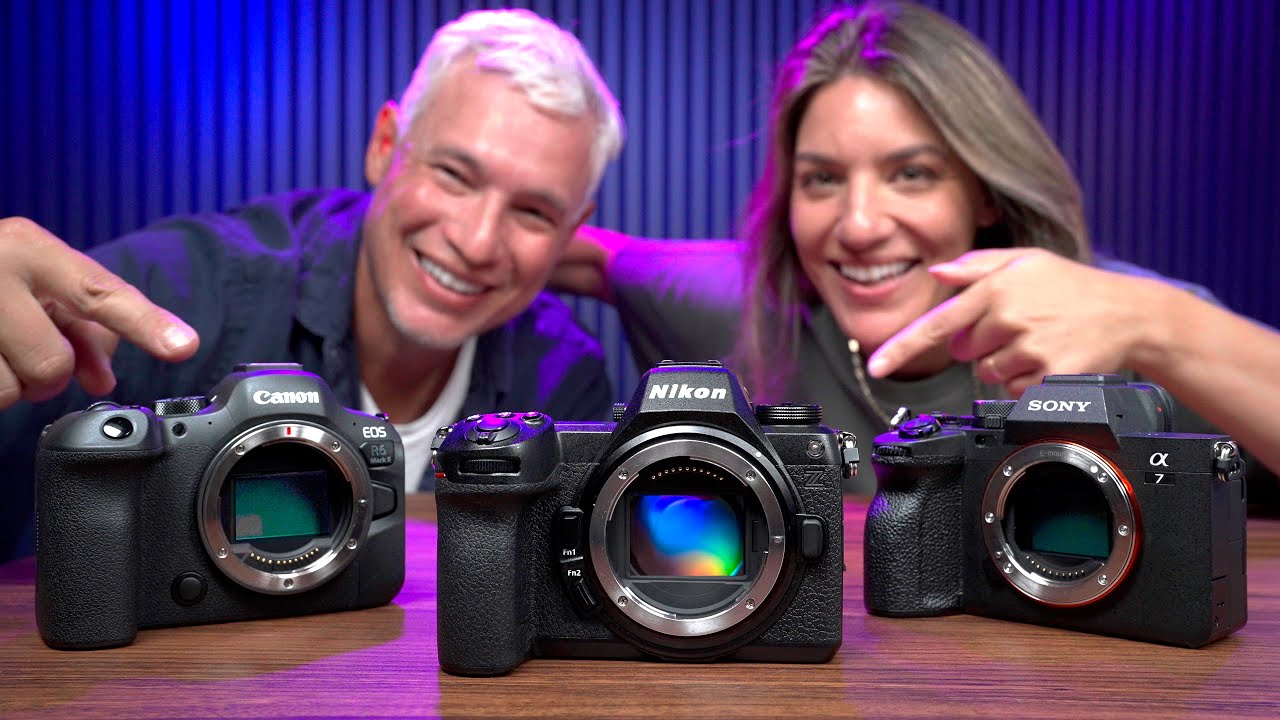
Every few months someone in a photography forum asks me which full-frame mirrorless camera they should buy around the $2,000-$2,500 mark. My honest answer used to be “it depends” – which is a cop-out. So when Tony & Chelsea Northrup dropped a side-by-side comparison of the Canon EOS R6 II, Nikon Z6 III, and Sony a7 IV, I watched the whole thing twice and took notes. Watch the full tutorial on YouTube
I started shooting on a $300 kit camera, and I still think most photographers buy too much camera too fast. But there’s a real question worth answering here: if you’re genuinely ready to invest in a full-frame hybrid body, which of these three actually earns its price tag for your specific use case? The answer is not the same for everyone, and the differences between these cameras are not all marketing noise. Some of them matter a lot.
What follows is a breakdown of Tony and Chelsea’s findings, organized by category, with the specific numbers and tradeoffs you need to make a real decision.
Step 1: Understand What These Cameras Have in Common
 Three cameras side by side on a flat surface
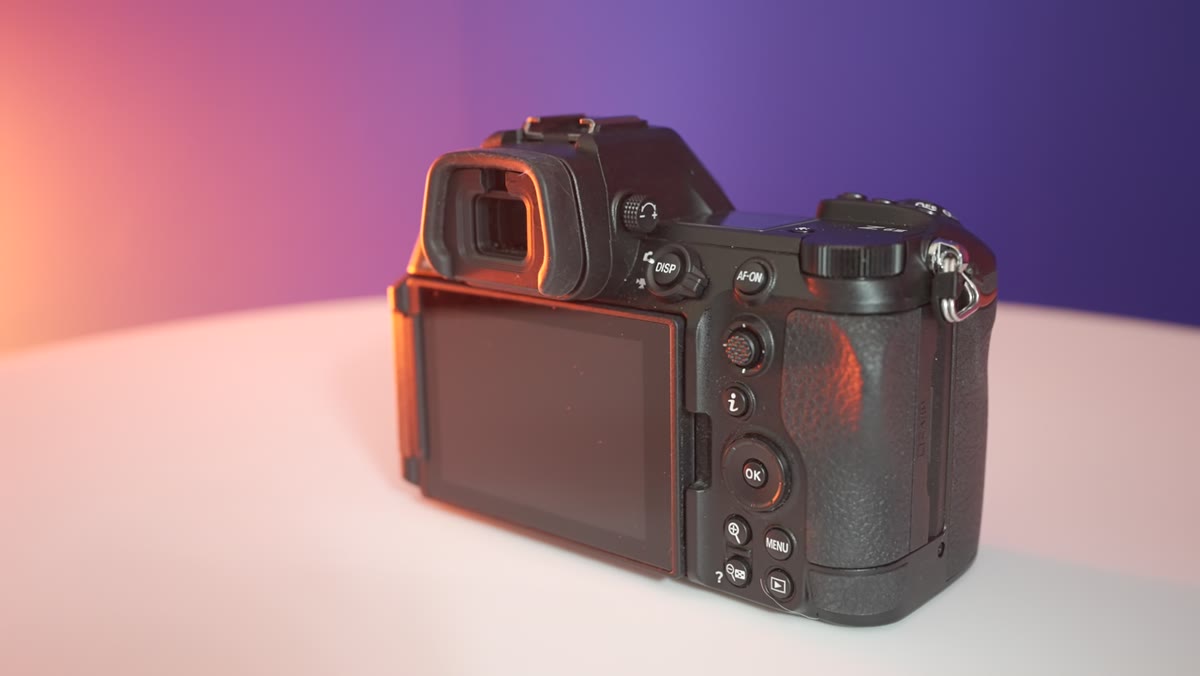
Before fixating on differences, recognize the baseline. All three cameras land between $2,000 and $2,500, all shoot full-frame, all offer vari-angle screens, and all are built for photographers who mix stills and video. The physical handling is close enough that if you swapped bodies mid-shoot, you wouldn’t feel lost. The Nikon adds a top LCD panel, which lets you read and adjust settings without waking the rear screen – genuinely useful if you’re working in bright outdoor conditions. The Sony ecosystem gives you aperture rings on many of its pro-grade lenses, which speeds up exposure adjustments when you’re shooting fast. These aren’t dealbreakers either way, but they’re worth knowing before you fall in love with one system’s ergonomics over another’s.
Three cameras side by side on a flat surface
Before fixating on differences, recognize the baseline. All three cameras land between $2,000 and $2,500, all shoot full-frame, all offer vari-angle screens, and all are built for photographers who mix stills and video. The physical handling is close enough that if you swapped bodies mid-shoot, you wouldn’t feel lost. The Nikon adds a top LCD panel, which lets you read and adjust settings without waking the rear screen – genuinely useful if you’re working in bright outdoor conditions. The Sony ecosystem gives you aperture rings on many of its pro-grade lenses, which speeds up exposure adjustments when you’re shooting fast. These aren’t dealbreakers either way, but they’re worth knowing before you fall in love with one system’s ergonomics over another’s.
Step 2: Compare Portrait Performance – Resolution and Eye Autofocus Accuracy
 Portrait test shots displayed side by side on a monitor
The Sony a7 IV leads on resolution with 33 megapixels versus 24 megapixels on both the Canon and Nikon. That gap shows up when you’re cropping tight or delivering large prints – put quality glass on the Sony and you’ll see the extra detail. But megapixels aren’t the whole story for portraits.
Portrait test shots displayed side by side on a monitor
The Sony a7 IV leads on resolution with 33 megapixels versus 24 megapixels on both the Canon and Nikon. That gap shows up when you’re cropping tight or delivering large prints – put quality glass on the Sony and you’ll see the extra detail. But megapixels aren’t the whole story for portraits.
Eye autofocus accuracy is where things get interesting. In testing at f/2.8 – specifically targeting the iris rather than the eyelashes, which is the real precision test – the Sony nailed focus on roughly three-quarters of shots. The Canon and Nikon both landed around half. The Nikon had an additional quirk: it sometimes struggled to latch onto a face initially, requiring a manual prompt before tracking kicked in. Once it locked, it was reliable. But in fast-moving portrait sessions, that delay costs you frames.
Step 3: Check Dynamic Range – It Affects More Than Landscape Shooting
 Side-by-side shadow recovery comparison in high-contrast scene
Dynamic range might sound like a landscape-only concern, but it hits portrait photographers too. The Nikon Z6 III runs about one stop behind the Canon and Sony in dynamic range. That sounds abstract until you’re shooting a wedding with a white dress and a black suit in the same frame, or doing backlit golden-hour portraits where you need to pull shadow detail out of a subject’s face.
Side-by-side shadow recovery comparison in high-contrast scene
Dynamic range might sound like a landscape-only concern, but it hits portrait photographers too. The Nikon Z6 III runs about one stop behind the Canon and Sony in dynamic range. That sounds abstract until you’re shooting a wedding with a white dress and a black suit in the same frame, or doing backlit golden-hour portraits where you need to pull shadow detail out of a subject’s face.
That one-stop deficit means the Nikon’s recovered shadows carry more noise and texture – which is particularly unflattering in skin tones. The Canon and Sony both handle these recovery situations more cleanly. If most of your portraits are in controlled studio light, this won’t matter. If you’re chasing natural light in tricky conditions, it does.
Step 4: Evaluate the Sync Speed Difference for Strobe Shooters
 Flash sync speed settings screen on camera body
This one is small but real. The Canon and Sony both sync at 1/250th of a second. The Nikon syncs at 1/200th. One stop is not a dramatic gap, but if you’re shooting strobes outdoors in bright sunlight – fighting the ambient to get a dark background while lighting your subject – that extra stop from the Canon and Sony gives you more room to work without jumping to high-speed sync, which cuts into your flash power. Strobe photographers should factor this in. Everyone else can move on.
Flash sync speed settings screen on camera body
This one is small but real. The Canon and Sony both sync at 1/250th of a second. The Nikon syncs at 1/200th. One stop is not a dramatic gap, but if you’re shooting strobes outdoors in bright sunlight – fighting the ambient to get a dark background while lighting your subject – that extra stop from the Canon and Sony gives you more room to work without jumping to high-speed sync, which cuts into your flash power. Strobe photographers should factor this in. Everyone else can move on.
Step 5: Understand the Sony a7 IV’s Video Limitation – This One Is a Big Deal
 Crop factor diagram showing APS-C sensor area highlighted
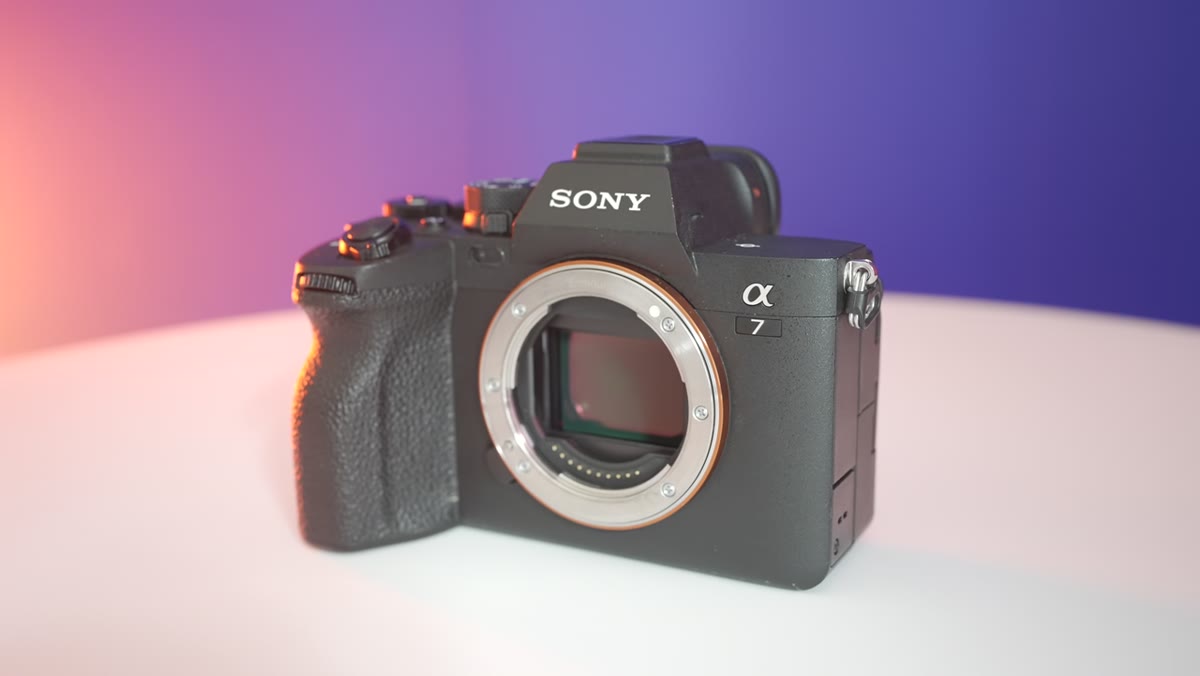
Here’s where the Sony takes a significant hit. On paper, the a7 IV shoots 4K at 60 frames per second. In practice, it does so using only the APS-C portion of the sensor – roughly a 1.5x crop. That means your full-frame lenses are suddenly behaving like crop-sensor lenses, your field of view narrows, and you lose the low-light and dynamic range advantages that made you buy a full-frame body in the first place.
Crop factor diagram showing APS-C sensor area highlighted
Here’s where the Sony takes a significant hit. On paper, the a7 IV shoots 4K at 60 frames per second. In practice, it does so using only the APS-C portion of the sensor – roughly a 1.5x crop. That means your full-frame lenses are suddenly behaving like crop-sensor lenses, your field of view narrows, and you lose the low-light and dynamic range advantages that made you buy a full-frame body in the first place.
The Canon R6 II and Nikon Z6 III both shoot 4K/60 using the full sensor. For hybrid shooters who care about video quality – and Tony notes that more than 90% of camera buyers today are shooting both – this is the most important practical difference in the entire comparison. If video is a meaningful part of your work, the Sony’s video specs are genuinely misleading without this context.
Step 6: Match the Camera to Your Primary Use Case
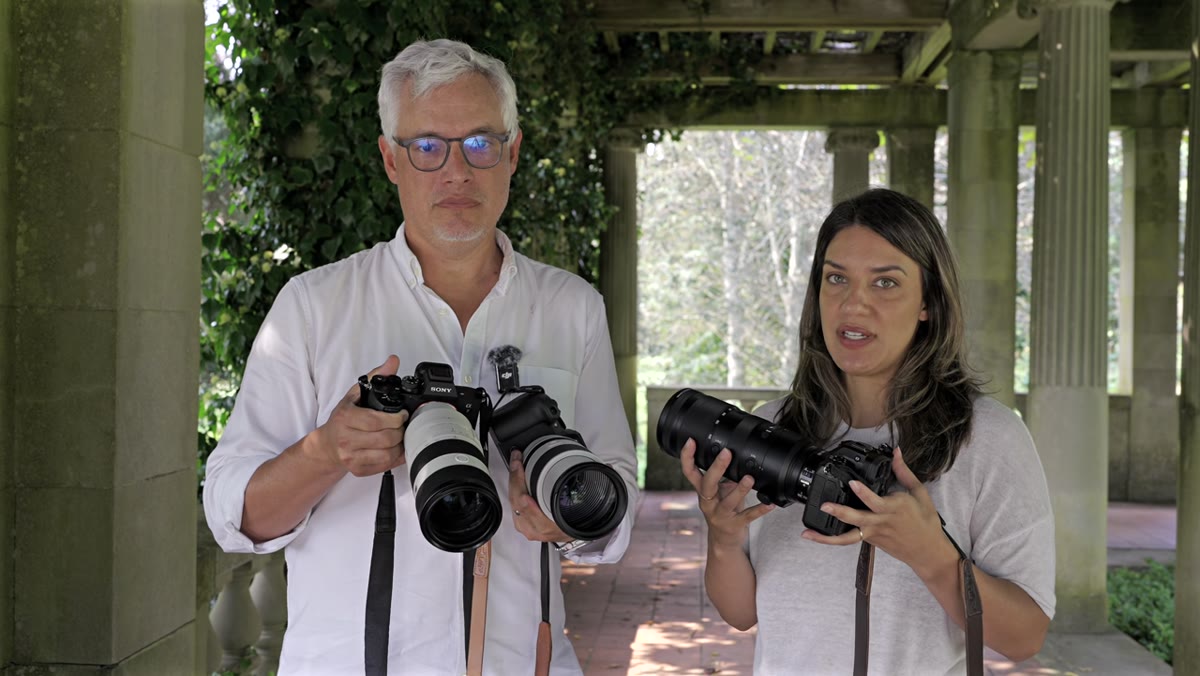
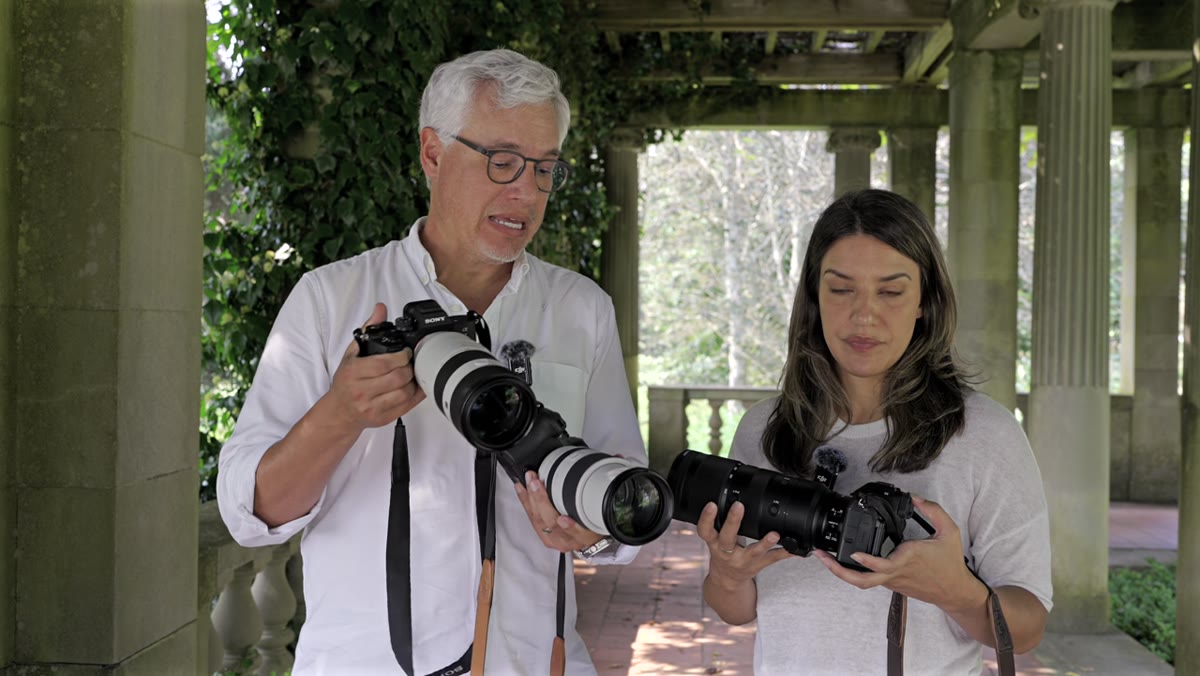
 Presenter holding each camera while listing use cases
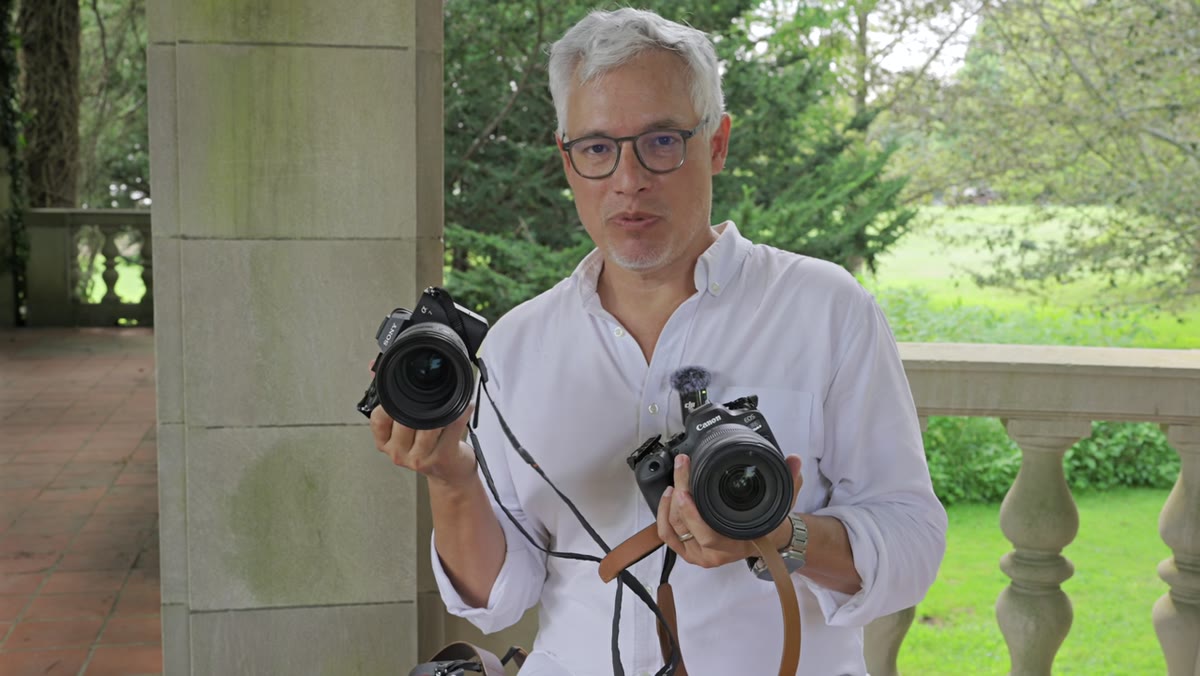
The useful summary is this: the Sony a7 IV is the strongest portrait camera of the three – better eye AF accuracy, higher resolution, and cleaner dynamic range. The Canon R6 II is the most balanced hybrid, with full-sensor 4K/60, strong dynamic range, and a reliable autofocus system. The Nikon Z6 III is a fun, capable camera with a great top display, but it trails slightly in portrait AF, dynamic range, and video flexibility. It’s not a bad camera – it just loses more of these individual matchups than the other two.
Presenter holding each camera while listing use cases
The useful summary is this: the Sony a7 IV is the strongest portrait camera of the three – better eye AF accuracy, higher resolution, and cleaner dynamic range. The Canon R6 II is the most balanced hybrid, with full-sensor 4K/60, strong dynamic range, and a reliable autofocus system. The Nikon Z6 III is a fun, capable camera with a great top display, but it trails slightly in portrait AF, dynamic range, and video flexibility. It’s not a bad camera – it just loses more of these individual matchups than the other two.
One Thing the Comparison Doesn’t Cover: Long-Term Ecosystem Cost
I want to add something Tony and Chelsea don’t dig into deeply, which is the total cost of committing to one of these systems. The body price is the entry fee. The lens ecosystem is where you actually spend money over years. Sony’s FE lineup is the most mature of the three, which means more third-party options and more competition driving prices down. Canon’s RF ecosystem has grown fast but still leans expensive for native glass. Nikon’s Z-mount is improving, but the lens selection is narrower at the budget end. If you’re buying a body and one or two lenses today, this matters less. If you’re building a system over five years, run the numbers on the glass before you commit to a mount.
The single most important takeaway from this comparison is the Sony’s video crop issue – because it’s the kind of spec that sounds great in a press release and disappoints you six months into ownership. Know what you’re buying before you spend $2,500. Watch the full tutorial on YouTube to see the actual test footage and sample images that back up every point above.
Comments
Leave a Comment