
Every few months I get an email asking me some version of the same question: “Tyler, should I just save up and buy the expensive lens?” My honest answer is usually no. But occasionally a piece of gear comes along that makes me actually stop and think through the math. Canon’s RF 100-500mm f/4.5-7.1L IS USM is one of those lenses. At $2,899, it sits in that painful middle zone where it’s too expensive to dismiss as a lifestyle purchase and too specialized to recommend broadly. So when Peter McKinnon took it out to shoot Formula 1 racing and did a proper breakdown, I paid attention.
Watch the full tutorial on YouTube
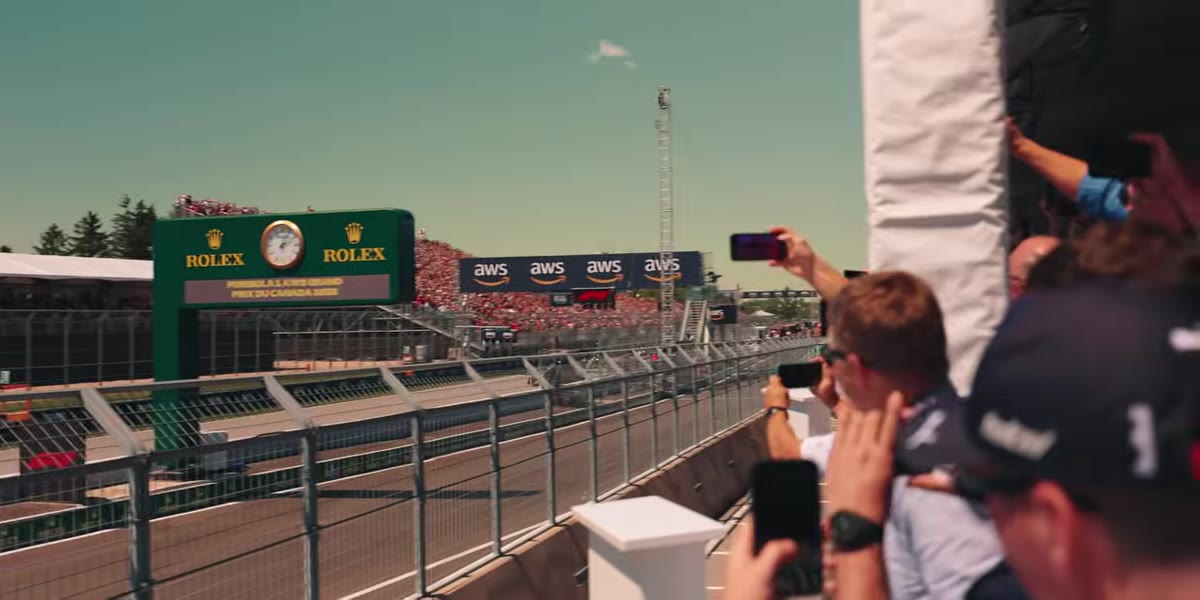
In this Peter McKinnon tutorial, he puts the lens through real-world conditions, not a studio test chart. Rain, fast-moving cars, the chaos of a motorsport event. That’s the kind of testing that actually tells you something. What follows is my breakdown of everything he covers, plus where I’d push back based on what I’ve learned testing gear at a fraction of these prices.
Step 1: Understand What You’re Actually Buying for $2,900
 Peter holds the RF 100-500mm lens in its carry case
Before you even think about whether this lens is worth it, you need to be clear on what the price tag includes and what it doesn’t. The RF 100-500mm is an L-series lens, which means weather sealing, premium glass construction, and Canon’s top-tier build quality. What it does not mean is fast glass. The aperture range runs from f/4.5 at the wide end to f/7.1 at 500mm. That’s slow, and at nearly three grand, that’s a number worth sitting with.
Peter holds the RF 100-500mm lens in its carry case
Before you even think about whether this lens is worth it, you need to be clear on what the price tag includes and what it doesn’t. The RF 100-500mm is an L-series lens, which means weather sealing, premium glass construction, and Canon’s top-tier build quality. What it does not mean is fast glass. The aperture range runs from f/4.5 at the wide end to f/7.1 at 500mm. That’s slow, and at nearly three grand, that’s a number worth sitting with.
McKinnon is upfront about this tradeoff. You’re not buying this to shoot portraits with creamy background separation in a studio. You’re buying it because you need reach, reliability, and the ability to shoot in conditions that would destroy cheaper gear. If both of those last two things matter to your work, the L designation starts justifying itself. If they don’t, you’re paying a serious premium for durability you may never need.
Step 2: Recalibrate Your Bokeh Expectations for Long Telephoto Work
 Sharp F1 car in frame with motion-blurred background
One of the most useful points McKinnon makes is about compression and background blur at long focal lengths. At 500mm, the physical compression of the focal length does a lot of the background separation work for you, even at slower apertures. You don’t need f/1.8 to make a background disappear when you’re shooting at 500mm from any meaningful distance.
Sharp F1 car in frame with motion-blurred background
One of the most useful points McKinnon makes is about compression and background blur at long focal lengths. At 500mm, the physical compression of the focal length does a lot of the background separation work for you, even at slower apertures. You don’t need f/1.8 to make a background disappear when you’re shooting at 500mm from any meaningful distance.
The F1 shot he highlights demonstrates this cleanly. He was tracking a car at speed, panning with the motion to keep the car sharp while the background smears into abstract color. The panning technique combined with the focal length compression made the aperture limitation essentially irrelevant for that shot. This is worth internalizing: when you’re shooting fast-moving subjects at long range, your technique matters more than your maximum aperture. That’s not a reason to accept a slow lens casually, but it is a reason to stop treating f/7.1 at 500mm as a dealbreaker.
Step 3: Learn the Physical Controls and What’s Actually New
 Close-up of lens barrel showing stabilizer and focus switches
McKinnon walks through the control layout methodically, and a few details stand out. The lens hood has been redesigned with a ribbed machined texture instead of the felt-lined interior of older EF hoods. There’s a filter window built into the hood for adjusting circular polarizers or ND filters without removing the hood, which is a genuinely practical addition for outdoor shooters.
Close-up of lens barrel showing stabilizer and focus switches
McKinnon walks through the control layout methodically, and a few details stand out. The lens hood has been redesigned with a ribbed machined texture instead of the felt-lined interior of older EF hoods. There’s a filter window built into the hood for adjusting circular polarizers or ND filters without removing the hood, which is a genuinely practical addition for outdoor shooters.
The stabilization switch gives you two modes: full stabilization and panning mode, where the system stabilizes only the vertical axis and lets horizontal motion track naturally. For sports and motorsport work, switching to panning mode is the right call and McKinnon makes sure to flag it. There’s also a zoom friction ring that lets you adjust how much resistance the zoom barrel has. Tighten it and the lens won’t creep when pointed down. Loosen it and you can zoom faster with less effort. Small feature, but anyone who has dealt with zoom creep on a long lens knows exactly why it matters.
Step 4: Know the Real Comparison - the RF 100-400mm Non-L
 McKinnon compares size and build of the two Canon zoom lenses
This is where the review gets genuinely useful for decision-making. McKinnon puts the 100-500mm L directly against Canon’s RF 100-400mm, which costs more than $2,000 less. The 100-400mm is smaller, lighter, and significantly cheaper. It also tops out at 400mm instead of 500mm, runs at f/5 instead of f/4.5, and critically, it is not weather sealed.
McKinnon compares size and build of the two Canon zoom lenses
This is where the review gets genuinely useful for decision-making. McKinnon puts the 100-500mm L directly against Canon’s RF 100-400mm, which costs more than $2,000 less. The 100-400mm is smaller, lighter, and significantly cheaper. It also tops out at 400mm instead of 500mm, runs at f/5 instead of f/4.5, and critically, it is not weather sealed.
McKinnon was shooting in the rain at the F1 event. Water was spraying off the track behind the cars. He makes the point that weather sealing is not a guarantee against damage but it is meaningful insurance when you’re working in wet conditions without reliable cover. If you’re shooting outdoors regularly and can’t always control your environment, that sealing becomes part of the value calculation. If you shoot in controlled environments or can always protect your gear, you’re paying for something you won’t use.
Step 5: Do the Actual Math on Focal Length vs. Price
 McKinnon gestures toward price difference between the two lenses
The 100mm of extra reach between 400mm and 500mm sounds modest written out. In practice, at long telephoto distances, it can be significant. Wildlife and motorsport photographers know that the difference between getting the shot and not getting it often comes down to whether you can fill the frame from a fixed position. You can’t always move closer, and cropping in post costs you resolution.
McKinnon gestures toward price difference between the two lenses
The 100mm of extra reach between 400mm and 500mm sounds modest written out. In practice, at long telephoto distances, it can be significant. Wildlife and motorsport photographers know that the difference between getting the shot and not getting it often comes down to whether you can fill the frame from a fixed position. You can’t always move closer, and cropping in post costs you resolution.
That said, McKinnon’s honest take is that whether the extra reach justifies the premium depends entirely on your shooting situation. If you’re at a track with designated photographer positions and a fixed distance from the action, 500mm might matter. If you’re shooting wildlife where you control your approach, the gap might matter less. The question isn’t which lens is objectively better. The question is which lens is better for how you actually shoot.
My Take: The Budget Angle McKinnon Doesn’t Cover
I’ve spent a lot of time in the sub-$500 lens world, and here’s the thing the L-series conversation tends to skip: third-party options from Sigma and Tamron in the telephoto range have gotten genuinely good. The Tamron 150-500mm for Sony E-mount, for example, undercuts Canon’s offering significantly while delivering competitive optical performance. Canon RF shooters don’t have as many third-party options yet due to mount licensing, but that’s changing. Before committing to $2,900, it’s worth checking what’s available in your mount from Sigma’s Contemporary line or Tamron’s Sport series. You might find 85% of the performance at 50% of the price, and for most working photographers, that’s the smarter deal.
The single most important thing McKinnon’s breakdown reveals is this: the RF 100-500mm is a genuinely capable lens, but the price is only justified if weather sealing and that extra 100mm of reach are both relevant to your work. If either one doesn’t apply to you, the non-L 100-400mm saves you serious money without gutting your ability to get the shot. Buy for your actual use case, not for the spec sheet.
Watch the full tutorial on YouTube
Comments
Leave a Comment