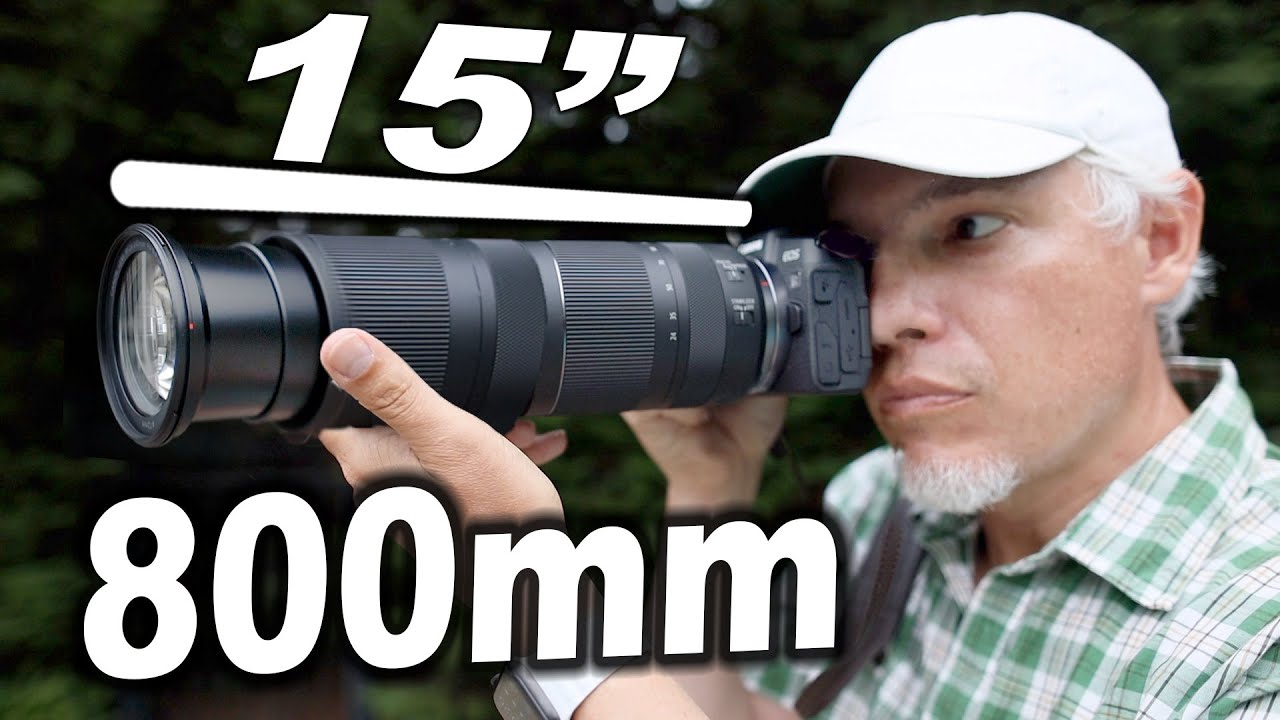
If you’ve been sitting on the fence about jumping from Canon DSLR to mirrorless, Canon’s leaked 2020 RF lens lineup might be the thing that finally pushes you over. I’ve been watching this space obsessively since the RF mount launched, running every new lens through my own budget-lens comparison spreadsheet to figure out what’s actually worth buying versus what’s just hype dressed up in white paint and a red ring. When Tony and Chelsea Northrup published their breakdown of the leaked Canon RF lens lineup for 2020, I watched it three times and took notes, because the implications here go well beyond just “new glass is coming.”
Watch the full tutorial on YouTube
What makes this leak notable isn’t any single lens. It’s the pattern. Every single lens on the rumored list is RF mount, Canon’s mirrorless standard. Not one new EF lens for DSLR shooters. That’s not an accident, and it’s not just a slow news year. Canon has apparently decided, officially, that new development effort goes to mirrorless from here on out. For anyone still shooting a Rebel or a 90D and wondering whether to upgrade, that decision just got made for you in a Tokyo boardroom.
Step 1: Understand What the Acronyms Actually Tell You
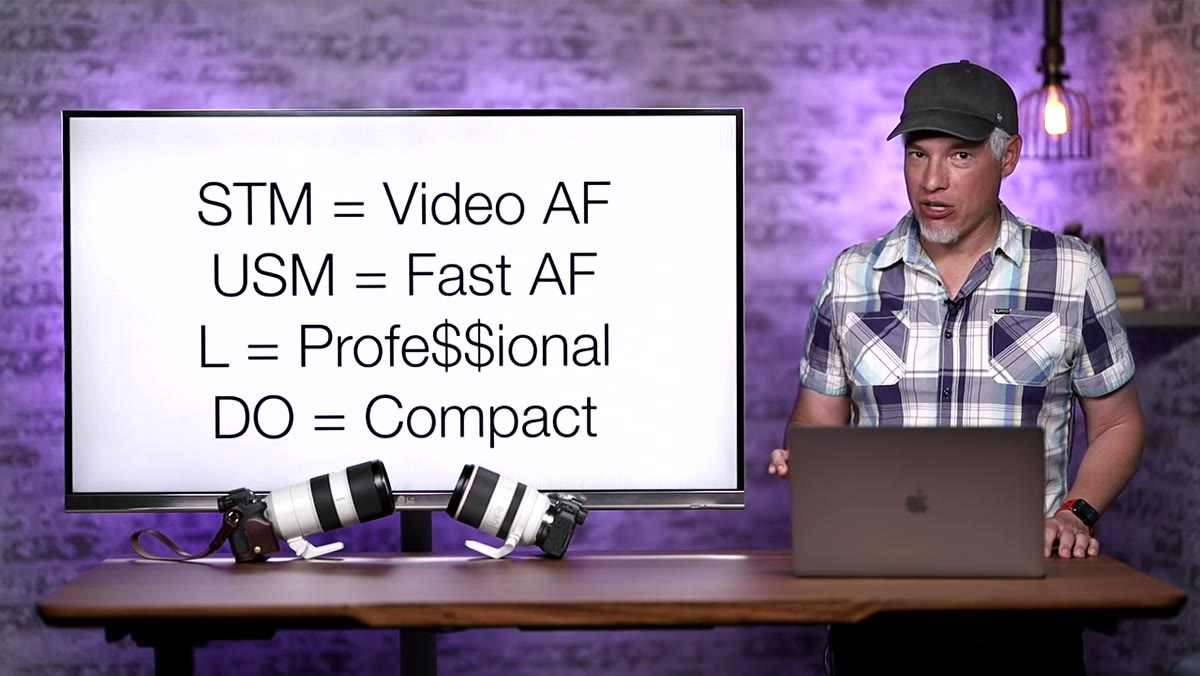 Tony explaining STM, USM, L, and DO lens acronyms on screen
Before you evaluate any of these lenses, you need a fast translation guide for Canon’s labeling system. STM means the autofocus motor is quiet and smooth, built for video work where a noisy lens ruins your audio. USM is faster and snappier, better suited for action and stills, but it produces more audible focus noise. The L designation marks Canon’s professional-grade lineup: more weather sealing, typically sharper, and noticeably pricier. DO stands for diffractive optics, a technology that lets Canon shrink a lens’s physical size without sacrificing optical reach. Knowing these four acronyms before you buy anything will save you from picking the wrong tool for your shooting style.
Step 2: Pay Attention to the Nifty 50 RF – It’s the Gateway Lens
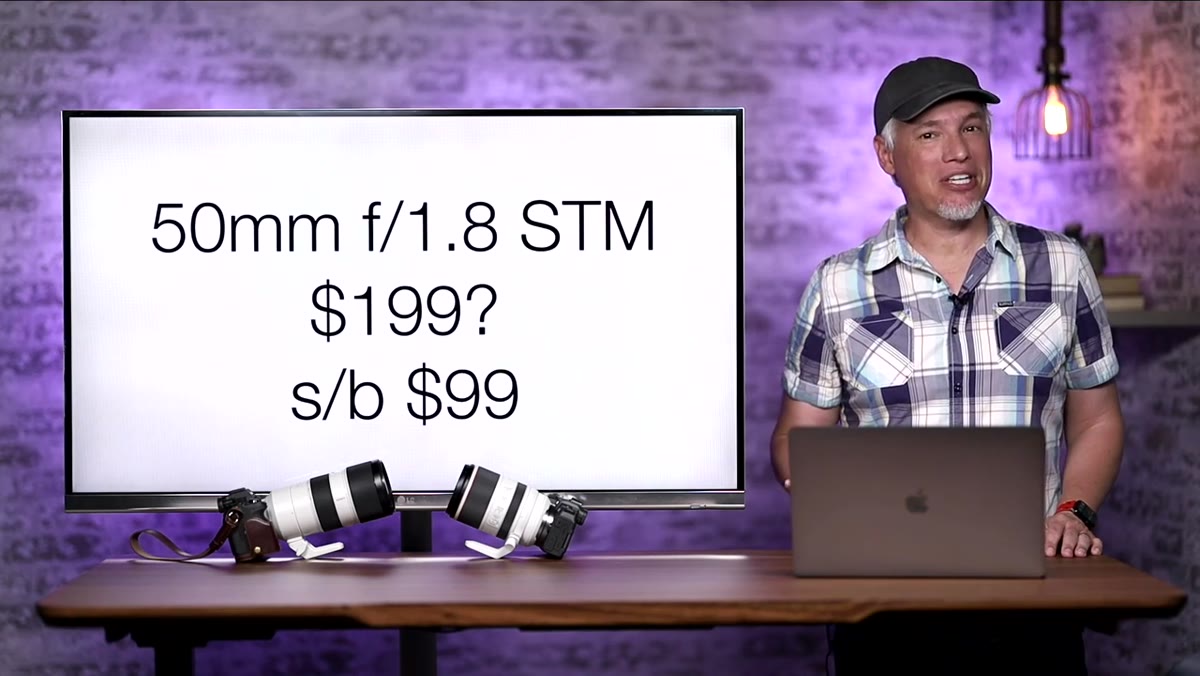 Tony describing the 50mm f/1.8 STM as the most important entry-level lens
The first leaked lens on the list is an RF 50mm f/1.8 STM, and Tony makes the case that this is the most important lens in the entire lineup outside of a kit zoom. I’d argue it’s even more important now than it was five years ago. Smartphone cameras have gotten genuinely excellent at wide shots, so a kit lens that shoots at f/3.5 to f/5.6 doesn’t give most beginners a compelling reason to prefer their camera over their phone. A 50mm f/1.8 does. The background separation you get at f/1.8 is something no phone computational blur filter fully replicates, and that’s the moment when new photographers stop thinking of their camera as a phone replacement and start thinking of it as a creative tool. Tony’s predicted price point is around $199, though he argues Canon should push it to $99 to maximize adoption. Realistically, budget for $200 and be pleasantly surprised if it comes in lower.
Step 3: Evaluate the 85mm f/2 IS Macro as a Portrait Workhorse
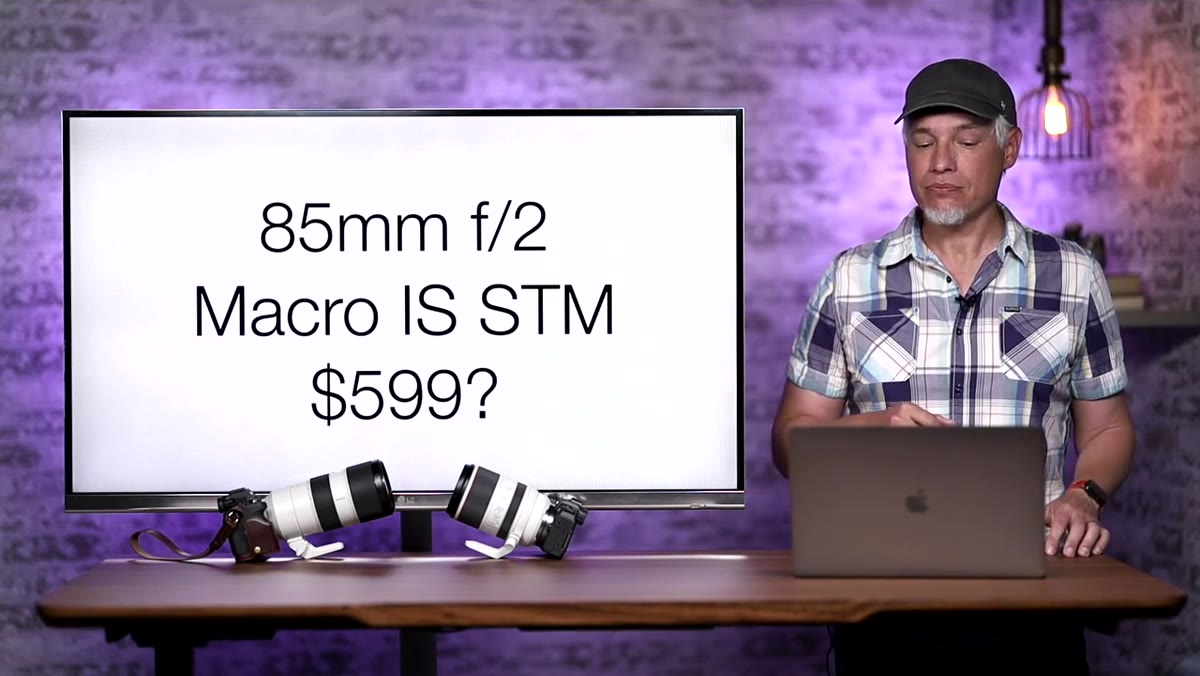 Tony describing the 85mm f/2 IS lens specs and predicted price
The next lens in the leak is an 85mm f/2 with image stabilization and some degree of macro capability. Tony’s prediction puts this around $600, which is a significant jump from the $350 EF 85mm f/1.8 that’s been in Canon’s lineup for decades. But here’s the key difference: that older lens has no image stabilization and was designed before modern video became a priority. An 85mm with IS opens up handheld portrait video in a way the old version never could. The macro labeling likely means closer-than-normal minimum focus distance rather than a true 1:1 macro ratio, so don’t plan on shooting product details at extreme magnification. For portraits, environmental headshots, and YouTube talking-head setups where you want natural compression and smooth background separation, this one has real practical value.
Step 4: Reconsider the 70-200 f/4 If You Shoot Handheld
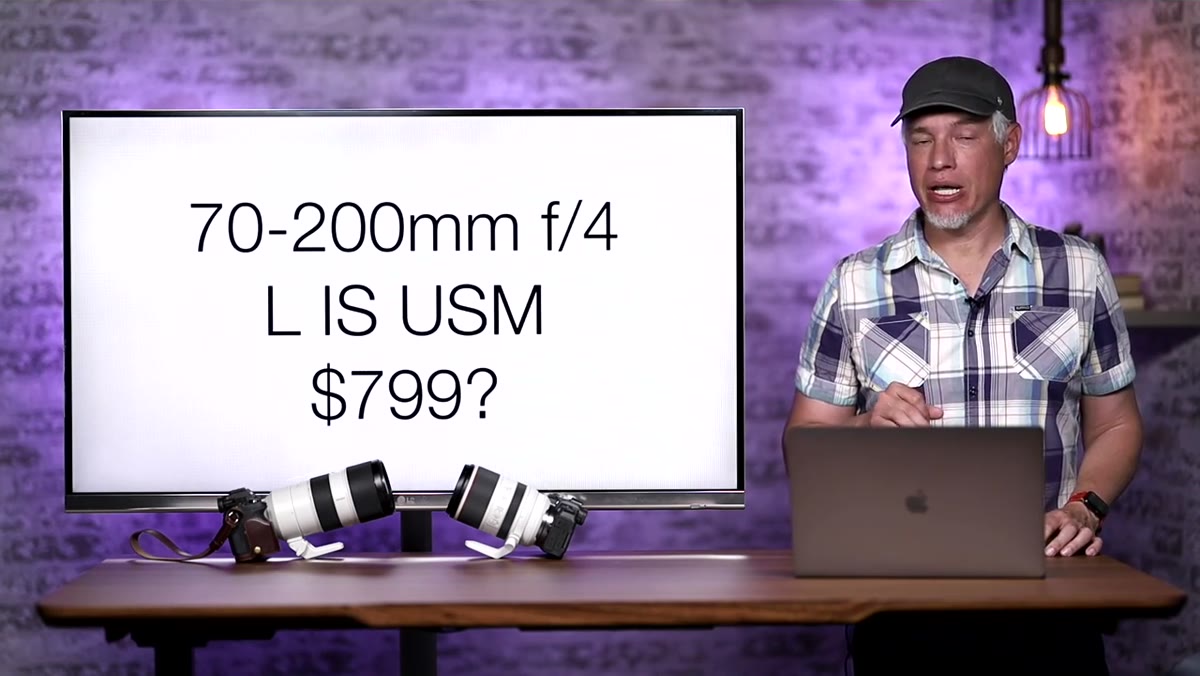 Tony discussing the lighter 70-200 f/4 as an alternative to the f/2.8
Canon’s leaked lineup includes a 70-200mm f/4, positioned as a lighter and more compact alternative to the 70-200mm f/2.8. For anyone who has hauled a 70-200 f/2.8 through a full day of shooting, the weight difference is not a minor convenience. It’s the difference between arriving at hour six with a functional wrist and arriving in pain. The f/4 aperture means you give up about one stop of light, which matters in low-light situations but is less of a trade-off than it sounds in outdoor or studio work. If you’re primarily shooting weddings, sports, or wildlife where you’re on your feet all day, the f/4 version deserves serious consideration over the faster glass.
Step 5: Read the Full Lineup as a Signal, Not Just a Product List
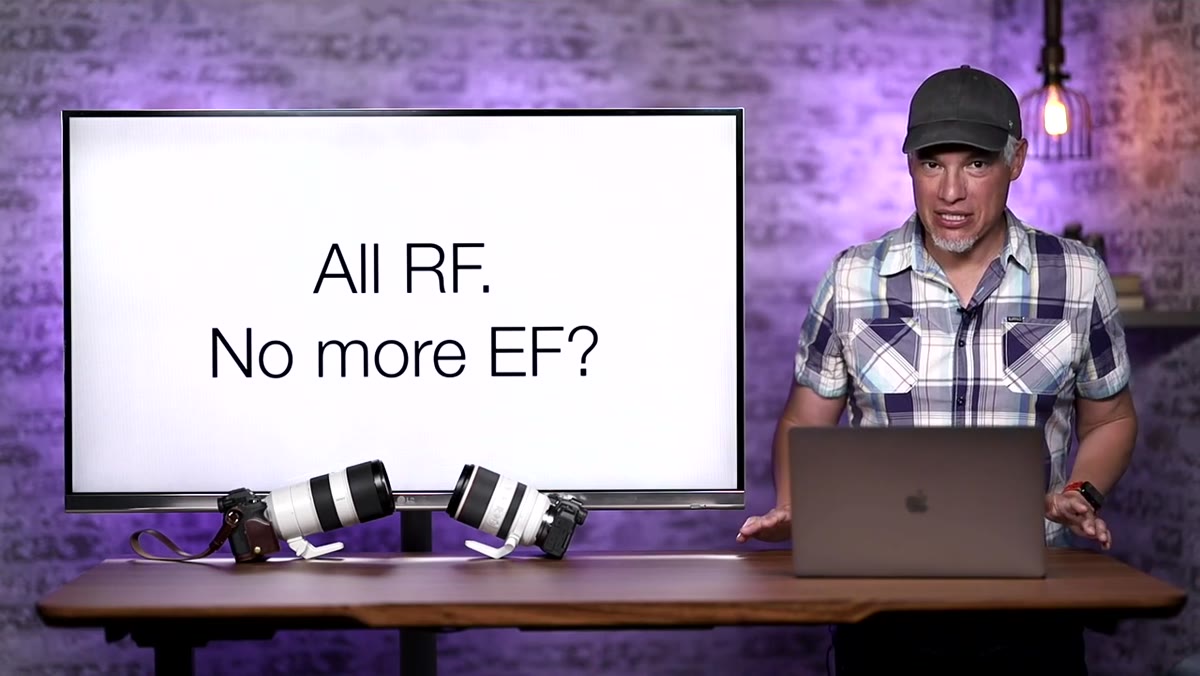 Showing that every leaked 2020 Canon lens uses RF mount, not EF
The single most actionable piece of information in this entire leak isn’t any individual lens. It’s the fact that Canon’s 2020 development slate contains zero new EF mount lenses. Tony points this out as confirmation of something Canon has said publicly: their R&D is going entirely into the RF ecosystem now. If you’re a DSLR shooter planning to buy a new Canon body or lens in the next two to three years, this is the clearest possible signal that you’re buying into a platform that’s being maintained but not advanced. Canon will keep making EF-compatible cameras for a while. They just won’t be developing new glass for them.
What I’d Add From My Own Experience Testing Budget Glass
I’ve tested enough sub-$300 lenses to know that Canon’s nifty 50 for RF mount will likely be the single best entry point for new mirrorless shooters, assuming the price lands where predicted. The optical formula for a 50mm f/1.8 isn’t exotic. The manufacturing costs are low. And the results, especially for someone coming from a kit zoom, feel transformative.
My honest caveat: don’t wait for perfect. If you’re already shooting Canon RF and you need a portrait focal length right now, the adapted EF 85mm f/1.8 with an EF-to-RF adapter performs well and costs about $350 used. The new RF 85mm f/2 IS will likely be sharper and smoother for video, but “better” and “available now at lower cost” are two different things. I built half my review portfolio on adapted glass before native RF options existed at reasonable prices.
The biggest takeaway here is that Canon has made a company-level bet on RF mount, and the 2020 lens lineup is the proof. Whether you’re buying your first prime or your fifth telephoto, every Canon purchase decision from here forward should be made with that reality in mind.
Watch the full tutorial on YouTube for Tony and Chelsea’s complete breakdown, including their analysis of additional lenses in the leak and their take on what Canon needs to do to compete with Sony’s mirrorless ecosystem.
Comments (1)
This is going in my reference folder. Incredibly useful.
Leave a Comment