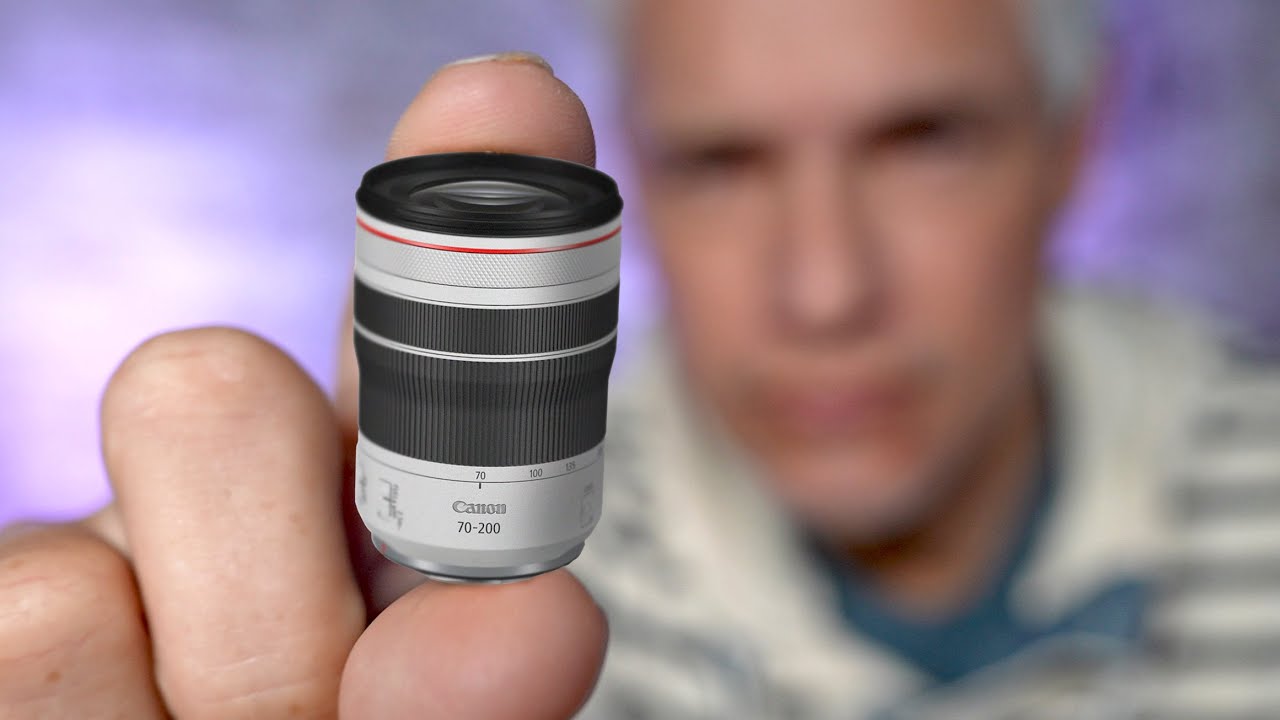
Every few months the camera industry drops a cluster of news that actually changes the math on what to recommend to people. Not incremental firmware updates or rebadged accessories, but real shifts in pricing and product categories that affect buying decisions. This week was one of those weeks. Watch the full tutorial on YouTube where Tony and Chelsea Northrup break down the full picture, but I want to dig into what this actually means if you’re buying, shooting, or advising someone else on gear right now.
I spend a disproportionate amount of my morning checking deal sites and rumor forums before most people have finished their coffee. So when Canon quietly dropped a $200 full-frame mirrorless 50mm and Sony announced a drone division in the same news cycle, I had opinions before lunch. Here’s what I actually think is worth paying attention to, step by step.
Step 1: Understand Why the Canon RF 50mm f/1.8 Is a Bigger Deal Than It Sounds
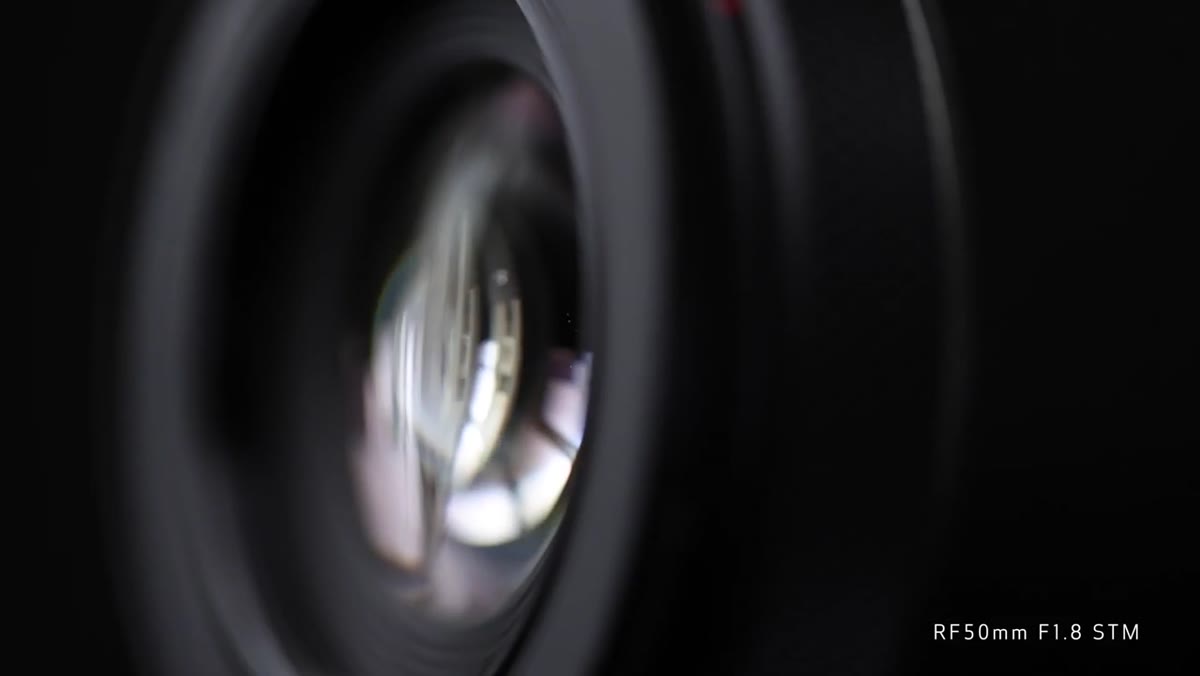 Canon RF 50mm f/1.8 lens shown with $200 price tag
The “nifty fifty” has always been the gateway lens. It’s the one that teaches new photographers what depth of field actually feels like, not as a concept in a manual but as a physical result you can see in your viewfinder. Canon finally released their RF-mount version of this lens for mirrorless full-frame cameras, priced at $200 at launch. That number matters more than it seems.
Canon RF 50mm f/1.8 lens shown with $200 price tag
The “nifty fifty” has always been the gateway lens. It’s the one that teaches new photographers what depth of field actually feels like, not as a concept in a manual but as a physical result you can see in your viewfinder. Canon finally released their RF-mount version of this lens for mirrorless full-frame cameras, priced at $200 at launch. That number matters more than it seems.
For context, the comparable Nikon Z-mount version sits at $500. Sony’s equivalent is around $250. Canon coming in at $200 for a fully autofocus, full-frame lens is a direct shot at the entry-level market, and it works. The lens itself may not win sharpness tests against the Nikon option, but for anyone shooting portraits for Instagram, small events, or just learning to control a camera, the difference in sharpness is invisible at social media resolutions. What is visible is the background blur, and at f/1.8 this lens delivers exactly the look that still separates a real camera from a smartphone.
Step 2: Run the Full System Cost, Not Just the Lens Price
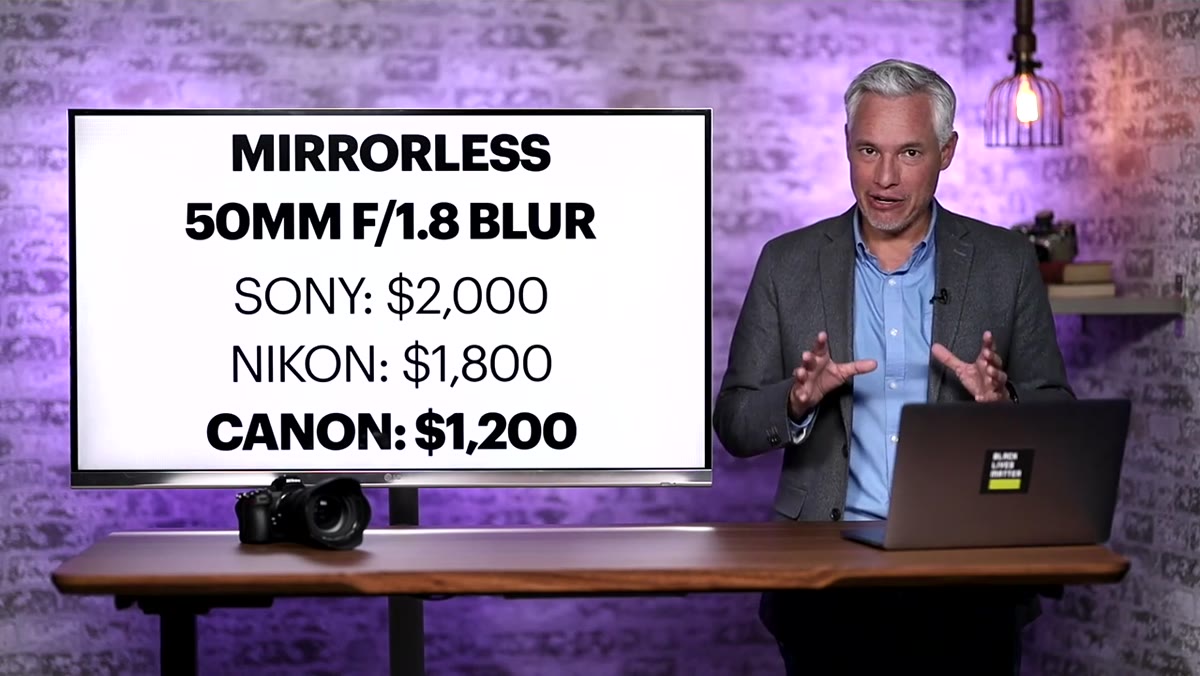 Side-by-side system cost comparison across Canon, Nikon, Sony
This is the step most new buyers skip, and it’s where Canon’s pricing strategy gets genuinely interesting. Tony runs the numbers in the video and they’re worth walking through because they change the recommendation depending on budget.
Side-by-side system cost comparison across Canon, Nikon, Sony
This is the step most new buyers skip, and it’s where Canon’s pricing strategy gets genuinely interesting. Tony runs the numbers in the video and they’re worth walking through because they change the recommendation depending on budget.
If you’re building a full-frame mirrorless kit from scratch, pairing the Canon EOS RP (frequently available under $999, and I’ve seen it lower) with this new $200 lens lands you under $1,200. A comparable Nikon Z5 plus their 50mm f/1.8 Z runs closer to $1,800. The Sony a7C entry point with their 50mm pushes toward $2,000. Canon isn’t just winning on the lens price here - they’re winning on the total system cost for someone who wants full-frame image quality without committing to a four-figure lens budget on day one. If you’re the person people ask “what camera should I buy,” Canon just made your answer easier.
Step 3: Pay Attention to the RF 70-200mm f/4 and What “Compact” Actually Means in Practice
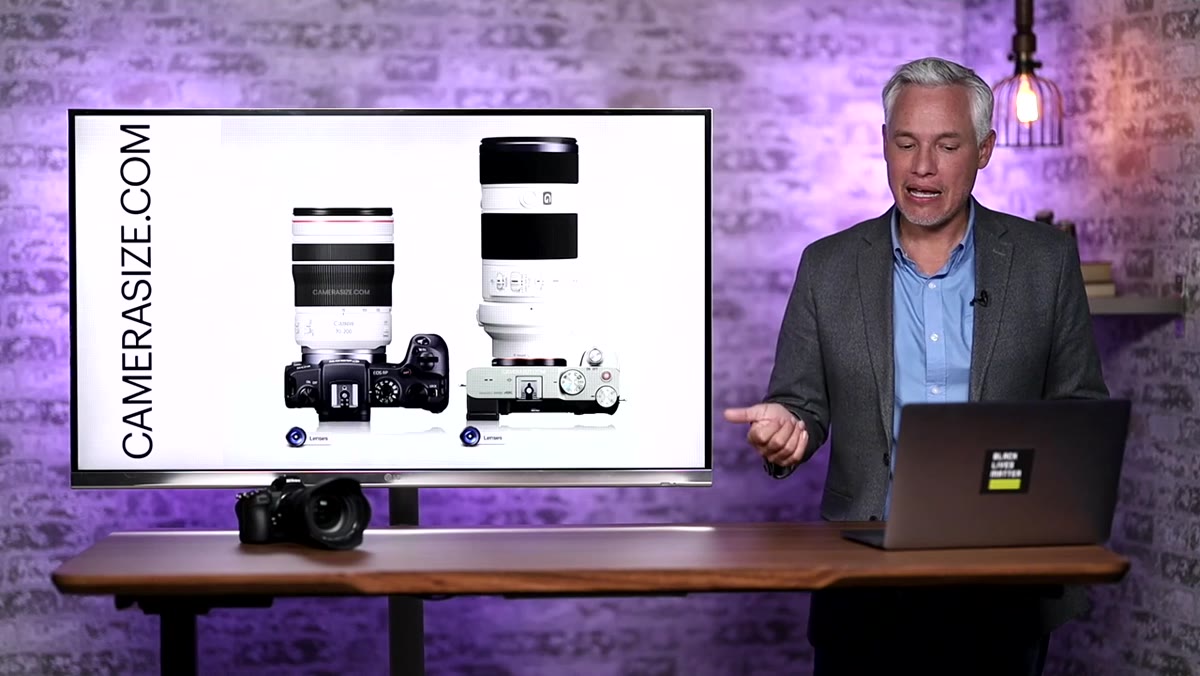 Size comparison of Canon RF 70-200 f/4 against Sony 70-200 f/4
The 70-200 f/4 category has been around long enough that it’s easy to assume every manufacturer’s version is basically the same lens in a different color scheme. Canon’s RF version breaks that assumption on size. Placed next to the Sony equivalent, the Canon is noticeably shorter, which sounds like a minor spec sheet footnote until you’ve actually tried to pack a telephoto for a hiking trip.
Size comparison of Canon RF 70-200 f/4 against Sony 70-200 f/4
The 70-200 f/4 category has been around long enough that it’s easy to assume every manufacturer’s version is basically the same lens in a different color scheme. Canon’s RF version breaks that assumption on size. Placed next to the Sony equivalent, the Canon is noticeably shorter, which sounds like a minor spec sheet footnote until you’ve actually tried to pack a telephoto for a hiking trip.
I’ve tested enough budget telephoto lenses to know that the one you actually bring with you beats the one sitting at home every single time. A white-ring Canon L-series lens that fits comfortably in a day pack changes what you shoot. Tony specifically calls it out as a landscape lens recommendation because that compression effect between foreground and background - the thing that makes mountain layers look dramatic - requires reach. And compact reach, for a professional-grade lens, is not something the other manufacturers are currently offering at the same level.
Step 4: Take Sony’s Drone Announcement Seriously, Even Without Full Specs
 Sony drone announcement graphic on screen
Sony entering the drone space is the news item that’s easiest to dismiss right now because we don’t have pricing or release details. Don’t dismiss it. Sony’s sensor technology is what powers DJI’s best drones already - the idea that Sony would build a drone platform around their own imaging pipeline makes complete sense, and their autofocus systems are among the best in the industry. A Sony drone with Sony AF and a Sony sensor could be genuinely competitive against DJI’s Mavic line.
Sony drone announcement graphic on screen
Sony entering the drone space is the news item that’s easiest to dismiss right now because we don’t have pricing or release details. Don’t dismiss it. Sony’s sensor technology is what powers DJI’s best drones already - the idea that Sony would build a drone platform around their own imaging pipeline makes complete sense, and their autofocus systems are among the best in the industry. A Sony drone with Sony AF and a Sony sensor could be genuinely competitive against DJI’s Mavic line.
What to do right now: nothing. Wait for specs and pricing. But if you’re a drone shooter who also works in the Sony mirrorless ecosystem, a Sony drone eventually means a more integrated workflow, potentially the same color science across your ground and aerial footage. That’s worth watching.
Step 5: Read the Nikon Layoffs as a Market Signal, Not Just Bad News
 Nikon layoffs news headline displayed on screen
Nikon has announced additional layoffs, and it’s tempting to file this under “sad but not relevant to me.” It’s actually relevant to anyone who’s currently in the Nikon system or considering entering it. Layoffs in R&D and product development slow the lens roadmap. A slower lens roadmap means fewer affordable native Z-mount options in the near term. The $500 Nikon 50mm already makes the system harder to recommend at the entry level, and if new budget glass isn’t coming quickly, that gap widens.
Nikon layoffs news headline displayed on screen
Nikon has announced additional layoffs, and it’s tempting to file this under “sad but not relevant to me.” It’s actually relevant to anyone who’s currently in the Nikon system or considering entering it. Layoffs in R&D and product development slow the lens roadmap. A slower lens roadmap means fewer affordable native Z-mount options in the near term. The $500 Nikon 50mm already makes the system harder to recommend at the entry level, and if new budget glass isn’t coming quickly, that gap widens.
This doesn’t mean Nikon is dying or that Z-mount is a bad system. The existing lenses are excellent. But if you’re advising a first-time buyer between systems today, the Canon pricing advantage combined with Nikon’s internal struggles tilts the recommendation in a clear direction until Nikon addresses their entry-level lens gaps.
What I’d Add From My Own Testing
I’ve run comparison tests where experienced photographers couldn’t reliably separate shots from cameras at vastly different price points. The thing that showed up consistently as a visible difference wasn’t sensor resolution or autofocus speed - it was background separation. Shallow depth of field. Bokeh. The exact thing a $200 Canon 50mm f/1.8 gives you on a full-frame body.
I keep a spreadsheet of every budget lens I’ve tested. The 50mm f/1.8 category always sits at the top of my value-per-dollar rankings across every manufacturer. Canon putting one at $200 for their mirrorless mount isn’t just a product launch - it’s a direct answer to the most common question I get from beginners: “Is there a cheap lens that will make my photos look professional?” There now is, and it works with one of the most affordable full-frame bodies on the market.
The single most important takeaway from this news cycle is that Canon has made the full-frame mirrorless entry point cheaper than it’s ever been, and the competition hasn’t responded yet. If someone in your life is asking whether now is a good time to buy their first serious camera, the answer just got a lot easier to give.
Watch the full tutorial on YouTube to see Tony and Chelsea’s complete breakdown, including the size comparison footage that makes the 70-200 argument more convincing than any spec sheet.
Comments (2)
This should be required reading for anyone starting out.
Bookmarked. Coming back to this one for sure.
Leave a Comment