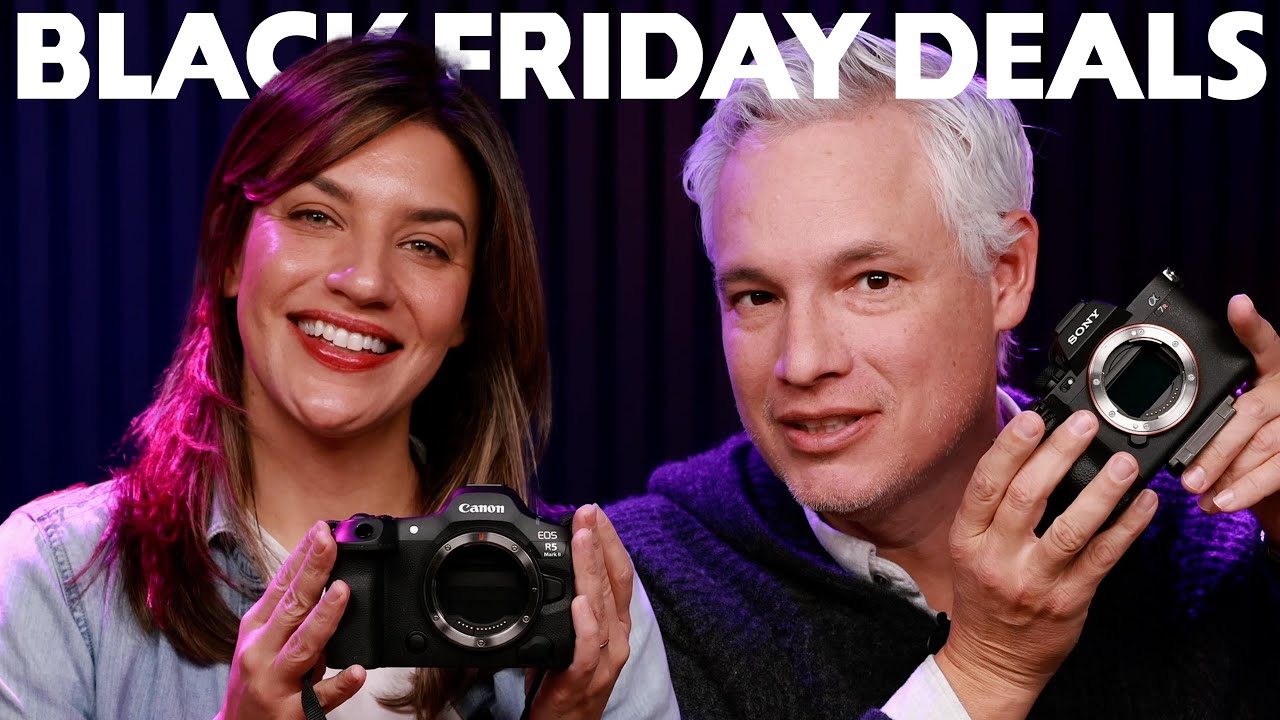
Every year I spend an embarrassing amount of time cross-referencing deal sites, manufacturer pages, and forum threads trying to figure out which “limited time offers” are genuinely discounted versus which ones are just the regular price with a festive banner slapped on. It’s the reason I got into deals content in the first place. Turns out I was spending more hours researching prices than actually shooting, so I figured I might as well make it useful for other people too.
This year, Tony and Chelsea Northrup saved me a chunk of that legwork. In their Cyber Monday photography deals tutorial, they run through a tight list of software discounts, used gear platforms, and camera body deals that are worth your actual attention. Watch the full tutorial on YouTube if you want to hear their takes directly. Below, I’ve broken down each deal category they cover with the context you need to decide fast, because this stuff does sell out.
Step 1: Grab the Free Photography Buying Guide First
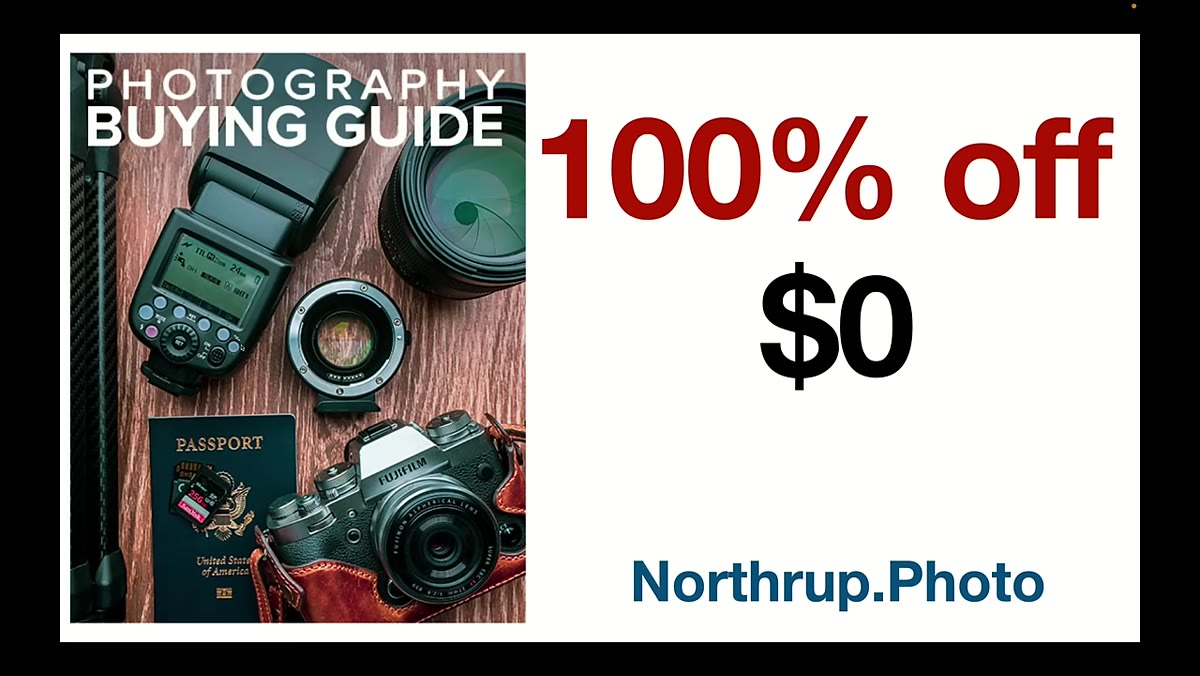 Tony holding up the free photography buying guide offer
Before any money changes hands, there’s a genuinely free resource worth snagging. Tony mentions that his photography buying guide, a full book covering how to choose cameras, lenses, flashes, and accessories, is available at no cost through their site. No credit card required at checkout. That’s not a trial, not a drip email sequence, just a free book.
Tony holding up the free photography buying guide offer
Before any money changes hands, there’s a genuinely free resource worth snagging. Tony mentions that his photography buying guide, a full book covering how to choose cameras, lenses, flashes, and accessories, is available at no cost through their site. No credit card required at checkout. That’s not a trial, not a drip email sequence, just a free book.
If you’re newer to gear research or you’ve got a family member asking what camera to buy them for the holidays, this is the cleanest starting point I’ve seen. Go to northrup.photo and run through the checkout process. The fact that it costs nothing means there’s zero reason to skip it before you spend money on anything else in this list.
Step 2: Score 10% Off Used Gear Through KEH
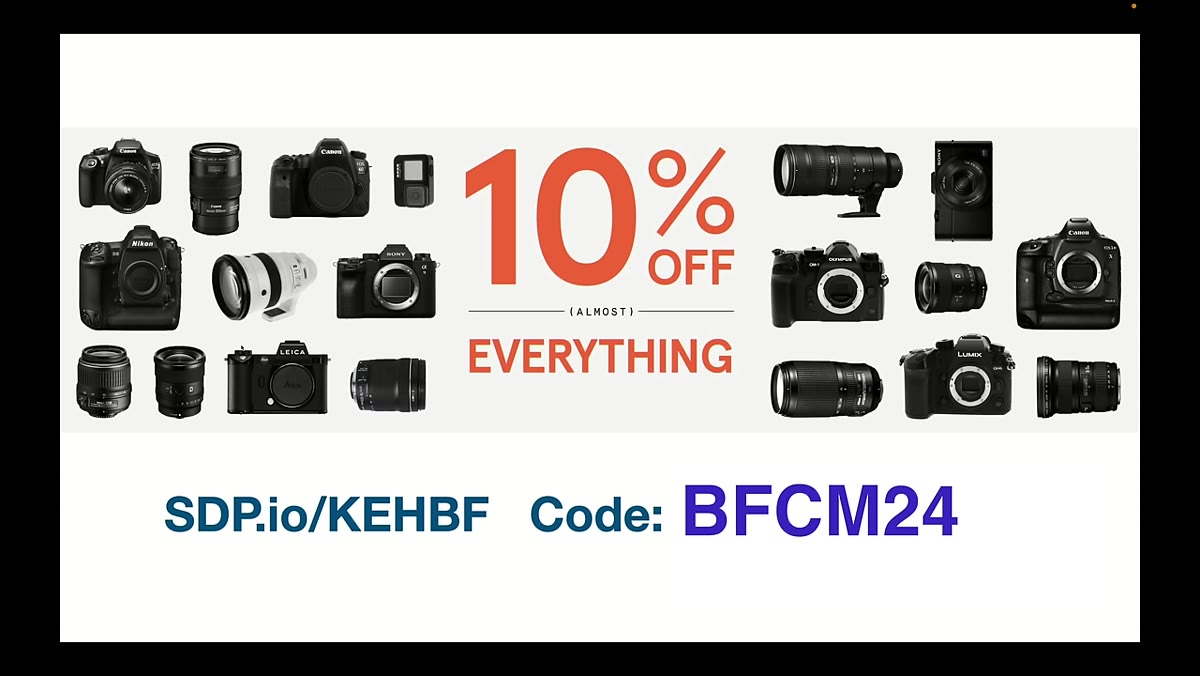 Browser showing KEH camera website with sale banner
KEH is running 10 percent off across most of their inventory, which includes used lenses, camera bodies, tripods, and lighting. I’ve bought from KEH before and their grading system is conservative in a good way. Something rated “bargain” condition often shows up looking closer to “excellent.” They also have a solid return policy, which matters when you’re buying used glass you can’t physically inspect first.
Browser showing KEH camera website with sale banner
KEH is running 10 percent off across most of their inventory, which includes used lenses, camera bodies, tripods, and lighting. I’ve bought from KEH before and their grading system is conservative in a good way. Something rated “bargain” condition often shows up looking closer to “excellent.” They also have a solid return policy, which matters when you’re buying used glass you can’t physically inspect first.
Ten percent might not sound massive, but on a $600 lens that’s $60 back in your pocket. Stack that on an already-reduced used price versus buying new and you’re often looking at 40 to 60 percent below retail. Make sure you use the affiliate link Tony and Chelsea provide if you want the coupon to apply correctly, and do it soon. Inventory on specific items at KEH can disappear quickly when a sale goes live.
Step 3: Get DXO Software at 50% Off
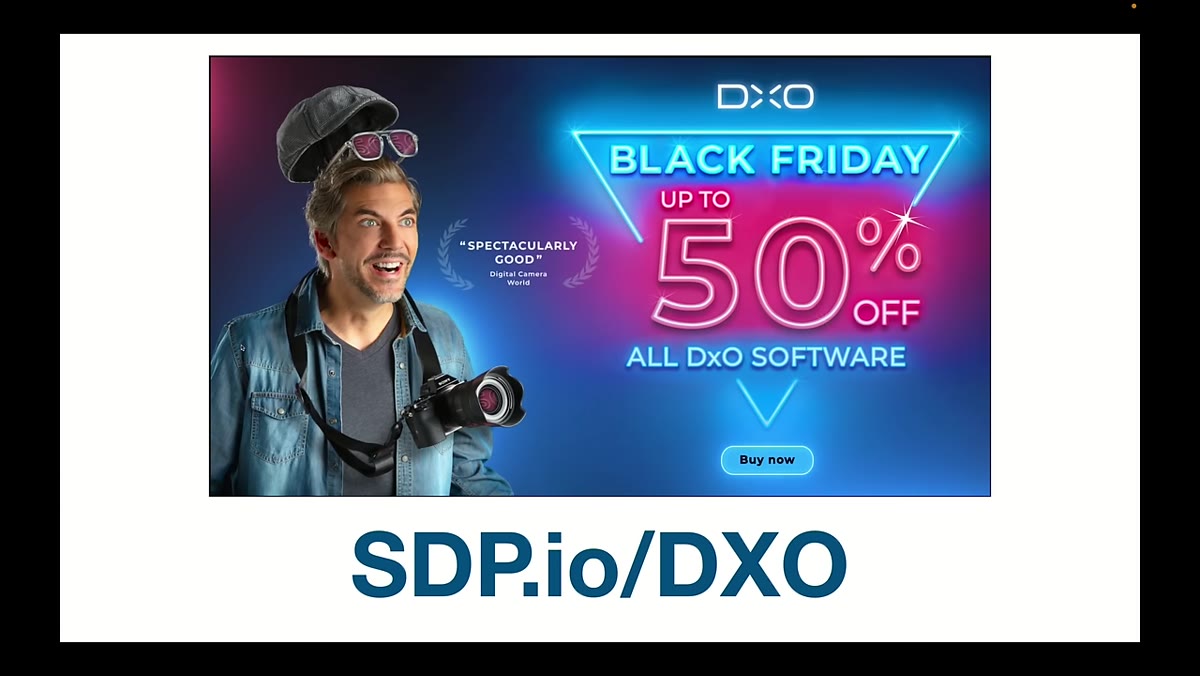 DXO software interface shown on screen with sale overlay
DXO is offering half off their photo editing software, and this one deserves more than a passing mention. Unlike Adobe, DXO sells perpetual licenses. You pay once, you own it. No monthly fee, no subscription creep. Their tools also include some genuinely impressive film simulation options if you want that analog aesthetic without shooting on actual film stock.
DXO software interface shown on screen with sale overlay
DXO is offering half off their photo editing software, and this one deserves more than a passing mention. Unlike Adobe, DXO sells perpetual licenses. You pay once, you own it. No monthly fee, no subscription creep. Their tools also include some genuinely impressive film simulation options if you want that analog aesthetic without shooting on actual film stock.
You can run DXO alongside Lightroom as a plugin, so this isn’t necessarily an Adobe replacement if you’re already embedded in that ecosystem. It’s more of a powerful add-on, especially for noise reduction and lens correction. The link to access the deal is sdp.io/dxo. At 50 percent off, the perpetual license math gets very favorable compared to another year of Adobe payments.
Step 4: Reduce Your Adobe Bill Right Now
 Adobe pricing page showing 50% off deal highlighted
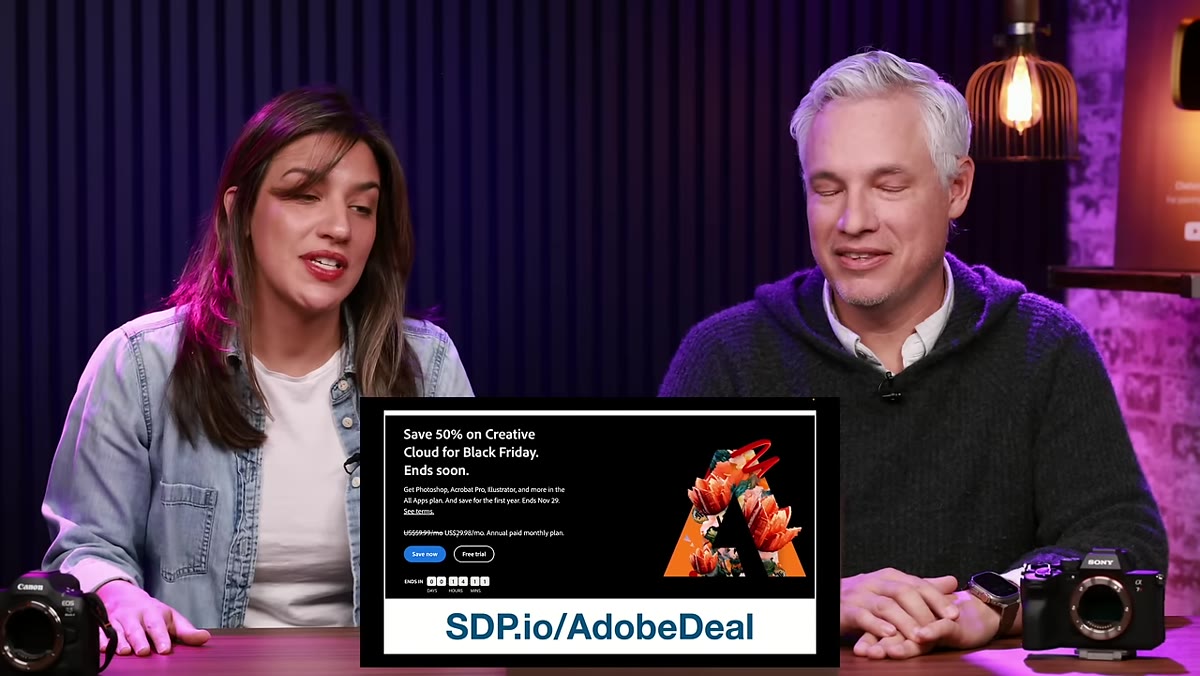
Speaking of Adobe, they’re also at 50 percent off during this window. Tony’s framing here is exactly right: if you’re going to pay Adobe anyway, pay them as little as possible. The deal lives at sdp.io/adobedeal. The key detail is that paying annually instead of month-to-month drops the per-month cost even further, so if you’re currently on a rolling monthly plan, this sale period is a good time to switch to annual billing and lock in the lower rate.
Adobe pricing page showing 50% off deal highlighted
Speaking of Adobe, they’re also at 50 percent off during this window. Tony’s framing here is exactly right: if you’re going to pay Adobe anyway, pay them as little as possible. The deal lives at sdp.io/adobedeal. The key detail is that paying annually instead of month-to-month drops the per-month cost even further, so if you’re currently on a rolling monthly plan, this sale period is a good time to switch to annual billing and lock in the lower rate.
I’ve gone back and forth on Adobe for years. It’s powerful, the ecosystem is tight, and if you’re already in it, switching has real costs in terms of time and muscle memory. But 50 percent off annual is genuinely the lowest entry point you’ll find, so if someone on your gift list is trying to break into photo editing, now is the time to help them start.
Step 5: Shop Sony Bodies, Especially the A7 III
 Sony A7 III product listing showing $1,150 price point
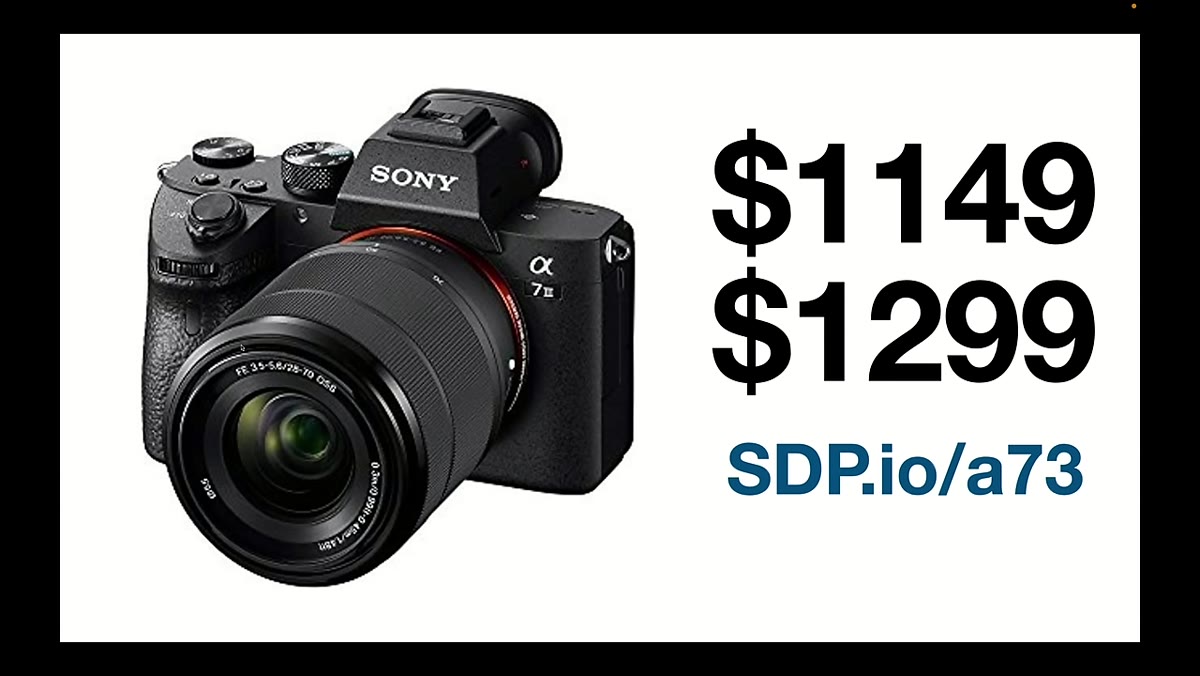
The Sony A7 III at $1,150 is the number that stopped me when Tony mentioned it. This camera won their camera of the year award and originally launched at $2,000. For a full-frame mirrorless body with excellent dynamic range, reliable autofocus, and broad lens compatibility, that price is hard to argue with. If you shoot portraits, landscapes, or any kind of event work and you’ve been sitting on the fence about going full-frame, this is a real entry point.
Sony A7 III product listing showing $1,150 price point
The Sony A7 III at $1,150 is the number that stopped me when Tony mentioned it. This camera won their camera of the year award and originally launched at $2,000. For a full-frame mirrorless body with excellent dynamic range, reliable autofocus, and broad lens compatibility, that price is hard to argue with. If you shoot portraits, landscapes, or any kind of event work and you’ve been sitting on the fence about going full-frame, this is a real entry point.
The A7R IV also gets a mention for under $2,000. That’s a 42-megapixel sensor, which matters if you’re doing large print work or need to crop heavily. Tony points out he held onto his A7R IV even when the R5 came out. That’s a useful data point: the camera still delivers at a level where an upgrade wasn’t worth it to someone who shoots for a living.
Step 6: Canon Full-Frame Options for Under $1,400
 Canon RP product listing at $661 on screen
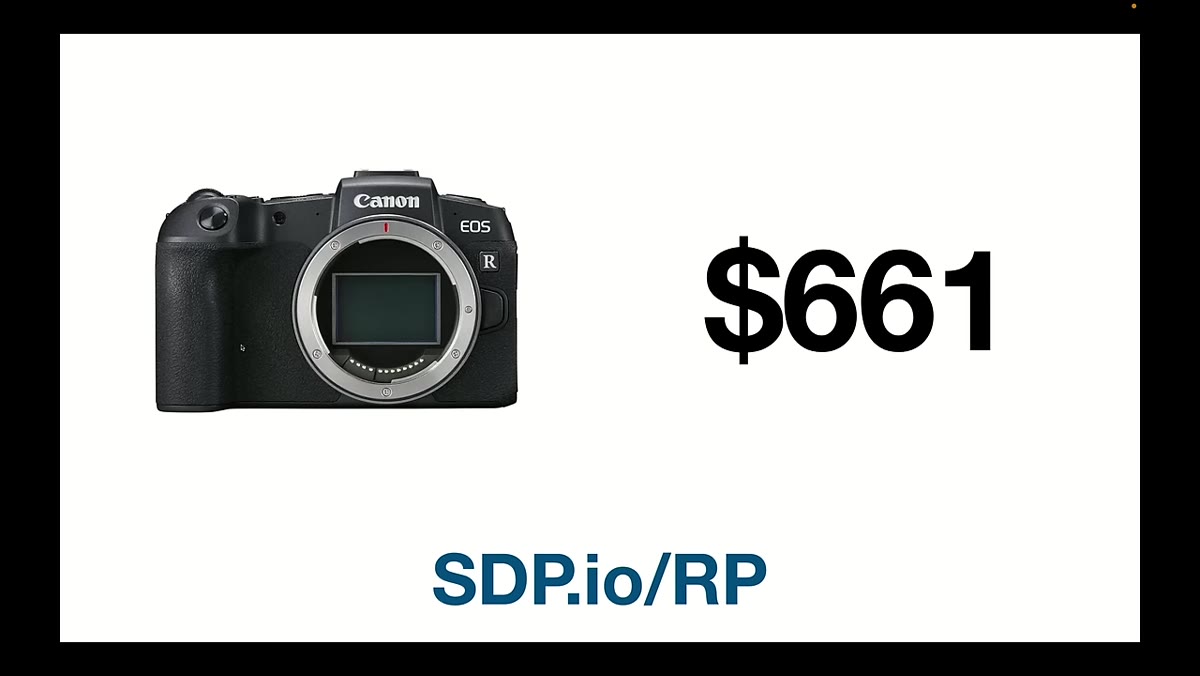
On the Canon side, the EOS RP at $661 is the headline. Full-frame sensor, used in Tony and Chelsea’s own studio setup, and at that price it undercuts most crop-sensor mid-range cameras while giving you the image quality step-up that comes with full frame. They’ve had three of them running since launch without issues. That’s the kind of long-term endorsement that matters more to me than any spec sheet.
Canon RP product listing at $661 on screen
On the Canon side, the EOS RP at $661 is the headline. Full-frame sensor, used in Tony and Chelsea’s own studio setup, and at that price it undercuts most crop-sensor mid-range cameras while giving you the image quality step-up that comes with full frame. They’ve had three of them running since launch without issues. That’s the kind of long-term endorsement that matters more to me than any spec sheet.
If you want something more current, the Canon R8 bundled with a 24-50mm lens for under $1,400 is a strong package for someone stepping up from a phone or entry-level camera. You get 4K video, solid autofocus, and a usable kit lens in one box. That’s a gift that doesn’t require the recipient to immediately spend more money to make it functional.
My Take: The Free Stuff Is the Real Deal
I’ve been burned before by Cyber Monday “deals” that were just noise. What makes this breakdown from Tony and Chelsea reliable is that they’re specific: exact prices, exact links, cameras they personally use. That tracks with how I try to write here too. The free photography buying guide is the move I’d make first regardless of budget. Knowing what you actually need before you spend is the only way to avoid the gear regret cycle that drains photographers every year.
The deals window is short. The Sony and Canon inventory especially won’t last at those prices. Pick your category, verify the current price at the link before you check out, and don’t let the sale create urgency for something you didn’t need before the banner appeared.
Watch the full tutorial on YouTube to hear Tony and Chelsea walk through all of this in their own words, including a few extra details on their own book and training deals that I didn’t cover here.
Comments
Leave a Comment