I run a spreadsheet comparing every budget lens I’ve ever tested. I’ve bought five tripods under $50 just to find the one worth recommending. I check deal sites before I make coffee in the morning. So when I tell you that gear obsession is one of the biggest traps in photography, I want you to know that’s coming from someone who is genuinely, professionally deep in the gear world. The question of whether new equipment actually improves your photos is one I get constantly from readers, and it’s one I’ve had to answer honestly for myself too.
In this Nigel Danson Q&A tutorial, Watch the full tutorial on YouTube, Danson fields a flood of gear-related questions from his audience and ends up giving one of the most grounded, practical answers I’ve seen from a working landscape photographer. Rather than just listing his kit, he digs into why we obsess over gear, where that obsession actually helps you, and where it quietly works against you. Here’s what he covers and how to apply it to your own shooting.
Step 1: Recognize Why We’re Obsessed With Gear in the First Place
 Danson explaining gear questions falling into two categories
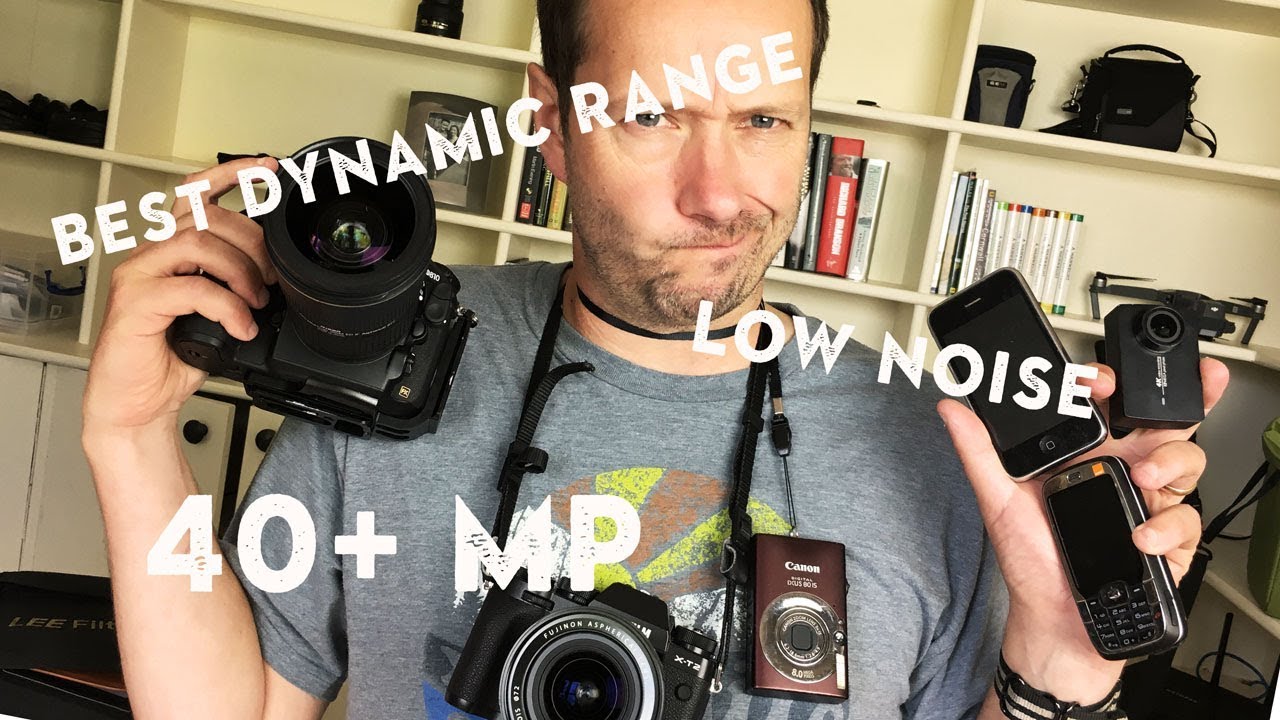
Danson noticed that nearly all the questions he received sorted themselves into two piles: questions about his creative process, and questions about technology. The gear pile was enormous. What camera, what lenses, what do you think of dynamic range on the new Canon? Sound familiar?
Danson explaining gear questions falling into two categories
Danson noticed that nearly all the questions he received sorted themselves into two piles: questions about his creative process, and questions about technology. The gear pile was enormous. What camera, what lenses, what do you think of dynamic range on the new Canon? Sound familiar?
Before you can fix a problem, you have to name it. The gear obsession isn’t irrational. It feels logical because better tools should produce better results. But photography is one of those skills where the tool and the operator are so intertwined that separating their contributions is almost impossible without a controlled test. That’s the trap.
Step 2: Look at What Exhibition Visitors Actually Respond To
 Danson describing his multi-camera photography exhibition
Danson ran an exhibition where prints came from a wide range of cameras: entry-level Nikons with around 3 megapixels, mid-range bodies, a 36-megapixel D800, and even an iPhone 5. He watched how visitors responded. They didn’t ask what camera he used. They responded to the images. The ones that connected, connected. The ones that didn’t, didn’t. Camera spec had nothing to do with it.
Danson describing his multi-camera photography exhibition
Danson ran an exhibition where prints came from a wide range of cameras: entry-level Nikons with around 3 megapixels, mid-range bodies, a 36-megapixel D800, and even an iPhone 5. He watched how visitors responded. They didn’t ask what camera he used. They responded to the images. The ones that connected, connected. The ones that didn’t, didn’t. Camera spec had nothing to do with it.
This is the exercise I’d recommend doing yourself: pull up your favorite shot you’ve ever taken and your least favorite. Now check the EXIF data on both. I’d bet the gap in quality has almost nothing to do with the body you used. The question shifts from “what camera made this good?” to “what decision made this good?”
Step 3: Understand the Two Things New Cameras Actually Improve
 Danson listing dynamic range and megapixels as the two key upgrades
Danson is careful not to say gear doesn’t matter at all. He’s specific: new camera generations improve two things. Dynamic range, meaning how much detail you recover in shadows and highlights. And megapixel count, meaning how large you can print or how aggressively you can crop.
Danson listing dynamic range and megapixels as the two key upgrades
Danson is careful not to say gear doesn’t matter at all. He’s specific: new camera generations improve two things. Dynamic range, meaning how much detail you recover in shadows and highlights. And megapixel count, meaning how large you can print or how aggressively you can crop.
Here’s the honest part. On dynamic range, modern sensors from most major brands are genuinely excellent. You’re not leaving significant image quality on the table with a three-year-old mid-range body. On megapixels, Danson makes a point I think about every time someone asks me about high-res cameras: if you need to crop heavily, the better fix is usually bringing the right lens, or nailing the composition in the first place. Extra megapixels are a safety net, not a strategy.
Step 4: Match Your Standards to Where Your Images Actually Live
 Danson referencing Instagram, Flickr, and social media image compression
Most images you take will be viewed on Instagram, Facebook, or a screen at 1080p resolution. The compression those platforms apply destroys fine detail. A photo from a $400 crop sensor camera and a photo from a $4,000 full-frame body will look functionally identical after Instagram is done with them. This is not a pessimistic take. It’s freeing.
Danson referencing Instagram, Flickr, and social media image compression
Most images you take will be viewed on Instagram, Facebook, or a screen at 1080p resolution. The compression those platforms apply destroys fine detail. A photo from a $400 crop sensor camera and a photo from a $4,000 full-frame body will look functionally identical after Instagram is done with them. This is not a pessimistic take. It’s freeing.
Danson points this out not to discourage you from caring about quality, but to reset where you actually invest your energy. If 95% of your images end up on social media, the thing that matters most is whether the composition stops someone mid-scroll. That’s a skill, not a spec.
Step 5: Shift Your Gear Focus to Lenses
 Danson pivoting to lenses as the gear choice that actually changes composition
If there’s one category of gear Danson says does change your photography, it’s lenses. Not because of resolution or sharpness tests, but because a lens physically changes what you can compose. A wide-angle lens lets you include foreground context. A telephoto compresses distance and isolates subjects. Choosing the wrong focal length isn’t a post-processing problem you can fix later.
Danson pivoting to lenses as the gear choice that actually changes composition
If there’s one category of gear Danson says does change your photography, it’s lenses. Not because of resolution or sharpness tests, but because a lens physically changes what you can compose. A wide-angle lens lets you include foreground context. A telephoto compresses distance and isolates subjects. Choosing the wrong focal length isn’t a post-processing problem you can fix later.
This is where I’d agree completely and add one thing: lens choice is also where the budget market has improved the most dramatically in the last five years. Third-party manufacturers like Sigma, Tamron, and TTArtisan have closed the gap with first-party glass on everything except autofocus speed and brand cachet. You can absolutely change how you see and compose with a $200 lens.
Step 6: Bring the Right Gear for the Job, Starting With What You Have
 Danson noting the best camera is the one you have with you
Danson’s practical conclusion is simple: the best gear is the gear you actually have with you. An iPhone photo beats no photo. But beyond that, think deliberately about what a specific shoot requires before you leave the house. Shooting wide landscapes? Pack the wide prime. Shooting wildlife or compressed mountain layers? Bring the telephoto. The planning is the skill.
Danson noting the best camera is the one you have with you
Danson’s practical conclusion is simple: the best gear is the gear you actually have with you. An iPhone photo beats no photo. But beyond that, think deliberately about what a specific shoot requires before you leave the house. Shooting wide landscapes? Pack the wide prime. Shooting wildlife or compressed mountain layers? Bring the telephoto. The planning is the skill.
This reframes gear decisions as intentional craft choices rather than prestige purchases. You don’t upgrade because a new camera exists. You ask whether your current kit is actually limiting a specific kind of shot you’re trying to make. Usually the answer is no.
What I’d Add: Run Your Own Blind Test
I did a version of this at a local photography meetup. I had people look at prints and try to identify which came from a $500 mirrorless and which came from a $2,000 body. Nobody got it right at a consistent rate. That experience changed how I write about gear. I stopped reviewing specs and started reviewing whether something actually changed what I could capture or how easily I could work.
If you’re on the fence about an upgrade, borrow the camera first. Most camera shops offer rentals. Shoot the same subjects you always shoot. Look at the results on your actual output medium, whether that’s Instagram or a 16x20 print. Then decide. You’ll have real data instead of spec sheet anxiety.
The single most important takeaway here is one Danson keeps returning to: the image quality gap between camera generations is shrinking, but the skill gap between photographers is not. Investing time in composition, light reading, and lens choice will outperform any sensor upgrade at almost any budget level.
Watch the full tutorial on YouTube to hear Danson walk through specific image examples and his full reasoning. It’s one of the more honest conversations about gear I’ve come across from a photographer at his level.
Comments (2)
The before and after really sells it. Incredible difference.
Finally someone explains this in a way that actually makes sense.
Leave a Comment