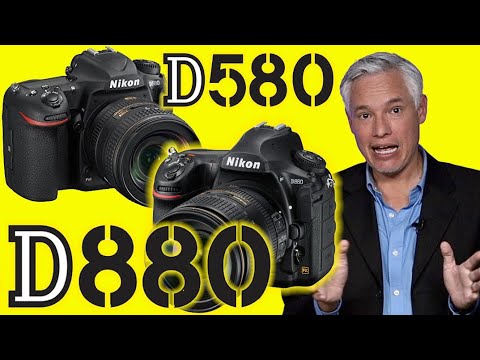
If you’re a Nikon shooter who hasn’t made the jump to mirrorless, you’ve probably felt the pressure. Every YouTube comment section, every photography forum, every gear podcast seems to be telling you that your DSLR is already obsolete. I’ve been covering budget gear long enough to know that “obsolete” is almost always marketing language dressed up as advice. And honestly? This leaked Nikon memo that Tony and Chelsea Northrup broke down recently made me feel vindicated on behalf of every F-mount shooter who just wants a solid upgrade without torching their lens collection.
Watch the full tutorial on YouTube
In this Tony and Chelsea Northrup video, Tony walks through what a leaked internal Nikon document suggests about two new DSLRs coming in 2021, and more importantly, he makes the case for why that actually makes sense strategically and practically. This isn’t hype. This is one of the more grounded takes I’ve seen on the mirrorless-versus-DSLR debate, and it has direct implications for how you should be thinking about your gear right now.
Step 1: Understand What the Leaked Memo Actually Says
 Breaking news title card about Nikon internal memo
The starting point here is simple: an internal Nikon memo was leaked suggesting two new DSLR cameras are planned for 2021. Tony doesn’t dramatize it. He uses it as a jumping-off point to ask a more important question: does this make sense given where Nikon’s user base actually sits? That framing is what makes this analysis worth your time. Before you react to any camera rumor, ask yourself who it’s actually for.
Breaking news title card about Nikon internal memo
The starting point here is simple: an internal Nikon memo was leaked suggesting two new DSLR cameras are planned for 2021. Tony doesn’t dramatize it. He uses it as a jumping-off point to ask a more important question: does this make sense given where Nikon’s user base actually sits? That framing is what makes this analysis worth your time. Before you react to any camera rumor, ask yourself who it’s actually for.
Step 2: Look at the Real Numbers Behind Nikon’s User Base
 Tony referencing camera sales data on screen
Tony references research he and Chelsea did roughly a year and a half before this video, digging into actual camera sales data rather than tech-enthusiast opinion. The finding: somewhere between 96 and 98 percent of Nikon shooters are still on DSLRs and using F-mount glass. That is not a rounding error. That is the overwhelming majority of Nikon’s customer base sitting on a system that hasn’t seen a meaningful mid-range update in years.
Tony referencing camera sales data on screen
Tony references research he and Chelsea did roughly a year and a half before this video, digging into actual camera sales data rather than tech-enthusiast opinion. The finding: somewhere between 96 and 98 percent of Nikon shooters are still on DSLRs and using F-mount glass. That is not a rounding error. That is the overwhelming majority of Nikon’s customer base sitting on a system that hasn’t seen a meaningful mid-range update in years.
When you’re reviewing budget gear, you learn quickly that most photographers aren’t early adopters. They buy a system, they invest in lenses, they get good at using it, and they don’t switch unless there’s a genuinely compelling reason. For the vast majority of Nikon users, that reason hasn’t arrived yet.
Step 3: Recognize the Practical Advantages DSLRs Still Hold
 Tony discussing wildlife and sports photography use cases
This is where Tony gets concrete, and it’s the section I’d recommend rewatching if you’re on the fence. He identifies two groups of enthusiast and professional shooters who have the most to gain from new DSLR bodies: wildlife photographers and sports photographers. Both groups cite the same things when they talk about why they haven’t switched.
Tony discussing wildlife and sports photography use cases
This is where Tony gets concrete, and it’s the section I’d recommend rewatching if you’re on the fence. He identifies two groups of enthusiast and professional shooters who have the most to gain from new DSLR bodies: wildlife photographers and sports photographers. Both groups cite the same things when they talk about why they haven’t switched.
First, optical viewfinder lag. Even on top-tier mirrorless bodies like the Sony A9 or the Canon R5, there is a perceptible delay in the electronic viewfinder. For tracking unpredictable moving subjects, that lag matters more than spec sheets suggest. Second, battery life. A mirrorless body will drain significantly faster than a DSLR during a long wildlife session or a full day of sports coverage, and that has real operational consequences.
Step 4: Understand Why New F-Mount Bodies Make Business Sense for Nikon
 Tony explaining Nikon’s short-term revenue strategy
Tony makes a point here that I think gets overlooked in most gear coverage: the business logic behind releasing new DSLRs is actually straightforward. Selling an upgrade to an existing DSLR user is a much easier transaction than convincing them to abandon their lens collection and learn a new system. The value proposition is clear, the risk to the buyer is low, and Nikon captures near-term revenue without cannibalizing its own mirrorless push.
Tony explaining Nikon’s short-term revenue strategy
Tony makes a point here that I think gets overlooked in most gear coverage: the business logic behind releasing new DSLRs is actually straightforward. Selling an upgrade to an existing DSLR user is a much easier transaction than convincing them to abandon their lens collection and learn a new system. The value proposition is clear, the risk to the buyer is low, and Nikon captures near-term revenue without cannibalizing its own mirrorless push.
From a deals and value perspective, this framing matters for buyers too. If Nikon releases a new mid-range DSLR, the previous generation bodies will drop in price quickly. That’s the pattern we see every single time a camera line gets refreshed. If you’ve been waiting to pick up a D7500 or a D500, a new body announcement is actually good news for your wallet even if you don’t buy the new one.
Step 5: Identify the Gaps Nikon Needs to Fill in Its DSLR Lineup
 Tony listing updated Nikon D6 and D780 on screen
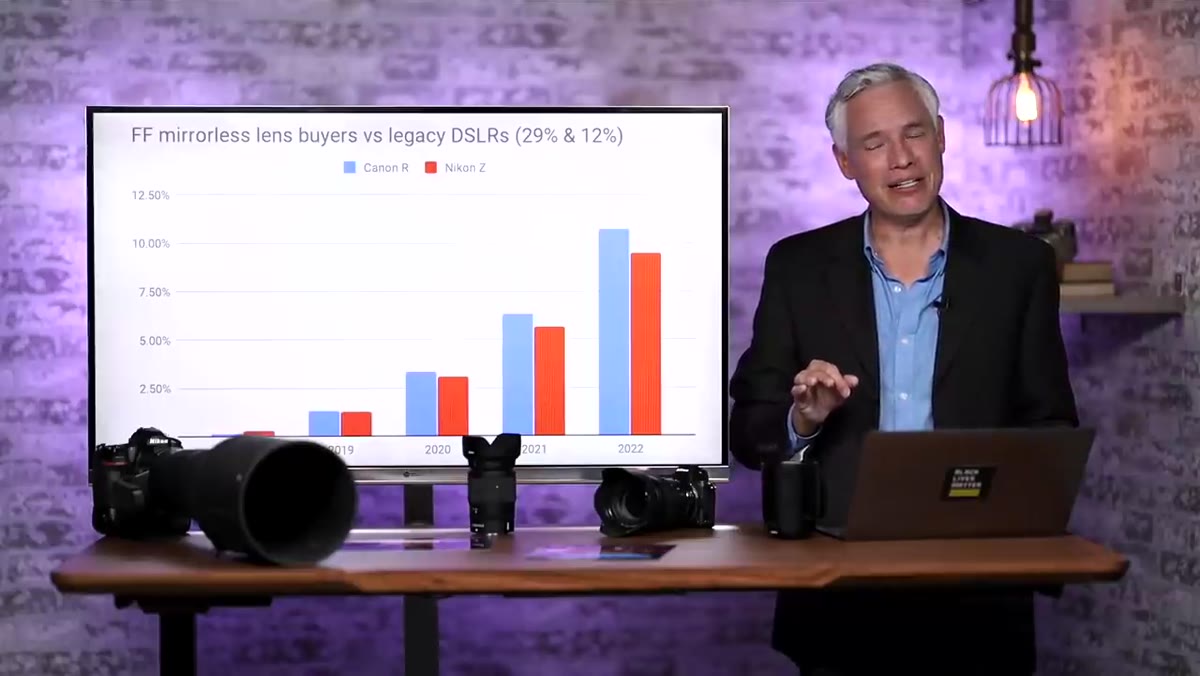
Tony points out that Nikon has already updated the D6 and the D780, which covers the top professional tier and the enthusiast full-frame slot. What’s missing is a refreshed crop-sensor body with modern features, specifically in-body image stabilization and smoother video autofocus, features that have become standard expectations in 2021 but are still absent from older F-mount bodies.
Tony listing updated Nikon D6 and D780 on screen
Tony points out that Nikon has already updated the D6 and the D780, which covers the top professional tier and the enthusiast full-frame slot. What’s missing is a refreshed crop-sensor body with modern features, specifically in-body image stabilization and smoother video autofocus, features that have become standard expectations in 2021 but are still absent from older F-mount bodies.
This is the gap that matters most to the majority of Nikon’s user base, because the majority of that user base isn’t shooting with a D6. They’re shooting with a D7200, a D7500, or an aging D500, and they want a reason to upgrade without switching systems entirely.
My Take: Don’t Let the Mirrorless Narrative Bully You Into a Purchase You Don’t Need
I’ve done enough gear comparisons to know that the gap between a well-used older system and a brand-new one is almost always smaller than the internet wants you to believe. I once ran a blind test at a local photography meetup where nobody could reliably identify which shots came from a $500 body versus a $2,000 one. Technique was the variable that mattered. System familiarity was the variable that mattered.
If you’re a Nikon F-mount shooter who’s happy with your glass and your workflow, the news of new DSLRs should be genuinely exciting, not a consolation prize. Nikon updating the lineup is a signal that F-mount isn’t being abandoned, it’s being maintained. And if you’re shopping right now, this is exactly the kind of rumor cycle that creates real deals on the previous generation. Set a price alert, be patient, and let the announcement do the work of pushing prices down.
The single most important takeaway from Tony’s breakdown is this: don’t let the mirrorless momentum pressure you into a system switch that doesn’t solve a real problem you actually have. New technology is only worth buying when it removes a specific friction from your shooting. If your DSLR isn’t creating friction, a new F-mount body with incremental improvements is almost certainly the smarter investment.
Watch the full tutorial on YouTube for Tony’s complete analysis, including his specific predictions on which body slots Nikon is likely to fill first.
Comments
Leave a Comment