There’s a particular kind of photographer paralysis that hits right before you pick up a film camera for the first time. You want the perfect starter body, the right film stock, the ideal first roll subject. You research until the momentum dies. I did exactly this when I first started poking around the analog world, cross-referencing every budget 35mm recommendation on three different forums before I ever touched a shutter. What I actually needed was someone to just start talking, out loud, without a polished script.
That’s what Watch the full tutorial on YouTube delivers. In this Mango Street episode of their “Analog Discussions” series, Rachel and Daniel use Esther Perel’s conversation card game “Where Should We Begin?” as a jumping-off point to get genuinely candid about their personal histories, creative habits, and the messy inner life that shapes how they make work. It sounds low-stakes. It isn’t. For photographers who have been treating gear acquisition as a substitute for actual creative development, this episode functions like a mirror.
The format is deceptively instructive. Two working creatives, no pre-planned answers, questions pulled at random. What comes out is a masterclass in being honest with yourself about why you make the choices you make, including the ones that have nothing to do with f-stops. Here’s how to actually use this episode as a practical exercise rather than just background noise.
Step 1: Pull a Random Prompt and Answer It Out Loud Before You Edit Yourself
 Rachel and Daniel drawing a conversation card from the deck
The game works because neither participant knows what’s coming. That randomness is the whole mechanism. Rachel draws first and gets a prompt about secrets kept from parents. She answers immediately, without hedging into something safe. The instinct to filter is exactly what this exercise is designed to short-circuit.
Rachel and Daniel drawing a conversation card from the deck
The game works because neither participant knows what’s coming. That randomness is the whole mechanism. Rachel draws first and gets a prompt about secrets kept from parents. She answers immediately, without hedging into something safe. The instinct to filter is exactly what this exercise is designed to short-circuit.
Try this yourself before your next shoot. Pull a random journaling prompt, a conversation card, anything with a question you didn’t write yourself, and answer it out loud or on paper without stopping to curate. You’ll surface assumptions about your own creative identity that you didn’t know were sitting there. Those assumptions are often what’s actually driving your gear choices, your subject matter, your editing style.
Step 2: Identify Which Creative Relationships Actually Shape Your Work
 Daniel reflecting on family dynamics and shared interests
Daniel’s response to the prompt about which family members he relates to most leads somewhere genuinely interesting. He maps out shared interests between his parents and siblings, then locates himself in that web. It’s not navel-gazing. It’s pattern recognition about influence.
Daniel reflecting on family dynamics and shared interests
Daniel’s response to the prompt about which family members he relates to most leads somewhere genuinely interesting. He maps out shared interests between his parents and siblings, then locates himself in that web. It’s not navel-gazing. It’s pattern recognition about influence.
Sit down and do a version of this for your photography. Who are the three or four people whose taste you actually trust? Not whose work you admire from a distance, but whose opinion would genuinely change how you look at an image you made. Those are your real creative relationships. Knowing them explicitly changes how you seek feedback and how you process it.
Step 3: Surface the Grudges That Are Costing You Creative Energy
 Rachel laughing while drawing the grudge prompt card
Rachel’s grudge segment is the funniest part of the video, but underneath it is something worth taking seriously. She describes carrying frustration about being misread, specifically about her age, across multiple separate encounters. Each incident compounds the last. By the time she’s done describing it, you realize she’s been carrying low-grade resentment that was genuinely affecting her relationship to those spaces.
Rachel laughing while drawing the grudge prompt card
Rachel’s grudge segment is the funniest part of the video, but underneath it is something worth taking seriously. She describes carrying frustration about being misread, specifically about her age, across multiple separate encounters. Each incident compounds the last. By the time she’s done describing it, you realize she’s been carrying low-grade resentment that was genuinely affecting her relationship to those spaces.
Photographers do this constantly. You’re still annoyed that a forum dismissed your kit lens. You’re still sour about a client who didn’t value your work. Those grudges take up mental bandwidth you could be putting toward actually making images. Writing them down and naming them explicitly, the way Rachel does here, is a practical way to stop them from running silently in the background.
Step 4: Practice Being Honest About What You Actually Believe vs. What You Perform
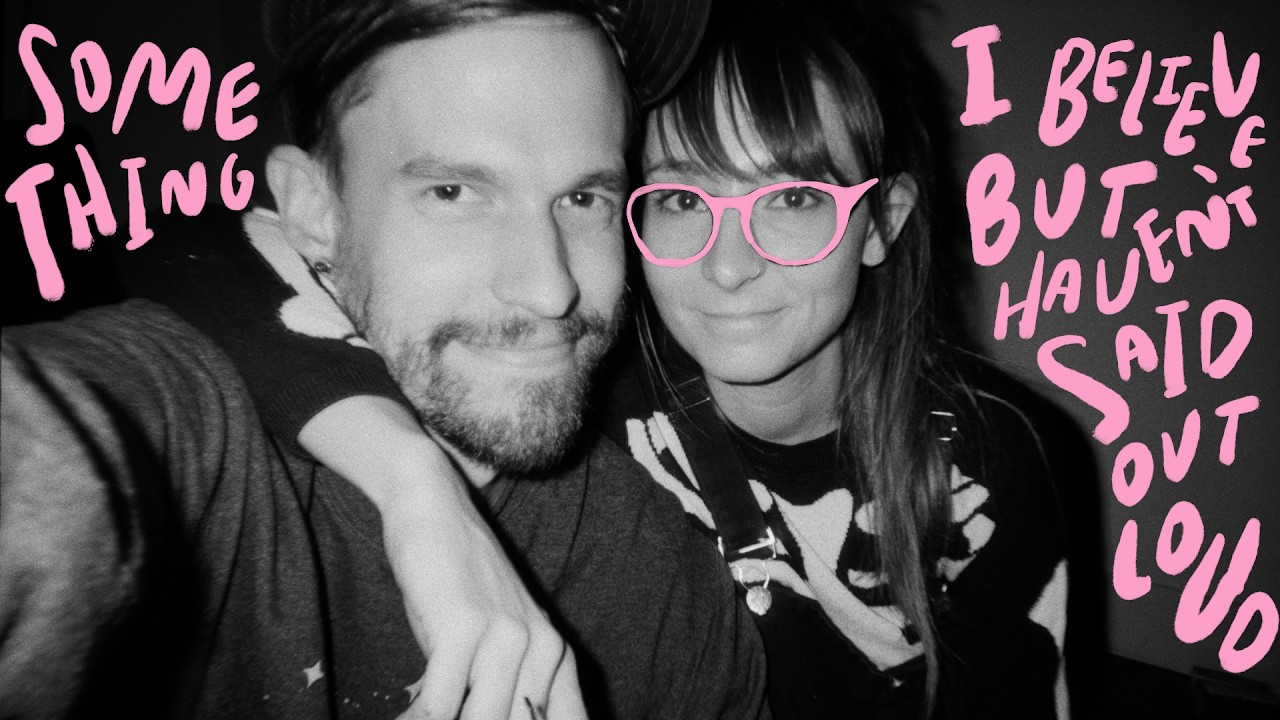
 Opening card prompts flashing on screen including “something I believe but haven’t said aloud”
One of the card prompts shown in the opening montage is “something I believe but haven’t said aloud.” That prompt doesn’t get a full answer on camera, but it’s the one I kept coming back to. Most photographers have a version of this. A belief about their own work that they haven’t admitted to themselves, let alone said publicly. Maybe it’s that you actually prefer shooting on a phone to your DSLR. Maybe it’s that you’ve been buying gear to feel like a photographer without putting in the hours to become one.
Opening card prompts flashing on screen including “something I believe but haven’t said aloud”
One of the card prompts shown in the opening montage is “something I believe but haven’t said aloud.” That prompt doesn’t get a full answer on camera, but it’s the one I kept coming back to. Most photographers have a version of this. A belief about their own work that they haven’t admitted to themselves, let alone said publicly. Maybe it’s that you actually prefer shooting on a phone to your DSLR. Maybe it’s that you’ve been buying gear to feel like a photographer without putting in the hours to become one.
Write down the thing you believe about your own photography that you haven’t said out loud yet. One sentence is enough. This isn’t therapy homework, it’s a diagnostic. Knowing the honest answer changes what you do next.
Step 5: Use Unscripted Conversation as a Scouting Tool for Your Own Voice
 Rachel and Daniel greeting each other casually before drawing cards
What Mango Street is modeling here, maybe without fully stating it, is that your most authentic creative voice comes out in unscripted moments. Rachel’s reaction to the Pilates instructor story is funnier and more specific than anything you’d write with an outline in front of you. That specificity is what makes content or conversation actually stick.
Rachel and Daniel greeting each other casually before drawing cards
What Mango Street is modeling here, maybe without fully stating it, is that your most authentic creative voice comes out in unscripted moments. Rachel’s reaction to the Pilates instructor story is funnier and more specific than anything you’d write with an outline in front of you. That specificity is what makes content or conversation actually stick.
If you’re trying to build an audience around your photography, whether through a blog, a YouTube channel, or even just a newsletter, record yourself talking about your work without notes for five minutes. Don’t edit the transcript. Read it back. The sentences that feel embarrassingly casual are usually the ones that sound most like an actual human being.
What I’d Add From My Own Experience
The one thing this episode doesn’t explicitly address is how to apply this kind of self-awareness to gear decisions, which is where I live professionally. I’ve been reviewing budget cameras and lenses long enough to know that most bad gear purchases are emotional decisions dressed up in spec comparisons. Someone buys the $800 body when the $300 one would do the job, because the $800 one feels like a signal that they’re serious. Doing the kind of honest self-interrogation that Rachel and Daniel model here, naming what you actually believe, who you’re actually influenced by, what resentments you’re carrying, helps you spot when you’re buying gear to solve a psychological problem instead of a photographic one.
I started with a $300 camera kit and shot a wedding that ended up in a local magazine. The camera didn’t make that happen. The willingness to just start did. This episode is fundamentally about that same thing, starting before you’re ready, talking before you’ve edited yourself into something safe.
The single most important thing this video teaches is that clarity about your own creative identity isn’t a prerequisite for starting. It’s what you build by starting. Pick up the camera. Draw the card. Answer the question before you’ve had time to make it sound good.
Watch the full tutorial on YouTube and see how Rachel and Daniel model this in real time. It’s one of the more honest pieces of creative conversation you’ll find from a photography channel this size.
Comments
Leave a Comment