
I track deals and gear rumors the same way some people track stock prices - obsessively, before coffee, with a spreadsheet already open. So when a video lands in my feed with the words “Sony a7C II leaked,” I’m not watching it for entertainment. I’m watching it to figure out what drops in price next, what’s worth preordering, and what the news actually means for photographers who aren’t dropping $4,000 on a body just to flex. This Tony & Chelsea Northrup tutorial covers a cluster of Sony news items that dropped close together, and there’s more substance here than the headline suggests. Watch the full tutorial on YouTube
What caught my attention wasn’t just the a7C II leak. It was the combination of stories, because they all point in the same direction. Sony is repositioning. They’re moving manufacturing, refreshing lens lineups through partners like Sigma, and apparently launching satellites. If you’re trying to figure out where to put your money in the next twelve months, this kind of pattern matters more than any single product announcement.
Here’s a step-by-step breakdown of everything covered, in the order it appears, with enough context to actually act on it.
Step 1: Understand Why Sony Is Shifting Manufacturing Away From China
 Map or factory footage showing Sony Thailand production facility
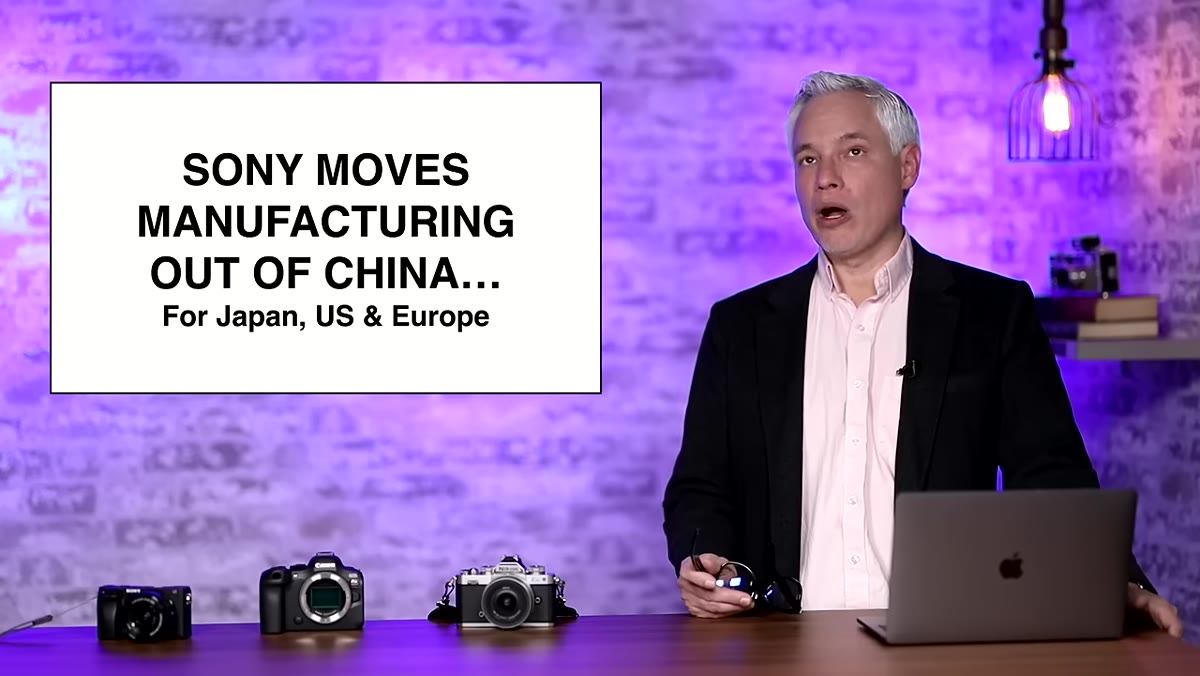
Sony is moving a significant portion of its manufacturing to a facility in Thailand. The cameras built there will be sold in Japan, Europe, and the United States. China-based manufacturing continues, but it’s now focused on cameras destined for the Chinese domestic market. This isn’t a dramatic overnight pivot - it’s a calculated hedge.
Map or factory footage showing Sony Thailand production facility
Sony is moving a significant portion of its manufacturing to a facility in Thailand. The cameras built there will be sold in Japan, Europe, and the United States. China-based manufacturing continues, but it’s now focused on cameras destined for the Chinese domestic market. This isn’t a dramatic overnight pivot - it’s a calculated hedge.
The practical reasons are worth understanding if you care about supply chain stability. Past disasters, including fires and floods at manufacturing facilities, have delayed product launches by months. Splitting production across locations reduces that risk. But the bigger driver is almost certainly tariff exposure. Digital still cameras don’t currently face the same tariff pressure as other Chinese exports, but that could change. Sony isn’t waiting to find out. As a buyer, this is worth knowing because it signals Sony is planning for long-term stability, not just short-term cost cuts - and stable supply chains usually mean more consistent pricing and availability for us.
Step 2: Don’t Confuse Sony’s China Move With Nikon’s Situation
 News headline or on-screen text about Nikon China manufacturing risk
Some reporting framed Sony’s manufacturing shift as bad news for Nikon. The reasoning being that Nikon still relies heavily on Chinese manufacturing. Tony pushes back on that interpretation, and I think he’s right to do so.
News headline or on-screen text about Nikon China manufacturing risk
Some reporting framed Sony’s manufacturing shift as bad news for Nikon. The reasoning being that Nikon still relies heavily on Chinese manufacturing. Tony pushes back on that interpretation, and I think he’s right to do so.
The real risk for Nikon isn’t their camera production. It’s a completely separate business division. Nikon makes semiconductor manufacturing equipment, and there are active restrictions on shipping that type of equipment to China. That’s a meaningful business problem for Nikon as a company, but it’s unlikely to affect camera supply or pricing in any direct way. If you’ve been hearing doom-and-gloom about Nikon availability, take it with some skepticism. The headline risk and the actual camera-buyer risk are not the same thing.
Step 3: Pay Attention to Sigma’s February 7th Lens Announcement
 Sigma teaser image or countdown graphic for February 7th reveal
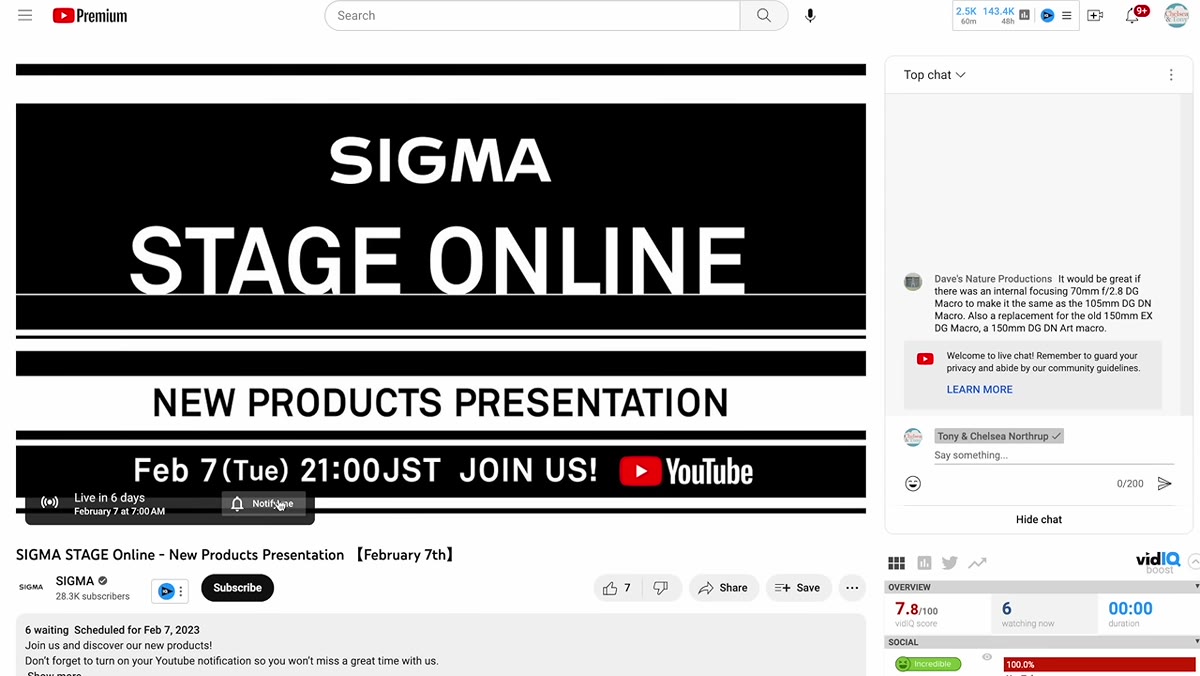
Sigma released a teaser for a new lens with a reveal date of February 7th. At the time of filming, nothing had been officially confirmed, but Sony Alpha Rumors was pointing toward a native E-mount 50mm f/1.4. That’s a meaningful distinction from the 50mm f/1.4 Sigma already sells, which is essentially a DSLR lens with a mirrorless adapter built into the mount.
Sigma teaser image or countdown graphic for February 7th reveal
Sigma released a teaser for a new lens with a reveal date of February 7th. At the time of filming, nothing had been officially confirmed, but Sony Alpha Rumors was pointing toward a native E-mount 50mm f/1.4. That’s a meaningful distinction from the 50mm f/1.4 Sigma already sells, which is essentially a DSLR lens with a mirrorless adapter built into the mount.
Sigma has been systematically rebuilding their lineup with lenses designed natively for mirrorless, and based on what’s been tested across that refresh, the quality bump is real. If you’re shooting Sony and you’ve been eyeing a fast 50mm, this announcement is worth tracking. Native mirrorless designs typically autofocus faster and more reliably than adapted glass. Given where Sigma prices their lenses relative to Sony’s own glass, this could land as a serious value option.
Step 4: The Sony a7C II Leak - What It Is and Why It Was Predictable
 Sony a7C II leaked image or Sony Alpha Rumors screenshot
Sony Alpha Rumors leaked the Sony a7C Mark II, which Tony notes was one of the more predictable camera announcements you could make. The original a7C was essentially the A7 III hardware crammed into a smaller, more compact, and honestly more attractive body. It came with retro styling options and appealed to people who wanted Sony’s full-frame performance without the bulk.
Sony a7C II leaked image or Sony Alpha Rumors screenshot
Sony Alpha Rumors leaked the Sony a7C Mark II, which Tony notes was one of the more predictable camera announcements you could make. The original a7C was essentially the A7 III hardware crammed into a smaller, more compact, and honestly more attractive body. It came with retro styling options and appealed to people who wanted Sony’s full-frame performance without the bulk.
The a7C Mark II follows the same logic, and the likely move is that it will do for the A7 IV what the original a7C did for the A7 III. That means current-generation sensor and autofocus in a travel-friendly form factor. For anyone considering the A7 IV at full price, this announcement is a reason to wait and see. And for anyone currently on the fence between Sony and Fuji, this is the camera Sony is throwing directly at that competition.
Step 5: Read the a7C II as Sony’s Direct Answer to Fujifilm
 Side-by-side comparison or Fujifilm camera reference on screen
Tony frames the a7C line as Sony’s strategic move against Fujifilm, which has built its entire brand identity around compact, stylish cameras with tactile controls and a community that genuinely loves shooting them. Fuji doesn’t have full-frame, and that used to matter less. Now Sony is coming at them with a full-frame body that’s small, good-looking, and increasingly surrounded by compact lens options.
Side-by-side comparison or Fujifilm camera reference on screen
Tony frames the a7C line as Sony’s strategic move against Fujifilm, which has built its entire brand identity around compact, stylish cameras with tactile controls and a community that genuinely loves shooting them. Fuji doesn’t have full-frame, and that used to matter less. Now Sony is coming at them with a full-frame body that’s small, good-looking, and increasingly surrounded by compact lens options.
The compact lens point is easy to underestimate. A small body paired with a large, heavy lens isn’t actually a small kit. Sony has been quietly building out compact primes and zooms specifically to complement the a7C body. If you’ve written off Sony full-frame as too bulky for travel or street shooting, the a7C II paired with Sony’s newer compact glass changes that calculation in a real way.
My Take: The Budget Angle Nobody’s Talking About Yet
I’ll be direct about what I’m watching here. When the a7C II officially launches, the original a7C is going to drop in price. It already trades well below its launch price, and a successor announcement will push it lower. If you want Sony full-frame performance in a compact body and you’re not attached to the very latest specs, the window to buy an original a7C at a great price is opening up.
I’ve run this pattern enough times with other cameras to trust it. New announcement, previous generation dips, deals appear in the used and refurbished market within weeks. I’ll have my alert set. If you want to do the same, B&H and Adorama both let you set price drop notifications, and KEH is worth checking for certified used bodies once the secondary market responds.
The single most important thing to take from all of this is that Sony is not slowing down. They’re managing supply chain risk, refreshing their lens ecosystem through Sigma, and launching a camera designed to win buyers from Fuji and Micro Four Thirds. If you’ve been sitting on a decision about which system to invest in, these moves tell you Sony is building for the long run, not coasting.
Watch the full tutorial on YouTube to hear Tony and Chelsea work through all of it in real time, including their take on the satellite launch, which is genuinely wild.
Comments
Leave a Comment