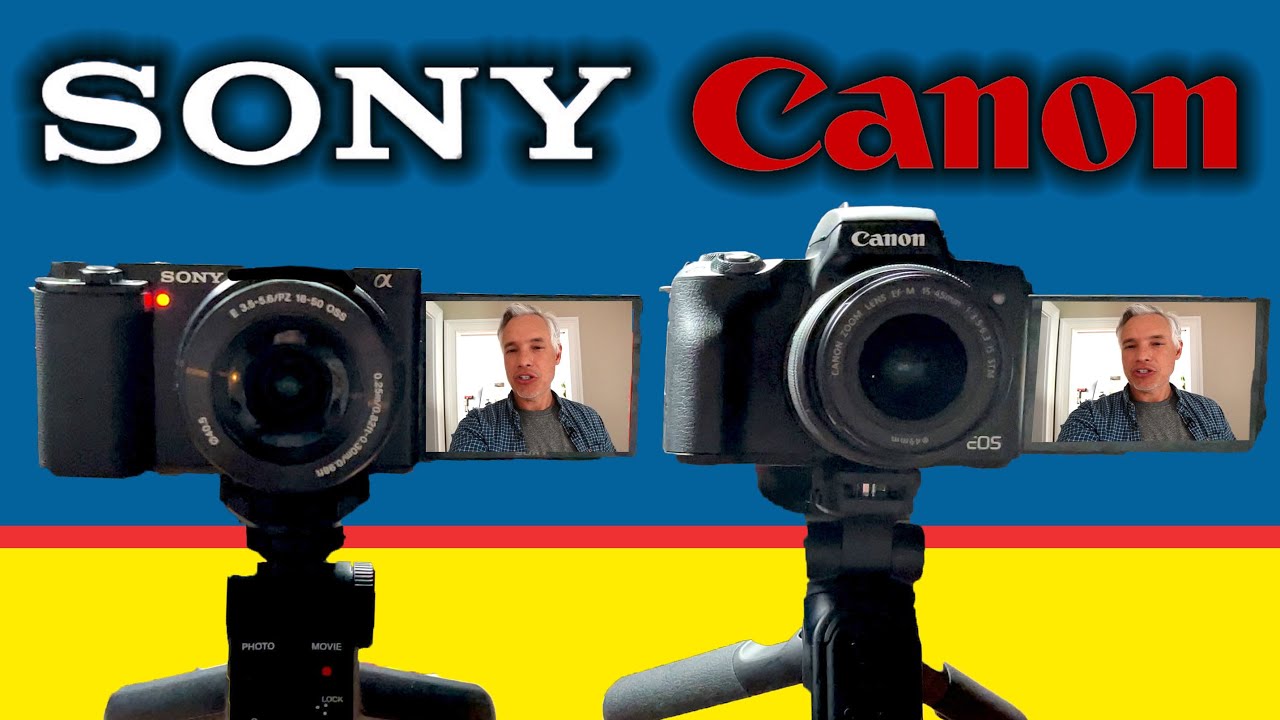
Every few months a new camera drops and my inbox fills up with the same question: “Should I switch?” I get it. I’ve been there. I still remember agonizing over my first real camera body upgrade and wondering whether the extra $200 would actually show up in my footage or just in my credit card statement. The Sony ZV-E10 has been generating that exact conversation since it launched, especially among Canon M50 users who’ve built their whole setup around that camera.
Watch the full tutorial on YouTube
In this Tony and Chelsea Northrup tutorial, Tony runs the ZV-E10 and the M50 through a side-by-side comparison that actually answers the upgrade question with real tests instead of spec-sheet flexing. What I found useful is that the framework he uses maps almost perfectly onto how I evaluate budget gear: price first, then audio, then usability, then video quality. That order matters. Most reviewers bury the price conversation at the end, after they’ve already made you want the thing. Tony flips it, which is the right call.
Step 1: Start With the Price Gap, Not the Feature Gap
 Tony holding both cameras with price figures on screen
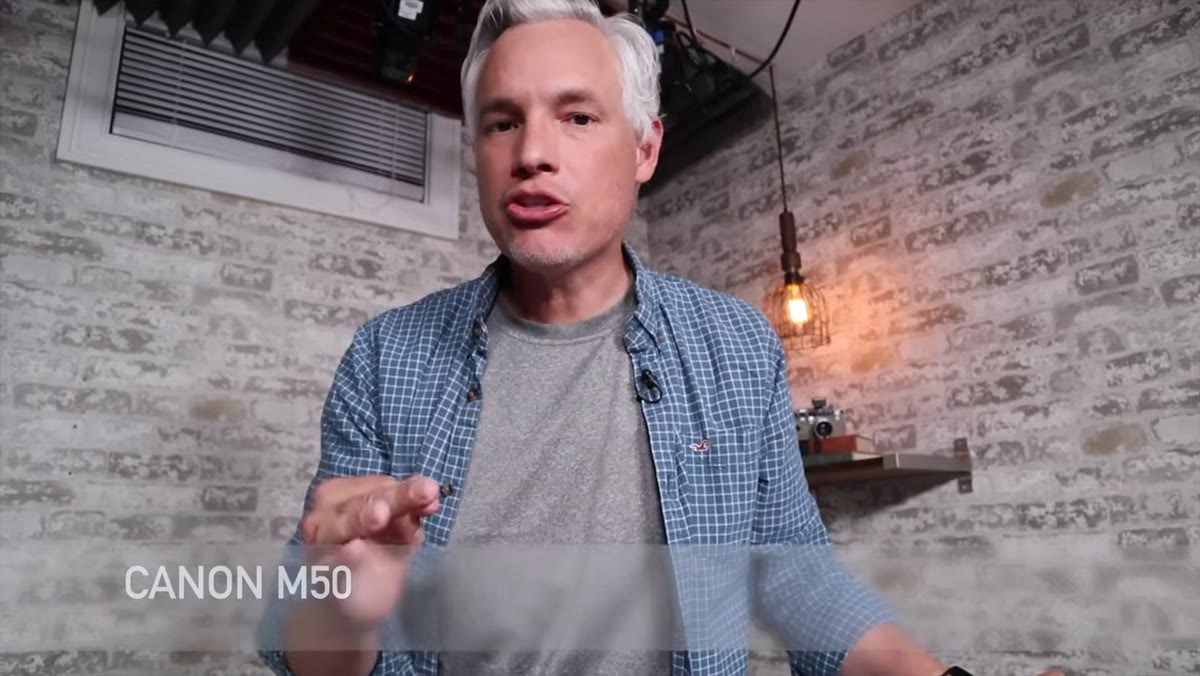
Before you even touch the cameras, get the numbers straight. The Sony ZV-E10 with its kit lens runs around $800. The Canon M50 with a comparable kit lens sits closer to $550. That is a $250 difference, and for a lot of vloggers starting out, $250 is a lens, a microphone, or several months of a software subscription. The M50 Mark II has since entered the picture and closes the gap in some areas, so factor that into your shopping if you’re doing this research now. Know what you’re actually comparing before you fall in love with either camera.
Tony holding both cameras with price figures on screen
Before you even touch the cameras, get the numbers straight. The Sony ZV-E10 with its kit lens runs around $800. The Canon M50 with a comparable kit lens sits closer to $550. That is a $250 difference, and for a lot of vloggers starting out, $250 is a lens, a microphone, or several months of a software subscription. The M50 Mark II has since entered the picture and closes the gap in some areas, so factor that into your shopping if you’re doing this research now. Know what you’re actually comparing before you fall in love with either camera.
Step 2: Test the Internal Microphone Back to Back
 Split-screen audio waveform comparison between both cameras
This is the step most comparison videos skip or treat as a throwaway. Tony records direct audio from both internal mics and plays them side by side. The Sony’s internal mic is noticeably cleaner and more sophisticated than the Canon’s. That matters more than it sounds. Even if you plan to use an external mic for your main audio, internal mic quality affects your scratch audio during multi-camera shoots. If you’re syncing clips in post, that scratch track needs to be usable. The Sony earns a clear point here, and for solo vloggers who want to travel light, it raises a real question about whether you even need an external mic at the start.
Split-screen audio waveform comparison between both cameras
This is the step most comparison videos skip or treat as a throwaway. Tony records direct audio from both internal mics and plays them side by side. The Sony’s internal mic is noticeably cleaner and more sophisticated than the Canon’s. That matters more than it sounds. Even if you plan to use an external mic for your main audio, internal mic quality affects your scratch audio during multi-camera shoots. If you’re syncing clips in post, that scratch track needs to be usable. The Sony earns a clear point here, and for solo vloggers who want to travel light, it raises a real question about whether you even need an external mic at the start.
Step 3: Check Minimum Focusing Distance With the Kit Lens
 Canon M50 lens focused close-up on a small object
This one surprised me when Tony demonstrated it. The Canon M50’s kit lens gets much closer to a subject than the Sony’s kit equivalent. If you shoot anything detailed up close, product reviews, makeup content, food, small gear, this is a genuine limitation of the Sony out of the box. The Canon’s minimum focusing distance gives it a practical advantage that never shows up in spec comparisons because nobody puts it in the headline numbers. If your content involves showing small things clearly, the cheaper Canon actually does the job better with the included glass.
Canon M50 lens focused close-up on a small object
This one surprised me when Tony demonstrated it. The Canon M50’s kit lens gets much closer to a subject than the Sony’s kit equivalent. If you shoot anything detailed up close, product reviews, makeup content, food, small gear, this is a genuine limitation of the Sony out of the box. The Canon’s minimum focusing distance gives it a practical advantage that never shows up in spec comparisons because nobody puts it in the headline numbers. If your content involves showing small things clearly, the cheaper Canon actually does the job better with the included glass.
Step 4: Evaluate the Hot Shoe Ecosystem for External Audio
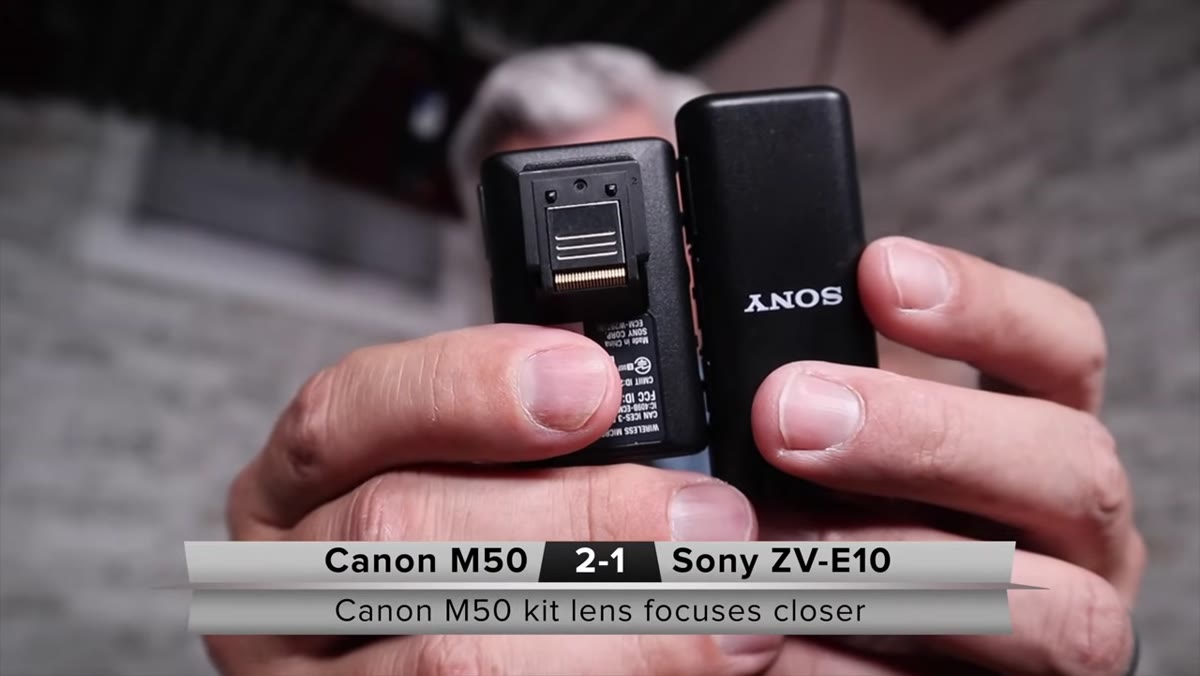 Sony wireless lav system clipped to hot shoe with no cables
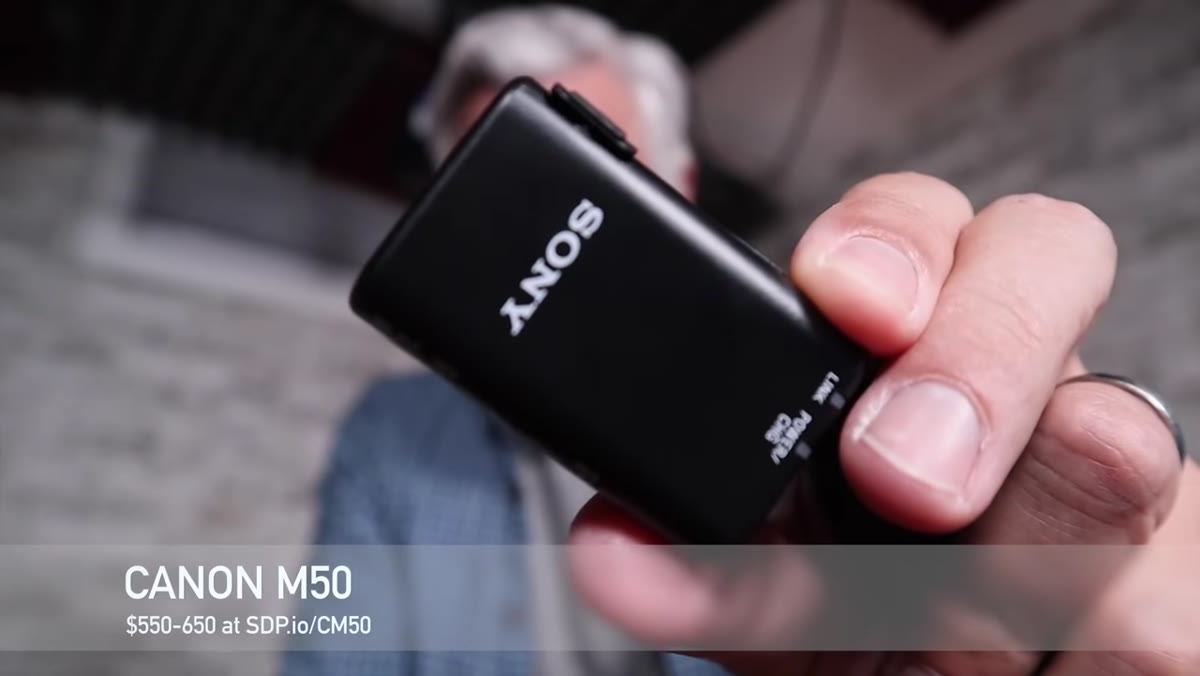
The Sony ZV-E10 supports Sony’s digital audio accessories through the multi-interface hot shoe. What that means in practice is that compatible mics and wireless lav systems connect directly to the camera body with no cables and no external battery required. Tony demonstrates this with a wireless lav setup where the receiver clips into the hot shoe and the transmitter clips onto your clothing. The whole system is compact, discreet, and eliminates two of the most common failure points in any audio rig: loose cables and dead batteries. If you’ve ever lost a take because a TRS cable worked itself out of a socket mid-recording, you understand immediately why this matters.
Sony wireless lav system clipped to hot shoe with no cables
The Sony ZV-E10 supports Sony’s digital audio accessories through the multi-interface hot shoe. What that means in practice is that compatible mics and wireless lav systems connect directly to the camera body with no cables and no external battery required. Tony demonstrates this with a wireless lav setup where the receiver clips into the hot shoe and the transmitter clips onto your clothing. The whole system is compact, discreet, and eliminates two of the most common failure points in any audio rig: loose cables and dead batteries. If you’ve ever lost a take because a TRS cable worked itself out of a socket mid-recording, you understand immediately why this matters.
Step 5: Understand Why Cable-Free Audio Is a Reliability Argument, Not a Convenience Argument
 Close-up of cable connection point on external microphone
Tony makes a point here that I want to underline because it’s easy to dismiss as a luxury concern. Cables fail. Mic batteries die. These aren’t edge cases. They are inevitable events that happen to every working shooter eventually, and they always happen at the worst possible moment. The Sony’s ecosystem reduces those failure points structurally. On the Canon side, you can still monitor audio levels on screen, but the integration isn’t as tight. For anyone shooting solo, where you can’t have a second person watching your audio meters, fewer failure points is worth real money.
Close-up of cable connection point on external microphone
Tony makes a point here that I want to underline because it’s easy to dismiss as a luxury concern. Cables fail. Mic batteries die. These aren’t edge cases. They are inevitable events that happen to every working shooter eventually, and they always happen at the worst possible moment. The Sony’s ecosystem reduces those failure points structurally. On the Canon side, you can still monitor audio levels on screen, but the integration isn’t as tight. For anyone shooting solo, where you can’t have a second person watching your audio meters, fewer failure points is worth real money.
Step 6: Weigh the Ecosystem Lock-In Before You Buy
 Sony multi-interface hot shoe accessories lined up
Here’s the part of the conversation that doesn’t get enough attention. When you commit to the Sony ZV-E10 partly because of the digital audio ecosystem, you’re also committing to Sony-compatible accessories. Those wireless lavs and digital shotgun mics aren’t cheap, and they don’t play nicely with a Canon body if you ever switch. The Canon M50 uses a standard 3.5mm input, which means it works with essentially any microphone on the market. Flexibility has value, especially if you’re early in building your kit and still figuring out what you actually need.
Sony multi-interface hot shoe accessories lined up
Here’s the part of the conversation that doesn’t get enough attention. When you commit to the Sony ZV-E10 partly because of the digital audio ecosystem, you’re also committing to Sony-compatible accessories. Those wireless lavs and digital shotgun mics aren’t cheap, and they don’t play nicely with a Canon body if you ever switch. The Canon M50 uses a standard 3.5mm input, which means it works with essentially any microphone on the market. Flexibility has value, especially if you’re early in building your kit and still figuring out what you actually need.
My Take: The $250 Question Is Really a Workflow Question
I’ve spent a lot of time with cameras in this price range, and the honest truth is that the footage quality gap between the ZV-E10 and the M50 is not what makes or breaks your YouTube channel. What breaks your channel is bad audio, missed focus, and workflow friction that slows down your upload schedule. So the real question isn’t which camera is technically better. It’s which camera fits how you actually shoot. If you’re a solo vlogger who wants to simplify your audio setup and you’re willing to invest in the Sony accessory ecosystem over time, the ZV-E10 is a smart long-term play. If you’re just starting out, shooting varied content, and not ready to lock into one brand’s accessories, the M50 at $550 leaves you budget for things that will improve your videos faster than a camera upgrade will.
The single most important takeaway here is that price and ecosystem fit should come before feature lists when you’re comparing cameras in this range. Neither camera is going to be the reason your channel grows. But buying the wrong one for your workflow could be the reason your upload consistency suffers while you’re working around its limitations.
Watch the full tutorial on YouTube to see Tony’s full side-by-side audio and video comparisons, including the real-world footage tests that give you a much clearer picture than spec sheets ever will.
Comments (3)
I've been looking for exactly this kind of tutorial. Perfect timing.
Printing this out and pinning it next to my monitor. That good.
Well explained. I think my audience would really benefit from this — mind if I link to it?
Leave a Comment