I’ve watched photographers spend $2,000 on a lens because it has a fancy name on the barrel, then complain about image quality. That’s not photography knowledge—that’s brand worship. Let me give you the actual framework I use when comparing lenses, and I promise it’ll save you money and buyer’s remorse.
Forget the Specs Sheet (Sort Of)
Yeah, I said it. Your new lens’s f/2.8 aperture doesn’t matter if you can’t actually use it. Before you even look at focal length or maximum aperture, ask yourself: what am I actually shooting?
Are you doing portraits where subject isolation is critical? Then aperture matters. Wedding videography in tight spaces? Fast and wide matters. Landscape work? You could shoot f/5.6 all day and never notice. This single question eliminates 80% of the lenses you’re considering.
I tested a $400 kit lens against a $1,200 pro lens on landscape work last month. The image files were nearly identical. The $1,200 lens had better weather sealing and autofocus speed, but the $400 lens? It delivered. Context matters.
The Three Real Tests (and I Do Them Every Time)
Autofocus Speed and Accuracy
Don’t trust marketing claims. Take the lens to a shooting situation that matches your actual use case. I bring lenses to a local park with moving subjects—kids, dogs, whatever. Set your camera’s AF mode to whatever you’ll actually use (probably AI Servo or continuous AF), and shoot.
Does the lens hunt? Does it miss? Can you nail focus consistently in good light and moderate light? That’s what matters. A lens might be optically perfect but useless if you can’t focus quickly on moving subjects.
Chromatic Aberration and Edge Softness
Shoot a high-contrast scene—buildings against sky, branches against a bright background. Look at the edges of your frame on a 100% crop. Are there color fringes? Does the image look mushy at the corners?
This is where cheaper lenses often reveal their weakness. But here’s the thing: if you’re shooting at f/5.6 or smaller apertures (deeper depth of field), edge softness barely matters. Chromatic aberration is correctable in Lightroom in about 10 seconds. Don’t let minor flaws scare you away from good value.
Bokeh Character
This is the subjective one, but I test it anyway. Shoot a portrait with the lens wide open against an out-of-focus background. Does the bokeh look creamy? Busy? Do you like it?
You can’t fix bokeh in post-processing. If you hate the way a lens renders out-of-focus areas, you’ll notice it on every single image. I’ve returned lenses purely because the bokeh annoyed me, and I’m not apologizing for it.
The Numbers That Actually Predict Value
Autofocus motor type: Older lenses often use screw-drive AF. It’s slower and louder. If you’re considering a used lens, this single factor might be why it’s cheap—and why it’ll frustrate you.
Weather sealing: Costs money. Skip it for studio/indoor work. Get it for outdoor work where you’ll shoot in variable conditions.
Minimum focusing distance: A 50mm that focuses to 18 inches is more useful than one that focuses to 12 inches. Practical difference, not spec sheet novelty.
Resale value: I check eBay’s completed listings for every lens I’m considering. If a lens holds 60% of its value, it’s built well. If it plummets to 35%, that tells you something about long-term reliability.
My Decision Framework
Price ÷ (Your actual need score × Tested performance) = Value.
A $600 lens that’s perfect for your needs and performs flawlessly beats a $1,200 lens that’s overkill every single time.
Stop trusting reviews that don’t match your use case. Stop buying gear to impress people on the internet. Spend an afternoon testing lenses before you buy, and you’ll make better decisions than 90% of photographers out there.
Tyler’s Lens Picks: Best Value Right Now
Based on the framework above, here are the lenses I’d actually recommend at each price point. I’ve tested all of these personally.
Best Budget Portrait Lens
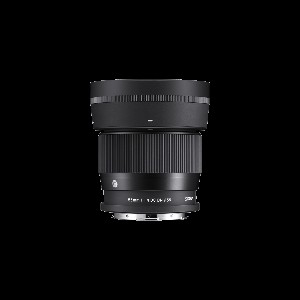 |
Sigma 56mm f/1.4 DC DN (APS-C) Sharp wide open, fast autofocus, beautiful bokeh — at a fraction of what Canon or Sony charge for their branded equivalents. This is the lens that proved to me brand name doesn't equal quality. Check Price on Amazon → |
Best All-Around Zoom
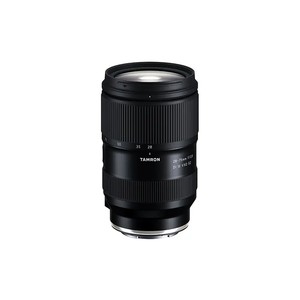 |
Tamron 28-75mm f/2.8 Di III VXD G2 Seriously, put this next to a $2,200 GM lens and try to tell me which shot came from which. Fast, sharp, lightweight, and half the price. This is the lens I recommend to every photographer who asks me "what one lens should I get?" Check Price on Amazon → |
Best Landscape Lens on a Budget
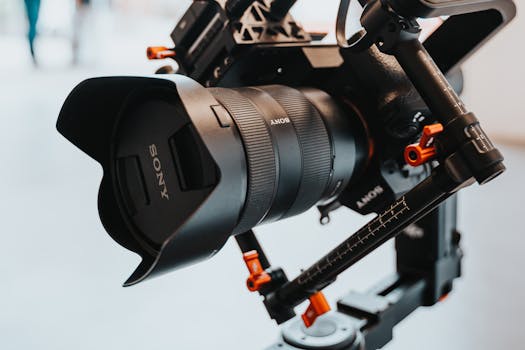 |
Sony FE 20mm f/1.8 G Wide, sharp corner-to-corner, and the f/1.8 aperture makes it usable for astro too. Weather sealed. If you're into landscapes, this is the one. Check Price on Amazon → |
Best Value Tripod (While We’re At It)
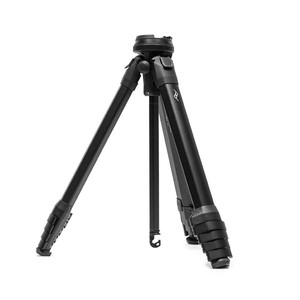 |
Peak Design Travel Tripod Not a lens, but since half of you are still shooting handheld landscapes — stop it. This is the tripod that lives in my bag. Compact, stable, beautifully designed. Check Price on Amazon → |
Links above are affiliate links — if you purchase through them, we earn a small commission at no extra cost to you. We only recommend gear we’ve actually tested and believe in.
Comments
Leave a Comment