
I’ve built my whole corner of the internet on a simple argument: you don’t need expensive gear to make great photos. I’ve stress-tested budget lenses, ranked five sub-$50 tripods, and written a breakdown of a $12 Amazon accessory that outperformed a $200 brand-name version. Specs and price-per-performance ratios are my native language. So when I came across a video where a professional landscape photographer wrestles with whether to keep a camera he openly admits he doesn’t need, I expected to roll my eyes. Instead, I watched it twice.
In this Mark Denney tutorial, Watch the full tutorial on YouTube, Mark walks through his decision to keep the Fujifilm X100VI alongside his Nikon Z8 - not because it fills a gap, not because it outperforms his main kit, but because it changed how he approached picking up a camera at all. He then takes it into Lightroom to show whether the RAW files actually hold up under his normal editing workflow. The answer surprised me, and I think it’ll challenge the way a lot of gear-focused photographers think about purchases.
The reason I’m writing this up isn’t to convince you to buy an X100VI. It’s to walk through the framework Mark uses, including the Lightroom comparison, so you can apply the same thinking to whatever “unnecessary” camera you’ve been eyeing, or talking yourself out of.
Step 1: Stop Asking If It Replaces Anything
 Mark describing Z8 vs X100VI spec comparison
Mark’s first move is to lay out an honest comparison. The Nikon Z8 beats the X100VI on sensor size, interchangeable lenses, ergonomics, and overall flexibility. By every professional metric, there’s no contest. His conclusion from that comparison isn’t “the X100VI is underrated” - it’s that he was asking the wrong question entirely.
Mark describing Z8 vs X100VI spec comparison
Mark’s first move is to lay out an honest comparison. The Nikon Z8 beats the X100VI on sensor size, interchangeable lenses, ergonomics, and overall flexibility. By every professional metric, there’s no contest. His conclusion from that comparison isn’t “the X100VI is underrated” - it’s that he was asking the wrong question entirely.
The replacement framework works for upgrading within a system. It breaks down when you’re looking at a camera that was never meant to compete. If you’ve ever tested a budget body against your main kit and declared it worthless because it lost, you’ve made the same mistake. The question isn’t “does it win?” It’s “does it make me want to shoot?”
Step 2: Notice What You Actually Reach For
 Mark reflecting on returning the X100V four years earlier
Mark returned an earlier version of this camera four years ago because the logic said to. And then he kept thinking about it. Not because he was missing shots without it. Not because his Nikon was failing him. He missed wanting to pick it up.
Mark reflecting on returning the X100V four years earlier
Mark returned an earlier version of this camera four years ago because the logic said to. And then he kept thinking about it. Not because he was missing shots without it. Not because his Nikon was failing him. He missed wanting to pick it up.
This is the part that landed hardest for me. When photography becomes work - and for me, gear reviewing is absolutely work - every piece of equipment starts getting evaluated as a tool. I have a spreadsheet comparing every budget lens I’ve tested. That mindset is useful for writing reviews. It becomes a problem when it bleeds into every photographic decision you make, including the recreational ones. Mark’s point is that a camera you instinctively grab when you’re not thinking about your workflow is giving you information worth paying attention to.
Step 3: Drop the Job Description
 Mark explaining attempts to assign the X100VI a role
Mark tried to give the X100VI a defined role. Smaller landscape camera? The Nikon is better. Dedicated travel camera? Some trips still need multiple lenses. Every role he invented, he could argue himself out of. The camera kept failing his job interview.
Mark explaining attempts to assign the X100VI a role
Mark tried to give the X100VI a defined role. Smaller landscape camera? The Nikon is better. Dedicated travel camera? Some trips still need multiple lenses. Every role he invented, he could argue himself out of. The camera kept failing his job interview.
The shift he describes is giving up on that exercise entirely. His Nikon has a job. When he picks it up, there’s a purpose attached - a portfolio shot, a YouTube video, a workshop location. The X100VI came with none of that weight. No checklist, no pressure, no specific deliverable. For photographers who shoot professionally, that distinction is more significant than any spec comparison.
Step 4: Test It in the Field Before You Decide
 Mark mentioning the Faroe Islands trip with the X100VI
Mark took the X100VI to the Faroe Islands before making his final call. This is the step most people skip because they’re trying to make the decision from a spec sheet or a sample image gallery online. He needed to live with the camera in real conditions to understand what it actually contributed to his experience of shooting, separate from image quality alone.
Mark mentioning the Faroe Islands trip with the X100VI
Mark took the X100VI to the Faroe Islands before making his final call. This is the step most people skip because they’re trying to make the decision from a spec sheet or a sample image gallery online. He needed to live with the camera in real conditions to understand what it actually contributed to his experience of shooting, separate from image quality alone.
The practical takeaway here: if you’re on the fence about any camera, find a way to use it on a real outing before you return it. Not a backyard test. Not a quick studio comparison. Take it somewhere you’d actually want to photograph, and pay attention to how you feel carrying it.
Step 5: Evaluate the RAW Files Against Your Existing Workflow
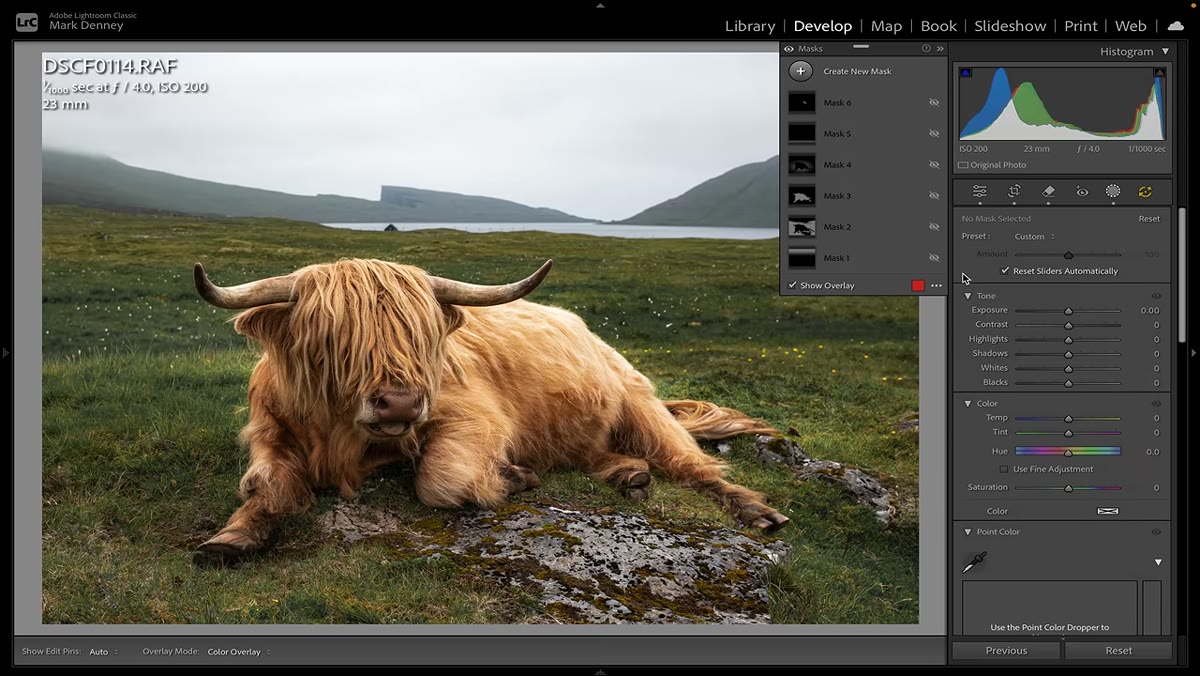 Mark opening X100VI RAW files in Lightroom
This is where the video earns its keep as a practical resource. Once Mark returned from the Faroe Islands, he ran the X100VI RAW files through the same Lightroom workflow he uses for his Nikon images. He checked sharpness, how the masking tools responded to the files, color behavior, and shadow recovery under heavy pushing.
Mark opening X100VI RAW files in Lightroom
This is where the video earns its keep as a practical resource. Once Mark returned from the Faroe Islands, he ran the X100VI RAW files through the same Lightroom workflow he uses for his Nikon images. He checked sharpness, how the masking tools responded to the files, color behavior, and shadow recovery under heavy pushing.
The result: the files held up without requiring him to build a separate workflow. He could apply the same masking logic, push shadows without weird color casts, and get sharpness that satisfied him at his normal output sizes. For photographers managing multiple cameras, workflow compatibility is a real and underrated consideration. A camera that forces you to build parallel editing habits costs more time than its purchase price.
Step 6: Let “I Want to Use It” Count as a Reason
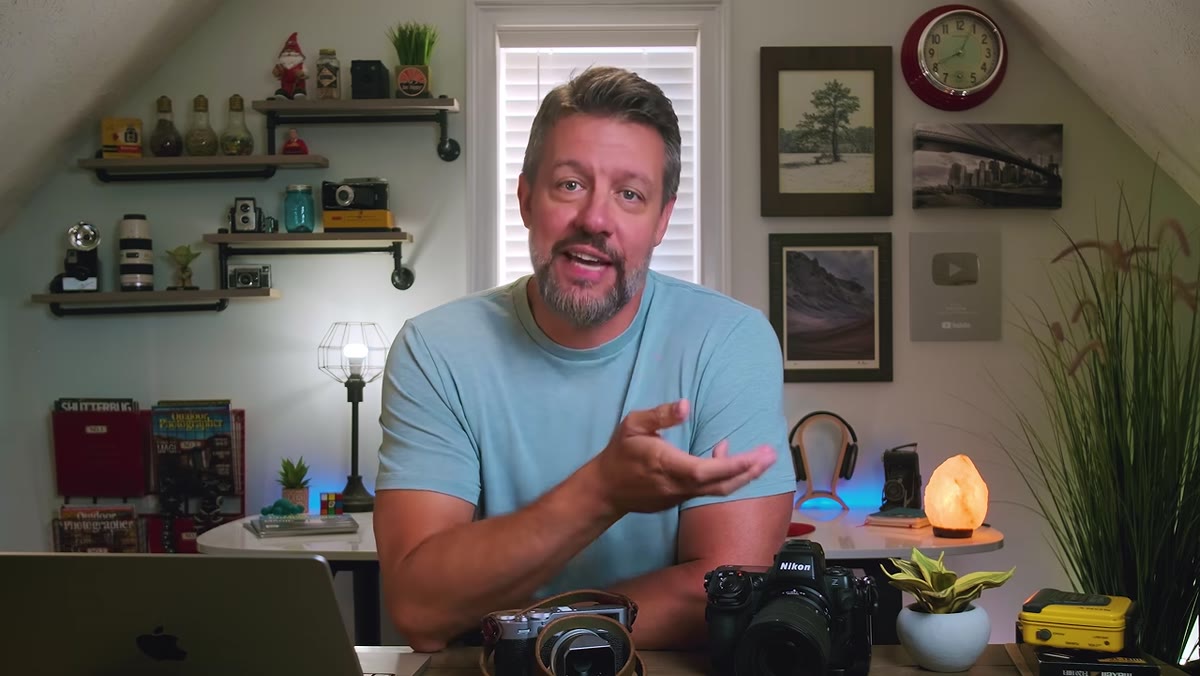 Mark stating maybe every photographer needs a camera they don’t need
Mark’s final argument is the simplest one, and probably the one that gets dismissed most often in gear discussions. Enjoying using a camera is a legitimate reason to own it. Not the only reason. Not sufficient on its own for every budget situation. But a real reason.
Mark stating maybe every photographer needs a camera they don’t need
Mark’s final argument is the simplest one, and probably the one that gets dismissed most often in gear discussions. Enjoying using a camera is a legitimate reason to own it. Not the only reason. Not sufficient on its own for every budget situation. But a real reason.
He’s not suggesting you buy gear you can’t afford to get a feeling. He’s saying that once you’ve confirmed the files work and the cost is manageable, “I keep reaching for this thing” should carry weight in the decision. That’s not gear acquisition syndrome. That’s listening to your own behavior as data.
What I’d Add From My Side of the Gear World
Mark comes at this from a professional landscape photography perspective, where his primary kit costs thousands and the X100VI is a secondary purchase. My readers are often working in the opposite direction - the “unnecessary” camera might actually be their first real camera, or a used body they’re considering as a creative outlet alongside a phone.
The principle scales down exactly the same way. I started shooting with a $300 kit. The camera I didn’t technically “need” was a used 50mm prime I bought for $45. It didn’t solve a problem. It wasn’t an upgrade. I just shot more when I had it. That matters regardless of what your main system costs.
The single thing I want you to take away from Mark’s breakdown is this: the metric “does it make me want to shoot” is not a soft or irrational standard. It might be the most important one. If a piece of gear makes you pick up the camera more often, everything downstream - the practice, the improvement, the finished images - follows from that.
Watch the full tutorial on YouTube to see Mark’s Lightroom walkthrough in full, including his specific shadow recovery and masking tests on the X100VI files.
Comments
Leave a Comment