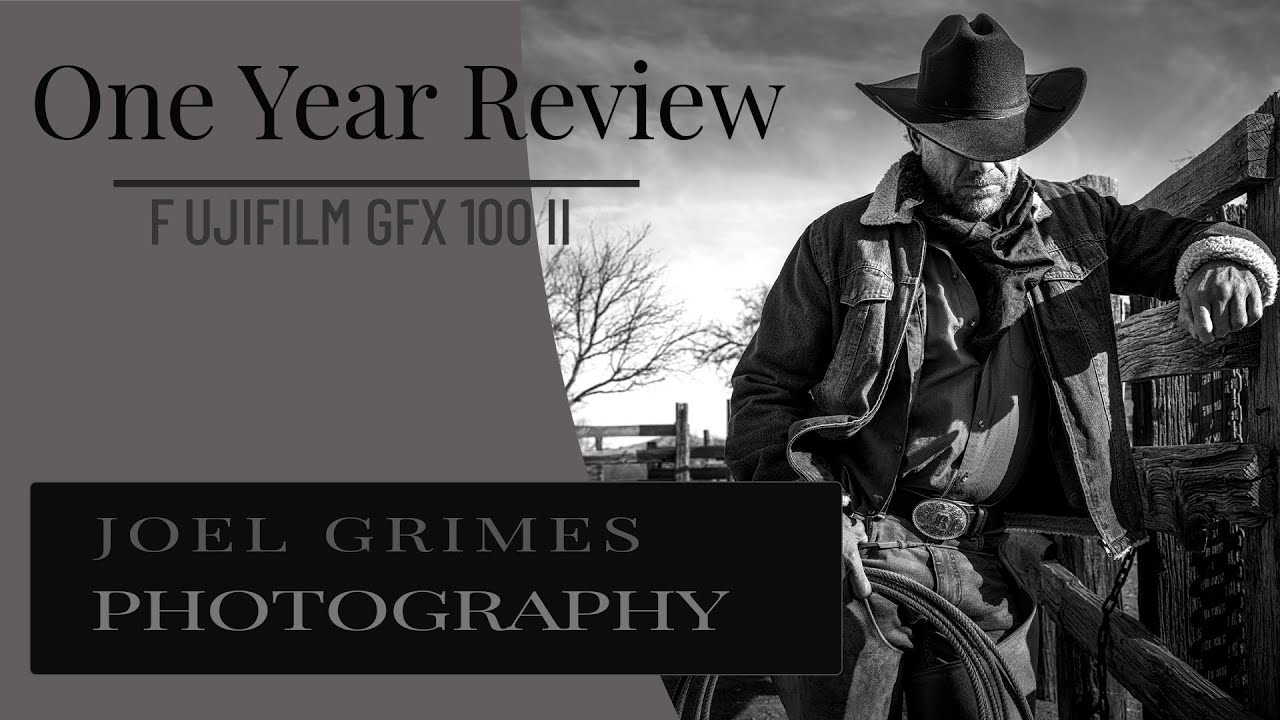
I’ll be straight with you: medium format has never been on my radar. My whole thing is proving that cheaper gear gets the job done, and a $7,500 camera body is basically the opposite of my brand. But lately I’ve been getting a steady stream of questions from readers who are actually considering the GFX system, either coming up from full frame or jumping back in after prices dropped. So when Joel Grimes dropped a full one-year retrospective on the GFX 100 II, I sat down and took notes. Not because I’m about to buy one, but because Grimes is the kind of shooter who tells you what something actually costs you, not just what it costs at checkout.
Why a Year Matters More Than a First Look
Most gear reviews come out in the first two weeks of a camera’s release. That’s when the hype is hottest and the sample images are cherry-picked. A one-year review is a different animal. Grimes has actually been on deadline with this system, using it in professional portrait and commercial work, not controlled studio comparisons. That’s the context that makes his assessment worth dissecting.
His core finding after twelve months is nuanced: the GFX 100 II delivers image quality that is genuinely beyond what full frame offers in the right conditions, but it asks you to make real trade-offs in speed, workflow, and lens costs. That’s not a revolutionary conclusion, but the specifics he walks through are what make this useful.
The Lenses That Actually Work, Native and Adapted
Grimes narrows his native GFX lens picks pretty deliberately. He leans hard on the GF 110mm f/2, which is the portrait workhorse of the system. The rendering at wide apertures gives that medium format subject separation that people talk about, and at 110mm on a medium format sensor, you’re getting a field of view close to 87mm full frame equivalent. For commercial portrait work, that’s a natural fit.
He also talks up the GF 45-100mm f/4 zoom as a practical everyday option. It’s not fast, but it’s sharp and covers a useful range without requiring you to carry three primes.
Here’s where it gets interesting for the budget-minded: Grimes adapted several Canon lenses onto the GFX body using a Fotodiox or similar adapter, and he was genuinely impressed by the results. He specifically tested Canon L-series glass and found that the larger medium format sensor actually shows off the resolving capability of those lenses in a way full frame doesn’t always reveal. If you’ve already invested in Canon glass, this is worth knowing. You lose autofocus in most cases or get slower, less reliable AF, but for studio and controlled portrait work, that’s a manageable trade-off.
What the 102 Megapixels Actually Changes
The 102MP sensor is the headline number, and Grimes does not let you forget it, but he frames it practically. That resolution matters most in two specific situations: large-format print work where clients are printing at billboard or exhibition scale, and heavy cropping workflows where you’re shooting wider and recomposing in post.
For anyone working primarily for web or standard print, he’s honest that the extra resolution creates more work than it solves. Larger raw files mean slower culling, more storage cost, and longer export times. His workstation handles it, but he flags it as a real consideration before you commit.
The dynamic range is where he gets more enthusiastic. The GFX 100 II holds shadow and highlight detail in a way that gives you meaningful flexibility in post, especially in high-contrast lighting scenarios like mixed natural and strobe setups that commercial portrait photographers live in.
Where the System Fights You
Grimes doesn’t bury the frustrations. Autofocus on the GFX 100 II is better than previous GFX bodies, but it still trails Sony and Canon in tracking speed and subject acquisition. For moving subjects or anything documentary-style, this is a genuine limitation. He shoots it primarily in controlled conditions, and he recommends you honestly assess whether your work fits that profile before buying in.
The other friction point is the ecosystem cost. Native GFX lenses are expensive, with most primes landing well above $1,500 and zooms pushing higher. That’s what makes his adapter work relevant. If you can cover core focal lengths with glass you already own, you shift the cost equation meaningfully.
My own counterpoint here: I’ve done blind image tests with photographers at local meetups, showing shots from different systems, and the differences at typical viewing distances are smaller than people expect. Medium format pulls ahead when you’re pixel-peeping or printing large, but at Instagram resolution or in a standard client gallery, the advantage compresses. That doesn’t make the GFX 100 II a bad investment for the right professional, but it does mean the ROI question deserves an honest answer before you sign up for the file size headaches.
The Real Takeaway From Twelve Months of Shooting It
Grimes closes with something that actually stuck with me: the GFX 100 II didn’t make him a better photographer, but it did raise the ceiling on what his best work could achieve. The system rewards photographers who already have their lighting, posing, and post-processing dialed in. If those fundamentals aren’t solid, 102 megapixels will just give you bigger files of mediocre images.
That’s the honest framing this system deserves, and it’s why a one-year review from someone doing real work with it is worth more than a hundred spec-sheet comparisons. Watch the full video to see Grimes walk through actual sample images and adapted lens comparisons with your own eyes.
Comments (7)
Tried this technique this morning. Game changer for real.
Would love to see a follow-up going deeper into this topic.
Been doing this wrong for years apparently. Thanks for the wake-up call.
Applied this to my portfolio shots and the improvement is noticeable.
Clear and practical. No fluff. Appreciate that.
Would love to see a follow-up going deeper into this topic.
Excellent tutorial. I'd add that from a landscape standpoint, this technique is incredibly versatile.
Leave a Comment