
I’ll be straight with you: I got into deals and gear content because I was spending more time researching prices than actually shooting. At some point I had to ask myself whether all that research was making me a better photographer or just a more anxious one. That tension is exactly what Tony and Chelsea Northrup dig into in their Picture This Podcast episode, and it’s worth a serious look, especially if you’ve ever fallen into a rabbit hole at 11pm comparing two cameras that cost $50 apart. Watch the full tutorial on YouTube
What makes this episode useful isn’t that it gives you a clean yes or no. It’s that it unpacks the psychology behind why this debate gets so heated, who’s actually driving it, and what a healthier relationship with gear content looks like. As someone who runs a spreadsheet comparing every budget lens I’ve ever tested, I found the whole thing uncomfortably relatable.
The conversation is audio-first, so it’s less a visual tutorial and more a structured argument. But there’s a real framework buried in it, one you can actually apply to how you consume reviews. Here’s how I’d break it down as actionable steps.
Step 1: Recognize the Emotional Source of the “Stop Watching Reviews” Argument
 Tony explaining emotional energy behind anti-review comments
Tony points out early on that the loudest voices telling you to stop watching camera reviews almost always show up in the comments of a camera review. That irony is worth sitting with. Before you take that advice seriously, ask what’s motivating it. In their experience, the emotional heat usually traces back to someone who watched a review of a camera they already bought and felt stung by the criticism. That’s not a neutral observer giving you good-faith advice. It’s someone processing buyer’s remorse in public.
Tony explaining emotional energy behind anti-review comments
Tony points out early on that the loudest voices telling you to stop watching camera reviews almost always show up in the comments of a camera review. That irony is worth sitting with. Before you take that advice seriously, ask what’s motivating it. In their experience, the emotional heat usually traces back to someone who watched a review of a camera they already bought and felt stung by the criticism. That’s not a neutral observer giving you good-faith advice. It’s someone processing buyer’s remorse in public.
When I ran a blind test at a local meetup where nobody could tell which shots came from a $500 camera versus a $2,000 one, the strongest reactions came from people who owned the expensive body. Emotions around gear spending are real. Don’t let them masquerade as philosophy.
Step 2: Separate the “Gear Obsession” Problem from the “Gear Research” Problem
 Chelsea and Tony discussing gear focus versus skill development
Tony and Chelsea make a distinction that most people in this debate blur together. There is a real problem with gear obsession: people with no portfolio who spend their energy nitpicking specs or telling others they bought the wrong camera. That behavior is worth criticizing. But gear research before a purchase is a completely different activity, and conflating the two is sloppy thinking.
Chelsea and Tony discussing gear focus versus skill development
Tony and Chelsea make a distinction that most people in this debate blur together. There is a real problem with gear obsession: people with no portfolio who spend their energy nitpicking specs or telling others they bought the wrong camera. That behavior is worth criticizing. But gear research before a purchase is a completely different activity, and conflating the two is sloppy thinking.
The move here is to audit your own behavior honestly. Are you researching because you have a real purchasing decision in front of you? Or are you watching reviews of gear you already own, looking for either validation or something to feel bad about? One is productive. The other is a loop worth breaking.
Step 3: Understand Why Gear Content Dominates Even Skill-Focused Channels
 Tony noting gear reviews outperform technique content in views
This one surprised me even though I’ve seen it in my own analytics. Tony and Chelsea came up through books on photographic technique and post-processing. That’s where their real interest is. But their gear reviews consistently outperform that content in views, which shapes what people assume they’re about.
Tony noting gear reviews outperform technique content in views
This one surprised me even though I’ve seen it in my own analytics. Tony and Chelsea came up through books on photographic technique and post-processing. That’s where their real interest is. But their gear reviews consistently outperform that content in views, which shapes what people assume they’re about.
The practical takeaway: the creator you’re watching may not be primarily a gear person, even if their gear content is what the algorithm surfaces to you. Go deeper into a channel before you decide what it’s actually about. Some of the best exposure and composition advice I’ve found was buried three pages into a channel that looked, on the surface, like pure spec comparisons.
Step 4: Watch Reviews Before You Buy, Not After
 Tony describing the trap of reviewing gear you already own
This is the most concrete rule the episode offers and the one with the most immediate impact. Watching a review of something you’ve already purchased and paid for puts you in a no-win position. If the review is positive, you feel fine. If it’s critical, you feel bad, and you can’t do anything with that information anyway.
Tony describing the trap of reviewing gear you already own
This is the most concrete rule the episode offers and the one with the most immediate impact. Watching a review of something you’ve already purchased and paid for puts you in a no-win position. If the review is positive, you feel fine. If it’s critical, you feel bad, and you can’t do anything with that information anyway.
Reviews earn their value in the decision phase. That’s when they can actually change your outcome: help you avoid a dud, spot a better option at the same price, or confirm that what you’re about to buy fits your specific shooting style. I read every review I can find before I pull the trigger. After? I close the tabs.
Step 5: Use the “Holier Than Thou” Signal as a Filter
 Tony describing the superior attitude behind anti-review comments
Tony uses the phrase “holier than thou” to describe people who position themselves as somehow above caring about gear. It’s a useful filter. When someone’s argument for ignoring reviews comes wrapped in contempt for people who watch them, that’s not a sign of photographic wisdom. It’s a personality tell.
Tony describing the superior attitude behind anti-review comments
Tony uses the phrase “holier than thou” to describe people who position themselves as somehow above caring about gear. It’s a useful filter. When someone’s argument for ignoring reviews comes wrapped in contempt for people who watch them, that’s not a sign of photographic wisdom. It’s a personality tell.
Apply the same filter to gear reviewers themselves. A reviewer who sneers at budget options or implies that caring about price is beneath serious photographers is showing you something about their perspective that will color everything else they say. I’d rather read a review from someone who agonized over a $30 price difference than one who waves off value entirely.
Step 6: Balance Gear Investment with Skill Investment
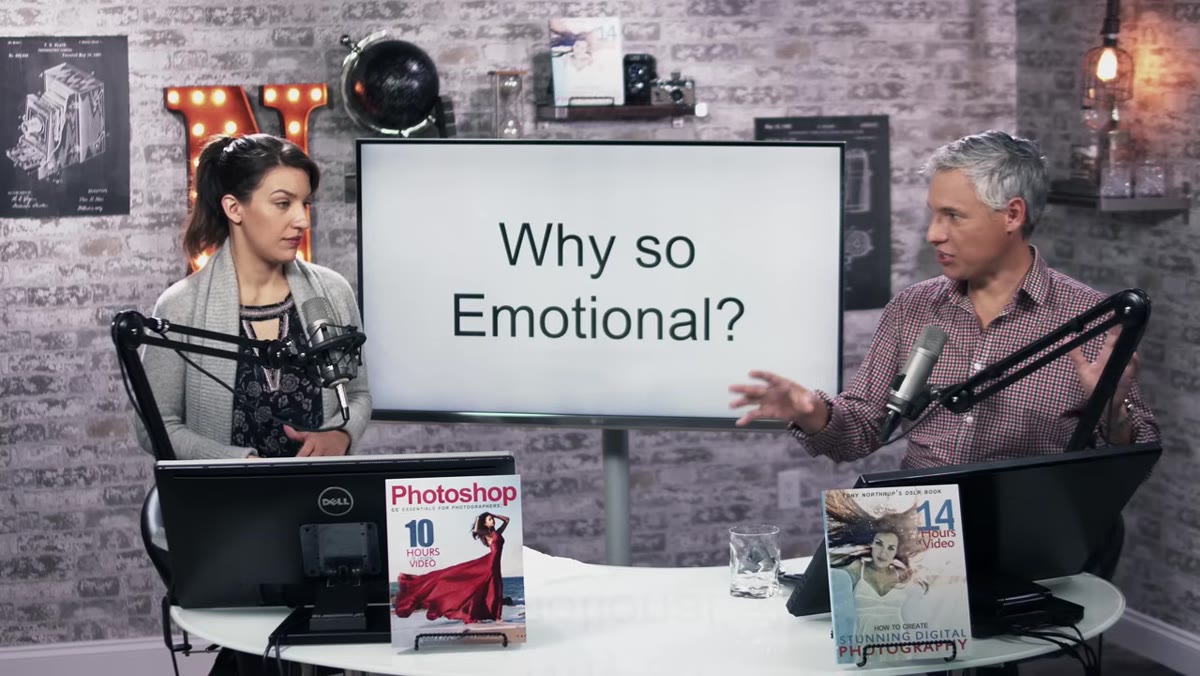 Chelsea noting some people over-index on gear versus skill
The most honest part of the episode is when they acknowledge that the “just go shoot” crowd has a point buried inside the bad-faith delivery. There are photographers who spend more on gear research and upgrades than they put into actually developing their craft. If your Lightroom catalog has fewer keepers than your browser has gear review tabs, that’s worth examining.
Chelsea noting some people over-index on gear versus skill
The most honest part of the episode is when they acknowledge that the “just go shoot” crowd has a point buried inside the bad-faith delivery. There are photographers who spend more on gear research and upgrades than they put into actually developing their craft. If your Lightroom catalog has fewer keepers than your browser has gear review tabs, that’s worth examining.
The goal isn’t to pick gear or skill. It’s to make sure your gear knowledge is in service of your shooting, not a substitute for it. I shoot with whatever I’ve tested most recently, even if something shinier is sitting on my desk. The reps matter more than the body.
What I’d Add from the Budget Side of Things
The episode focuses mostly on the psychology of reviewing, which is valuable. But it doesn’t dig much into what separates a useful review from a useless one, and from a deals-and-budget perspective, that gap matters a lot.
A review that only compares a camera to its direct predecessor in the same brand, at the same price tier, is far less useful than one that compares across brands and across price points. The question I always want answered is not “is this better than the last version?” but “is this the best thing I can get for this money right now?” Those are different questions, and most review formats are built to answer the first one.
Before you invest time in any review, check whether it actually addresses the comparison you care about. If it doesn’t, move on.
The single most useful thing I took from this episode is the pre-buy versus post-buy rule. Watch reviews early, use them to make better decisions, then put the camera down, pick up the camera, and go shoot. Everything else in the gear review debate is noise around that simple principle.
Watch the full tutorial on YouTube
Comments (2)
Clear and practical. No fluff. Appreciate that.
Never thought of approaching it this way. Really creative.
Leave a Comment