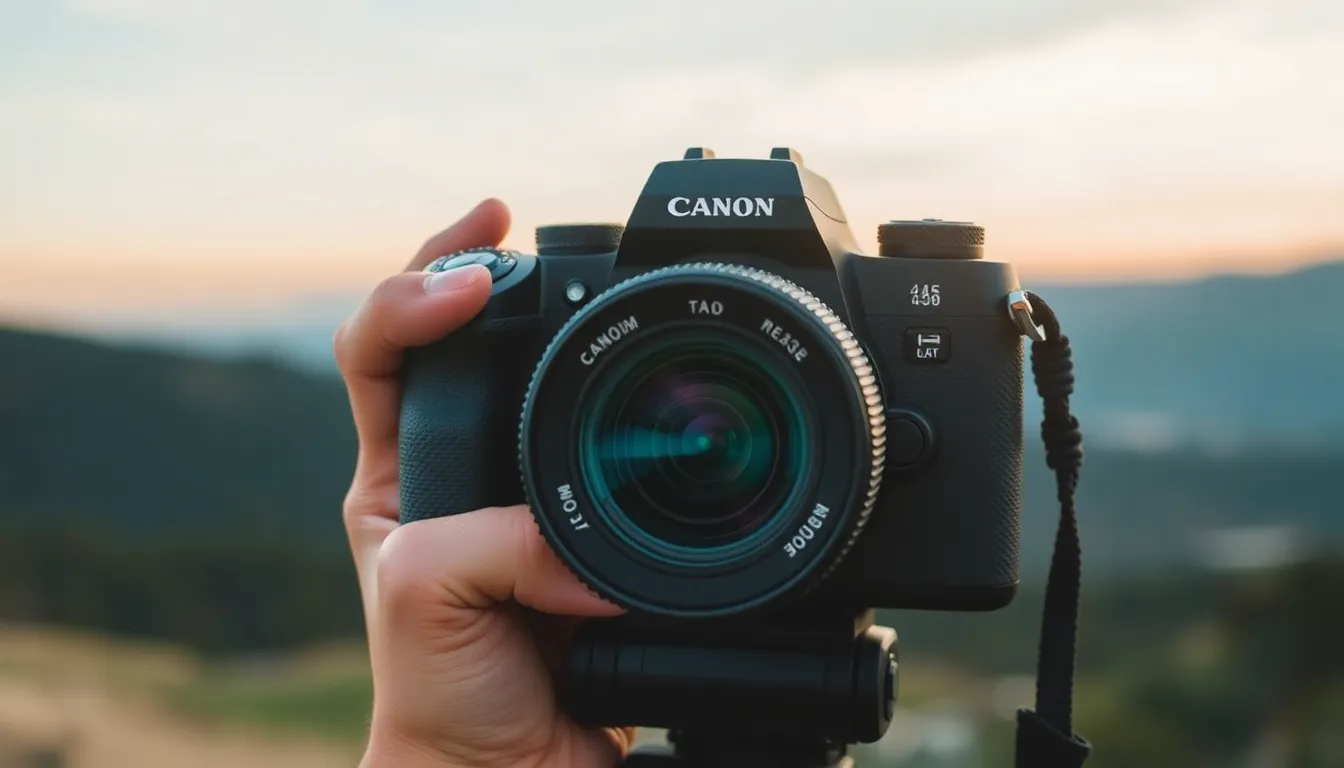
Best Camera for Beginners 2026: Stop Overthinking It (My Honest Picks)
Look, I’m going to be straight with you. The best camera for beginners 2026 isn’t the one with the most megapixels or the fancy marketing campaign behind it. It’s the one that doesn’t intimidate you, takes sharp images, and won’t drain your wallet before you even buy a lens.
I’ve been reviewing cameras for nearly a decade, and I’ve watched countless beginners drop $2,000+ on gear they didn’t understand, only to get frustrated and quit. That’s not happening on my watch. This guide cuts through the noise and gives you the actual facts about what works for people just starting out.
The Real Truth About Beginner Cameras
Here’s something camera manufacturers won’t tell you: most modern cameras are genuinely good. Your phone camera would’ve blown minds ten years ago. The gap between a $500 camera and a $3,000 camera isn’t skill—it’s features you won’t use for at least two years.
What actually matters for beginners:
Ergonomics - Does it feel comfortable in your hands? Can you reach the buttons without cramping?
Autofocus speed - Does it focus quickly and reliably? (This matters way more than you think)
Image quality baseline - Can it produce sharp, well-exposed images in decent light? Yes, pretty much all of them can.
Lens ecosystem - Are affordable lenses available? This is where people get burned.
Not what matters: Resolution beyond 24MP, weather sealing on your first body, having a full-frame sensor.
Best Camera for Beginners 2026: My Top Recommendation
The Canon EOS R50 is my honest pick for the best camera for beginners 2026. Here’s why:
It’s a mirrorless camera (I’ll get to why that matters), it has genuinely fast autofocus, the menu system is actually intuitive, and the RF-mount ecosystem has affordable glass options. At around $700 with a kit lens, you’re not bleeding money dry.
The 24.2MP sensor is plenty. Colors straight out of camera look natural. The articulating screen is brilliant for learning composition because you can shoot from weird angles without contorting yourself.
Real talk: I’d also recommend the Sony a6700 if you want to spend a bit more ($1,100) and get slightly better autofocus and video capabilities. It’s not overpriced for what you get, which is rare.
If you absolutely need to stay under $500, the used Canon EOS M6 Mark II is solid. Don’t sleep on the used market—that’s where value lives.
Mirrorless vs. DSLR: Make Your Decision
This is where I usually trigger some people. Mirrorless is the smarter choice for beginners in 2026. Not because it’s “better” (it’s not), but because:
-
The manufacturers are moving that direction. DSLR development is basically done. New lenses? Mostly mirrorless.
-
What you see is what you get. The LCD shows you your actual exposure before you take the shot. No guessing.
-
Autofocus is faster. Modern mirrorless AF will hunt prey faster than your DSLR dreams.
-
Lenses are getting cheaper. Competition in the mirrorless space means better pricing than ever.
Should you buy a DSLR? Only if someone’s selling you an insanely good used deal. Otherwise, mirrorless is the forward-thinking move.
The Lens Situation (This Actually Matters)
Here’s where beginners get wrecked: they spend $800 on a body and nothing on glass. The kit lens that comes in the box? It’s fine for learning, but you’ll quickly want something sharper and faster.
My advice: buy the body + kit lens combo, then save $300-400 for a better lens before anything else.
The Sony 50mm f/1.8 is genuinely exceptional for around $250. Sharp, affordable, and the fast aperture teaches you about depth of field immediately. If you go Canon, the RF 50mm f/1.8 is worth the extra $50.
This single lens will handle portraits, indoor shots, and event photography. You don’t need eight lenses. You need one sharp lens that makes you excited to shoot.
Essential Accessories Worth Your Money
You don’t need much. I see beginners buy junk they never use.
Storage: Get a reliable SanDisk Extreme Pro 128GB SD Card. Not the cheapest card, but it’s fast and won’t corrupt your files. One card is enough to start. One.
Tripod: If you’re doing anything beyond casual snapshots, grab a K&F Concept SA254T1 Tripod. It’s under $40, actually stable, and teaches you composition. Self-portraits and group shots become possible.
Don’t buy: UV filters, lens protectors, expensive bags, camera straps, remote triggers, intervalometers. You’ll figure out what you need after six months of shooting.
Settings Every Beginner Should Know
This is the part where you actually stop auto mode.
Start in Aperture Priority Mode (A or Av). This teaches you about depth of field while the camera handles shutter speed. Set aperture between f/4 and f/8 to start. Everything will be sharp and properly exposed.
ISO: Leave it on auto with a maximum of 3200. The camera will boost ISO when needed. Yeah, you’ll get some noise. So what? Sharp and slightly noisy beats blurry and clean.
Metering: Spot metering will change your life. Instead of the camera trying to expose the whole scene, it exposes based on where you point. Suddenly, backlit subjects don’t turn into silhouettes.
Autofocus: Use continuous AF for moving subjects, single AF for stationary. Modern cameras are smart about this, but knowing the difference matters.
The Bottom Line
The best camera for beginners 2026 is the one you’ll actually use. Seriously. A mid-range camera you love beats an expensive camera gathering dust.
Canon EOS R50 for most people. Sony a6700 if you want the best overall experience and don’t mind spending a bit more. Used mirrorless if you’re on a tight budget.
Stop waiting for the perfect camera. Stop reading reviews about specs you don’t understand. Buy a body that feels good, pair it with one sharp lens, and start shooting.
Everything else—filters, lighting, expensive tripods, workshops—comes later. After you’ve actually figured out if you love photography.
I promise you’ll learn more from taking bad photos with a decent camera than reading another spec sheet.
Now go take some pictures.
—Tyler
Comments
Leave a Comment