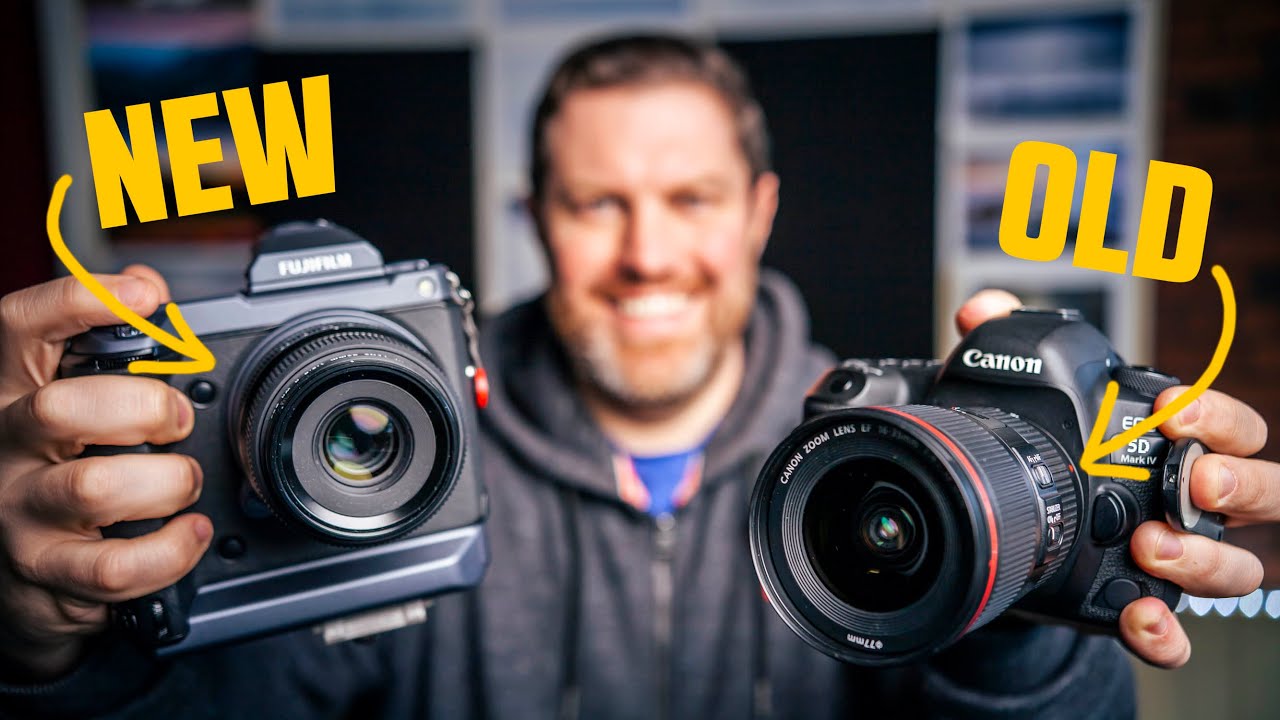
I spent more time last year researching gear prices than I did actually shooting. I have a spreadsheet with 47 budget lenses ranked by sharpness-per-dollar, and I check deal aggregators before I’ve had coffee. So when I came across a First Man Photography tutorial asking whether switching your gear makes you a better photographer, I figured I either had a lot to learn or a lot to argue with. Turns out it was both. Watch the full tutorial on YouTube
What the video does well is something most gear content refuses to do: it separates the emotional pull of new equipment from the practical question of whether that equipment actually expands what you can create. That distinction matters a lot if you’re buying on a tight budget, because every dollar spent on the wrong upgrade is a dollar that didn’t go toward something that would have genuinely moved your work forward.
The creator, who shoots at a pretty serious level, walks through seven pieces of gear he switched out in a single year, and uses that as a framework for thinking about gear decisions more broadly. Here’s how to apply that thinking to your own kit.
Step 1: Answer the Honest Question First
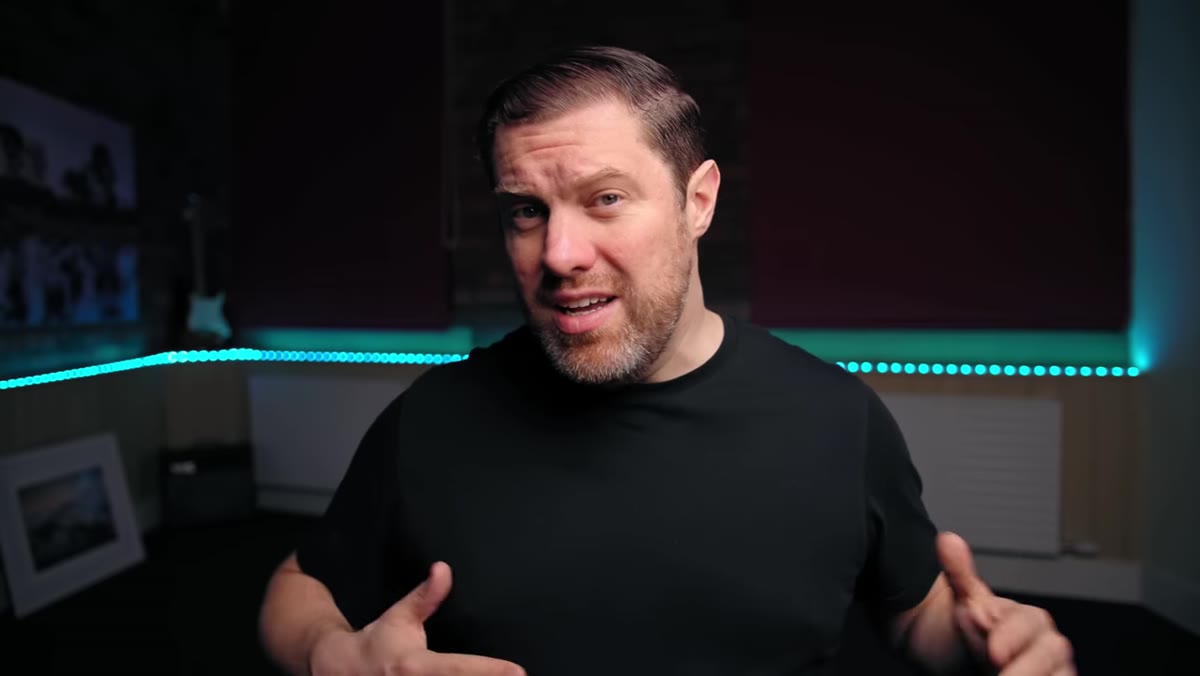 caption: Presenter explaining the question “will switching gear make you better”
Before you even open a browser tab to browse cameras, you need to sit with the uncomfortable answer: new gear will not make you a better photographer overnight. Skills, practice, and developing an eye for composition are what move the needle. There is no firmware update for that. If you are buying something hoping it will fix a creative rut, it won’t. The rut follows you into the new system.
caption: Presenter explaining the question “will switching gear make you better”
Before you even open a browser tab to browse cameras, you need to sit with the uncomfortable answer: new gear will not make you a better photographer overnight. Skills, practice, and developing an eye for composition are what move the needle. There is no firmware update for that. If you are buying something hoping it will fix a creative rut, it won’t. The rut follows you into the new system.
That said, the door stays open a crack. A new piece of gear can expand what you are technically capable of creating, and that expanded possibility is where real improvement can happen, but only if the skill is already there to take advantage of it.
Step 2: Define the Problem You Are Actually Trying to Solve
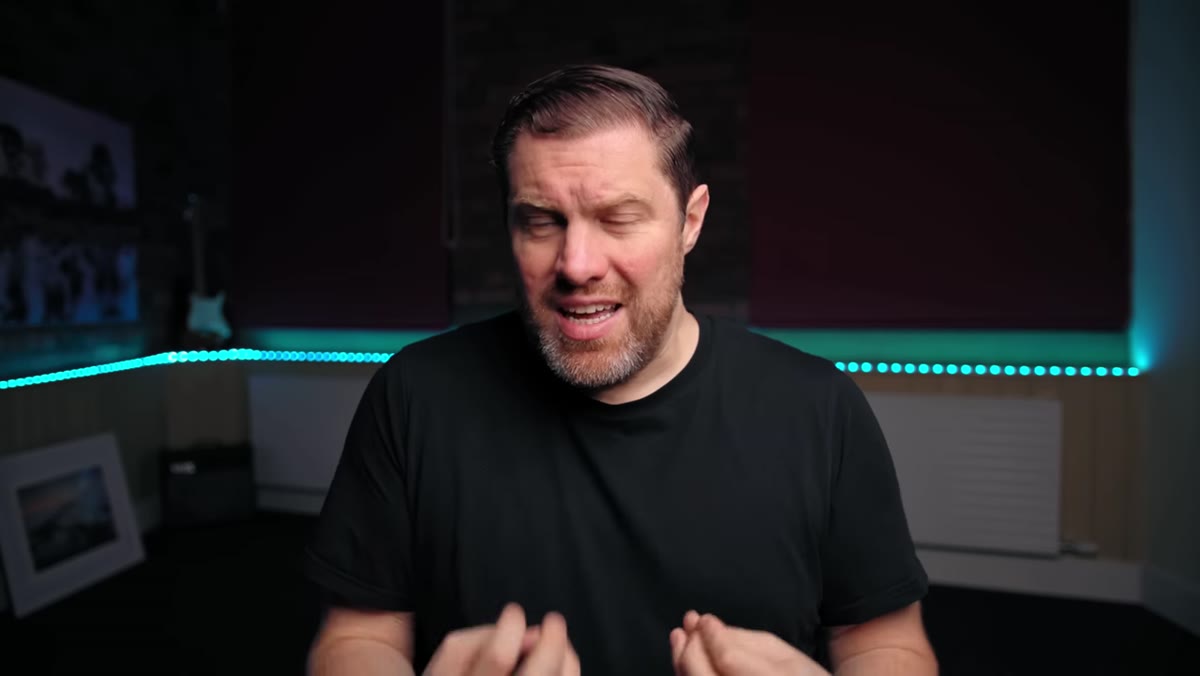 caption: Presenter outlining the gear purchase triangle concept
The tutorial introduces what the creator calls a “gear purchase triangle,” and it’s the most useful framework in the whole video. The three points are: the problem you are trying to solve, your budget, and a small, deliberate allowance for desire. That last one sounds like permission to overspend, but it’s actually smarter than it sounds.
caption: Presenter outlining the gear purchase triangle concept
The tutorial introduces what the creator calls a “gear purchase triangle,” and it’s the most useful framework in the whole video. The three points are: the problem you are trying to solve, your budget, and a small, deliberate allowance for desire. That last one sounds like permission to overspend, but it’s actually smarter than it sounds.
When you know the specific problem first, the purchase has a job to do. Want to shoot long exposures but getting blown-out skies? You need an ND filter, not a new camera body. Want tighter compression on distant subjects? That’s a focal length problem, not a sensor problem. Naming the problem keeps you from solving the wrong one with money.
Step 3: Let Budget Shape the Category, Not Just the Brand
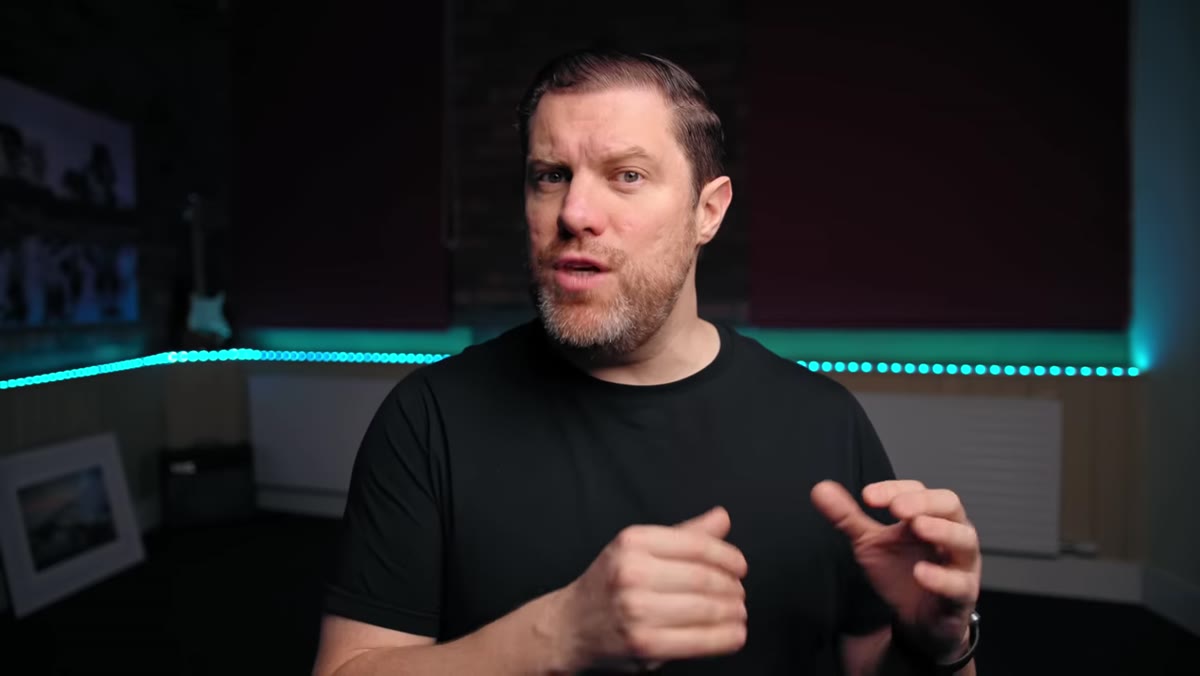 caption: Presenter discussing camera recommendations by price bracket
Once you know what problem you are solving, budget determines which tier of solution is realistic. The video breaks this down into rough price brackets and offers specific recommendations within each. Under a certain threshold, your phone camera is genuinely a competitive option and already paid for. On the used market, older full-frame bodies from Canon and Nikon have dropped to prices that would have seemed impossible three years ago, and the image quality from those sensors still holds up for still photography.
caption: Presenter discussing camera recommendations by price bracket
Once you know what problem you are solving, budget determines which tier of solution is realistic. The video breaks this down into rough price brackets and offers specific recommendations within each. Under a certain threshold, your phone camera is genuinely a competitive option and already paid for. On the used market, older full-frame bodies from Canon and Nikon have dropped to prices that would have seemed impossible three years ago, and the image quality from those sensors still holds up for still photography.
The point isn’t which specific body to buy. It’s that the used market almost always gives you more problem-solving power per dollar than buying new, and that should factor into your triangle before desire gets its vote.
Step 4: Let Desire Have a Controlled Vote
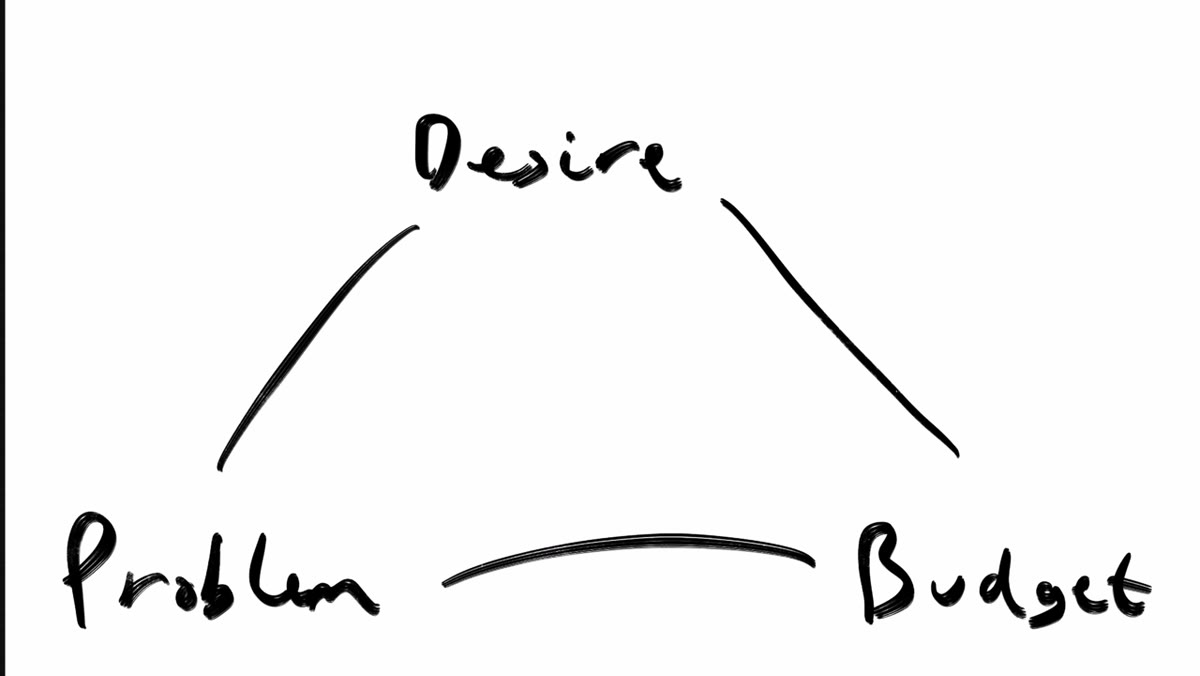 caption: Presenter explaining why desire belongs in the purchase decision
Here’s where the framework gets interesting. The creator argues that giving desire a small role in the purchase decision is actually good strategy. If you buy the absolute cheapest thing that technically solves your problem, you might end up with something you resent using. Gear you are excited about gets picked up more. Gear that feels like a compromise sits in a bag.
caption: Presenter explaining why desire belongs in the purchase decision
Here’s where the framework gets interesting. The creator argues that giving desire a small role in the purchase decision is actually good strategy. If you buy the absolute cheapest thing that technically solves your problem, you might end up with something you resent using. Gear you are excited about gets picked up more. Gear that feels like a compromise sits in a bag.
The word “controlled” matters though. Desire gets a vote, not a veto. You are not buying the flagship because it feels good. You are buying the one step up from bare minimum because it keeps you motivated to shoot, and shooting more is the actual path to improvement.
Step 5: Evaluate Whether the Gear Opens a New Creative Lane
 caption: Presenter describing how a new lens expands focal range options
Every piece of gear you are considering should pass one test: does it let you do something you genuinely cannot do right now? A wider lens opens compositions you physically cannot capture with your current kit. A faster lens opens low-light situations that were previously off the table. A tripod opens long exposures, self-portraits, and video work.
caption: Presenter describing how a new lens expands focal range options
Every piece of gear you are considering should pass one test: does it let you do something you genuinely cannot do right now? A wider lens opens compositions you physically cannot capture with your current kit. A faster lens opens low-light situations that were previously off the table. A tripod opens long exposures, self-portraits, and video work.
If the answer is no, and the new gear just does the same thing your current gear does with marginally better specs, that’s usually an upgrade you can defer. Marginal improvements in image quality rarely change what you make. New capabilities sometimes do.
Step 6: Review a Year’s Worth of Decisions as a Pattern
 caption: Presenter listing seven gear changes made in one year
The structure of the video, reviewing seven gear switches across a full year, is worth borrowing as a personal habit. Instead of evaluating each purchase in isolation, step back every few months and look at the pattern. What did you buy? What problem did each thing solve? Which ones are you still using? Which ones are sitting in a drawer?
caption: Presenter listing seven gear changes made in one year
The structure of the video, reviewing seven gear switches across a full year, is worth borrowing as a personal habit. Instead of evaluating each purchase in isolation, step back every few months and look at the pattern. What did you buy? What problem did each thing solve? Which ones are you still using? Which ones are sitting in a drawer?
This kind of audit is brutal but useful. I did a version of this after buying five tripods under $50 trying to find one that wasn’t garbage, and the pattern was clear: I had been solving a symptom (wobbly footage) rather than the real problem (no budget set aside for a single mid-range tripod). Seeing the whole year at once makes the waste visible.
My Honest Extension: The Used Market Changes the Math Entirely
The gear purchase triangle works even better when you run it entirely through the used market. Almost every recommendation in this video has a used equivalent that costs 40 to 60 percent less and performs identically. I started on a $300 camera kit I found on a local listing, and a wedding I shot on that body ended up in a regional magazine. Nobody asked what I was shooting with.
If you are in the early stages of building a kit, or if you are switching systems and worried about the cost, used gear from reputable sellers eliminates most of the financial risk. You can resell it for close to what you paid if the problem turns out to be different than you thought.
The single most useful idea from this tutorial is also the simplest: buy gear that solves a named problem, not gear that sounds impressive. That filter applies whether you are spending $30 or $3,000, and it will keep your kit leaner and your shooting more deliberate than almost any other habit you can build.
Watch the full tutorial on YouTube to see all seven specific gear switches, including the lens and filter choices that actually changed what the creator could shoot.
Comments (2)
Would love to see a follow-up going deeper into this topic.
Been doing this wrong for years apparently. Thanks for the wake-up call.
Leave a Comment