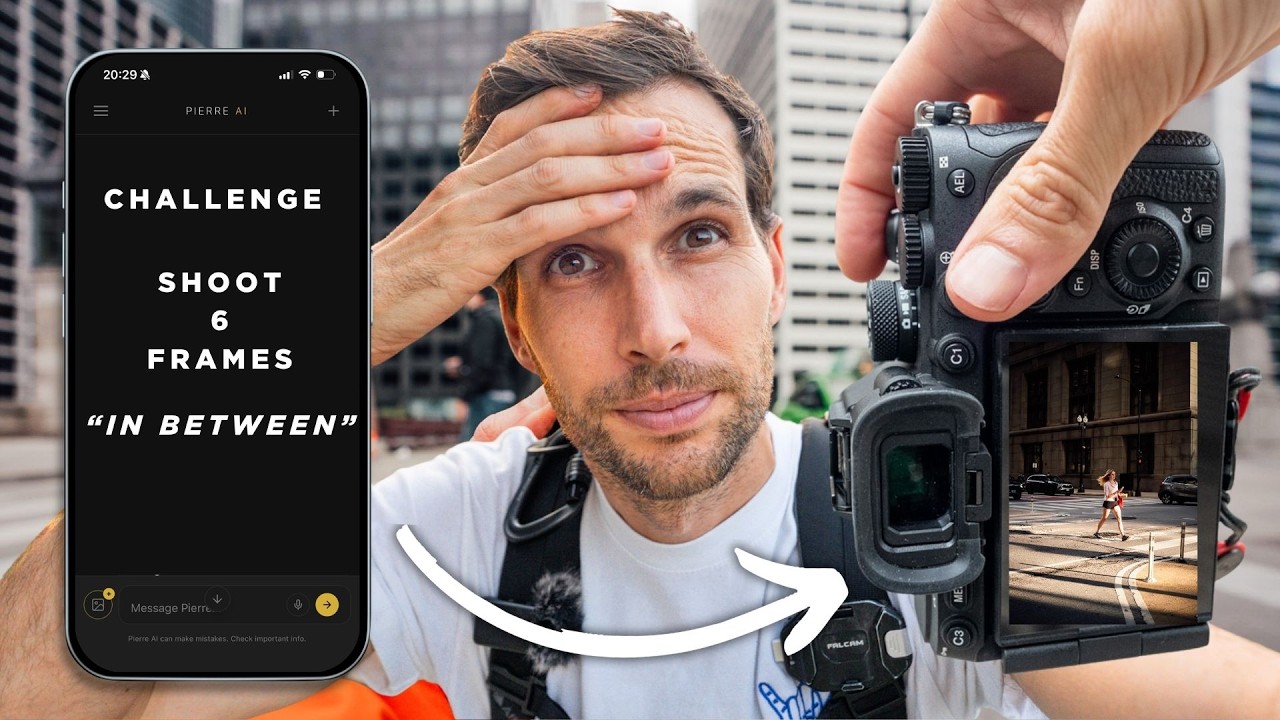
Street photography has a motivation problem. You show up somewhere you’ve shot a dozen times, you wander around for a while, you come home with okay images, and you wonder why you bothered. The location isn’t the issue. The lack of a mission is. That’s the real thing this technique solves, and I say that as someone who spent more hours than I’d like to admit researching gear when what I actually needed was a reason to go outside and shoot.
In this Pierre T. Lambert tutorial, Pierre does something deceptively simple: he hands creative control to his own AI tool before the session starts, so he can’t second-guess the brief. He’s in Chicago with a Sony a7 V, a 55mm, and a 24mm, and he lets the AI design a six-frame series with specific visual constraints he doesn’t get to negotiate. The result isn’t a perfect portfolio shoot. Some frames work, some don’t, and he keeps both in the video, which is exactly why it’s worth watching. Watch the full tutorial on YouTube
The workflow here doesn’t require Pierre’s specific AI tool. The logic behind it translates to any structured constraint system, whether that’s an AI, a random prompt generator, or a list you write yourself the night before. The discipline is in committing to the brief before you pick up the camera.
Step 1: Brief the AI With Your Actual Gear and Location
 Pierre typing gear details into Pierre AI chat interface
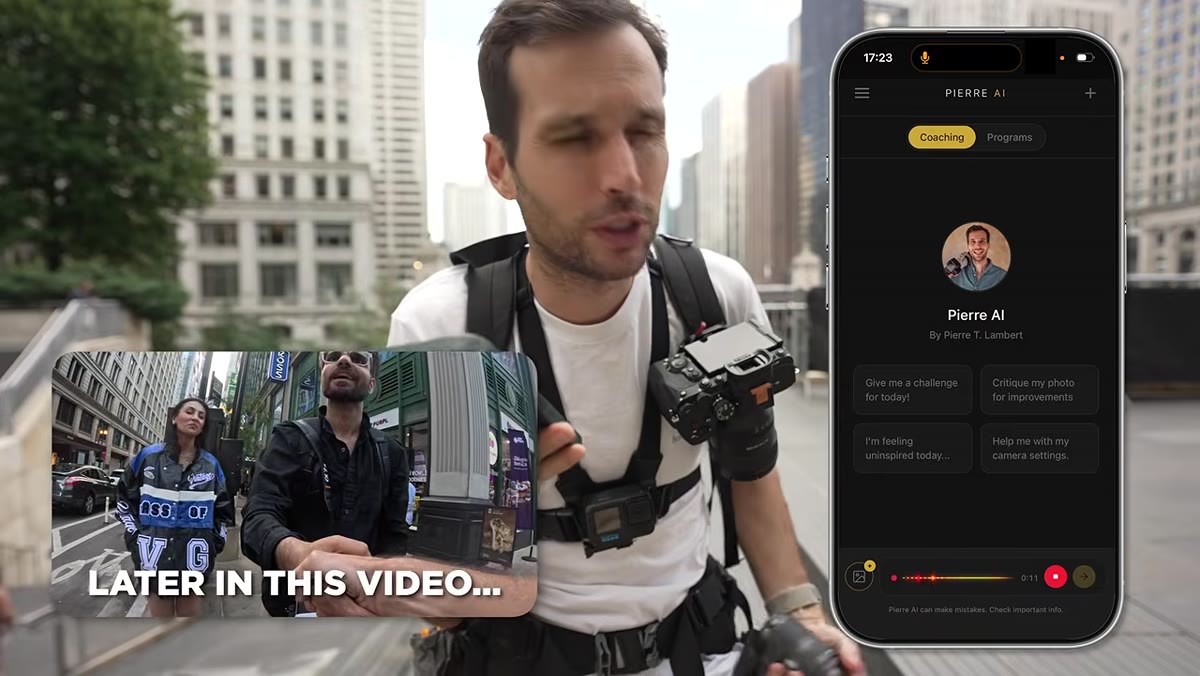
Don’t open with a generic prompt. Pierre gives the AI specific inputs: camera body, the two lenses he has with him (55mm and 24mm), and the fact that he’s shot Chicago before and needs something genuinely new. The specificity matters because a vague prompt returns a vague challenge. If you’re using any AI tool for this, tell it your focal length options, your time limit, and your experience level with the location. That context shapes a brief that’s actually useful.
Pierre typing gear details into Pierre AI chat interface
Don’t open with a generic prompt. Pierre gives the AI specific inputs: camera body, the two lenses he has with him (55mm and 24mm), and the fact that he’s shot Chicago before and needs something genuinely new. The specificity matters because a vague prompt returns a vague challenge. If you’re using any AI tool for this, tell it your focal length options, your time limit, and your experience level with the location. That context shapes a brief that’s actually useful.
Step 2: Lock in the Constraint Before You Evaluate It
 Pierre reading the six-frame “Chicago In Between” brief on screen
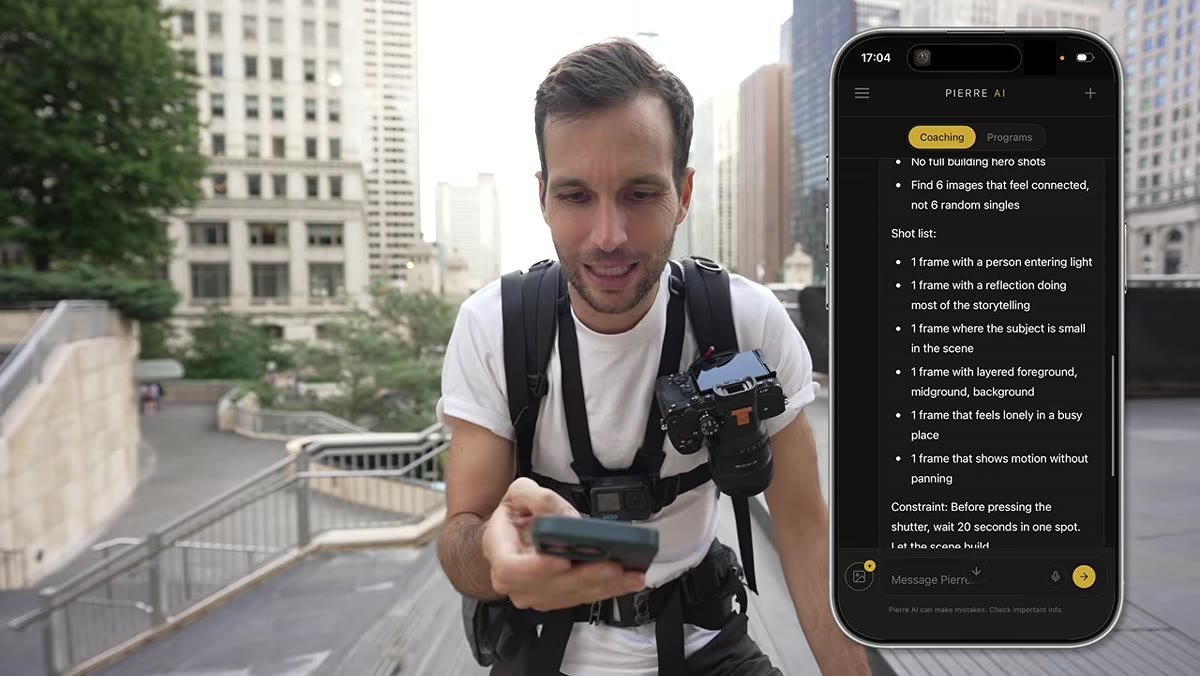
The AI returns a structured six-frame series called “Chicago In Between” with a hard rule: 55mm only for the first hour. Pierre’s instinct to question it doesn’t matter here, and that’s the point. He pockets the 24mm and starts shooting. This step is where most photographers fail the exercise. If you read the brief and immediately start negotiating with yourself (“but what if I just use the wide for one shot”), you’ve already lost the benefit. The constraint is the whole mechanism. Commit to it before you leave the house.
Pierre reading the six-frame “Chicago In Between” brief on screen
The AI returns a structured six-frame series called “Chicago In Between” with a hard rule: 55mm only for the first hour. Pierre’s instinct to question it doesn’t matter here, and that’s the point. He pockets the 24mm and starts shooting. This step is where most photographers fail the exercise. If you read the brief and immediately start negotiating with yourself (“but what if I just use the wide for one shot”), you’ve already lost the benefit. The constraint is the whole mechanism. Commit to it before you leave the house.
Step 3: Start With the Hardest Frame First
 Pierre on Chicago street scanning for small figure in large scene
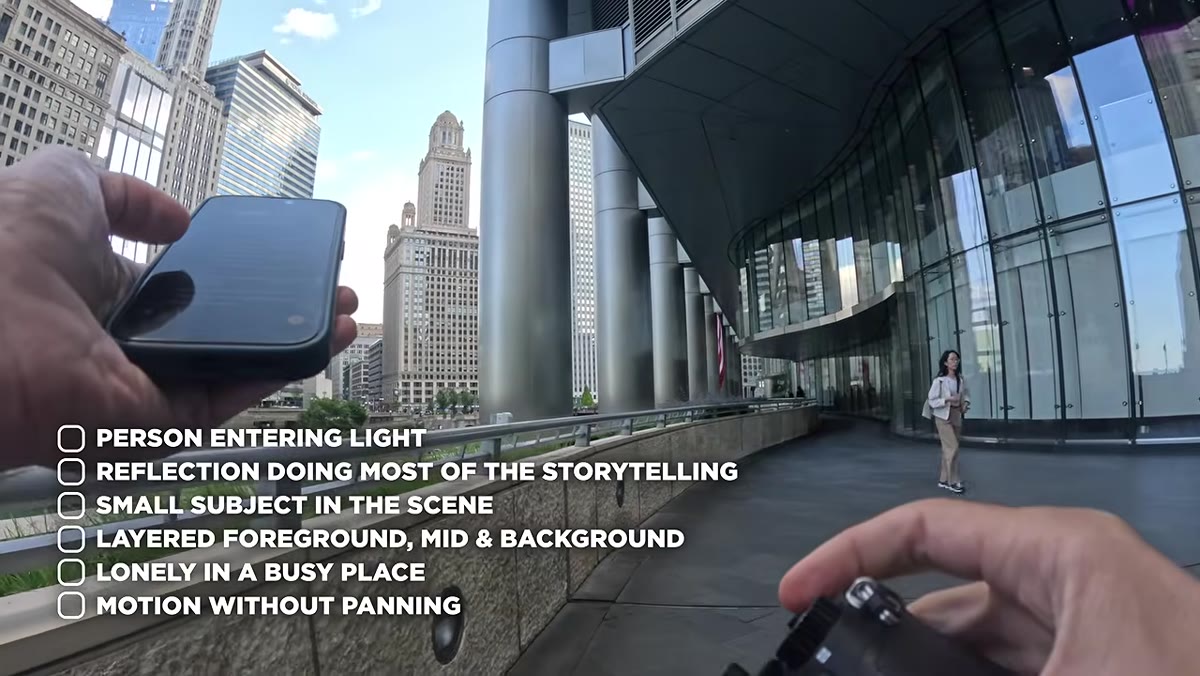
The first assigned frame asks for a person who reads as small and isolated inside a large, busy environment. Pierre doesn’t drift toward easier shots first. He scouts a location where the architecture creates scale and waits for the right pedestrian to enter the frame. On a 55mm, getting that sense of environmental scale requires distance and patience, not a wide angle. He positions himself back far enough that the subject becomes a compositional element rather than the subject in the traditional portrait sense.
Pierre on Chicago street scanning for small figure in large scene
The first assigned frame asks for a person who reads as small and isolated inside a large, busy environment. Pierre doesn’t drift toward easier shots first. He scouts a location where the architecture creates scale and waits for the right pedestrian to enter the frame. On a 55mm, getting that sense of environmental scale requires distance and patience, not a wide angle. He positions himself back far enough that the subject becomes a compositional element rather than the subject in the traditional portrait sense.
Step 4: Let the AI Review the Location, Not Just the Final Image
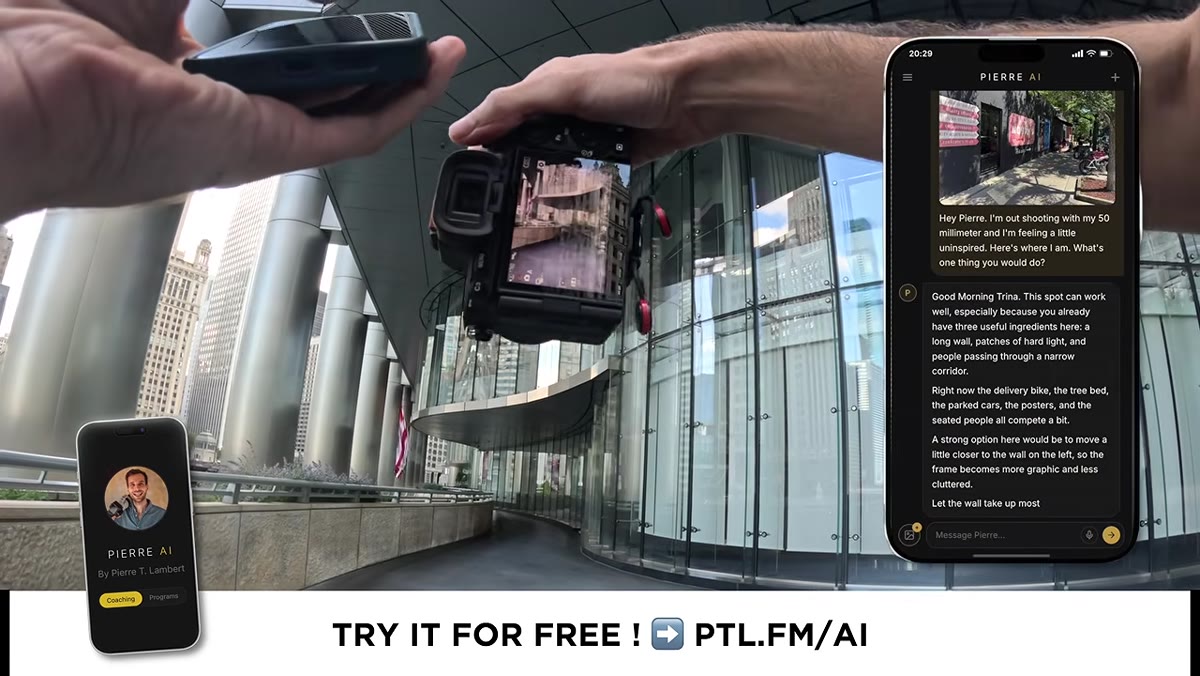 Pierre uploading a test shot for real-time location feedback
This is the step I hadn’t seen done this way before. Pierre photographs a candidate location, sends it to the AI mid-session, and asks whether it fits the brief before he invests serious time waiting for the shot. The AI responds with what’s missing and what’s working, essentially functioning as a remote collaborator. If you’re not using an AI tool with image input, you can replicate this by asking a brutally honest friend to evaluate screenshots while you shoot. The goal is catching compositional problems in the field, not in Lightroom two days later.
Pierre uploading a test shot for real-time location feedback
This is the step I hadn’t seen done this way before. Pierre photographs a candidate location, sends it to the AI mid-session, and asks whether it fits the brief before he invests serious time waiting for the shot. The AI responds with what’s missing and what’s working, essentially functioning as a remote collaborator. If you’re not using an AI tool with image input, you can replicate this by asking a brutally honest friend to evaluate screenshots while you shoot. The goal is catching compositional problems in the field, not in Lightroom two days later.
Step 5: Wait for the Frame Rather Than Settle for the Scene
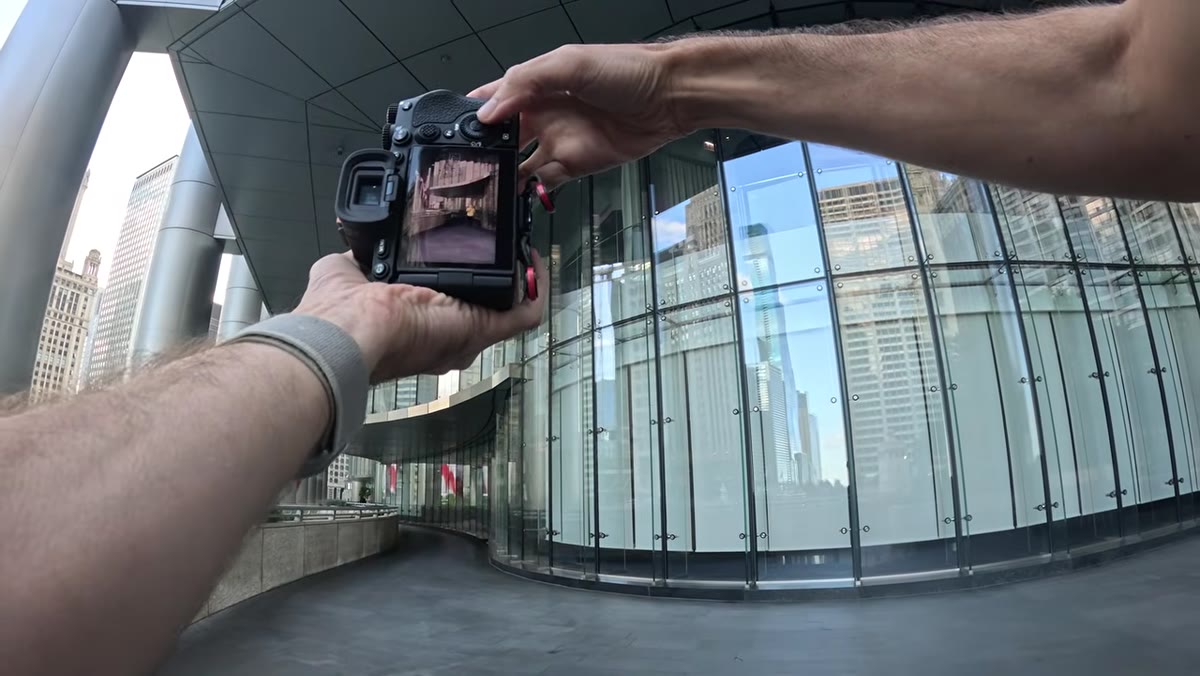 Pierre waiting as woman in yellow coat enters reflection frame
The reflection brief says the reflection should do “most of the storytelling,” not just appear in the image. Pierre finds a puddle that multiplies a figure across the frame. He doesn’t shoot the puddle and call it done. He waits until a pedestrian in a yellow coat creates the contrast point that makes the reflection read as intentional rather than accidental. On a fixed focal length with no zoom to compensate, your only variables are position and timing. This step is a reminder that the 55mm forces compositional discipline in a way zooms don’t.
Pierre waiting as woman in yellow coat enters reflection frame
The reflection brief says the reflection should do “most of the storytelling,” not just appear in the image. Pierre finds a puddle that multiplies a figure across the frame. He doesn’t shoot the puddle and call it done. He waits until a pedestrian in a yellow coat creates the contrast point that makes the reflection read as intentional rather than accidental. On a fixed focal length with no zoom to compensate, your only variables are position and timing. This step is a reminder that the 55mm forces compositional discipline in a way zooms don’t.
Step 6: Keep the Failures in the Record
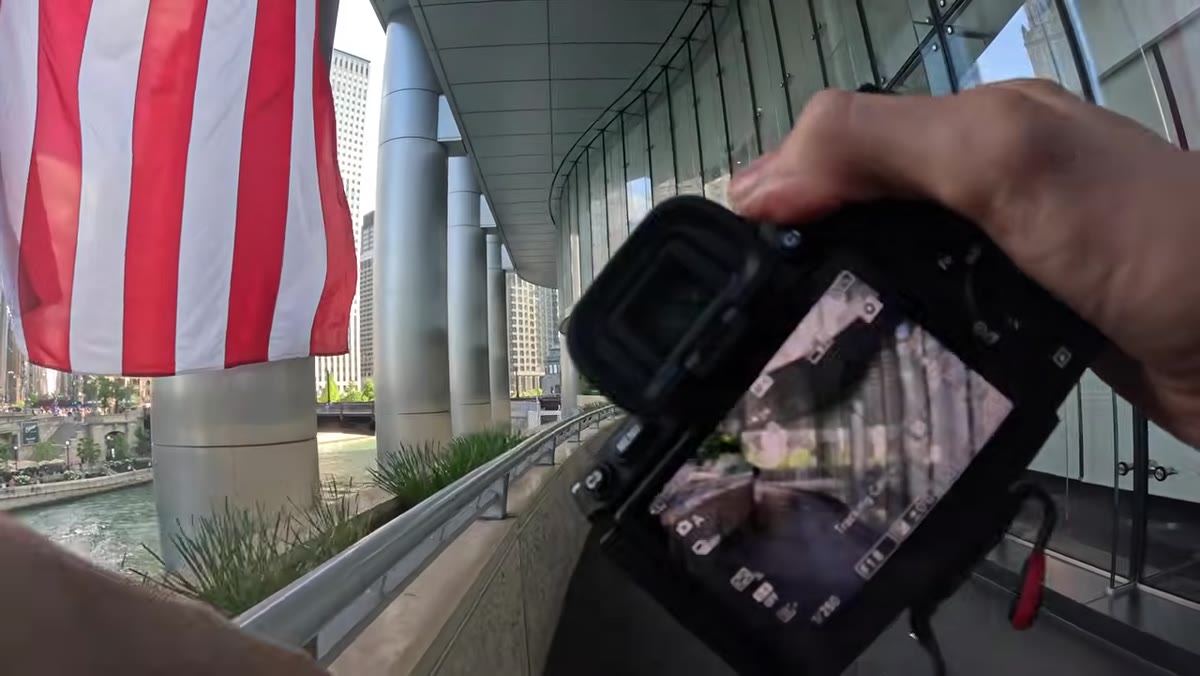 Pierre reviewing shots that didn’t meet the brief criteria
Pierre explicitly keeps the frames that didn’t land and talks through why. One frame gets interrupted when a building security guard moves him along. Another doesn’t quite satisfy the motion-without-panning constraint. He logs these as real outcomes of the session, not as deleted drafts. This matters for the learning loop. If you only keep the winners, you can’t diagnose what the constraint revealed about your instincts. The failure frames show where your defaults are, which is the actual coaching data.
Pierre reviewing shots that didn’t meet the brief criteria
Pierre explicitly keeps the frames that didn’t land and talks through why. One frame gets interrupted when a building security guard moves him along. Another doesn’t quite satisfy the motion-without-panning constraint. He logs these as real outcomes of the session, not as deleted drafts. This matters for the learning loop. If you only keep the winners, you can’t diagnose what the constraint revealed about your instincts. The failure frames show where your defaults are, which is the actual coaching data.
What I’d Add: Run This on a Single Cheap Prime
I’ve tested this kind of constrained shooting on a budget Sony 50mm f/1.8 that runs around 200 dollars used, and the experience tracks almost exactly with what Pierre demonstrates. The constraint isn’t about the gear. It’s about removing decisions. When you have one lens, one hour, and six specific frames to find, you stop thinking about equipment and start thinking about light and timing. That’s the unlock.
If you want to try the brief format without any AI tool, write six compositional targets the night before based on themes: scale, reflection, motion, stillness, shadow, and transition. Seal the list. Open it at the location. The act of not knowing until you’re on the street is most of the value.
The single most transferable idea from this tutorial is that a mission isn’t the same as a goal. “Go shoot Chicago” is a goal. “Find one frame where a reflection carries the story, using only your 55mm, in the next hour” is a mission. The specificity creates pressure, and pressure produces decisions you wouldn’t otherwise make.
Watch the full tutorial on YouTube to see Pierre work through the complete six-frame series and hear his real-time evaluation of what the AI brief pushed him to find.
Comments
Leave a Comment