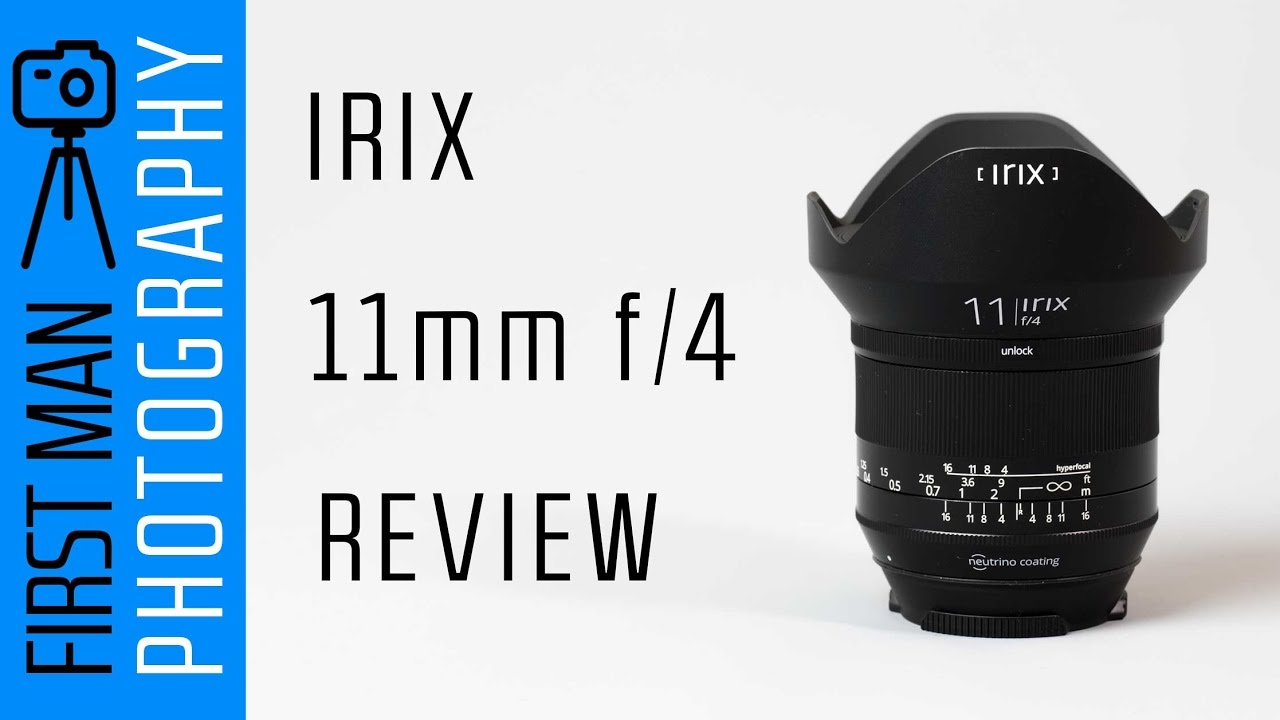
There’s a question I get more than almost any other from photographers stepping up their landscape game: “What’s the widest I can go before my images start looking like a funhouse mirror?” It’s a fair concern. Ultra-wide lenses are either revelatory or a regret, and there isn’t much middle ground. When I came across this review from First Man Photography covering the Irix 11mm f/4 Blackstone, I paid close attention, because this lens sits in a price bracket that gets real consideration from shooters who aren’t ready to drop a mortgage payment on a first-party prime.
Watch the full tutorial on YouTube
What makes this review useful isn’t pixel-level lab testing. First Man Photography takes a practical, real-world approach, the kind that actually tells you whether a lens fits into a working shooter’s kit. That’s the lens evaluation framework I care about, and it’s what I’m breaking down step by step here.
Step 1: Check the Packaging and Included Accessories
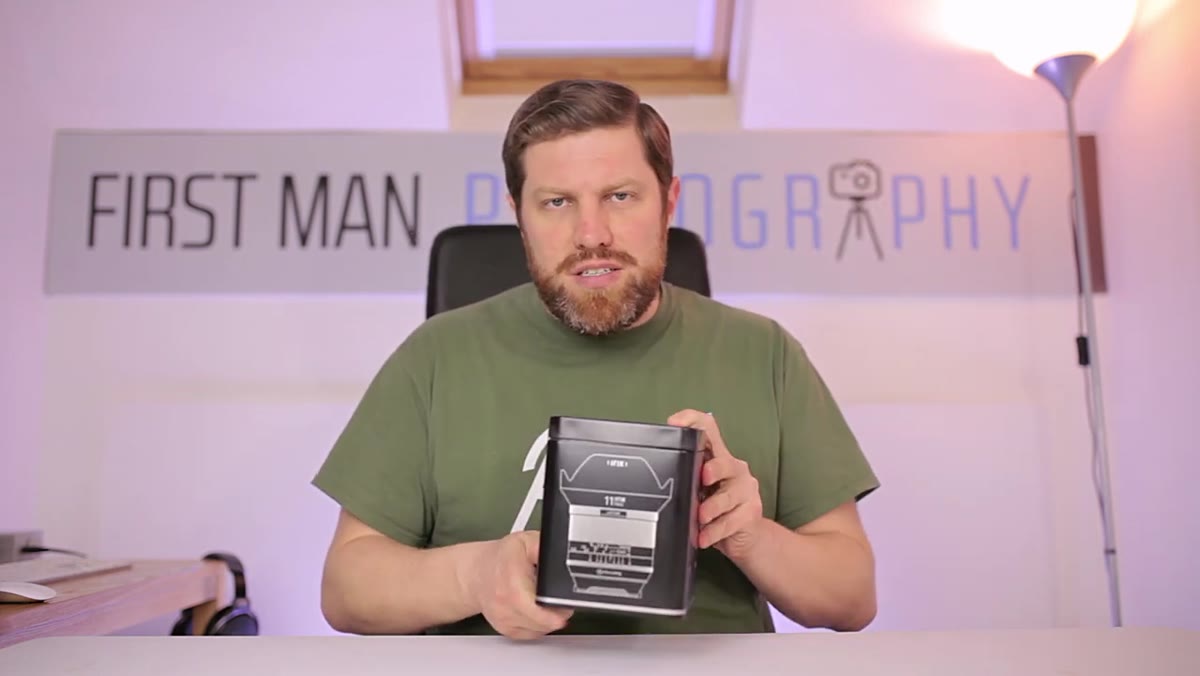 Reviewer opening the metal box and neoprene pouch
Don’t skip this part. Packaging tells you something about how a manufacturer thinks about their product, and in Irix’s case, the 11mm Blackstone ships in a hard metal box with a neoprene-style protective pouch inside. That’s not fluff. A hard case means this lens is positioned as a serious tool, and if you’re buying second-hand, the presence of that original case is a reliable signal that the previous owner treated it with care.
Reviewer opening the metal box and neoprene pouch
Don’t skip this part. Packaging tells you something about how a manufacturer thinks about their product, and in Irix’s case, the 11mm Blackstone ships in a hard metal box with a neoprene-style protective pouch inside. That’s not fluff. A hard case means this lens is positioned as a serious tool, and if you’re buying second-hand, the presence of that original case is a reliable signal that the previous owner treated it with care.
The lens itself arrives clean and ready to mount. No cheap plastic wrap, no flimsy cardboard. For a third-party manufacturer competing against Canon and Nikon glass, this first impression matters more than people give it credit for.
Step 2: Understand What “Rectilinear” Means for This Focal Length
 Close-up of the bulbous front element of the 11mm lens
The Irix 11mm has a pronounced, bulging front element that immediately makes people ask if it’s a fisheye. It is not. This is a rectilinear lens, which means it’s engineered to render straight lines as straight lines, not curved ones. Irix achieves this through a complex internal optical formula: four refractive lens elements, two ED (extra-low dispersion) elements, and three aspherical elements all working together to counteract the barrel distortion that a focal length this wide would otherwise produce.
Close-up of the bulbous front element of the 11mm lens
The Irix 11mm has a pronounced, bulging front element that immediately makes people ask if it’s a fisheye. It is not. This is a rectilinear lens, which means it’s engineered to render straight lines as straight lines, not curved ones. Irix achieves this through a complex internal optical formula: four refractive lens elements, two ED (extra-low dispersion) elements, and three aspherical elements all working together to counteract the barrel distortion that a focal length this wide would otherwise produce.
Irix claims distortion as low as 3.13%. In the reviewer’s real-world testing, that holds up well, especially through the center of the frame where horizon lines stay flat. Corners show some distortion, as they do on every ultra-wide lens ever made, but it’s not the aggressive warping that makes subjects near the edges look pulled and stretched. For landscape work, where you’re rarely placing a person in the corner of the frame, this is a non-issue.
Step 3: Evaluate Image Sharpness in Practical Shooting Conditions
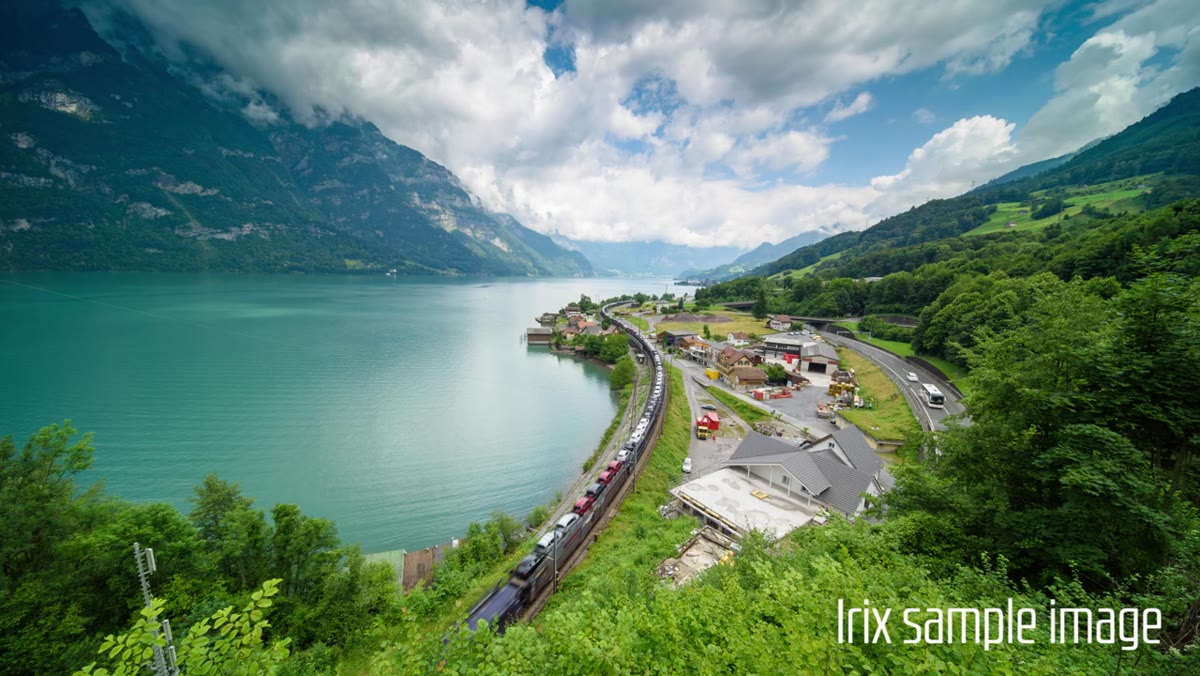
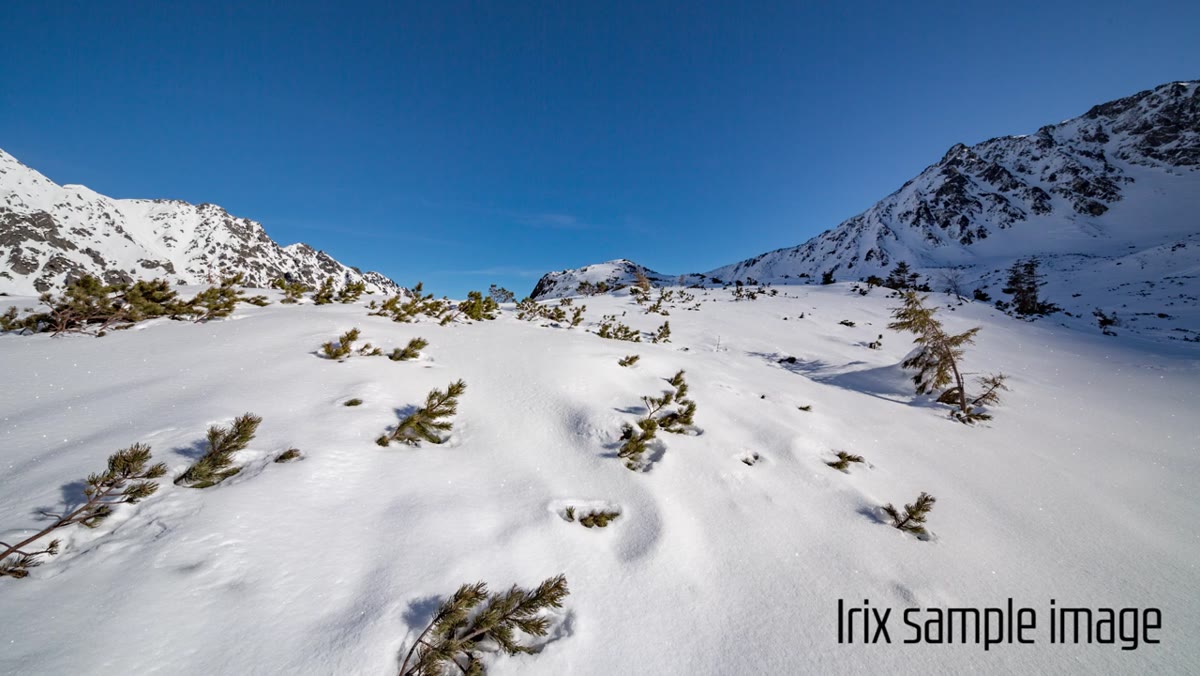
 Sample images displayed showing sharpness across the frame
Sharpness on this lens, paired with a Canon 5D Mark IV, is genuinely impressive. Center sharpness is strong at f/4, and stopping down improves edge-to-edge consistency. This is worth testing on your own camera body before committing, because full-frame lenses at 11mm can resolve differently depending on the sensor behind them, but the optical formula here is clearly built to perform.
Sample images displayed showing sharpness across the frame
Sharpness on this lens, paired with a Canon 5D Mark IV, is genuinely impressive. Center sharpness is strong at f/4, and stopping down improves edge-to-edge consistency. This is worth testing on your own camera body before committing, because full-frame lenses at 11mm can resolve differently depending on the sensor behind them, but the optical formula here is clearly built to perform.
The practical test is simple: shoot a building facade or a brick wall filling the entire frame, then zoom into the corners at 100%. If you’re seeing mush, that’s a problem. If the lines hold and textures are visible, you’re working with a capable optic. Based on the review footage and sample images shown, this lens passes that test with room to spare.
Step 4: Assess Vignetting and Chromatic Aberration
 Reviewer discussing vignetting at f/4 with sample footage
At f/4 (wide open), the Irix 11mm shows light vignetting, darker corners compared to the center of the frame. Stop down to f/5.6 or f/8 and it clears up considerably. For landscape photographers shooting golden hour, a touch of natural vignetting can actually be a welcome creative effect, drawing the eye toward the center of the image.
Reviewer discussing vignetting at f/4 with sample footage
At f/4 (wide open), the Irix 11mm shows light vignetting, darker corners compared to the center of the frame. Stop down to f/5.6 or f/8 and it clears up considerably. For landscape photographers shooting golden hour, a touch of natural vignetting can actually be a welcome creative effect, drawing the eye toward the center of the image.
Chromatic aberration, the color fringing you sometimes see along high-contrast edges, is present but mild. Both of these issues fall well within what Lightroom’s lens correction panel handles automatically in about three seconds. If you’re already using lens profiles in your RAW processing workflow (and you should be), neither of these flaws will meaningfully affect your final images.
Step 5: Compare the Blackstone vs. the Firefly Version
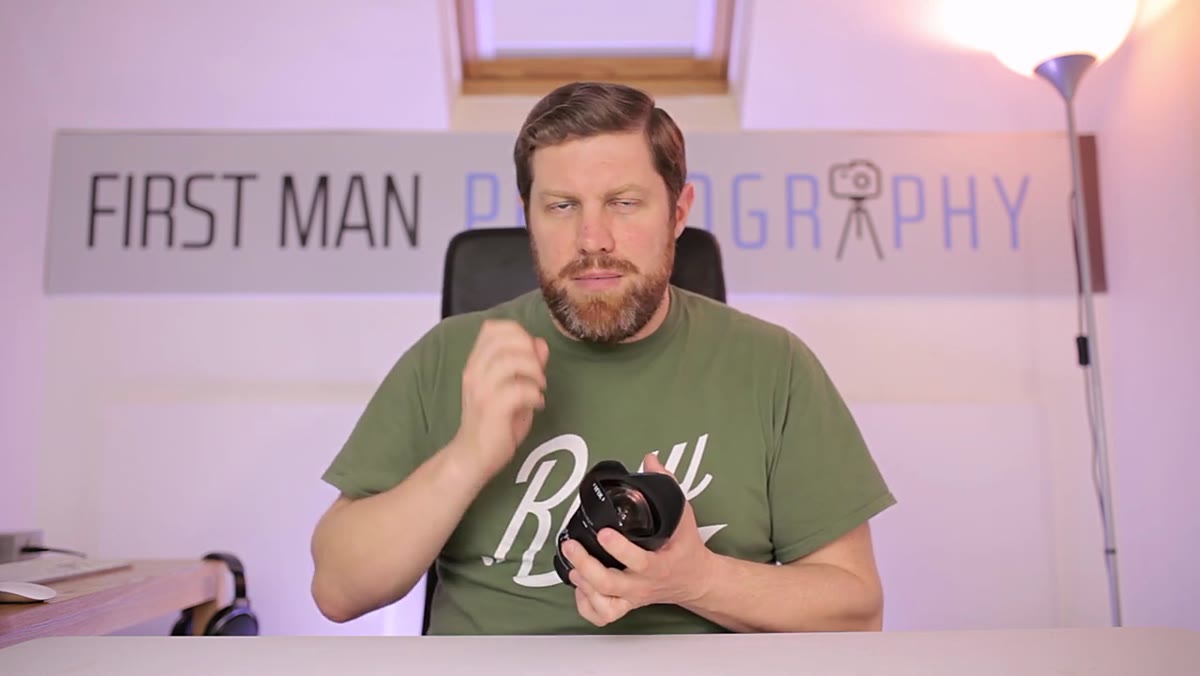
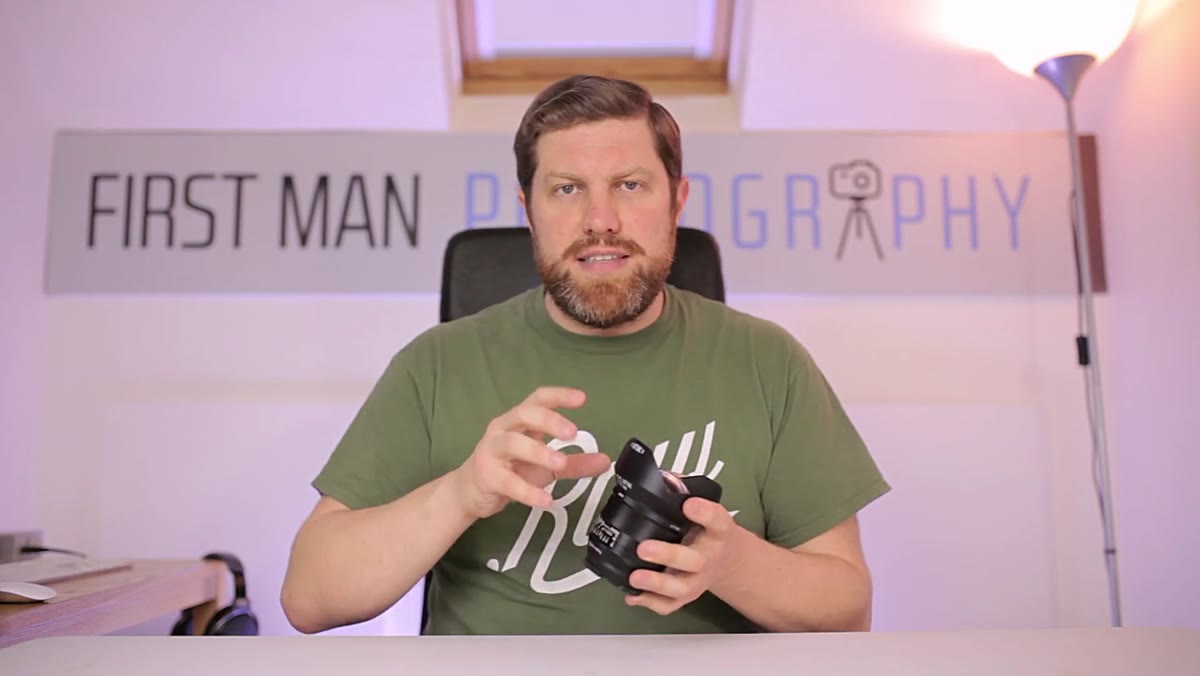 Reviewer holding the Blackstone and describing the two variants
Irix makes the 11mm in two versions. The Firefly is the lighter, plastic-bodied option at a lower price point. The Blackstone, which this review covers, is the premium model with a magnesium alloy body that feels like it could survive a drop onto a rocky trail without flinching.
Reviewer holding the Blackstone and describing the two variants
Irix makes the 11mm in two versions. The Firefly is the lighter, plastic-bodied option at a lower price point. The Blackstone, which this review covers, is the premium model with a magnesium alloy body that feels like it could survive a drop onto a rocky trail without flinching.
The optics inside both versions are identical. Let that sink in. If you’re a travel photographer counting grams in your pack, the Firefly gets you the same image quality for less money and less weight. If you shoot in rough conditions, cold weather, or just want a lens that inspires confidence when you’re hanging over a cliff edge to get the shot, the Blackstone’s build quality justifies the price gap. This is one of the few cases where the premium version isn’t about better photos, it’s about durability and feel.
Step 6: Examine the Physical Controls and Lens Hood Design
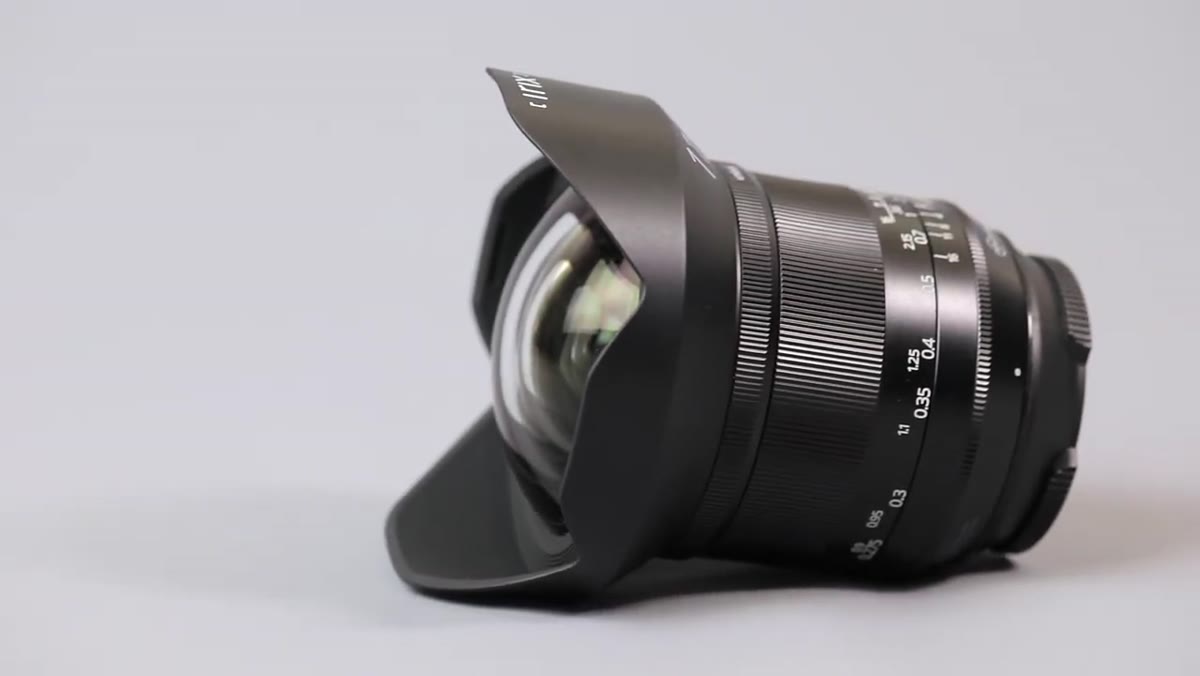 Reviewer showing the permanently attached lens hood and metal focus ring
The Blackstone has a permanently attached plastic lens hood, which protects that vulnerable front element without any risk of losing the hood in the field. The rest of the build is metal, including a smooth, well-damped focus ring with a hard stop at infinity, which matters for landscape photographers who want to nail focus in the dark without guessing.
Reviewer showing the permanently attached lens hood and metal focus ring
The Blackstone has a permanently attached plastic lens hood, which protects that vulnerable front element without any risk of losing the hood in the field. The rest of the build is metal, including a smooth, well-damped focus ring with a hard stop at infinity, which matters for landscape photographers who want to nail focus in the dark without guessing.
There is no autofocus on this lens. It is manual focus only. For landscape and architectural work, that’s completely workable. For street or any situation where you need to react quickly, factor that in before buying. The focus ring feel on the Blackstone is precise enough that zone focusing, where you set a distance and shoot, is a reliable technique at this focal length.
My Take: Where This Lens Sits in the Value Equation
I’ve tested enough third-party glass to know that “third-party” doesn’t mean “compromise” anymore. My spreadsheet has lenses from Samyang, Tokina, Sigma, and now Irix, and the Blackstone 11mm competes seriously with options costing significantly more. The build quality alone is better than some first-party lenses I’ve handled at twice the price.
Where I’d push back slightly: if you’re a casual shooter or someone who travels ultralight, the Firefly version removes the premium price while keeping everything that actually affects your images. The Blackstone is the right call for working landscape photographers who put their gear through punishment. For everyone else, consider where the weight and cost savings from the Firefly could go toward other parts of your kit.
The single most important thing I took from this review is the distortion story. At 11mm, most shooters assume they’re signing up for compromised lines and warped edges. The Irix Blackstone shows that a well-engineered rectilinear ultra-wide can deliver a usable, honest image that doesn’t require heavy correction to look natural. That opens up creative possibilities that just weren’t accessible at this price point a few years ago.
Watch the full tutorial on YouTube to see the sample images and hear the full breakdown directly from First Man Photography.
Comments (4)
Simple but effective. Sometimes that's all you need.
This should be required reading for anyone starting out.
Quality content like this is rare. Keep it up.
This saved me so much time on my last edit. Wish I'd found this sooner.
Leave a Comment