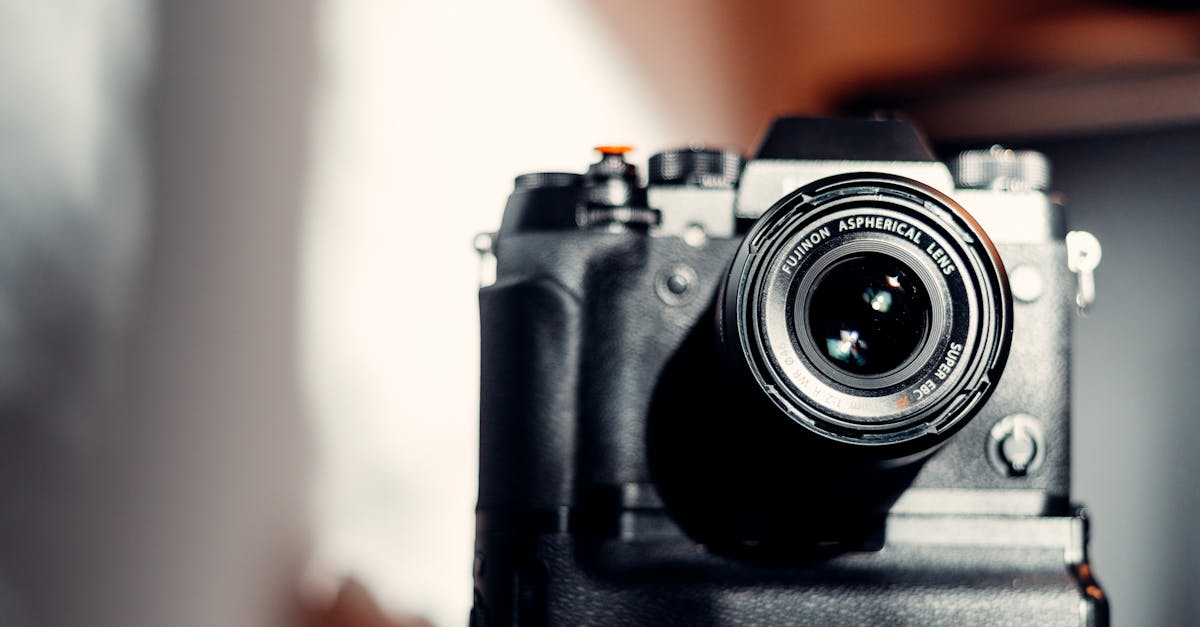
“Should I go full frame?” is the most common gear question I get. The marketing says full frame is better at everything. The reality is more nuanced.
What Full Frame Actually Gives You
Better Low-Light Performance
This is the biggest real-world advantage. A full-frame sensor is roughly 2.5 times larger than an APS-C (crop) sensor. More surface area means more light captured, which means less noise at high ISO settings.
At ISO 6400, a modern full-frame camera produces images that look like a crop sensor at ISO 2500. That’s roughly a one-stop advantage. If you regularly shoot in dim environments — events, indoor sports, concert photography — this matters.
Shallower Depth of Field
A full-frame sensor produces shallower depth of field at equivalent field of view and aperture. If you love that creamy background separation in portraits, full frame makes it easier to achieve.
Higher Dynamic Range
Full-frame sensors generally capture a wider range of tones from shadows to highlights. This means more room to recover blown highlights and lift shadows in post-processing. Landscape and architectural photographers benefit the most from this.
More Resolution (Usually)
Most current full-frame cameras offer higher resolution than their crop counterparts, though this gap has narrowed. A 40-60 megapixel full-frame sensor gives you enormous detail for cropping and large prints.
What Full Frame Costs You
Money
A full-frame body costs $1,500-3,000 for a capable model. A comparable crop-sensor body costs $800-1,500. Full-frame lenses are also more expensive — that 70-200mm f/2.8 is $2,500 instead of $1,200 for the crop equivalent.
The total system cost difference: A full-frame kit (body + 3 lenses) easily runs $4,000-8,000. A crop-sensor kit with equivalent coverage runs $2,000-4,000.
Size and Weight
Full-frame bodies are larger and heavier. Full-frame lenses are larger and heavier. The difference isn’t dramatic for a single lens, but carry three lenses plus a body for a full day and you’ll feel it.
Crop Factor Advantage for Telephoto
Crop sensors effectively multiply your focal length by 1.5x (APS-C) or 2x (Micro Four Thirds). A 200mm lens on a crop sensor gives you the field of view of a 300mm lens on full frame. For wildlife and sports photographers, this is a genuine advantage — equivalent reach costs much less on crop.
When Full Frame Is Worth It
- You regularly shoot in low light and need clean high-ISO images
- You’re a professional whose clients expect maximum image quality
- You shoot landscapes and need the widest possible dynamic range
- You print large (20x30 inches and above) and need the resolution
When Full Frame Is a Waste of Money
- You shoot primarily outdoors in good light
- Your output is social media and web (where a phone camera is honestly fine)
- You’re still learning fundamentals like composition, exposure, and lighting
- You’d have to sacrifice lens quality to afford a full-frame body
This last point is critical. A crop-sensor camera with a sharp f/2.8 lens produces better images than a full-frame camera with a cheap kit zoom. If going full frame means you can’t afford good glass, stay on crop.
The Honest Answer
For 80% of photographers, a modern crop-sensor camera is more than sufficient. The latest APS-C cameras from Sony, Fujifilm, Canon, and Nikon produce stunning images that are indistinguishable from full frame at normal viewing sizes.
Full frame becomes worth it when you’re hitting the limits of your current sensor — consistently needing better high-ISO performance, more dynamic range, or shallower depth of field than your crop camera can deliver. If you’re not hitting those limits, the money is better spent on lenses, lighting, or education.
Spend on skills first, lenses second, bodies last. In that order.
Comments (5)
Is there a Lightroom equivalent for this or is it strictly a Photoshop technique?
Put this into practice over the weekend. My portraits have never looked better.
Short, practical, and to the point. More of this please.
This is exactly what I needed. Bookmarked for future reference.
Thanks Steve Mitchell! Glad it was helpful.
Leave a Comment