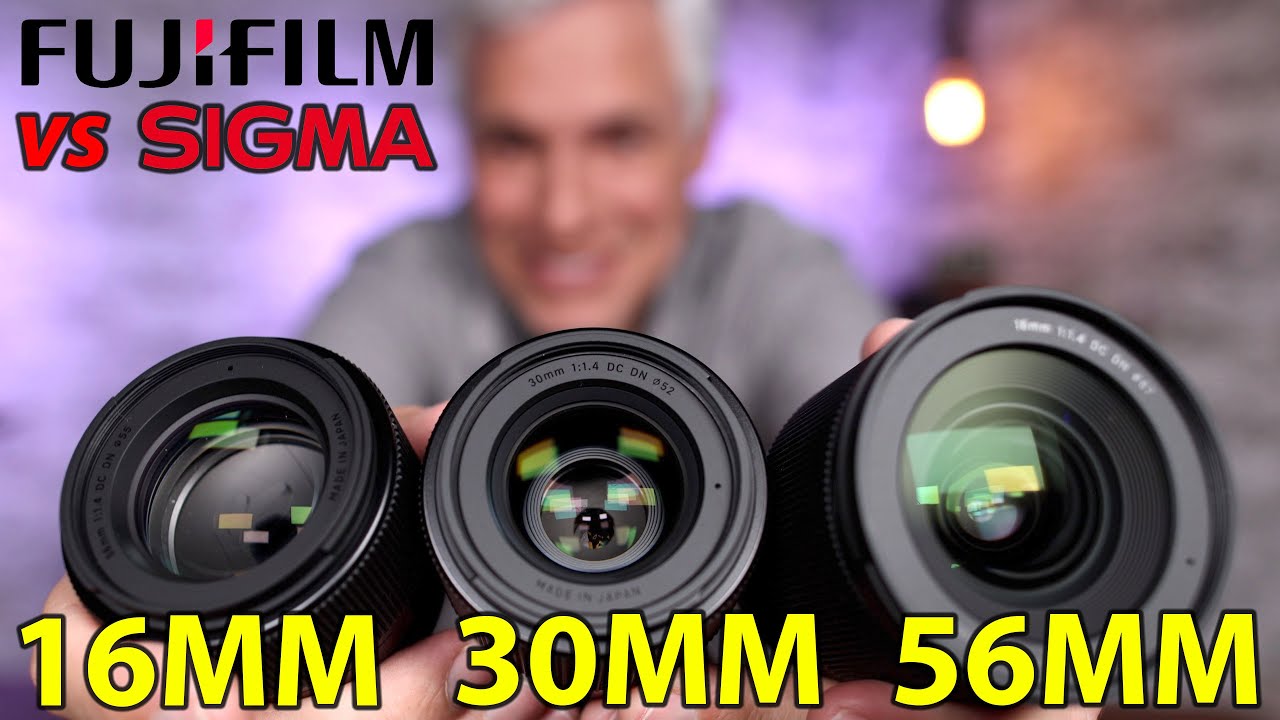
If you shoot Fuji and you’ve been eyeing Sigma’s APS-C lens lineup with envy, the wait is finally over. Sigma has ported their popular 16mm, 30mm, and 56mm trio to the Fuji X-mount, bringing autofocus and auto exposure to a system that’s long deserved more third-party love. That sounds like a win on paper, but the real question for anyone who cares about value is whether these lenses actually earn their price tag when stacked against what already exists.
This Tony and Chelsea Northrup tutorial puts all three Sigma lenses head-to-head against their Fujifilm equivalents, with Viltrox thrown in for good measure. Watch the full tutorial on YouTube. I’ve been running my own spreadsheet of budget lenses for years, and this comparison fills in a gap I’ve had in my Fuji column for a while. Here’s what the video covers and what it actually means for how you spend your money.
Step 1: Understand What Sigma Is Bringing to X-Mount
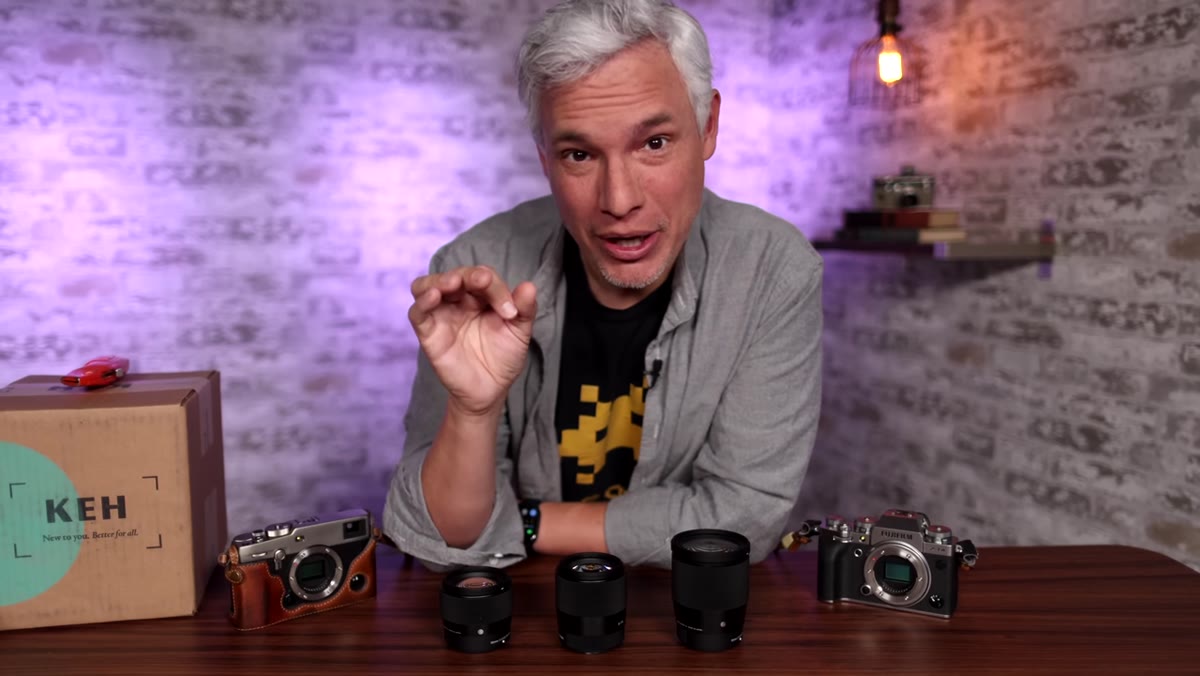 Sigma and Fuji lenses side by side on a table
Sigma’s 16mm f/1.4, 30mm f/1.4, and 56mm f/1.4 have already earned strong reputations on Sony and Canon APS-C systems. The X-mount versions bring full autofocus and auto exposure support, which matters because Fuji shooters have historically had to rely almost entirely on native glass for reliable AF performance. The promise here is that you get a proven optical formula on a system that previously had no access to it.
Sigma and Fuji lenses side by side on a table
Sigma’s 16mm f/1.4, 30mm f/1.4, and 56mm f/1.4 have already earned strong reputations on Sony and Canon APS-C systems. The X-mount versions bring full autofocus and auto exposure support, which matters because Fuji shooters have historically had to rely almost entirely on native glass for reliable AF performance. The promise here is that you get a proven optical formula on a system that previously had no access to it.
The catch worth flagging immediately: at the time of this video, the Sigma lenses were still running pre-release firmware. Autofocus was not tested. That’s not a small asterisk. Third-party lenses on mirrorless systems can lag behind OEM in AF speed and tracking, and that gap matters a lot depending on what you shoot. Image quality tests are still valuable, but hold off on buying these as a sports or action lens until final firmware results are in.
Step 2: Compare the 16mm Wide-Angle Options
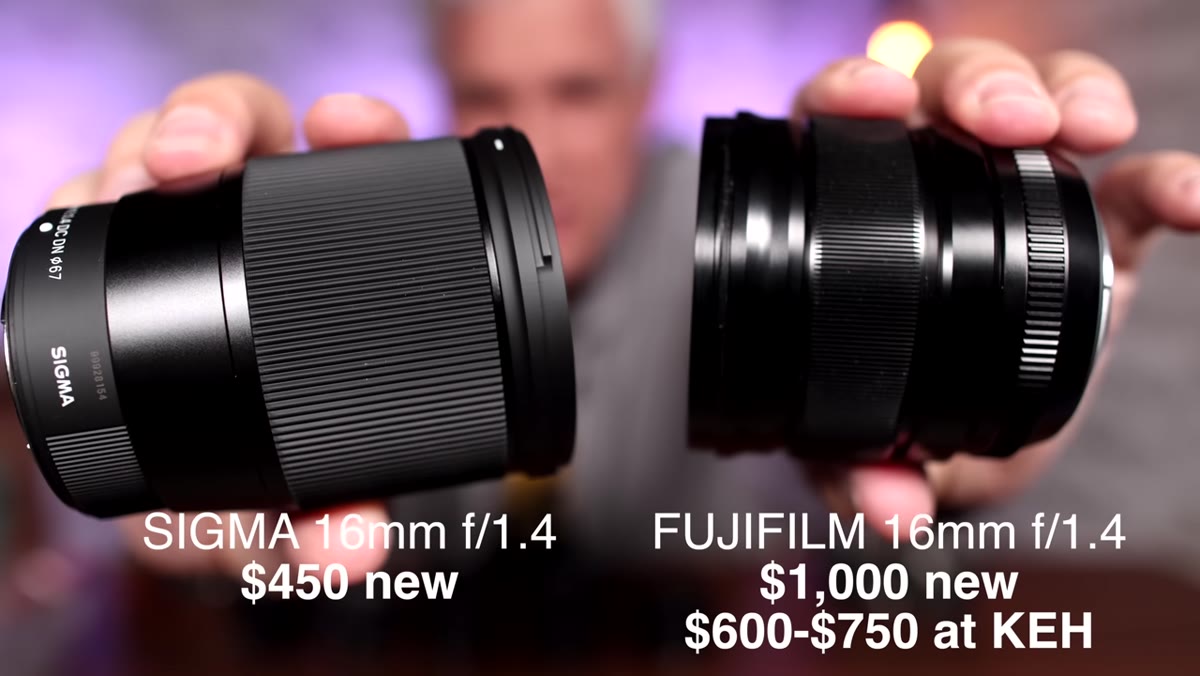 Sigma 16mm and Fuji 16mm f/1.4 held up side by side
The wide-angle matchup is Sigma 16mm f/1.4 versus the Fujifilm 16mm f/1.4. Both are fast primes well-suited to astrophotography, vlogging, and environmental portraits. The optical character of both lenses is strong, but the physical differences are immediately obvious. The Fuji is noticeably more compact and built entirely from metal. It also includes a physical aperture ring and a manual focus clutch that lets you switch between AF and MF by pulling the focus ring back, no menu diving required.
Sigma 16mm and Fuji 16mm f/1.4 held up side by side
The wide-angle matchup is Sigma 16mm f/1.4 versus the Fujifilm 16mm f/1.4. Both are fast primes well-suited to astrophotography, vlogging, and environmental portraits. The optical character of both lenses is strong, but the physical differences are immediately obvious. The Fuji is noticeably more compact and built entirely from metal. It also includes a physical aperture ring and a manual focus clutch that lets you switch between AF and MF by pulling the focus ring back, no menu diving required.
The Sigma lacks that aperture ring entirely. For street shooters or anyone who picked up a Fuji camera specifically because of the tactile, analog-style controls, that omission stings. Sigma has included physical aperture rings on newer Sony-mount designs, so it’s a deliberate choice that doesn’t quite fit the Fuji ecosystem. If the X-Pro series is your camera, also consider that the Sigma 16mm has a larger barrel that blocks more of the optical viewfinder than the native Fuji lens does.
Step 3: Evaluate the Normal Focal Length Lineup
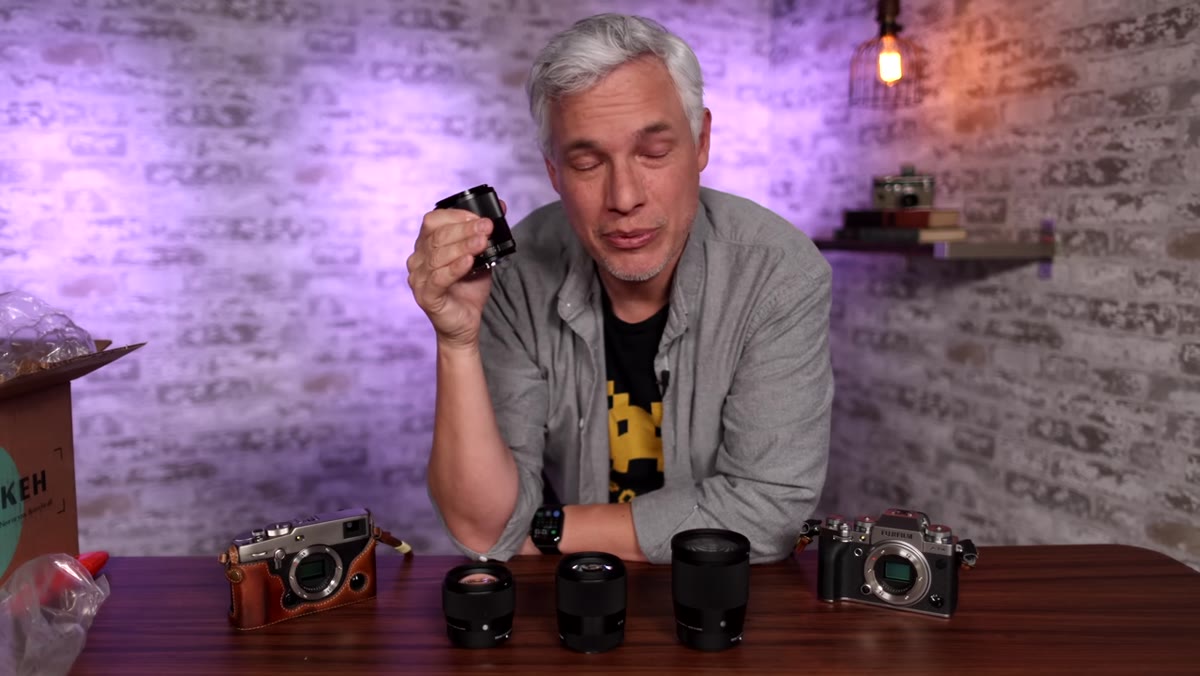
 Sigma 30mm, Fuji 35mm, and Viltrox 33mm lined up on camera
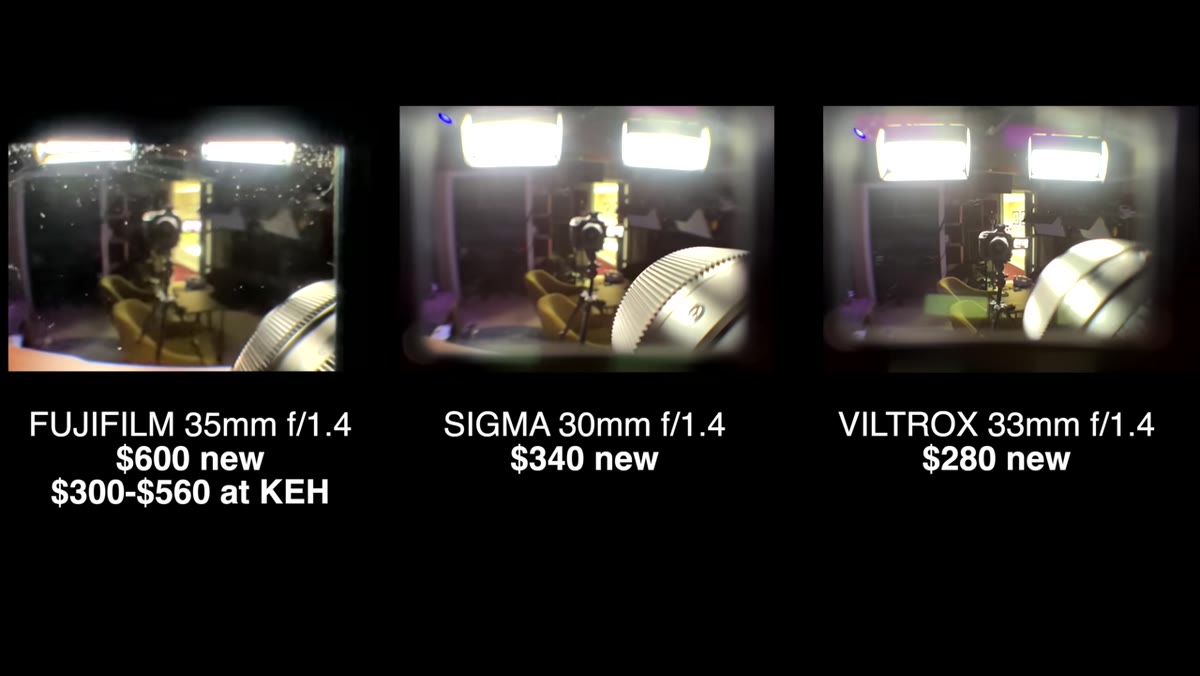
The “normal” range for APS-C sits around 28-35mm equivalent, which translates to roughly a 50mm full-frame field of view. Here you have three real contenders: the Sigma 30mm f/1.4, the Fujifilm 35mm f/1.4, and the Viltrox 33mm f/1.4. The Viltrox is the wild card that makes this segment genuinely interesting from a value standpoint.
Sigma 30mm, Fuji 35mm, and Viltrox 33mm lined up on camera
The “normal” range for APS-C sits around 28-35mm equivalent, which translates to roughly a 50mm full-frame field of view. Here you have three real contenders: the Sigma 30mm f/1.4, the Fujifilm 35mm f/1.4, and the Viltrox 33mm f/1.4. The Viltrox is the wild card that makes this segment genuinely interesting from a value standpoint.
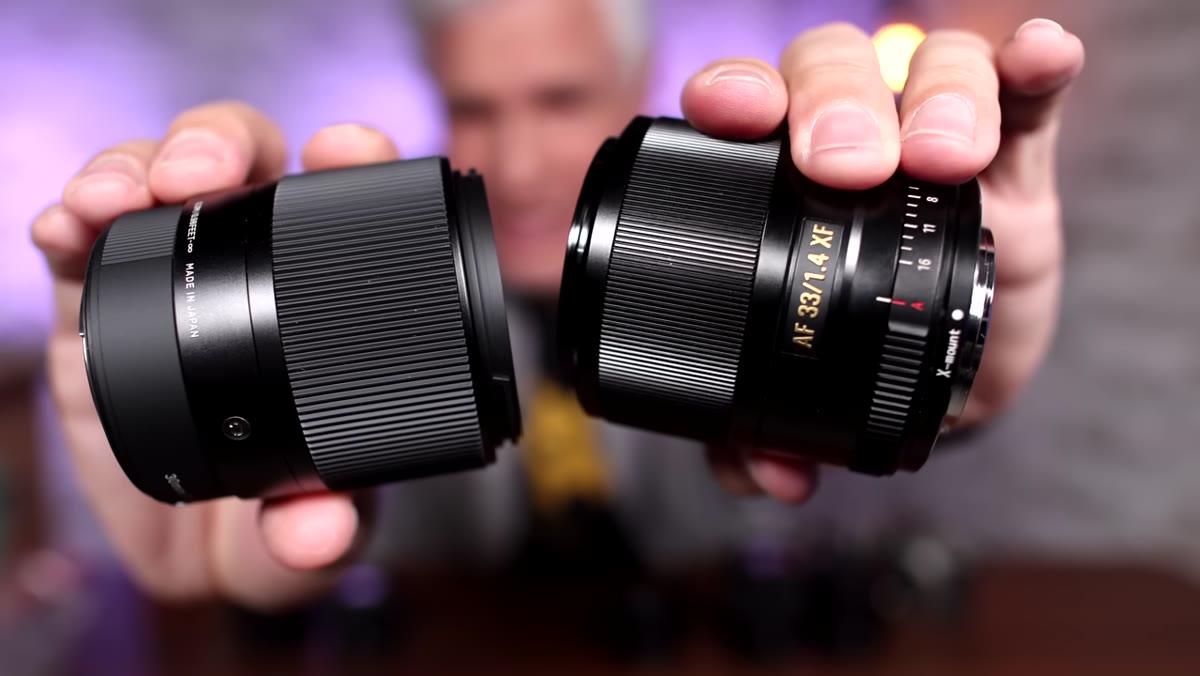
Physically, the Fuji is the smallest of the three and the only one with a native aperture ring. The Viltrox is mid-sized and also includes a physical aperture ring, which is a meaningful point in its favor for Fuji users. The Sigma is the largest of the three. Size alone doesn’t determine value, but when you’re already shooting a system prized for its compact, well-balanced feel, a noticeably larger third-party lens is worth factoring into your decision before you look at price or sharpness charts.
Step 4: Break Down the Portrait Lens Comparison
 Three 56mm portrait lenses arranged for comparison
The 56mm f/1.4 focal length is where things get most interesting for portrait photographers. On APS-C, 56mm gives you roughly an 85mm full-frame equivalent, which is the sweet spot for flattering compression on faces and clean background separation. Sigma enters this segment against the Fujifilm 56mm f/1.2, which is a slightly faster lens and one of the most beloved native Fuji primes available.
Three 56mm portrait lenses arranged for comparison
The 56mm f/1.4 focal length is where things get most interesting for portrait photographers. On APS-C, 56mm gives you roughly an 85mm full-frame equivalent, which is the sweet spot for flattering compression on faces and clean background separation. Sigma enters this segment against the Fujifilm 56mm f/1.2, which is a slightly faster lens and one of the most beloved native Fuji primes available.
The aperture ring issue applies here too. Fuji’s 56mm includes it. Sigma’s does not. But the optical performance in this segment is where your money is really riding, and the video runs proper sharpness and contrast tests to show how the two lenses render detail wide open and stopped down. Pay close attention to how each lens handles bokeh transitions, not just background blur, but how smoothly the out-of-focus areas blend. That rendering quality is what separates good portrait lenses from great ones.
Step 5: Run the Image Quality Tests
 Sharpness test charts displayed on screen for comparison
The testing methodology covers sharpness, contrast, and bokeh rendering across all three focal lengths. The approach is straightforward: shoot the same subjects with each lens at matched settings, then compare at 100 percent crops. This gives you a realistic sense of how each lens performs in actual use rather than in a controlled lab chart situation.
Sharpness test charts displayed on screen for comparison
The testing methodology covers sharpness, contrast, and bokeh rendering across all three focal lengths. The approach is straightforward: shoot the same subjects with each lens at matched settings, then compare at 100 percent crops. This gives you a realistic sense of how each lens performs in actual use rather than in a controlled lab chart situation.
What to look for as you watch: center sharpness wide open matters most for portrait work, while edge sharpness becomes critical for landscapes and architecture shot with the 16mm. Contrast affects how punchy your images look straight out of camera, which matters more on Fuji because many shooters rely heavily on film simulations without heavy post-processing. A low-contrast lens can undercut the look you’re going for before you even open Lightroom.
Step 6: Factor In the Viltrox as a Serious Alternative
 Viltrox 33mm mounted on X-Pro body with OVF view
Viltrox deserves more than a footnote here. The 33mm f/1.4 with its physical aperture ring is a direct challenge to both the Sigma and the Fuji in that focal length, and its price typically undercuts both. If you’ve been sleeping on Viltrox because the name doesn’t carry the same weight as Sigma or Fujifilm, that’s exactly the kind of brand bias that costs photographers real money.
Viltrox 33mm mounted on X-Pro body with OVF view
Viltrox deserves more than a footnote here. The 33mm f/1.4 with its physical aperture ring is a direct challenge to both the Sigma and the Fuji in that focal length, and its price typically undercuts both. If you’ve been sleeping on Viltrox because the name doesn’t carry the same weight as Sigma or Fujifilm, that’s exactly the kind of brand bias that costs photographers real money.
I’ve seen this play out in my own testing: a lens from a lesser-known brand frequently performs close enough to the premium option that the difference disappears in actual prints or web-sized exports. The Viltrox deserves a close look at its image quality results in the video before you dismiss it.
My Take: The Aperture Ring Is Not Optional for Fuji
I’ve tested a lot of third-party lenses on different systems, and one thing I’ve learned is that ergonomics aren’t a soft preference, they’re part of your actual workflow. On Fuji, the aperture ring is baked into how the whole system operates. Shooting without one on a Fuji body creates a friction point every single time you change your exposure settings. Sigma’s decision to skip it on these X-mount lenses is the kind of oversight that won’t show up in a sharpness chart but will absolutely affect how much you enjoy using the gear day to day.
If I were recommending a path forward for a Fuji shooter on a budget, I’d say: wait for confirmed final-firmware autofocus results on the Sigmas before committing, and seriously compare the Viltrox options in the meantime. The Viltrox 33mm with its aperture ring may already be the better fit for how most Fuji photographers actually shoot.
The single most important takeaway from this comparison is that optical quality is no longer the only differentiator between lenses at this price level. Ergonomics, ecosystem fit, and firmware maturity all factor into whether a lens earns its place in your bag. Watch the full image quality tests and make the call with your specific shooting style in mind.
Watch the full tutorial on YouTube
Comments
Leave a Comment