I keep a running spreadsheet of every wide-angle lens I’ve tested, and the column I look at first is never sharpness. It’s always the “who actually needs this” column. Because that’s where most gear reviews fall apart. They tell you what a lens does. They don’t tell you whether it should matter to you.
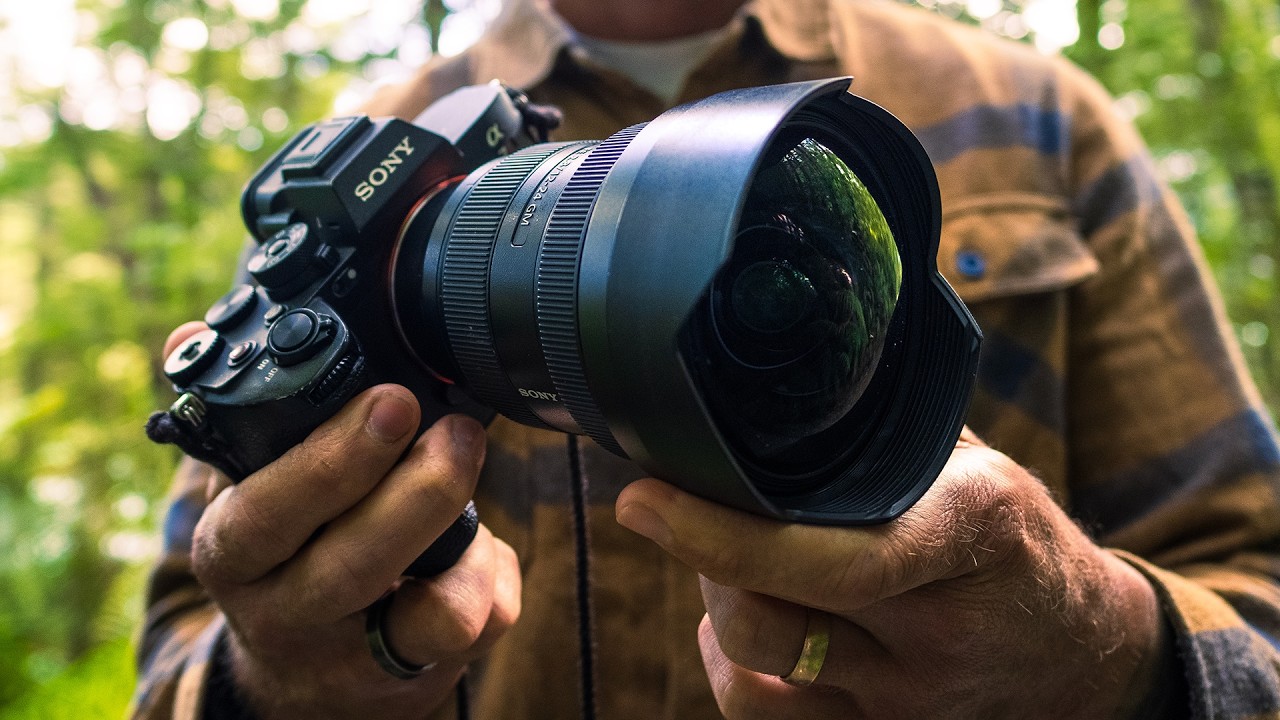
That question came back hard recently when I was trying to figure out the ceiling on ultra-wide options for Sony full-frame shooters. There are a lot of choices in that range now, from cheap third-party primes to the flagship Sony glass, and the price gaps are enormous. So when I came across William Patino’s honest breakdown of the Sony 12-24mm f/2.8 GM, I paid close attention. He’s the kind of reviewer who actually uses his gear in the field, and this video does something most reviews skip: it tells you when to walk away.
What Makes This Focal Range Different From Other Ultra-Wides
Most photographers think 16-35mm when they think wide. The 12-24mm range pushes past that into territory where the image-making rules genuinely change. At 12mm on full frame, you’re not just getting more in the frame. You’re bending space. Foregrounds become massive, backgrounds recede, and any slight tilt of the camera creates distortion that can either make or break a shot depending on your subject.
Patino grounds this early. The 12-24mm f/2.8 GM is designed for situations where you need both extreme width AND fast aperture simultaneously. Think astrophotography in tight environments, indoor architectural work without a tripod, or event photography where you can’t back up any further. If you only need one of those two things, this lens is probably not your answer.
The f/2.8 Argument: When It Matters and When It Doesn’t
The headline spec is the f/2.8 aperture, and Patino is careful not to oversell it. Yes, f/2.8 at 12mm is technically impressive engineering. But at ultra-wide focal lengths, the depth of field is so naturally deep that shooting wide open doesn’t produce the creamy background separation it would at 50mm or 85mm. What f/2.8 actually buys you here is light gathering, period.
That’s meaningful for night shooters. If you’re doing Milky Way work or interior events with no flash, the difference between f/2.8 and f/4 is a full stop, which translates directly into lower ISO and cleaner files. Patino makes the point that for any daylight shooter, even one doing landscape work, the Sony 12-24mm f/4 G lens covers most of the same creative ground at a significantly lower price. The f/2.8 version exists for a specific subset of use cases, not as a universal upgrade.
The Size and Filter Trade-Off Nobody Talks About Enough
Here’s where Patino earns his credibility. The 12-24mm f/2.8 GM has a bulbous front element that makes it physically impossible to use standard screw-on filters. No polarizer, no standard ND filters. If you shoot landscapes and live by your circular polarizer, this matters. A lot.
The workaround is a rear gel filter system, which Sony does include a slot for. But gels are not the same workflow as spinning a front-mounted polarizer, and you lose some flexibility. Patino acknowledges this without dismissing it, which is the honest move. The lens is also substantial in weight, around 847 grams, which adds up over a full day of shooting handheld. If you’re a run-and-gun shooter who values a light kit, that number is worth sitting with before you spend the money.
Where My Experience Pushes Back Slightly
I’d extend Patino’s point about alternatives even further. He references the competitive landscape briefly, and it’s worth being direct: third-party options in this focal range have gotten genuinely good. I’ve been testing the Laowa 10mm prime (which Patino himself covers in a separate video linked below his), and for pure image quality in controlled shooting scenarios, the gap to Sony’s own glass is narrower than the price gap suggests.
The trade-off is autofocus and lens correction profiles. If you shoot Sony and rely on in-camera corrections and fast, reliable AF, the native glass still wins. But if you’re a tripod-and-manual-focus landscape shooter, the case for spending $3,000+ on the GM version over a sharp, well-built manual prime weakens considerably. Patino doesn’t say this explicitly, but the logic of his honest framing points there. I’d say it outright: the Sony 12-24mm f/2.8 GM is a professional tool for professional use cases, not a prestige purchase that improves hobbyist results.
The Single Question That Should Drive Your Decision
Patino wraps his thoughts around a practical filter. Not “is this a great lens” (it is), but “does your actual shooting justify it.” That’s the right frame, and it’s one I apply to everything I review. I got into this whole side of photography because I realized most gear decisions are made emotionally, rationalized technically, and then justified after the fact. The Sony 12-24mm f/2.8 GM is a legitimate piece of engineering that earns its place in working professionals’ kits, specifically those doing astrophotography, dark interior events, or wide editorial work where f/2.8 is genuinely necessary.
If you’re not in one of those categories, spend the savings on glass that moves your actual work forward.
Watch William Patino’s full video for the visual comparisons and sample shots that make the sharpness and distortion performance click in a way that words can’t fully replace: https://www.youtube.com/watch?v=bGv3wQ8DWzw
Comments
Leave a Comment