Every time a new “best lens” drops, I get the same question from readers: “Should I switch systems to get it?” It’s the kind of question that sounds like a gear problem but is usually a spending problem in disguise. So when Sony launched the 16-35mm f/2.8 G Master and people started asking me whether it was worth ditching their Nikon kit, I wanted actual data before I gave an opinion. Fortunately, Tony and Chelsea Northrup already did the legwork. Watch the full tutorial on YouTube before or after reading this, because the real-world landscape shots they captured make the numbers hit harder than any lab chart.
The core question in their comparison is deceptively practical: if you’re heading out to shoot landscapes, does it matter whether you grab the Sony A7R III with the new 16-35 GM, or stick with the battle-tested Nikon D800 and the 14-24 f/2.8? They also loop in the Tamron 15-30 f/2.8 partway through, which is the move I appreciated most, because the Tamron is the one that budget-conscious shooters actually consider. Here’s what they found, and what I think it actually means for how you spend your money.
Step 1: Understand What You’re Actually Comparing
 Three lenses side by side, host introduces comparison
Before you can read the results, you need to understand the mismatch baked into this test. The Sony covers 16-35mm. The Nikon tops out at 24mm. The Tamron lands at 30mm. These are not identical tools, and the hosts are upfront about that. The reason the Nikon stays in the conversation is the 14mm end, which is meaningfully wider for astrophotography and certain landscape compositions. If you never shoot below 16mm, that advantage evaporates entirely. Know which focal lengths you actually use before you decide this comparison applies to you.
Three lenses side by side, host introduces comparison
Before you can read the results, you need to understand the mismatch baked into this test. The Sony covers 16-35mm. The Nikon tops out at 24mm. The Tamron lands at 30mm. These are not identical tools, and the hosts are upfront about that. The reason the Nikon stays in the conversation is the 14mm end, which is meaningfully wider for astrophotography and certain landscape compositions. If you never shoot below 16mm, that advantage evaporates entirely. Know which focal lengths you actually use before you decide this comparison applies to you.
Step 2: Factor In Filter Compatibility Before Anything Else
 Sony lens shown with 82mm filter thread highlighted
This one gets glossed over in most lens reviews and it cost me real money early on. The Sony 16-35 GM accepts standard 82mm screw-on filters. The Nikon 14-24 and Tamron 15-30 have bulbous front elements that require specialty filter holder systems, which are large, expensive, and genuinely awkward to use in the field. If you shoot landscapes with graduated ND filters or polarizers, that difference alone changes the math on total kit cost. Add up the filter system for the Nikon or Tamron and the price gap between lenses shrinks considerably.
Sony lens shown with 82mm filter thread highlighted
This one gets glossed over in most lens reviews and it cost me real money early on. The Sony 16-35 GM accepts standard 82mm screw-on filters. The Nikon 14-24 and Tamron 15-30 have bulbous front elements that require specialty filter holder systems, which are large, expensive, and genuinely awkward to use in the field. If you shoot landscapes with graduated ND filters or polarizers, that difference alone changes the math on total kit cost. Add up the filter system for the Nikon or Tamron and the price gap between lenses shrinks considerably.
Step 3: Account for Camera-Level Differences, Not Just Glass
 Sony A7R III body shown, in-body stabilization mentioned
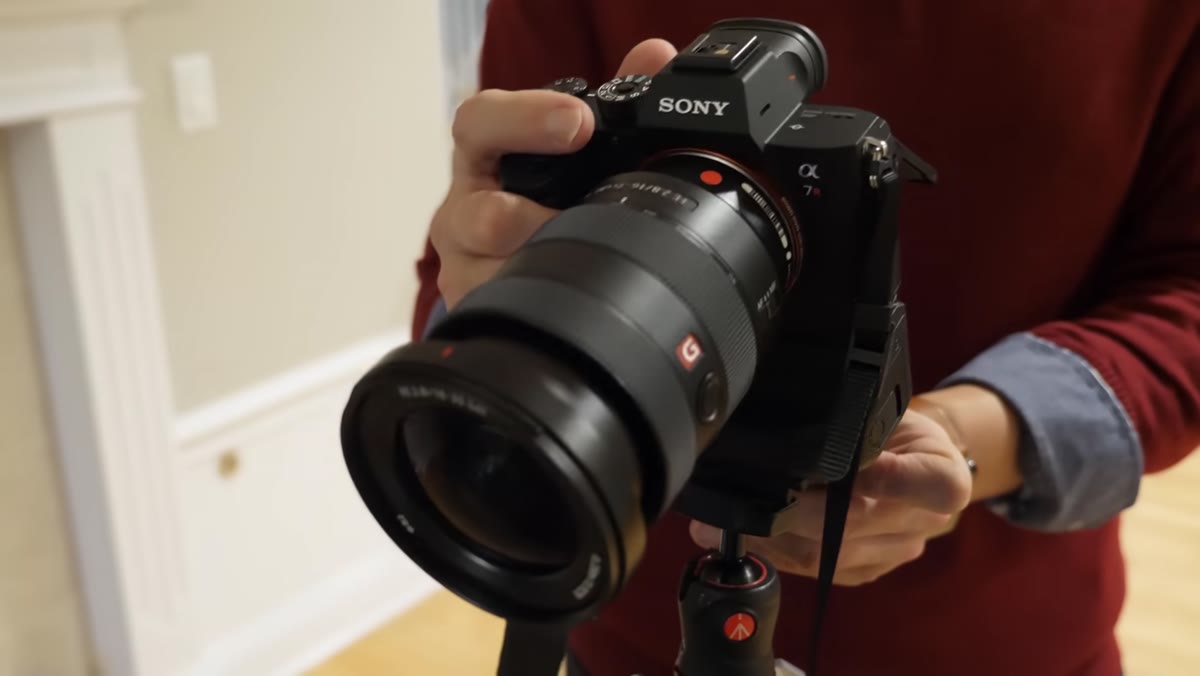
The hosts are careful to flag something reviewers often bury: the Sony body in this test has in-body image stabilization. The Nikon does not. That matters for handheld shots and, interestingly, even on a tripod in windy conditions where micro-vibration can soften an otherwise sharp frame. On the flip side, the Nikon’s D800 has a lower native base ISO, which translates to cleaner shadows without stacking exposures. Neither advantage is absolute. They just apply to different shooting situations, and you should know which situations describe your work before you treat one as a dealbreaker.
Sony A7R III body shown, in-body stabilization mentioned
The hosts are careful to flag something reviewers often bury: the Sony body in this test has in-body image stabilization. The Nikon does not. That matters for handheld shots and, interestingly, even on a tripod in windy conditions where micro-vibration can soften an otherwise sharp frame. On the flip side, the Nikon’s D800 has a lower native base ISO, which translates to cleaner shadows without stacking exposures. Neither advantage is absolute. They just apply to different shooting situations, and you should know which situations describe your work before you treat one as a dealbreaker.
Step 4: Compare Center and Corner Sharpness at Matching Focal Lengths
 Side-by-side sharpness crops at 16mm, Sony vs Tamron
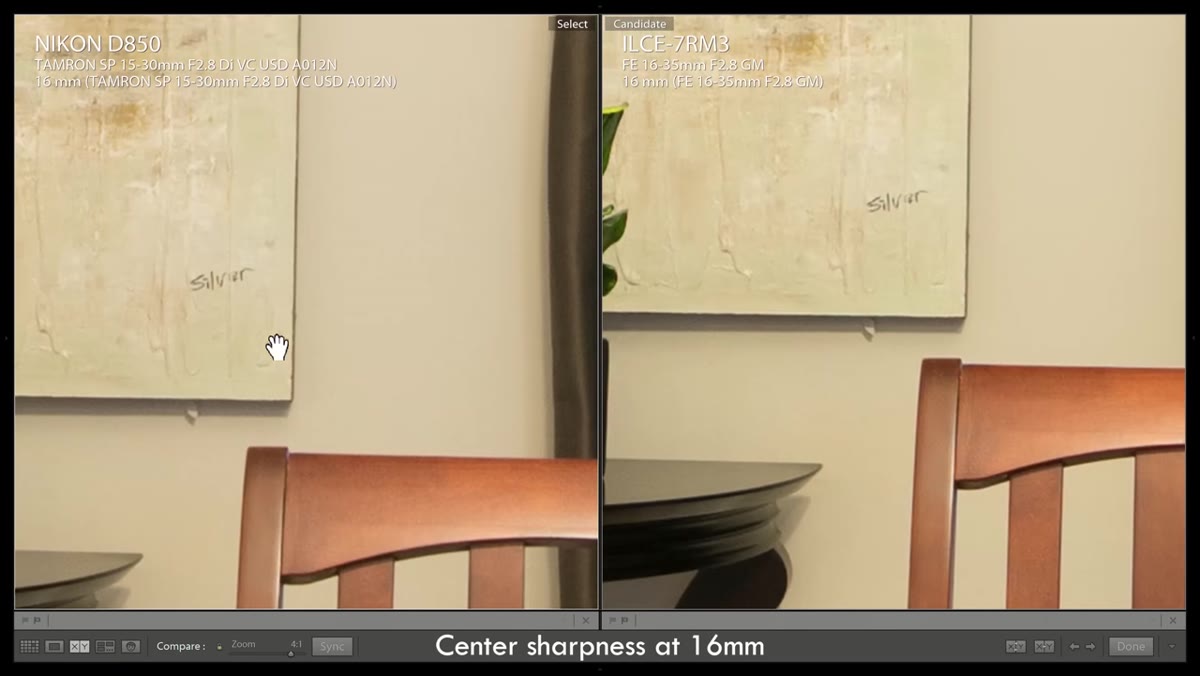
At 16mm, the Sony G Master and the Tamron 15-30 are roughly equal in center sharpness. That’s a notable result because the Tamron costs significantly less. Where they separate is the corners: the Sony pulls ahead clearly, which matters for landscape work where you often want edge-to-edge detail across a wide scene. Against the Nikon at equivalent focal lengths, the Sony is actually a bit sharper overall, both in the center and in the corners. That’s the headline result and it’s legitimate.
Side-by-side sharpness crops at 16mm, Sony vs Tamron
At 16mm, the Sony G Master and the Tamron 15-30 are roughly equal in center sharpness. That’s a notable result because the Tamron costs significantly less. Where they separate is the corners: the Sony pulls ahead clearly, which matters for landscape work where you often want edge-to-edge detail across a wide scene. Against the Nikon at equivalent focal lengths, the Sony is actually a bit sharper overall, both in the center and in the corners. That’s the headline result and it’s legitimate.
At 30mm, the situation flips slightly. The Tamron edges out the Sony in center sharpness at that focal length, though corner performance stays comparable. If you primarily shoot in the 24-30mm range and corners aren’t your priority, the Tamron’s performance at that end of its range is genuinely competitive.
Step 5: Look at Bokeh and Chromatic Aberration for a Complete Picture
 Bokeh comparison showing Nikon’s harsh rings vs Sony’s rendering
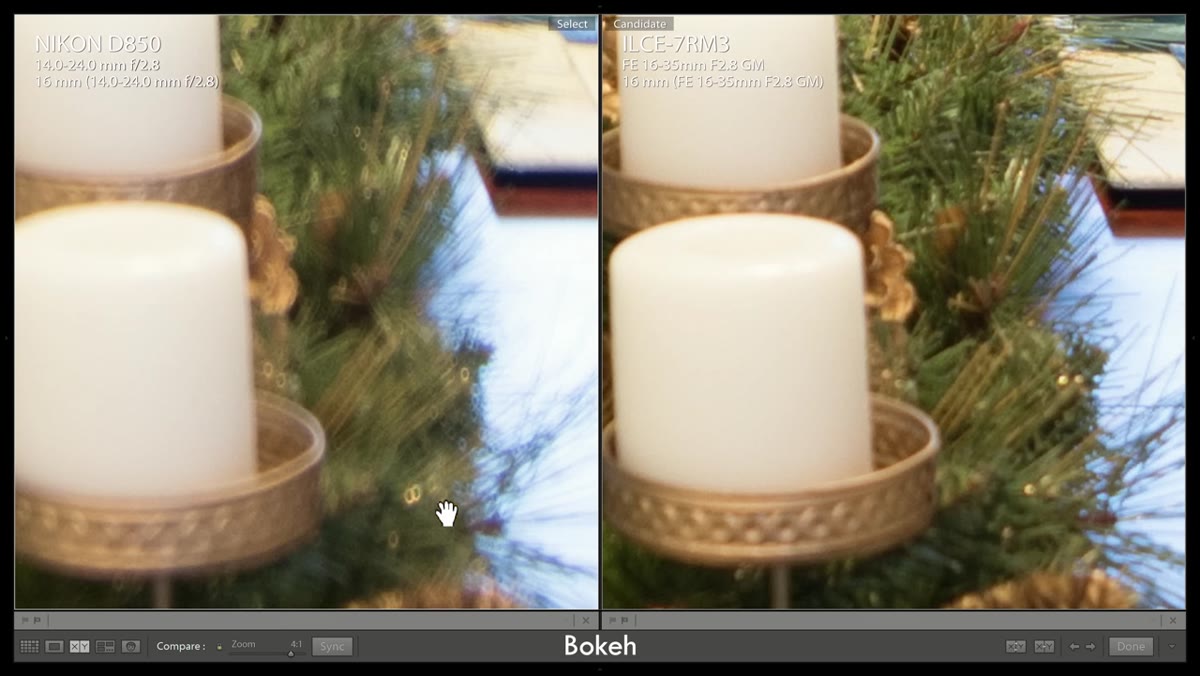
Bokeh matters less for landscape work than for portrait or macro shooting, but it’s a useful signal about how well a lens handles out-of-focus rendering and internal reflections. The Nikon 14-24 shows harsher bokeh rings compared to the Sony, which produces smoother, more natural blur. The Tamron actually has better bokeh than the Sony at 30mm, which surprised me when I heard it. Chromatic aberration tells a cleaner story: the Sony outperforms both the Nikon and Tamron here, with noticeably less color fringing on high-contrast edges. For landscape work, that means less cleanup in post, which adds up over a full shoot.
Bokeh comparison showing Nikon’s harsh rings vs Sony’s rendering
Bokeh matters less for landscape work than for portrait or macro shooting, but it’s a useful signal about how well a lens handles out-of-focus rendering and internal reflections. The Nikon 14-24 shows harsher bokeh rings compared to the Sony, which produces smoother, more natural blur. The Tamron actually has better bokeh than the Sony at 30mm, which surprised me when I heard it. Chromatic aberration tells a cleaner story: the Sony outperforms both the Nikon and Tamron here, with noticeably less color fringing on high-contrast edges. For landscape work, that means less cleanup in post, which adds up over a full shoot.
Step 6: Map the Results to Your Actual Shooting Priorities
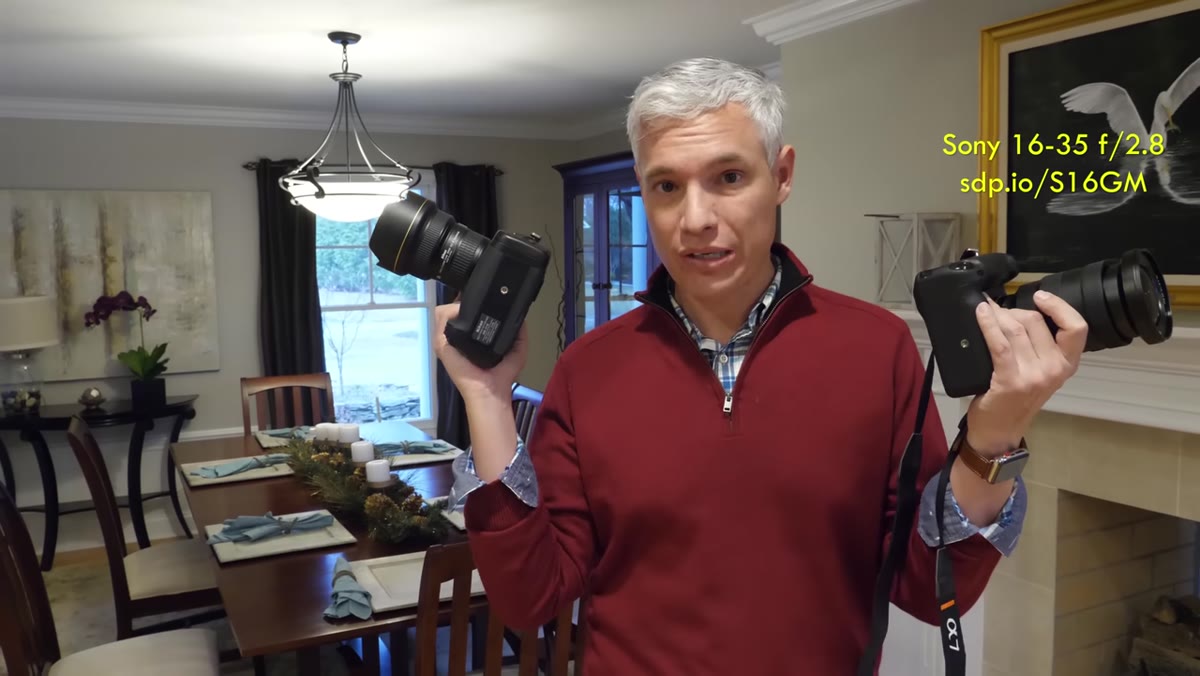 Host summarizing results, A7R III shown with 16-35 GM attached
The conclusion from the comparison is that the Sony 16-35 G Master holds up against both competitors and beats them in most optical categories. But the real takeaway isn’t “buy Sony.” It’s that your specific use case determines which trade-off matters. If you need 14mm for astrophotography, the Sony system doesn’t have an f/2.8 equivalent at that focal length at G Master quality. If you shoot primarily in the 24-30mm range on a budget, the Tamron’s center sharpness at that range and its lower price deserve serious consideration. If filter usability is a daily concern, the Sony wins before you even test sharpness.
Host summarizing results, A7R III shown with 16-35 GM attached
The conclusion from the comparison is that the Sony 16-35 G Master holds up against both competitors and beats them in most optical categories. But the real takeaway isn’t “buy Sony.” It’s that your specific use case determines which trade-off matters. If you need 14mm for astrophotography, the Sony system doesn’t have an f/2.8 equivalent at that focal length at G Master quality. If you shoot primarily in the 24-30mm range on a budget, the Tamron’s center sharpness at that range and its lower price deserve serious consideration. If filter usability is a daily concern, the Sony wins before you even test sharpness.
What I’d Add: Don’t Ignore the Total System Cost
I run a spreadsheet on every lens category I cover, partly because I’m obsessive about it and partly because the “lens price” is almost never the real price. When I work through the wide-angle f/2.8 category, the Tamron 15-30 is where budget shooters land most often, and for good reason. The optical performance in this comparison holds up well enough that most viewers would never see the difference in a final print or a web gallery. The Sony G Master is genuinely excellent, but it’s excellent in ways that show up in controlled comparisons more than they show up in your portfolio.
If you’re already in the Nikon ecosystem and shooting landscapes, the 14-24 f/2.8 is still a strong lens. The Sony being “sharper” doesn’t mean your Nikon shots look bad. It means if you’re buying new glass today and aren’t locked into a system, the Sony is the smarter pick on pure optical merit. If you’re a Nikon shooter eyeing a system switch, that decision involves a lot more than one lens test.
The single most useful thing this comparison does is make the filter system cost visible. Most lens shootouts ignore it. Tony and Chelsea flag it early, and if you shoot with filters regularly, that point alone might save you from a purchase you’d regret six months later.
Watch the full tutorial on YouTube to see the actual side-by-side crops and landscape shots. The visual difference between the corner sharpness samples is the kind of thing that’s worth seeing with your own eyes before you commit to an opinion.
Comments
Leave a Comment