The single most expensive mistake I see newer landscape photographers make isn’t buying a bad lens. It’s buying six decent lenses when two great ones would have done the job. I’ve watched people drop two grand spread across a half-dozen focal lengths, only to shoot 90% of their images with the same two glass options every single time. I know this pattern well because I’ve tracked it obsessively in a spreadsheet I started years ago, and the data is embarrassingly consistent.
In this Mark Denney tutorial, Watch the full tutorial on YouTube, he walks through exactly which lenses he’d buy if he were starting over in landscape photography. What caught my attention is that Denney isn’t selling maximalism. He went from owning seven or eight lenses down to three, and found that just two of them covered 94% of his shots over a two-year period. That kind of ruthless self-audit is the lens buying conversation I wish someone had started with me earlier.
What follows is my breakdown of his recommendations, translated into actionable buying decisions with some honest input from someone who tests gear at every price point.
Step 1: Start With a Fast 16-35mm Zoom
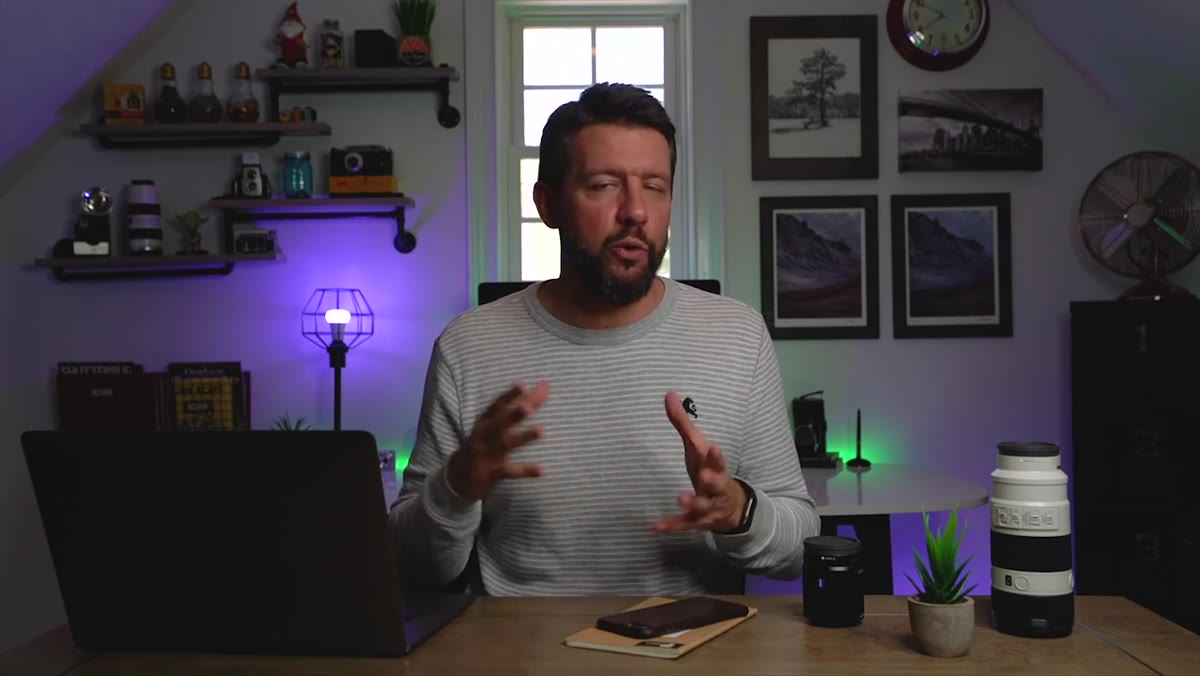 Denney discussing the 16-35mm zoom lens recommendation
The first lens Denney recommends is a wide-angle zoom in the 16-35mm range, and he’s specific about one thing: it needs to be fast. Fast here means a maximum aperture of f/2.8 or wider. An f/4 version of this lens is optically solid for landscape work, but it locks you out of one of the best reasons to own this focal length in the first place.
Denney discussing the 16-35mm zoom lens recommendation
The first lens Denney recommends is a wide-angle zoom in the 16-35mm range, and he’s specific about one thing: it needs to be fast. Fast here means a maximum aperture of f/2.8 or wider. An f/4 version of this lens is optically solid for landscape work, but it locks you out of one of the best reasons to own this focal length in the first place.
That reason is astrophotography. Shooting the night sky at 16mm is genuinely spectacular, but you need that wider aperture to pull in enough light without pushing your ISO so high that your images fall apart with noise. At f/2.8, you can drop your shutter speed significantly and still capture stars without streaking. The 16-35mm fast zoom is essentially two lenses in one kit, which is the kind of value math I respect. Yes, fast wide zooms cost more upfront, but you’re buying one piece of glass that covers two completely different shooting scenarios.
Step 2: Understand What “Fast” Actually Means Before You Shop
 Denney explaining fast lens aperture values on screen
Before you start clicking through product pages, Denney clarifies the terminology because it trips people up constantly. A fast lens is any lens with a maximum aperture of f/4 or below, but in practical use, f/2.8 is the benchmark most photographers mean when they say fast. The aperture number describes how wide the lens can open, and a wider opening lets in more light.
Denney explaining fast lens aperture values on screen
Before you start clicking through product pages, Denney clarifies the terminology because it trips people up constantly. A fast lens is any lens with a maximum aperture of f/4 or below, but in practical use, f/2.8 is the benchmark most photographers mean when they say fast. The aperture number describes how wide the lens can open, and a wider opening lets in more light.
More light means your camera can use a quicker shutter speed to achieve the same exposure. That matters at night when the only way to get a clean image is to gather as much light as possible in as short a time as possible. For daytime landscape work the speed advantage is less critical, but having it gives you flexibility when light drops fast, which it always does during golden hour when you’re scrambling to get the shot before the color disappears.
Step 3: Treat Your Focal Length Range as a Creative Decision, Not Just a Technical One
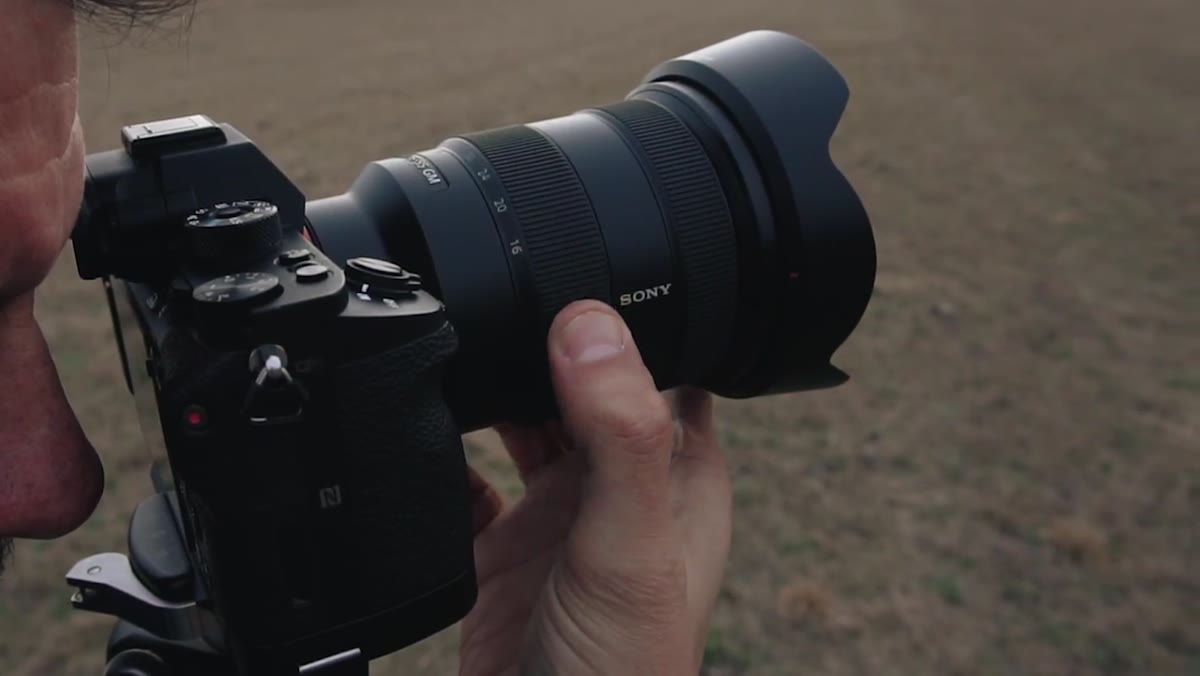 Discussing focal length use cases for landscape shooting
Denney’s lens choices aren’t accidental. The 16-35mm range is wide enough to capture sweeping foreground-to-sky compositions, which is the bread and butter of landscape photography. It also compresses well on a full-frame body and gives you room to zoom in slightly when you want to tighten the frame without switching glass.
Discussing focal length use cases for landscape shooting
Denney’s lens choices aren’t accidental. The 16-35mm range is wide enough to capture sweeping foreground-to-sky compositions, which is the bread and butter of landscape photography. It also compresses well on a full-frame body and gives you room to zoom in slightly when you want to tighten the frame without switching glass.
Where I’d add to this from my own testing: don’t assume you need to go wider just because wider options exist. Fisheye lenses have their moment, but they’re specialty tools. Ultra-wide lenses at 10-14mm distort edges significantly, which can ruin a careful composition if you’re not working around it deliberately. The 16-35mm range sits in a sweet spot that’s genuinely versatile without forcing you to fight the optics to get a clean, natural-looking image.
Step 4: Consider How Few Lenses You Actually Need
 Denney reviewing his Lightroom lens usage statistics
This is the step most buyers skip entirely, and it’s the most important one. Denney pulled his own Lightroom data and found that 94% of his images over two years came from just two lenses. That’s not a fluke. Most photographers, when they actually audit their usage, find a similar pattern.
Denney reviewing his Lightroom lens usage statistics
This is the step most buyers skip entirely, and it’s the most important one. Denney pulled his own Lightroom data and found that 94% of his images over two years came from just two lenses. That’s not a fluke. Most photographers, when they actually audit their usage, find a similar pattern.
Before you buy anything new, open your photo library and look at the EXIF data on your favorite shots from the last six months. Almost every camera and editing application logs which lens was used. If you already own multiple lenses, you’ll probably find one or two dominating your best work. That tells you where to invest in quality, not spread your budget thin across focal lengths you’ll use twice and forget.
Step 5: Plan for Dual-Purpose Use Cases to Justify Your Investment
 Denney explaining astrophotography use case for wide zoom
One of the sharper points Denney makes is that a single high-quality lens can serve multiple photographic disciplines, and that versatility is part of how you justify spending more on it. A good f/2.8 wide zoom pays for itself differently than a slow kit lens because it doesn’t sit in a drawer when you’re not doing traditional landscape work.
Denney explaining astrophotography use case for wide zoom
One of the sharper points Denney makes is that a single high-quality lens can serve multiple photographic disciplines, and that versatility is part of how you justify spending more on it. A good f/2.8 wide zoom pays for itself differently than a slow kit lens because it doesn’t sit in a drawer when you’re not doing traditional landscape work.
This is the kind of thinking I apply to every gear recommendation I write about. A lens that only does one thing well is a liability in a compact kit. A lens that does two or three things well at a high level is an asset. When you’re shopping, don’t just ask what this lens is for. Ask what else it can do, and whether those secondary uses match how you actually shoot.
My Take: Budget Versions Exist and They’re Worth Knowing About
I’ll be straightforward here. Denney shoots at a level where premium first-party glass makes sense, and his recommendations reflect that. But the optical principles he describes apply equally to third-party options that cost significantly less. Sigma’s Art line and Tamron’s SP series both produce fast 17-35mm or 17-28mm range zooms that compete with the big names at a fraction of the price. I’ve run side-by-side tests on several of these, and the real-world difference for landscape work at base ISO is smaller than most people expect.
If you’re building your first serious landscape kit, prioritize the focal length and aperture specs Denney outlines, then shop across all manufacturers. You’ll find the same creative range at a price point that doesn’t require selling lenses at a loss six months later, which is a trap Denney himself admits falling into early on.
The core lesson from this tutorial is simple: buy fewer lenses, buy them intentionally, and make sure each one earns its place in your bag by covering more than one use case. That approach would have saved Denney a significant amount of money early in his career, and it’ll save you the same headache.
Watch the full tutorial on YouTube to hear Denney’s complete lens lineup and the reasoning behind each choice in his own words.
Comments
Leave a Comment