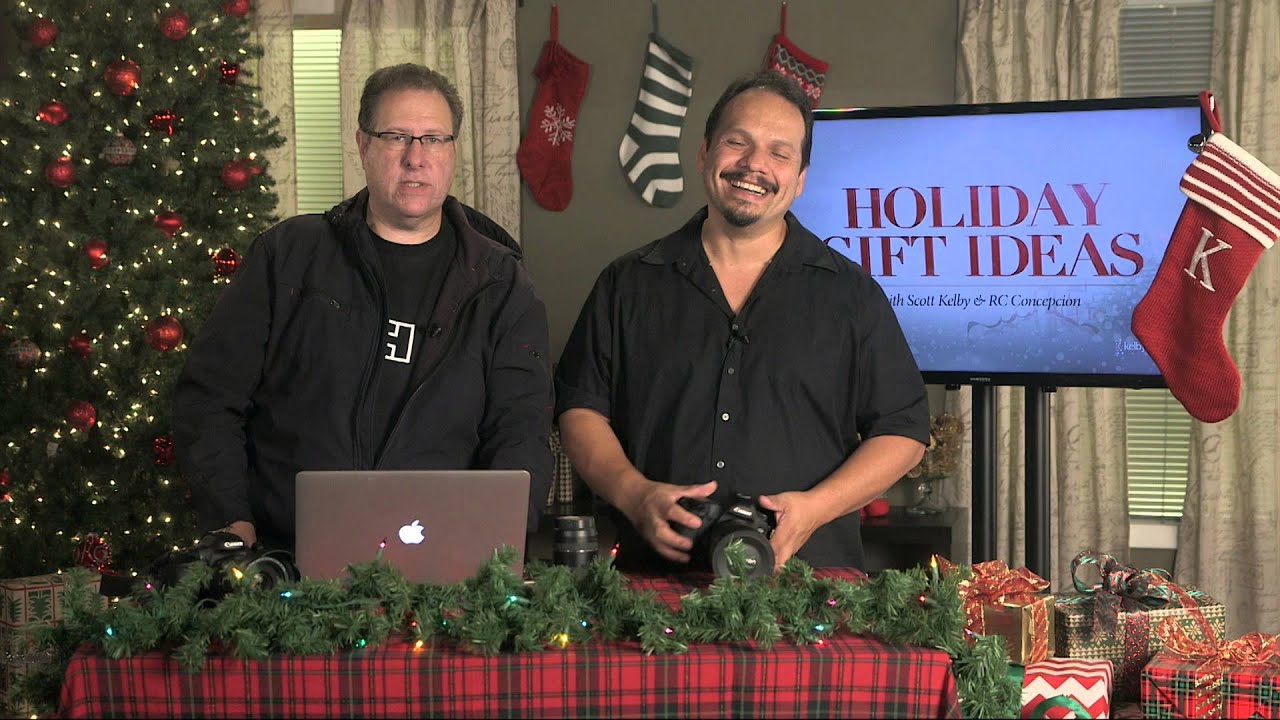
There’s a certain kind of gear recommendation I actually trust: the one that comes from someone who pulled the lens out in the field, not in a studio with controlled lighting and a color chart. When RC Concepcion and Scott Kelby run through holiday lens picks in this KelbyOne segment, the recommendations carry weight because they’re grounded in real shooting situations. RC used the Tamron 15-30mm in Dubai on a workshop trip. Scott has taken the Tamron 28-300mm on multiple travel assignments. That’s the kind of field testing I care about. Watch the full tutorial on YouTube
I’ll be honest: I was skeptical about Tamron for a long time. My spreadsheet of budget lenses has a lot of third-party glass on it, and the hit rate is inconsistent. But the two lenses RC and Scott highlight here represent something specific that the spreadsheet confirms: Tamron has figured out how to make lenses that compete with first-party glass at a price that doesn’t require a payment plan. If you’re shopping for a photographer this holiday season, or if you’re the photographer dropping hints, these two options deserve a serious look.
The video is short and conversational, but there’s real information in it if you know what to pull out. Here’s the breakdown, with context I’d add from my own testing experience.
Step 1: Understand What the Tamron 15-30mm Actually Is
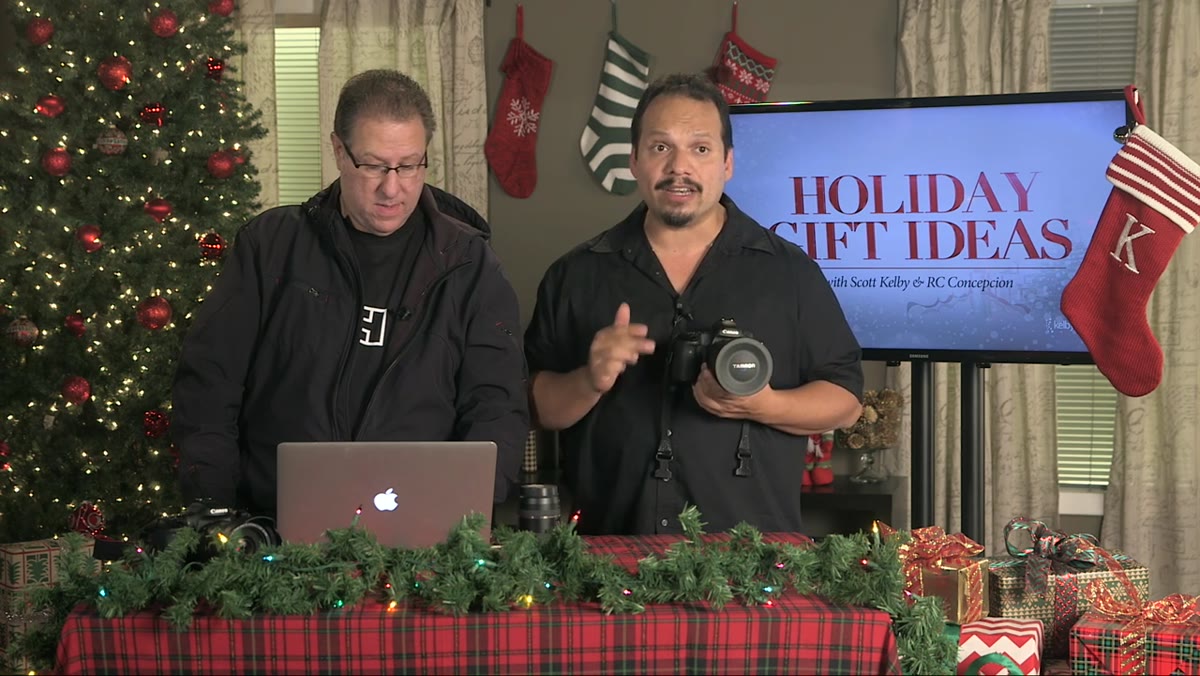 RC holding the Tamron 15-30mm lens up to camera
Before you buy any ultra-wide lens, you need to settle one question: do you want a fisheye or a rectilinear wide angle? These are completely different tools. A fisheye distorts lines near the edges for that curved, exaggerated look. A rectilinear ultra-wide keeps straight lines straight, which means you can shoot architecture, interiors, and landscapes without the barrel distortion warping your scene.
RC holding the Tamron 15-30mm lens up to camera
Before you buy any ultra-wide lens, you need to settle one question: do you want a fisheye or a rectilinear wide angle? These are completely different tools. A fisheye distorts lines near the edges for that curved, exaggerated look. A rectilinear ultra-wide keeps straight lines straight, which means you can shoot architecture, interiors, and landscapes without the barrel distortion warping your scene.
The Tamron 15-30mm is rectilinear. At 15mm on a full-frame body, you’re getting an aggressively wide field of view that still looks natural. RC specifically flags this because it’s a common point of confusion when shoppers see “ultra wide” and assume fisheye. If you want to shoot tight spaces, dramatic environmental portraits, or expansive landscapes without weird bending at the edges, this is the type of lens you want.
Step 2: See How the 15mm End Performs in Real Shooting Conditions
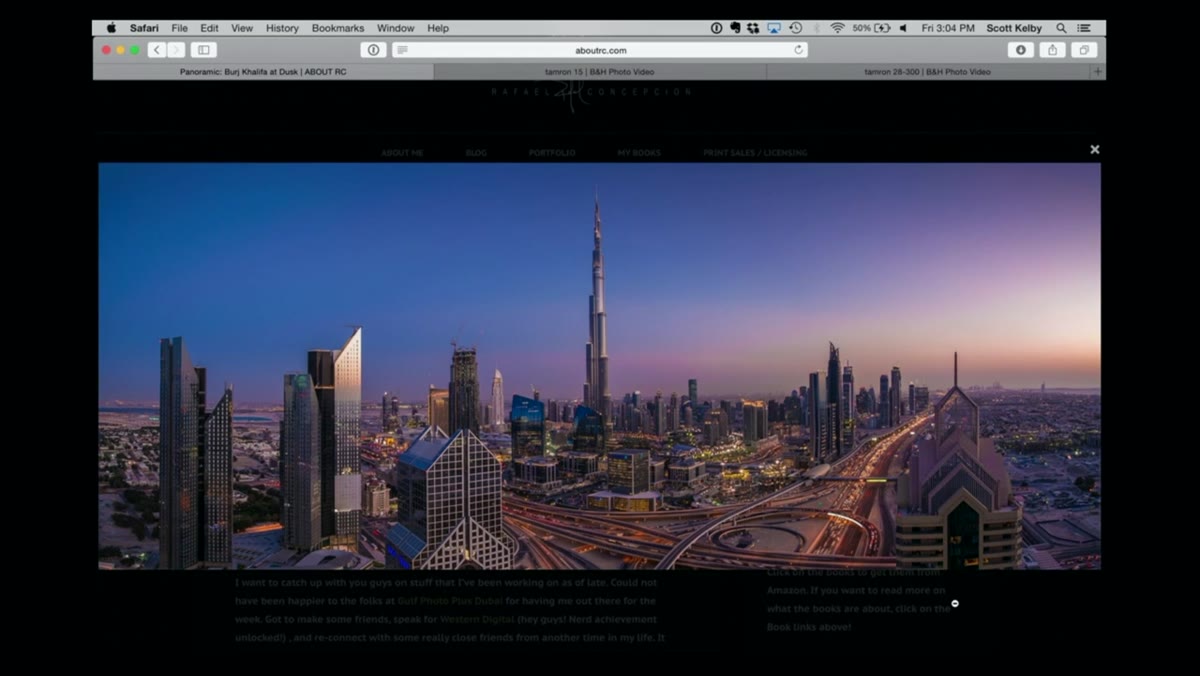 Dubai panoramic photo displayed on screen from the Tamron 15-30mm
RC’s example image from Dubai is worth paying attention to, not because it’s a flex, but because it demonstrates something practical about how to use a lens this wide. He shot the scene twice: once horizontally and once vertically, then combined the two frames. Two shots, stitched together, and the result is wide enough to fill a wall.
Dubai panoramic photo displayed on screen from the Tamron 15-30mm
RC’s example image from Dubai is worth paying attention to, not because it’s a flex, but because it demonstrates something practical about how to use a lens this wide. He shot the scene twice: once horizontally and once vertically, then combined the two frames. Two shots, stitched together, and the result is wide enough to fill a wall.
What this tells you about the lens: at 15mm, sharpness has to hold across the entire frame for a stitch like that to work cleanly. Edge softness, which kills a lot of budget wide angles, would show up immediately in a two-frame panorama. The fact that this image is hanging in RC’s office and holds up at print size says something real about optical quality. When you’re evaluating any ultra-wide, pull up a test chart at the corners. That’s where cheap lenses fall apart.
Step 3: Know Which Camera System the 28-300mm Is Designed For
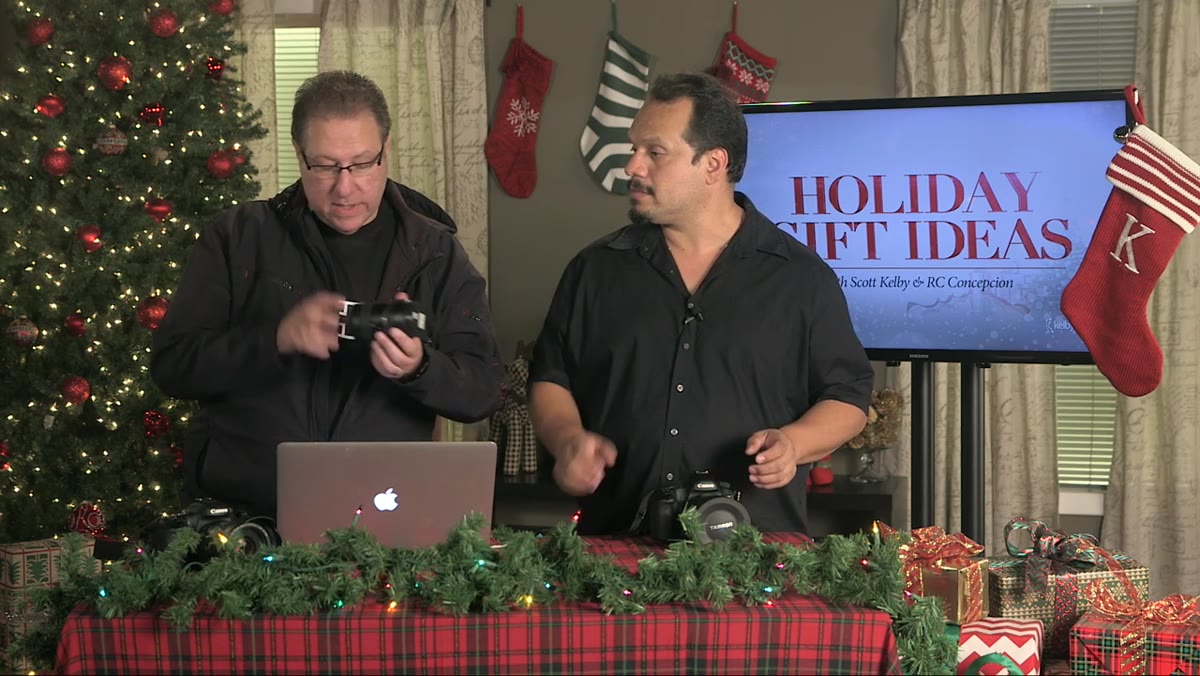 Scott holding the Tamron 28-300mm, noting Canon compatibility
This is important and gets glossed over fast in the video: the Tamron 28-300mm that Scott recommends is built for Canon users. Canon makes their own 28-300mm, and it’s a legitimate lens, but it’s heavy and expensive enough that a lot of shooters look for alternatives. Tamron’s version fills that gap specifically for Canon full-frame bodies.
Scott holding the Tamron 28-300mm, noting Canon compatibility
This is important and gets glossed over fast in the video: the Tamron 28-300mm that Scott recommends is built for Canon users. Canon makes their own 28-300mm, and it’s a legitimate lens, but it’s heavy and expensive enough that a lot of shooters look for alternatives. Tamron’s version fills that gap specifically for Canon full-frame bodies.
If you’re shooting Nikon, Sony, or another system, don’t tune out entirely. Tamron makes lenses across multiple mounts, and the broader point here is about the superzoom category. A 28-300mm on a full-frame camera covers wide angle through strong telephoto in a single barrel. That’s a meaningful convenience trade-off worth understanding regardless of your system.
Step 4: Evaluate the 28-300mm as a Travel and Street Lens
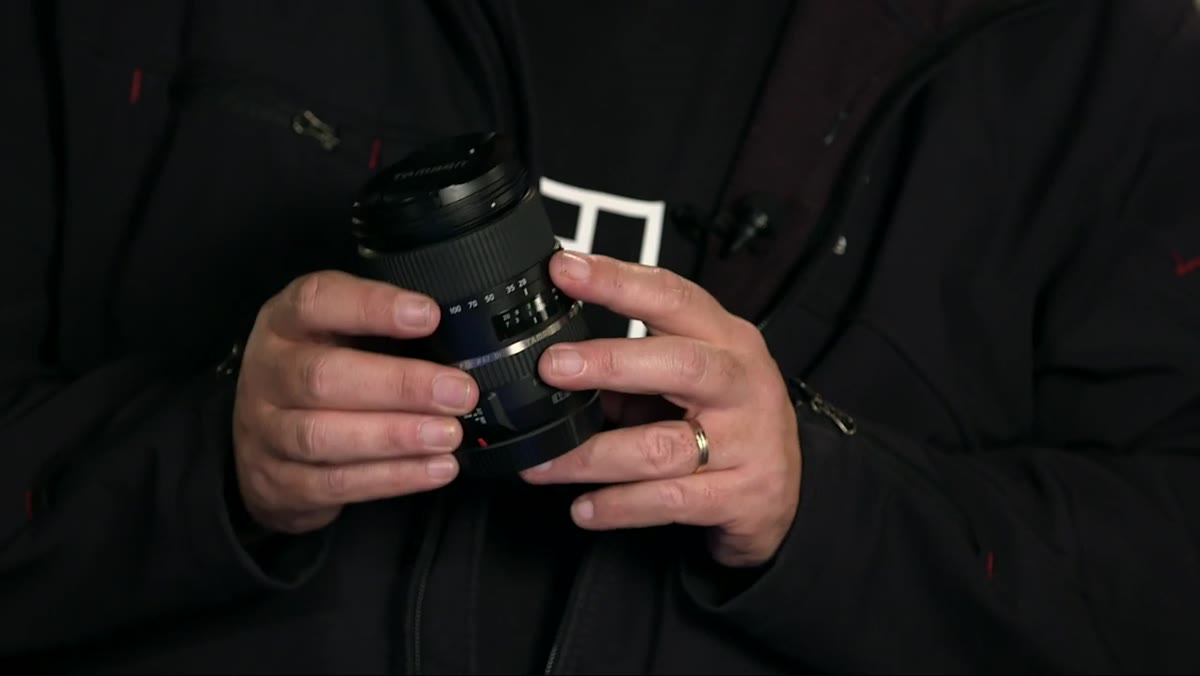 Scott describing travel use cases for the 28-300mm lens
Scott’s case for this lens is built around one real-world situation: you’re traveling and you don’t want to carry multiple lenses. A 28-300mm superzoom means you leave the bag at the hotel. Street corner, tourist site, landscape pull-off, unexpected wildlife, all covered with one lens swap you’ll never have to make.
Scott describing travel use cases for the 28-300mm lens
Scott’s case for this lens is built around one real-world situation: you’re traveling and you don’t want to carry multiple lenses. A 28-300mm superzoom means you leave the bag at the hotel. Street corner, tourist site, landscape pull-off, unexpected wildlife, all covered with one lens swap you’ll never have to make.
The trade-off with any superzoom is optical compromise. You’re not getting the sharpness of a prime or even a tight zoom range at either end. But at roughly $850, you’re buying versatility and portability. Scott uses this lens on actual trips, not just as a backup. That matters. A lens that lives in your bag because it’s too limiting doesn’t save you anything. One that you actually reach for consistently earns its price every time.
Step 5: Compare the Price Against First-Party Alternatives
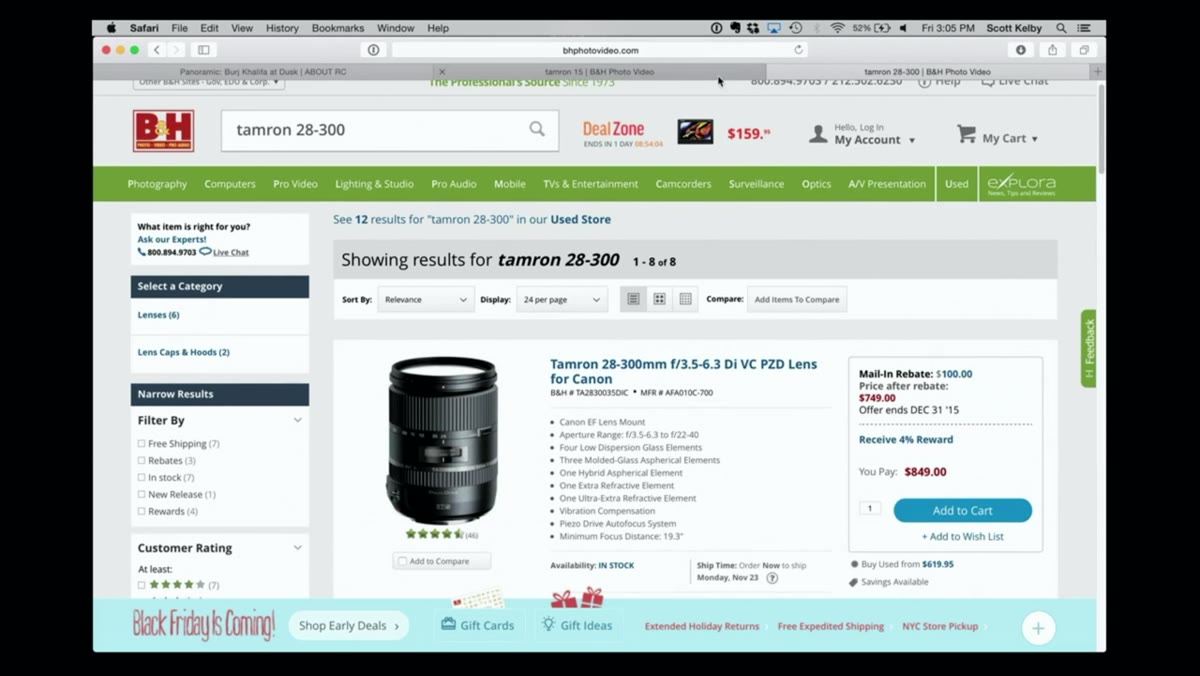 B&H website shown with Tamron 28-300mm listed at $849
RC and Scott send viewers to B&H to order, and the pricing they mention is the key data point here. The Tamron 28-300mm sits around $849. Canon’s equivalent runs significantly higher and weighs more. The Tamron 15-30mm is in a similar bracket for an ultra-wide that competes with lenses that cost twice as much from other manufacturers.
B&H website shown with Tamron 28-300mm listed at $849
RC and Scott send viewers to B&H to order, and the pricing they mention is the key data point here. The Tamron 28-300mm sits around $849. Canon’s equivalent runs significantly higher and weighs more. The Tamron 15-30mm is in a similar bracket for an ultra-wide that competes with lenses that cost twice as much from other manufacturers.
For gift buyers, this is actually a useful bracket to know. You’re not buying someone a cheap lens as a consolation prize. You’re buying them a well-regarded third-party option that photographers with serious budgets choose deliberately, not by default.
What I’d Add From My Own Testing
I’ve run a version of this comparison myself. My lens spreadsheet has a column for “would I recommend this to someone who shoots professionally” and another for “would I recommend this to someone on a budget.” The best lenses land in both columns. Tamron’s recent lineup has been showing up in both more consistently than it used to.
One thing I’d flag that the video doesn’t have time to cover: Tamron lenses in this price range often have slower autofocus than their Canon or Nikon counterparts. For landscapes, architecture, and travel shooting, that’s a non-issue. If you’re shooting sports or fast-moving subjects, it’s worth testing before you commit. Rent it for a weekend if you can. The optical quality is there. The autofocus speed is the variable that depends on your shooting style.
Also worth noting: if you find this lens at a lower price through an open-box or refurbished channel, Tamron’s build quality holds up. I’ve tested several third-party lenses in used condition and Tamron consistently comes out ahead on durability at the $500-900 price point.
The real takeaway from this KelbyOne segment is simple. You don’t have to spend first-party money to get a sharp, capable lens that works in professional situations. The Tamron 15-30mm gives you an ultra-wide rectilinear option with field-tested sharpness. The 28-300mm gives Canon shooters a lightweight travel workhorse at a fraction of what the Canon equivalent costs. Both are honest recommendations from people who use them, and that’s the only kind worth listening to.
Watch the full tutorial on YouTube
Comments (2)
I've been looking for exactly this kind of tutorial. Perfect timing.
Love this. I referenced a similar technique in one of my recent posts. Always good to see other perspectives.
Leave a Comment