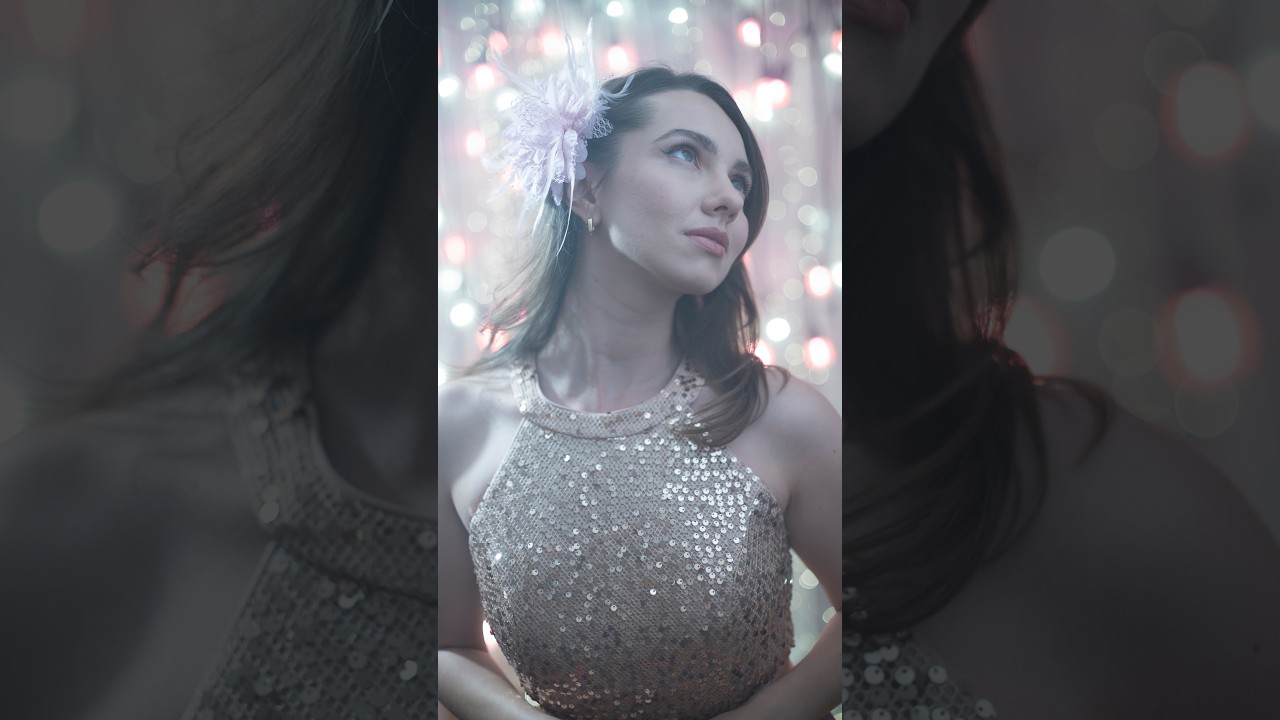
I spend a lot of time on eBay before breakfast. It’s a problem, or a system, depending on how you look at it. And one question I get constantly from readers is some version of: “I found a cheap vintage 50mm on eBay, is it actually worth buying?” My honest answer used to be “depends on the brand” — but that’s not good enough. Different vintage glass renders differently, and if you’re shooting portraits, those differences matter more than most people realize.
That’s why I was glad to find this comparison from The Slanted Lens. In this tutorial, Jay P. Morgan mounts four vintage 50mm-range primes onto a modern mirrorless body using adapters and shoots portraits with each one under the same outdoor conditions. No charts, no lab tests. Just real portrait light, real skin tones, real bokeh. Watch the full tutorial on YouTube — but if you want the breakdown before you go lens hunting, here’s what you need to know.
The setup matters because it mirrors exactly what most of us are actually doing: grabbing old glass, slapping on an adapter, and shooting on a Sony or Fuji body. This isn’t a film simulation. This is what these lenses do right now, on current sensors, in real shooting conditions.
Step 1: Set Up the Test — Same Camera, Same Light, Different Glass
 Four vintage lenses laid out next to a mirrorless camera body
Before you can compare lenses fairly, you have to control the variables. The Slanted Lens uses the same mirrorless camera body for all four lenses, shooting portraits of the same subject in the same outdoor location. Each lens is mounted via its own adapted mount. This is the right way to do it. If you’re running your own comparison at home, lock your ISO and shoot in a consistent patch of shade or open sky. Let the lenses speak without fighting changing light.
Four vintage lenses laid out next to a mirrorless camera body
Before you can compare lenses fairly, you have to control the variables. The Slanted Lens uses the same mirrorless camera body for all four lenses, shooting portraits of the same subject in the same outdoor location. Each lens is mounted via its own adapted mount. This is the right way to do it. If you’re running your own comparison at home, lock your ISO and shoot in a consistent patch of shade or open sky. Let the lenses speak without fighting changing light.
The four lenses in the test are the Canon FD 50mm, the Nikkor 55mm f/2.8 Macro, the Pentax M 50mm f/2.0, and the Minolta Rokkor PF 58mm f/1.4. Three of those are true 50mm lenses; the Minolta is slightly longer at 58mm, which affects framing and compression. Keep that in mind as you follow along.
Step 2: Evaluate the Canon FD 50mm — High Contrast, Punchy Blacks
 Portrait shot with Canon FD lens showing skin tones and bokeh
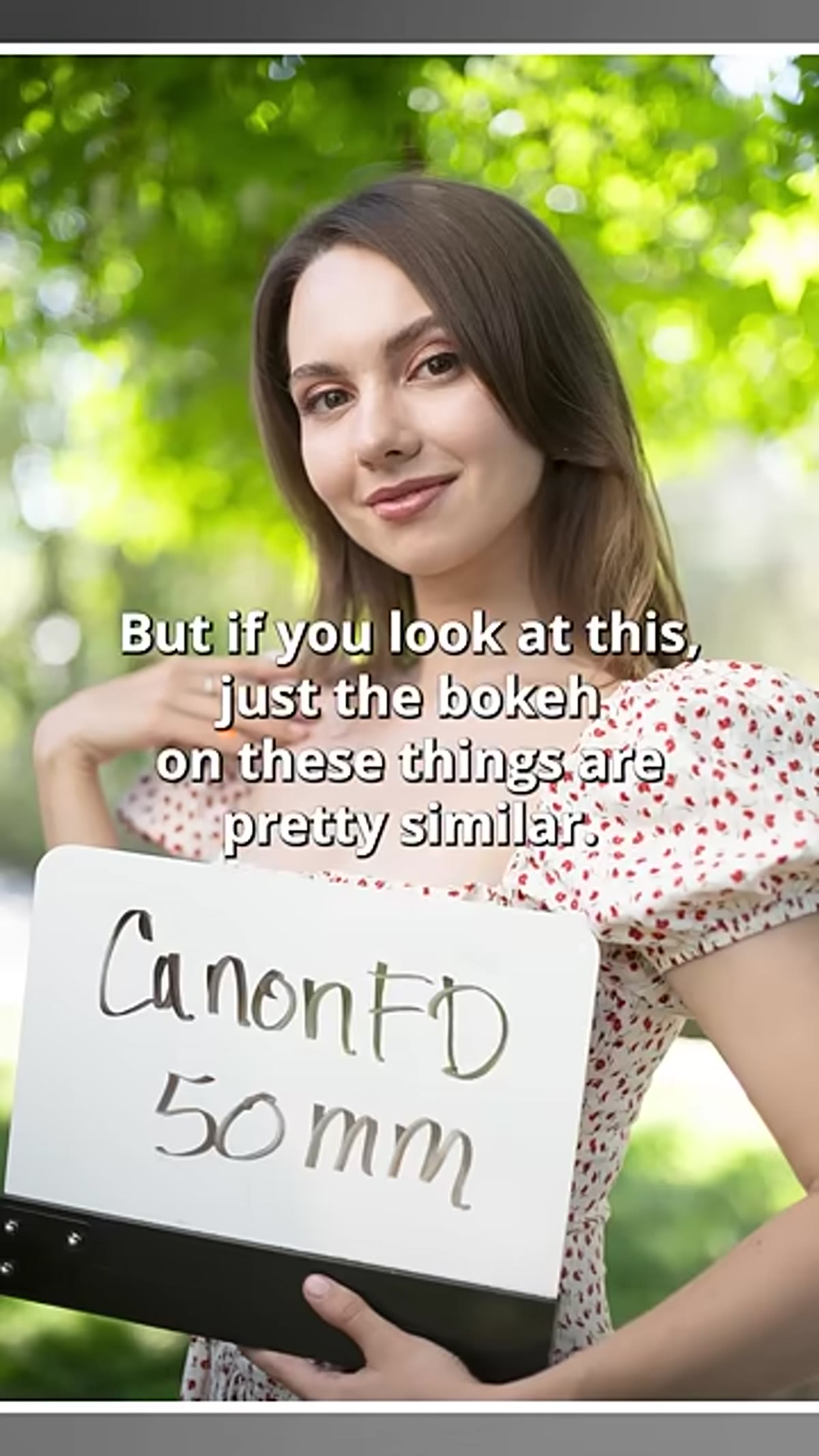
The Canon FD is the one that jumps off the screen first. The contrast is noticeably heavier than the others, with deeper blacks and what you might describe as “crunchy” highlights on skin. It’s not clinical sharpness — it’s character. The bokeh behind the subject is smooth and round, which is what you want for portrait work.
Portrait shot with Canon FD lens showing skin tones and bokeh
The Canon FD is the one that jumps off the screen first. The contrast is noticeably heavier than the others, with deeper blacks and what you might describe as “crunchy” highlights on skin. It’s not clinical sharpness — it’s character. The bokeh behind the subject is smooth and round, which is what you want for portrait work.
If your editing style leans toward film-like contrast or you’re going for a vintage editorial look, the FD lens does a lot of that work in-camera. You’re not fighting flat files in post — you’re starting with a rendering that already has mood. These lenses are widely available on eBay and Amazon (Canon FD 50mm - check current prices on Amazon), and they’re one of the better-value vintage options precisely because Canon abandoned the FD mount in 1987, flooding the used market with orphaned glass.
Step 3: Evaluate the Nikkor 55mm f/2.8 Macro — Flattering Skin, Softer Contrast
 Portrait rendered with Nikkor macro lens, background bokeh visible
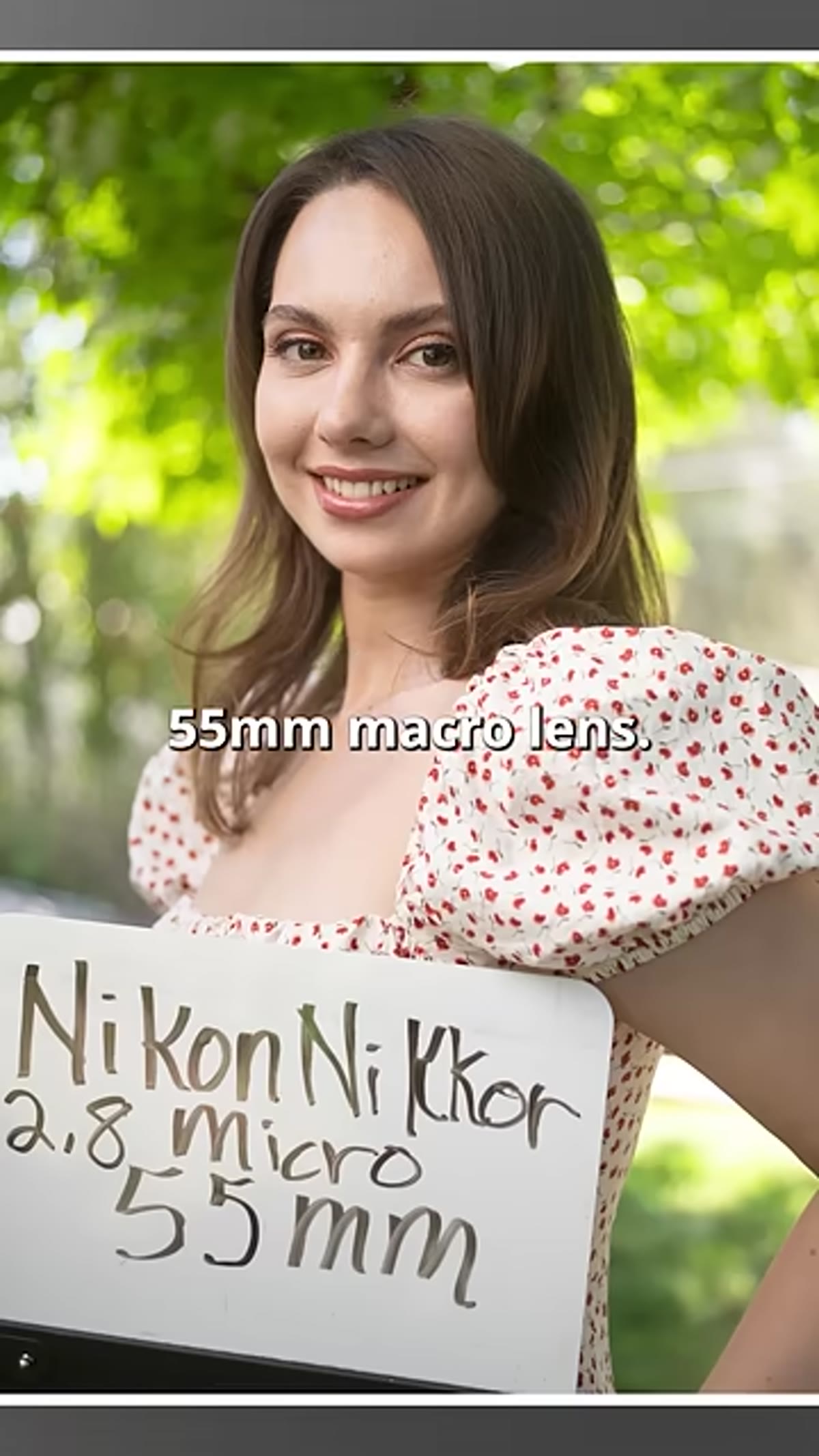
The Nikkor 55mm macro is a different animal. The skin tones are genuinely beautiful, probably the most flattering of the four for portrait work right out of the gate. The contrast is softer than the Canon, which means you have more latitude in post if you want to push or pull the look. The trade-off is bokeh shape. Because it’s a macro lens, the aperture blades render out-of-focus backgrounds with more of an angular, geometric quality rather than smooth circles. It’s not ugly, but it’s noticeable if your background has point light sources or distinct shapes.
Portrait rendered with Nikkor macro lens, background bokeh visible
The Nikkor 55mm macro is a different animal. The skin tones are genuinely beautiful, probably the most flattering of the four for portrait work right out of the gate. The contrast is softer than the Canon, which means you have more latitude in post if you want to push or pull the look. The trade-off is bokeh shape. Because it’s a macro lens, the aperture blades render out-of-focus backgrounds with more of an angular, geometric quality rather than smooth circles. It’s not ugly, but it’s noticeable if your background has point light sources or distinct shapes.
At f/2.8, it’s also the slowest of the four. For outdoor portraits in good light that’s fine, but in lower-contrast conditions the lens can feel a little flat. Still, for anyone who spends time trying to fix harsh skin rendering in post, this lens could save you real editing time.
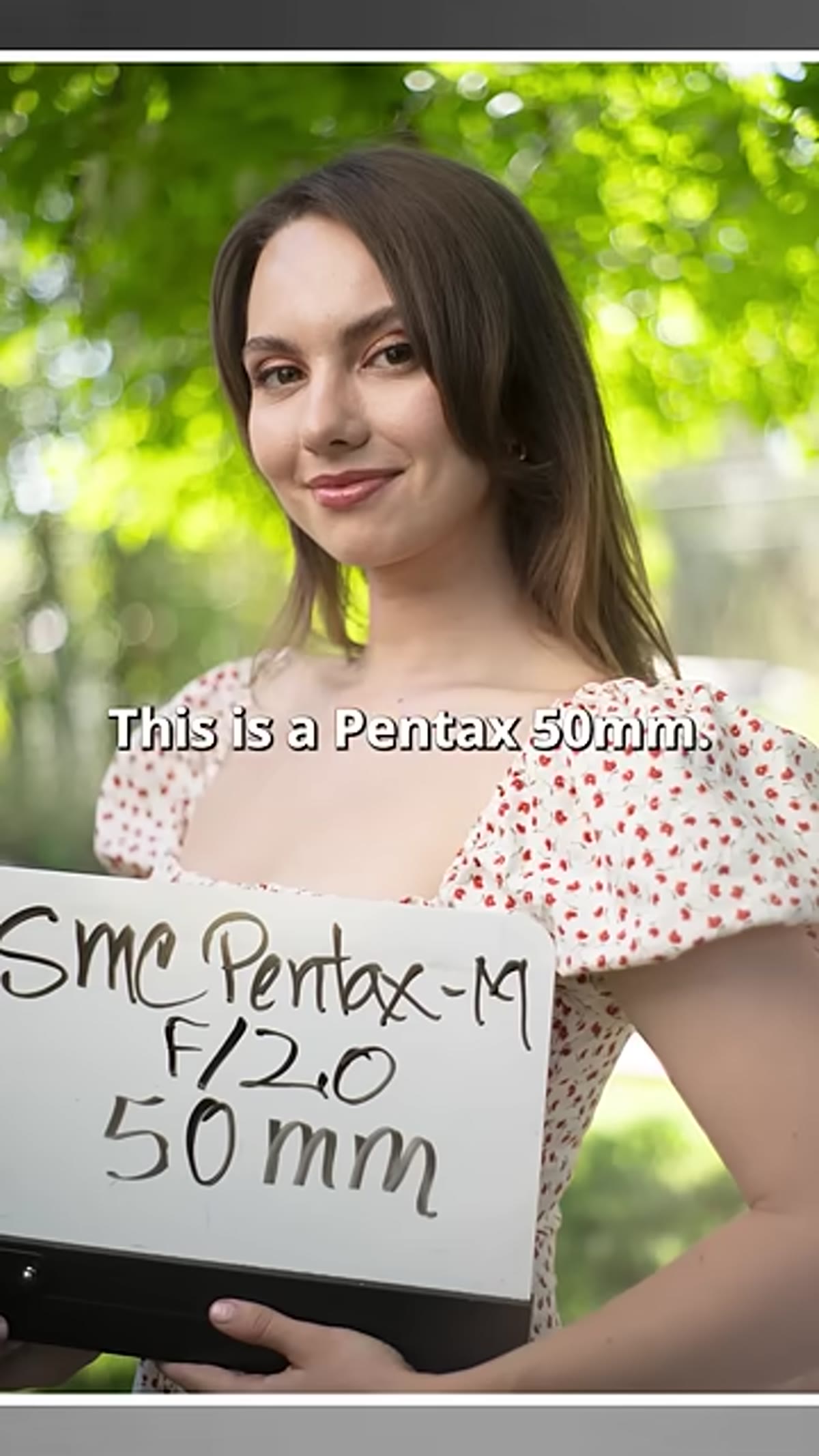
Step 4: Evaluate the Pentax M 50mm f/2.0 — Decent Contrast, Rougher Bokeh
 Portrait with Pentax lens showing comparable bokeh to Nikkor
The Pentax M 50mm sits between the Canon and the Nikkor on contrast — the blacks are a bit heavier than the Nikkor but without the Canon’s polish. The bokeh rendering is similar to the Nikkor: more angular, less creamy. It doesn’t fall apart, but it doesn’t disappear either. The overall rendering is pleasant without being distinctive.
Portrait with Pentax lens showing comparable bokeh to Nikkor
The Pentax M 50mm sits between the Canon and the Nikkor on contrast — the blacks are a bit heavier than the Nikkor but without the Canon’s polish. The bokeh rendering is similar to the Nikkor: more angular, less creamy. It doesn’t fall apart, but it doesn’t disappear either. The overall rendering is pleasant without being distinctive.
If you already shoot Pentax or you find one of these cheap at a thrift store or camera swap, it’s worth picking up. You can find the Pentax SMC 50mm f/2.0 on Amazon for a reasonable price. But if you’re specifically hunting for portrait glass and you have a choice, the Canon FD and Minolta will probably give you more satisfying results faster.
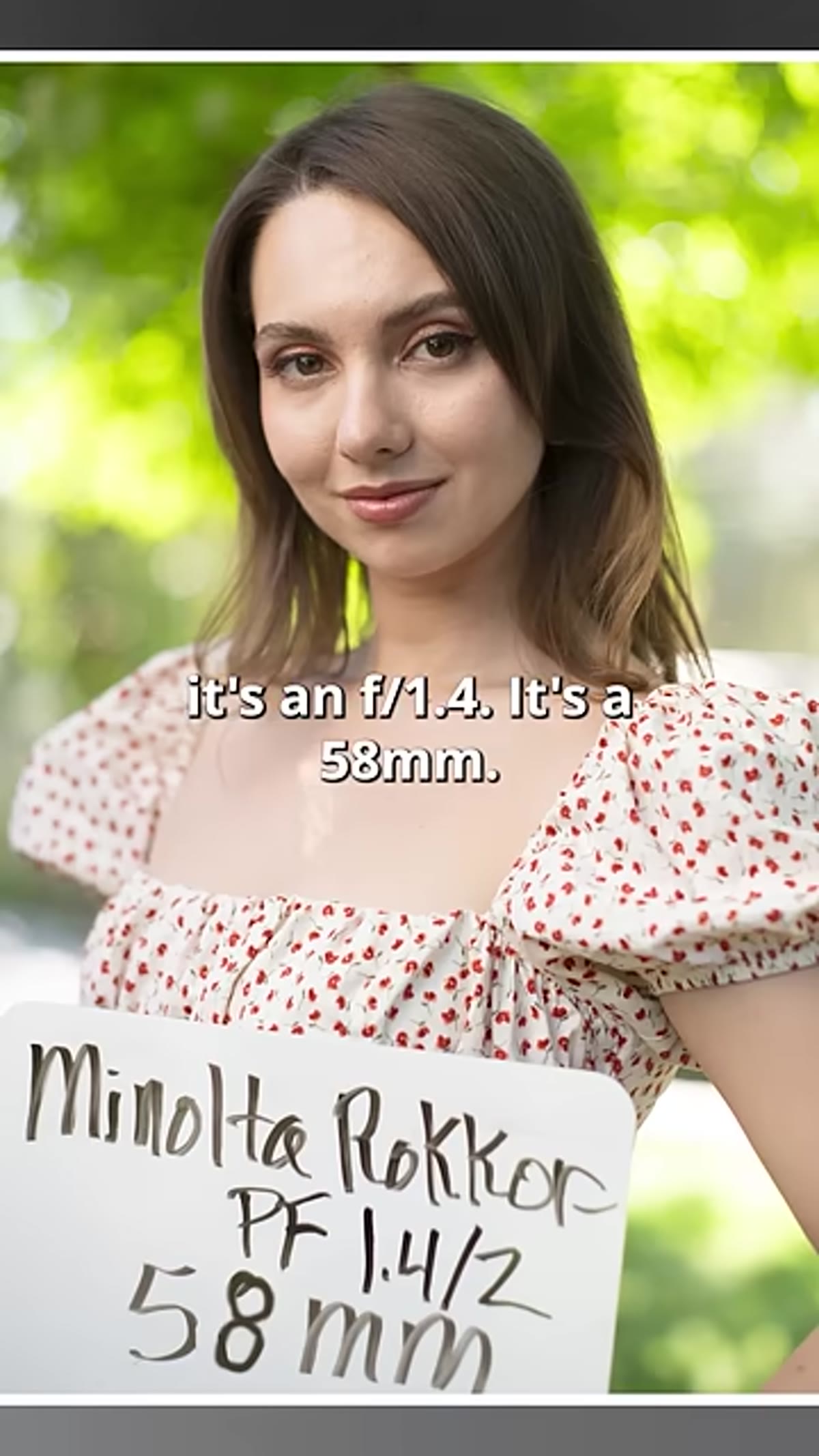
Step 5: Evaluate the Minolta Rokkor PF 58mm f/1.4 — The Smoothest Rendering
 Portrait with Minolta Rokkor showing background separation and bokeh quality
The Minolta Rokkor PF 58mm f/1.4 is the one that earns a second look. At f/1.4, the background melts in a way the other lenses can’t match at their respective apertures. Part of that is physics — a longer focal length and a wider maximum aperture together create more separation. But even accounting for that, the quality of the out-of-focus rendering is genuinely different. Backgrounds go soft without turning to mush, and the transition from sharp to blurred is gradual in a way that looks expensive.
Portrait with Minolta Rokkor showing background separation and bokeh quality
The Minolta Rokkor PF 58mm f/1.4 is the one that earns a second look. At f/1.4, the background melts in a way the other lenses can’t match at their respective apertures. Part of that is physics — a longer focal length and a wider maximum aperture together create more separation. But even accounting for that, the quality of the out-of-focus rendering is genuinely different. Backgrounds go soft without turning to mush, and the transition from sharp to blurred is gradual in a way that looks expensive.
The contrast sits right alongside the Canon FD — heavy enough to be interesting, controlled enough not to clip highlights on skin. If you’re torn between two vintage lenses for portraits and one of them is the Minolta Rokkor, lean toward the Minolta. The Minolta MD 50mm f/1.4 is available on Amazon and consistently comes up in used markets at prices that make it one of the best value-per-image-quality buys in vintage glass right now.
What the Test Doesn’t Cover (And What I’d Add)
The Slanted Lens keeps this comparison clean and visual, which is the right call for a YouTube format. What it doesn’t dig into is how these lenses behave when you push them. Vintage glass shot wide open in harsh midday sun or mixed indoor-outdoor light will show you every flaw fast. The Canon FD’s contrast that looks gorgeous in open shade can get aggressive if you’re not watching your exposure. The Minolta’s smooth rendering can go a little dreamy if you’re not careful about subject sharpness.
My spreadsheet of budget lenses has about 40 entries at this point, and the consistent pattern I see is this: lenses with “character” demand more from the photographer. You’re not just adapting old glass for the look, you’re also taking on more responsibility for nailing exposure and focus. Autofocus adapters help, but most vintage glass shooters are using manual focus, which slows you down on moving subjects. Know what you’re signing up for.
The single most useful thing this comparison demonstrates is that the Canon FD and the Minolta Rokkor deliver the most portrait-ready rendering straight out of camera, and both are genuinely affordable on the used market. If you want to see the side-by-side portraits and judge the bokeh and color yourself rather than taking my word for it, go watch the full breakdown: Watch the full tutorial on YouTube.
Comments
Leave a Comment