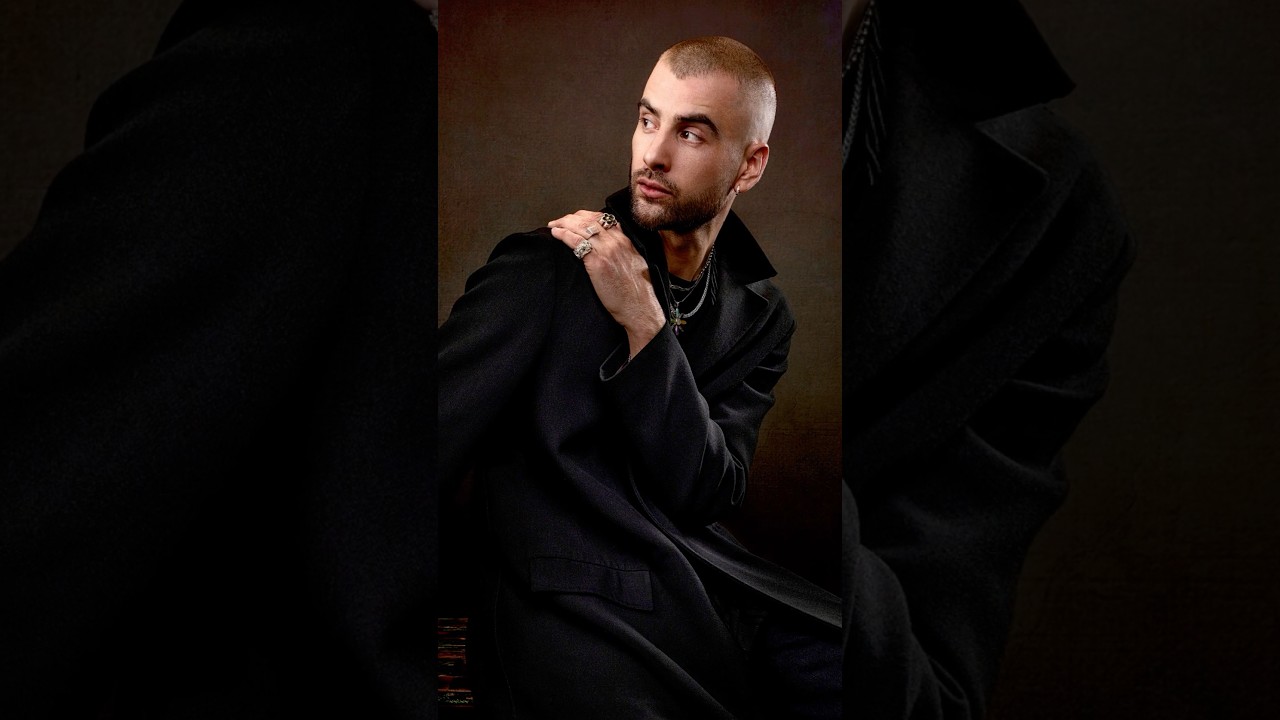
I was staring at a client portrait last month thinking something felt flat about it. The exposure was fine, the pose was fine, technically nothing was wrong. But it looked like a snapshot with good lighting rather than an image with intention behind it. That gap between “technically correct” and “visually compelling” is something I’ve been chasing down for a while now, and it’s exactly what this tutorial cracked open for me.
In this Joel Grimes tutorial, he walks through the full thought process behind one of his signature dramatic composite portraits, from the initial lighting setup on the subject to how the background plate gets matched and blended in post. Grimes has been doing this for decades at a commercial level, and what makes his teaching valuable isn’t name-dropping clients. It’s that he explains the why behind every decision, not just the what.
Why the Lighting Ratio Is the Real Starting Point
The foundation of Grimes’ approach is controlling the ratio between your strobe and ambient light with real precision. He’s not just eyeballing it. The goal is to underexpose the ambient by roughly two stops, which kills the background and gives you full control over where the light lives in the frame. On the subject, the strobe is doing the heavy lifting, typically a large softbox positioned to camera left, close enough to create that soft falloff across the face while still maintaining edge definition.
What this does practically is separate your subject from whatever environment you’re shooting in, which is the prerequisite for any compositing work. If your ambient and your strobe are fighting each other at similar exposures, you’ll never get a clean extraction later. Two stops of separation is the minimum. Grimes tends to push it further when he wants a more cinematic, dramatic result.
The Background Plate Strategy Most Tutorials Skip
Here’s the part that doesn’t get enough attention in compositing tutorials: the background has to be shot at the same focal length and approximate camera height as the subject, or the perspective will never look right regardless of how clean your mask is. Grimes is deliberate about this. He’ll note the exact lens he used for the subject and go back to match it for the environmental plate.
The lighting direction matters just as much. If the key light on your subject is coming from the left, the light in your background plate needs to reinforce that logic. It doesn’t have to be identical, but it can’t contradict it. A subject lit from the left dropped into a background with strong right-side shadows will read as fake to anyone who looks at it for more than two seconds, even if they can’t articulate why.
Keeping the Strobe Setup Repeatable
One thing Grimes does that I’ve started copying directly: he locks in his base exposure before the subject even walks in. He sets the ambient underexposure first using only the camera controls, no flash, then dials in the strobe power to hit the subject at the right level without touching the ambient again. This two-stage process keeps things clean and repeatable session to session.
His typical starting point in these setups is something like 1/200s, f/8, ISO 100. The fast shutter kills ambient. The aperture gives him enough depth of field to composite cleanly. The low ISO keeps the file clean for heavy masking work in post. From there, strobe power is the only variable he’s adjusting for the subject exposure. That kind of systematic approach saves real time on set when you’re not second-guessing yourself between every shot.
Where I’d Push Back Slightly
I’ll be honest: the two-stop underexposure rule works beautifully in a controlled studio or overcast outdoor situation. It gets harder when you’re dealing with harsh midday sun or a mix of artificial light sources in a location you can’t control. I’ve shot environmental portraits on location where the ambient was so chaotic that killing it by two stops made the background useless as a plate. You end up with a muddy, underexposed background that doesn’t match anything.
In those cases I’ve had better luck shooting the subject and background plate at different times of day, or bracketing the background heavily and choosing in post. It adds steps, but it solves the problem Grimes’ clean studio workflow runs into in messy real-world situations. His method is the right foundation. Just know that location work will test it.
The Single Thing That Makes Composites Look Real
After going through this tutorial carefully, the one principle that ties everything together is light consistency. Not just direction, but quality. Soft light on the subject needs a soft-light environment. Hard, specular light on the subject needs a background with harder shadows and brighter highlights. Grimes talks about this in terms of “matching the feel” rather than matching the technical specs exactly, and that framing is useful. You’re not trying to recreate physics. You’re trying to create the impression of physics.
If you get the light consistency right, small mismatches in resolution or color grade disappear. If you get it wrong, no amount of post-processing fixes it.
Watch the full tutorial to see Grimes demonstrate the lighting setup and post-processing blend visually. Some of this only clicks when you see the before-and-after side by side: https://www.youtube.com/watch?v=vWmveX2AeuI
Comments
Leave a Comment