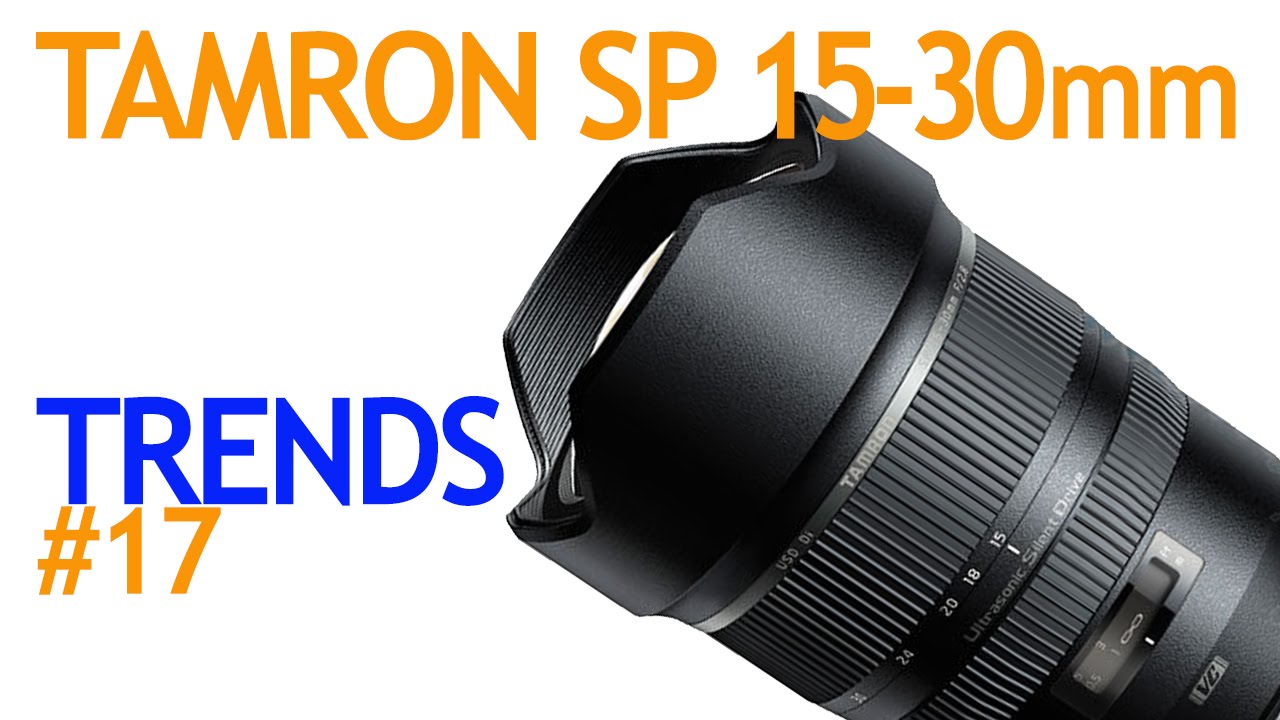
I’ll be honest with you: ultra-wide lenses are one of those categories where I’ve watched a lot of people spend a lot of money chasing something they didn’t fully understand before buying. The 15-30mm focal range sounds exciting until you’re standing inside a room trying to fill the frame with anything interesting, realizing that shooting ultra-wide is a skill set, not just a setting. When Tamron dropped their 15-30mm f/2.8 SP, the photography world paid attention, and I wanted to dig into what actually makes this lens different from the pile of wide primes and cheaper zoom alternatives sitting on my comparison spreadsheet.
In this The Slanted Lens tutorial, host Jay P. Morgan sits down with Armando from Tamron at what appears to be a trade show floor, and the two of them walk through the lens with the kind of casual technical depth that actually teaches you something. Watch the full tutorial on YouTube – it runs short but packs in real spec talk that goes beyond the marketing sheet. What I want to do here is pull out the key points, add some context, and tell you how they translate to actual shooting decisions.
Step 1: Understand Where This Lens Fits in the Lineup
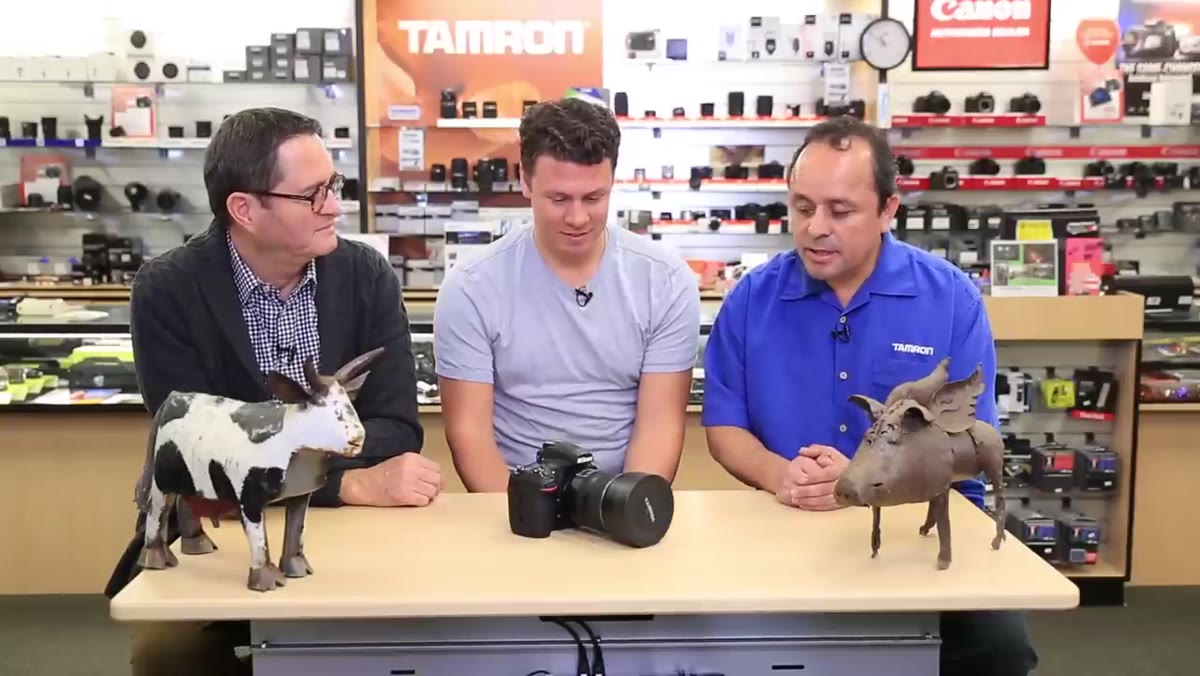 Armando introducing the 15-30mm as Tamron’s first SP ultra-wide
The first thing Armando clarifies is that this lens completes Tamron’s SP trinity: ultra-wide, mid-range, and telephoto. You’ve got the 15-30mm, then the 24-70mm, then the 70-200mm. Each one is f/2.8 constant aperture. That matters because if you’re building a kit around Tamron glass, you now have a full professional zoom system where you never lose a stop of light as you change lenses or zoom in.
Armando introducing the 15-30mm as Tamron’s first SP ultra-wide
The first thing Armando clarifies is that this lens completes Tamron’s SP trinity: ultra-wide, mid-range, and telephoto. You’ve got the 15-30mm, then the 24-70mm, then the 70-200mm. Each one is f/2.8 constant aperture. That matters because if you’re building a kit around Tamron glass, you now have a full professional zoom system where you never lose a stop of light as you change lenses or zoom in.
Before this lens existed, Tamron shooters had a gap. Now that gap is closed. If you’re already running the 24-70 and 70-200, this is the logical third purchase, not a random addition.
Step 2: Note the Focal Length Overlap and Why It’s a Feature
 Discussion of the 15-30 and 24-70 overlapping in the 24-30mm range
One of the more interesting points in the conversation is about the overlap between the 15-30mm and the 24-70mm. Both lenses cover the 24-30mm range. Jay P. mentions that Canon’s philosophy with their lineup was no overlap, going from 11-24 to 24-70 with a hard handoff. Tamron’s approach means you have that 24-30mm range covered by two lenses, which gives you flexibility in how you handle transitions between lenses mid-shoot.
Discussion of the 15-30 and 24-70 overlapping in the 24-30mm range
One of the more interesting points in the conversation is about the overlap between the 15-30mm and the 24-70mm. Both lenses cover the 24-30mm range. Jay P. mentions that Canon’s philosophy with their lineup was no overlap, going from 11-24 to 24-70 with a hard handoff. Tamron’s approach means you have that 24-30mm range covered by two lenses, which gives you flexibility in how you handle transitions between lenses mid-shoot.
This isn’t a design flaw. Some of the most respected cinema zoom systems intentionally build in overlap so operators always have a fallback range when swapping glass. For documentary work or event shooting where you can’t reshoot a moment, having overlap in your kit is a safety net, not redundancy.
Step 3: Take the Minimum Focus Distance Seriously
 Jay P. and Armando discussing the 11-inch minimum focusing distance
The minimum focusing distance on the 15-30mm is 11 inches. That sounds impressive for a lens this wide, but the conversation surfaces something worth sitting with: at 15mm, filling your frame is genuinely difficult. The field of view is so wide that you need to get extremely close to your subject, or have your subject be very large, to dominate the composition.
Jay P. and Armando discussing the 11-inch minimum focusing distance
The minimum focusing distance on the 15-30mm is 11 inches. That sounds impressive for a lens this wide, but the conversation surfaces something worth sitting with: at 15mm, filling your frame is genuinely difficult. The field of view is so wide that you need to get extremely close to your subject, or have your subject be very large, to dominate the composition.
If you’re planning to use this for portraits or product work, go in with realistic expectations. This lens rewards subjects that are either massive, like architecture or landscapes, or subjects where you want dramatic perspective distortion by getting unusually close. It’s a compositional challenge that takes practice, not just pointing and shooting.
Step 4: Factor In the Vibration Compensation for Video Work
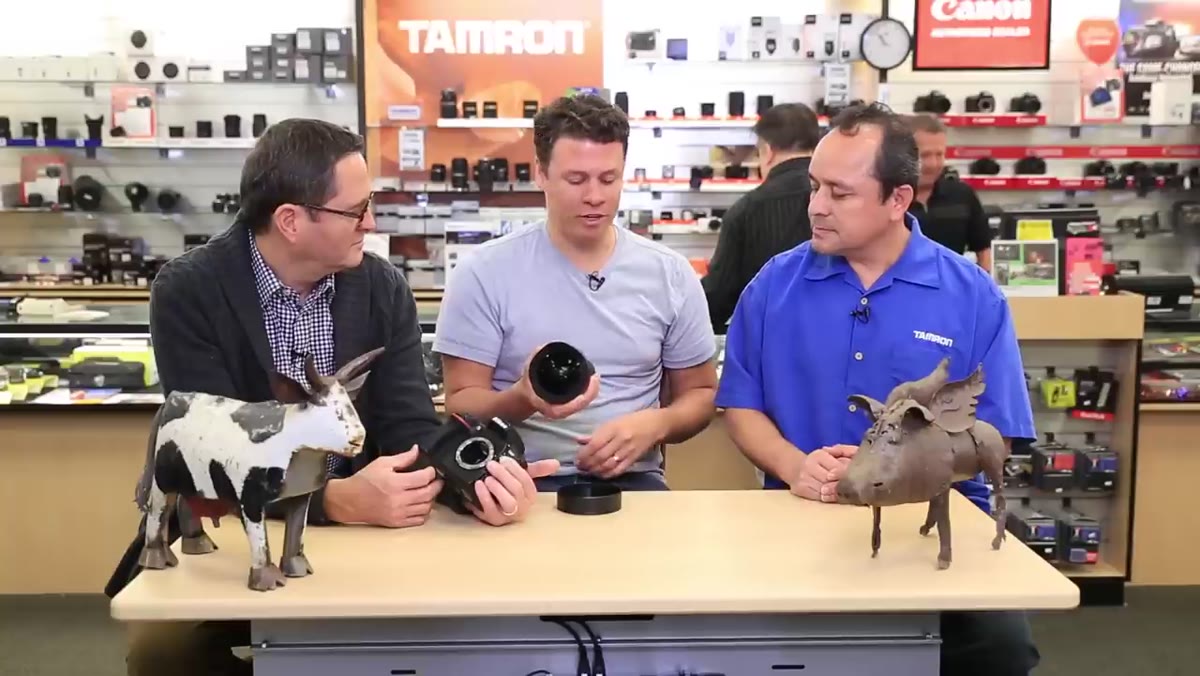 Armando explaining three-axis stabilization and four stops of compensation
Here’s the spec that most people gloss over and probably shouldn’t. Tamron’s Vibration Compensation (VC) on this lens is three-axis, meaning it corrects for horizontal, vertical, and rotational movement. That’s not standard. A lot of stabilized lenses handle two axes and call it done. Four stops of compensation is also a meaningful number, enough to turn a shaky handheld shot into something usable.
Armando explaining three-axis stabilization and four stops of compensation
Here’s the spec that most people gloss over and probably shouldn’t. Tamron’s Vibration Compensation (VC) on this lens is three-axis, meaning it corrects for horizontal, vertical, and rotational movement. That’s not standard. A lot of stabilized lenses handle two axes and call it done. Four stops of compensation is also a meaningful number, enough to turn a shaky handheld shot into something usable.
For still photography at wide angles, stabilization is often overkill since shutter speeds tend to be fast enough to freeze motion. But for video, where you’re often running slower frame rates and handheld, this system earns its place. Armando specifically mentions strong interest from the video market at trade shows, and that tracks. If you’re shooting documentary, travel content, or BTS footage handheld with a DSLR, four stops of VC on a wide zoom is genuinely useful.
Step 5: Confirm Rectilinear Correction Before Shooting Architecture
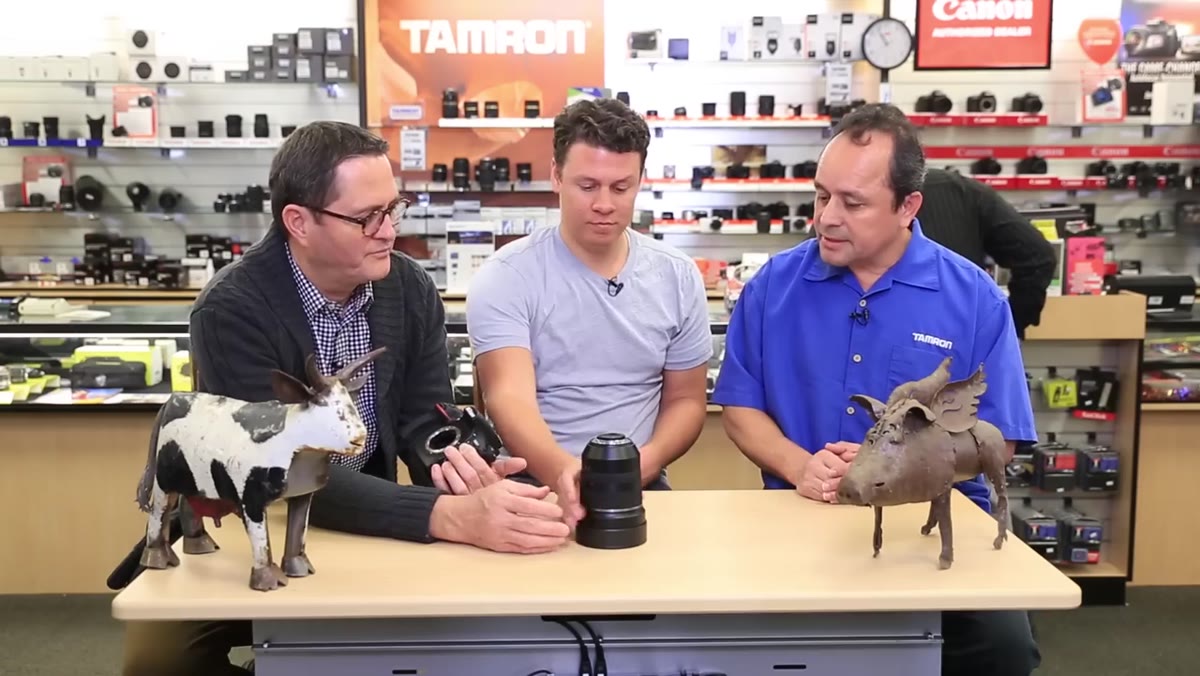 Confirmation that the 15-30mm is a rectilinear lens suitable for architecture
The conversation briefly but importantly confirms that this is a rectilinear lens. That means straight lines in your scene, door frames, building edges, horizon lines, stay straight in the image rather than bowing out in the barrel distortion you’d see with a fisheye or cheaper ultra-wide optics.
Confirmation that the 15-30mm is a rectilinear lens suitable for architecture
The conversation briefly but importantly confirms that this is a rectilinear lens. That means straight lines in your scene, door frames, building edges, horizon lines, stay straight in the image rather than bowing out in the barrel distortion you’d see with a fisheye or cheaper ultra-wide optics.
If you’re doing architectural photography, interior real estate, or any work where geometric accuracy matters to the client, rectilinear correction is non-negotiable. This isn’t a lens you have to heavily correct in post to make walls look like walls. That saves time and protects edge-to-edge sharpness that aggressive post-correction tends to degrade.
Step 6: Register the Design Change from Gold to Tungsten Ring
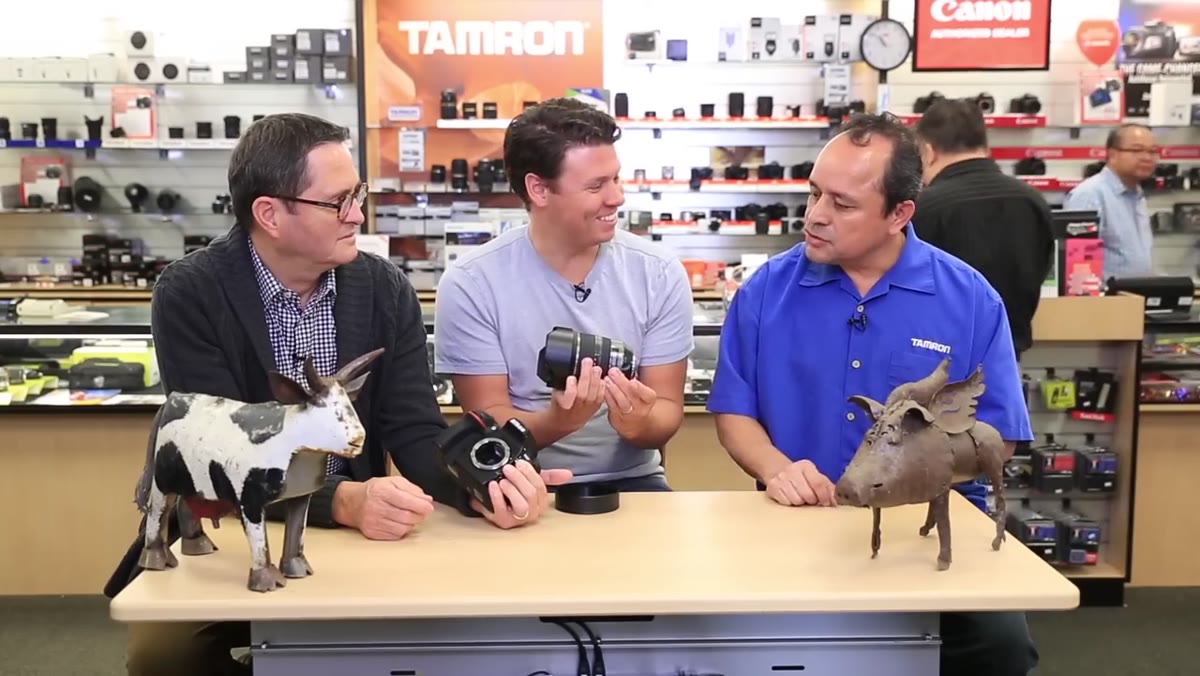 The new tungsten-colored SP ring replacing the traditional gold band
A small but meaningful visual detail: Tamron is retiring the gold ring on their SP lenses in favor of a tungsten-colored ring. This is rolling out across new SP releases and will eventually carry over to the 24-70 and 70-200 as well. Existing lenses may or may not get the update.
The new tungsten-colored SP ring replacing the traditional gold band
A small but meaningful visual detail: Tamron is retiring the gold ring on their SP lenses in favor of a tungsten-colored ring. This is rolling out across new SP releases and will eventually carry over to the 24-70 and 70-200 as well. Existing lenses may or may not get the update.
This matters if you care about kit consistency, which some shooters do for professional appearances. It also signals a broader design refresh at Tamron, so if you’re buying into the SP system now, you’re buying into the updated aesthetic from the start.
My Take: The f/2.8 Advantage Against the Canon 11-24mm f/4
The video briefly mentions that Canon announced their 11-24mm f/4 around the same time as this Tamron launch. Jay P. even brings it up directly. Here’s my honest read on that comparison: the Canon gives you a wider maximum field of view, but the Tamron gives you a full stop more light.
One extra stop sounds small until you’re shooting a dimly lit venue, a night landscape, or any video scene where you’re trying to keep ISO in check. I’ve done enough low-light shooting to know that the difference between f/2.8 and f/4 is often the difference between a usable frame and a noisy one you can’t publish. The Tamron also adds stabilization that the Canon doesn’t offer in that class. For shooters who live in controlled lighting studios, the Canon’s extra width might win. For everyone else working in real-world conditions, that extra stop is hard to argue against.
The single most important thing to take away from this breakdown is that the Tamron 15-30mm f/2.8 SP is not just a wide lens, it’s a system lens. It completes a kit, brings professional-grade stabilization that the competition skips, and holds its own on optical correction for serious architectural and video work. If you’re already in the Tamron SP ecosystem, this is the piece that makes the system whole.
Watch the full tutorial on YouTube for the full conversation with Armando, including the hands-on handling footage that gives you a real sense of just how substantial this lens is in person.
Comments (1)
Bookmarked. Coming back to this one for sure.
Leave a Comment