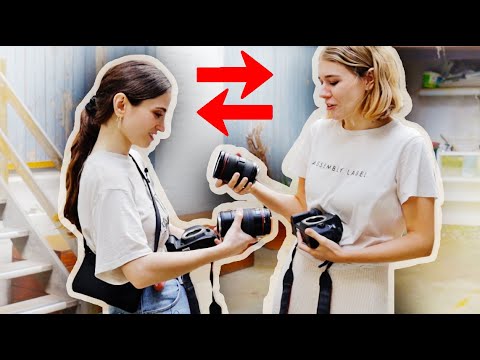
I spend a lot of time thinking about lenses in terms of specs and price points. That’s the job. But there’s a different kind of lens education that no MTF chart can give you, and it only happens when you’re forced to shoot with glass that doesn’t match how your brain works. That’s the real lesson hiding inside this Jessica Kobeissi tutorial, where she and beauty photographer Kaylee swap lenses entirely and each tries to shoot in the other’s style. Watch the full tutorial on YouTube
This isn’t a gear review. It’s a pressure test. Jessica shoots fashion with a 24-70mm, wide angles, weird perspectives, full-body compositions. Kaylee shoots beauty almost exclusively with a Canon 100mm f/2.8 macro. When they hand each other those lenses and walk into each other’s genre, everything they take for granted about their own workflow falls apart. The result is equal parts chaotic and genuinely instructive.
I’d argue this is one of the most practical exercises you can do if your shooting has started to feel mechanical. We all develop muscle memory around a single focal length, and that comfort quietly becomes a ceiling. Here’s how the challenge unfolds and what you can take from each stage.
Step 1: Define Each Photographer’s Visual Identity Before the Swap
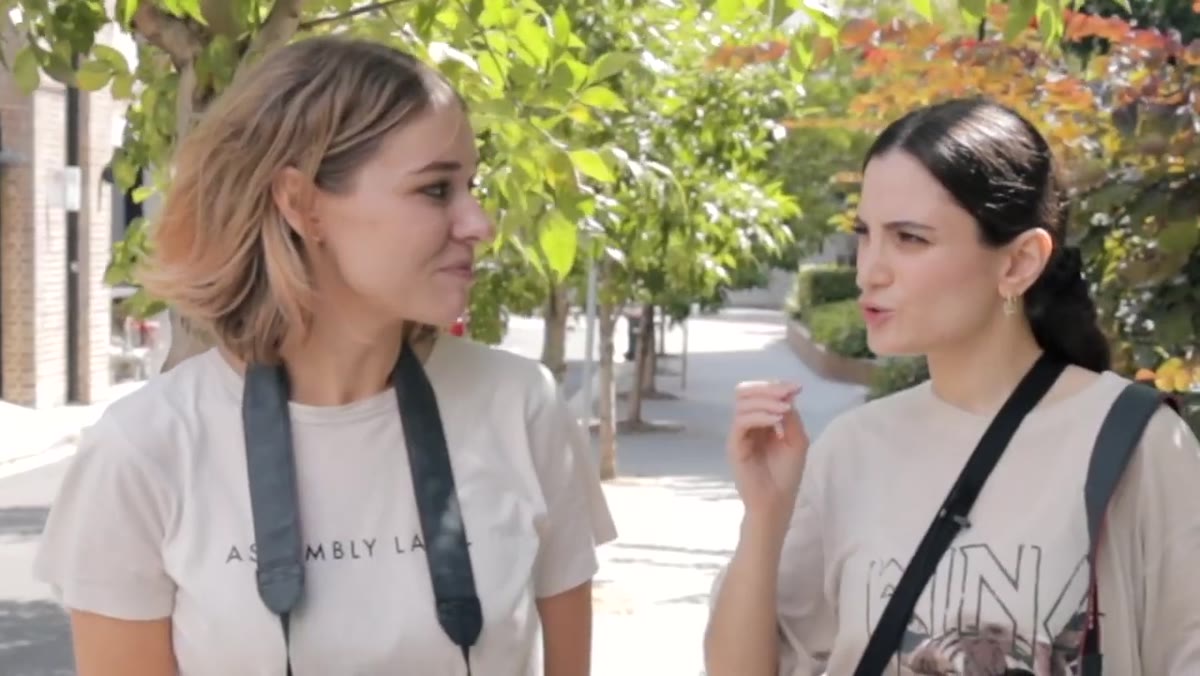
 Two photographers introducing their distinct styles and lenses
Before any glass changes hands, both photographers clearly name what their chosen lens actually does for their work. Kaylee uses the 100mm macro almost exclusively for beauty because it lets her isolate tiny details, eyes, lips, skin texture, without introducing distortion. Jessica uses the 24-70mm because her fashion work demands spatial context, unusual angles, and the ability to pull back and show environment. The point isn’t just “here are our lenses.” It’s that each photographer has built an entire visual language around a single piece of glass.
Two photographers introducing their distinct styles and lenses
Before any glass changes hands, both photographers clearly name what their chosen lens actually does for their work. Kaylee uses the 100mm macro almost exclusively for beauty because it lets her isolate tiny details, eyes, lips, skin texture, without introducing distortion. Jessica uses the 24-70mm because her fashion work demands spatial context, unusual angles, and the ability to pull back and show environment. The point isn’t just “here are our lenses.” It’s that each photographer has built an entire visual language around a single piece of glass.
If you’re doing this exercise yourself, write down three words that describe your current shooting style before you ever touch the other lens. That clarity will make the discomfort you feel during the swap actually useful, because you’ll know exactly which instincts are getting blocked.
Step 2: Assign the Opposite Genre, Not Just the Opposite Lens
 Jessica confirming Kaylee will attempt wide-angle fashion work
The swap only works as a learning tool because they also swap genres. Kaylee isn’t just holding a 24-70mm and shooting beauty with it. She’s shooting fashion, full body, environmental, wide perspective. Jessica isn’t just using a macro lens. She’s trying to produce beauty images, tight crops, detail work, intimate framing. This double constraint is what creates the real pressure.
Jessica confirming Kaylee will attempt wide-angle fashion work
The swap only works as a learning tool because they also swap genres. Kaylee isn’t just holding a 24-70mm and shooting beauty with it. She’s shooting fashion, full body, environmental, wide perspective. Jessica isn’t just using a macro lens. She’s trying to produce beauty images, tight crops, detail work, intimate framing. This double constraint is what creates the real pressure.
If you just hand someone a different lens and let them keep shooting their own style, they’ll adapt quickly and learn very little. The genre assignment forces them to confront what the lens genuinely cannot do for that specific type of image, and what it might do better than expected.
Step 3: Set a Hard Time Limit
 Five-minute countdown beginning for the shoot
Both photographers get five minutes per setup. That’s not much time, and it’s intentional. A tight clock eliminates the option of overthinking. You can’t spend three minutes agonizing over composition when you have five minutes total to get usable shots. What comes out under that pressure is instinct, and instinct tells you a lot about where your real skill gaps are versus where you just need more reps.
Five-minute countdown beginning for the shoot
Both photographers get five minutes per setup. That’s not much time, and it’s intentional. A tight clock eliminates the option of overthinking. You can’t spend three minutes agonizing over composition when you have five minutes total to get usable shots. What comes out under that pressure is instinct, and instinct tells you a lot about where your real skill gaps are versus where you just need more reps.
For solo practice, set a five-minute timer on your phone and commit to finishing before it goes off. No chimping after every frame, no adjusting the scene endlessly. Shoot, adapt, move.
Step 4: Navigate the Physical Constraints of an Unfamiliar Focal Length
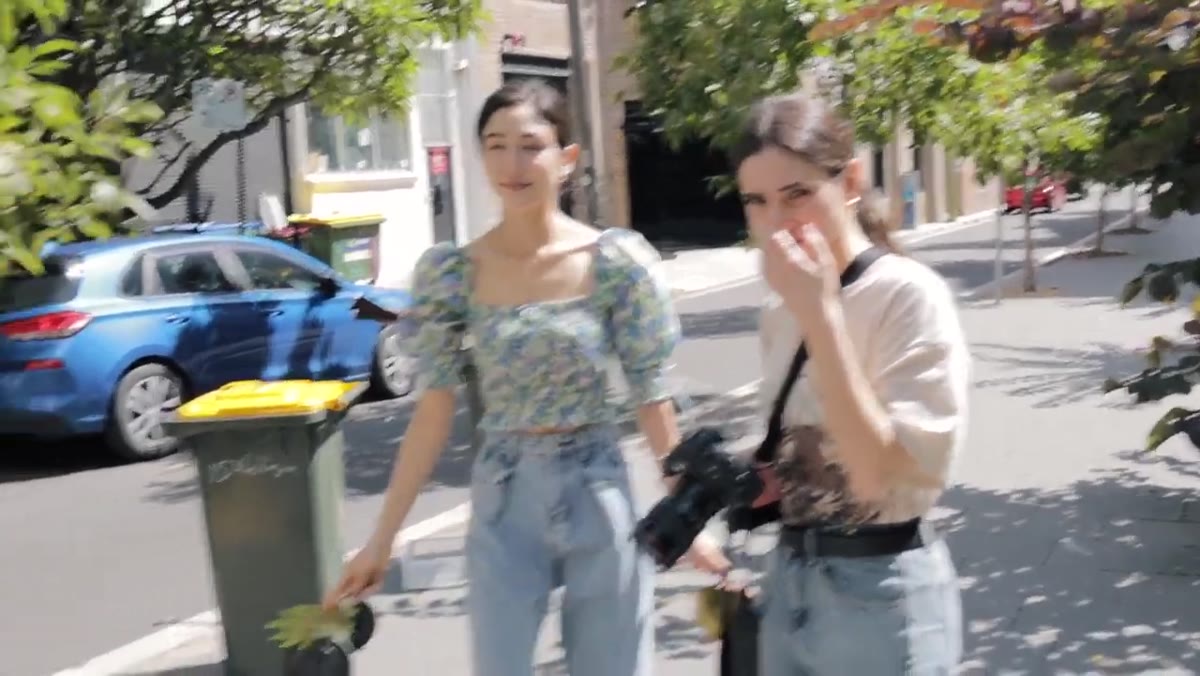
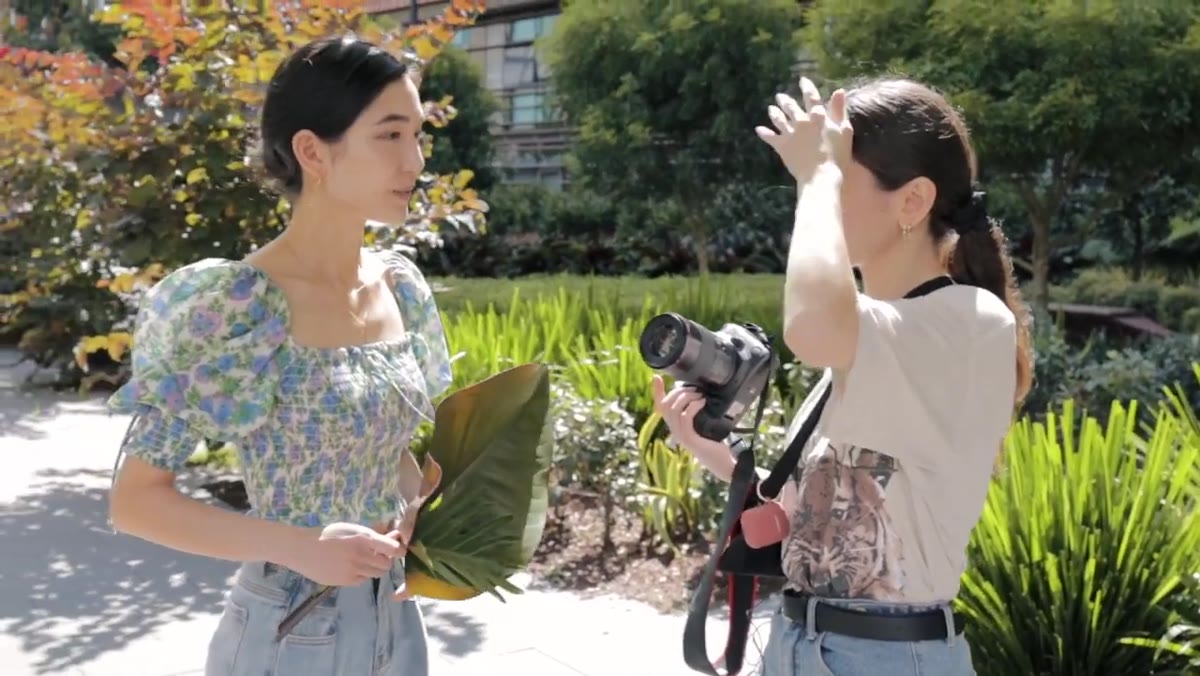 Jessica struggling with where to position the model for macro work
This is where the tutorial gets honest fast. Jessica, used to backing up and going wide, suddenly has to figure out where to actually stand with a macro lens. The 100mm macro has a minimum focus distance, which means she can’t just wander around and frame freely. She has to be in a specific physical relationship to her subject to get anything sharp at all. Kaylee faces the opposite problem: the 24-70 wants her to move back, but fashion compositions require deliberate use of that wide angle rather than just defaulting to a safe mid-range zoom.
Jessica struggling with where to position the model for macro work
This is where the tutorial gets honest fast. Jessica, used to backing up and going wide, suddenly has to figure out where to actually stand with a macro lens. The 100mm macro has a minimum focus distance, which means she can’t just wander around and frame freely. She has to be in a specific physical relationship to her subject to get anything sharp at all. Kaylee faces the opposite problem: the 24-70 wants her to move back, but fashion compositions require deliberate use of that wide angle rather than just defaulting to a safe mid-range zoom.
The lesson here is that focal length isn’t just an optical choice. It’s a physical choreography. Every lens asks you to stand in a different place, move differently, and relate to your subject differently.
Step 5: Lean on Your Subject When the Lens Disorients You
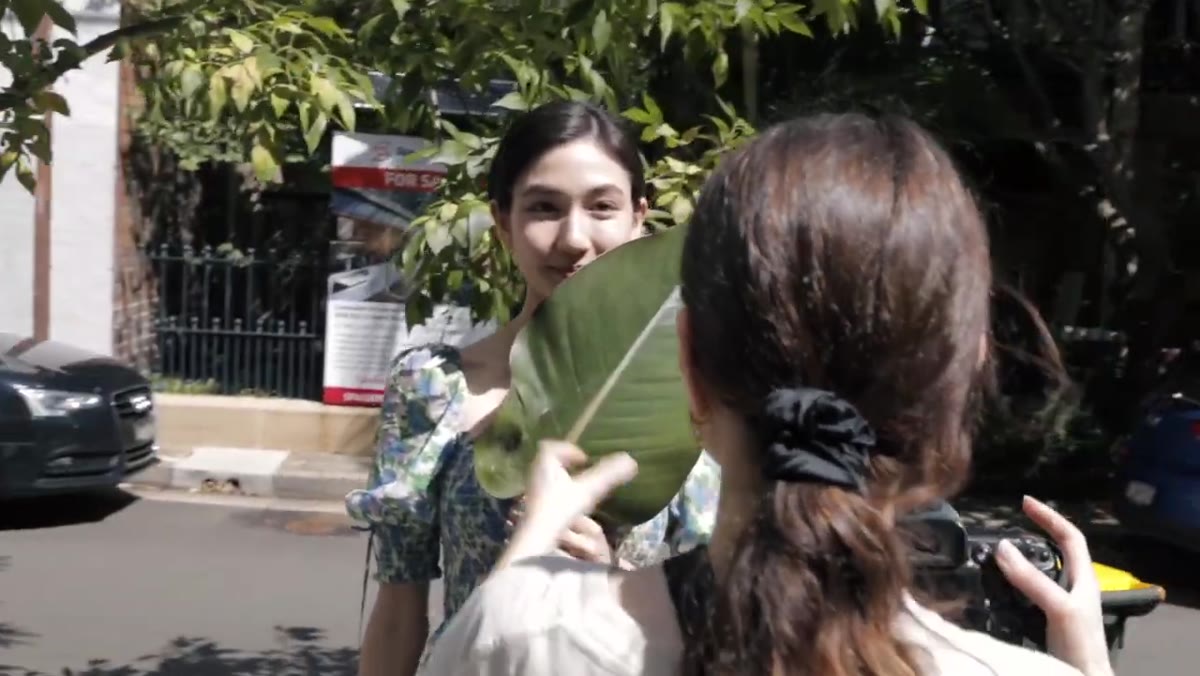 Jessica directing the model’s chin and head position for beauty framing
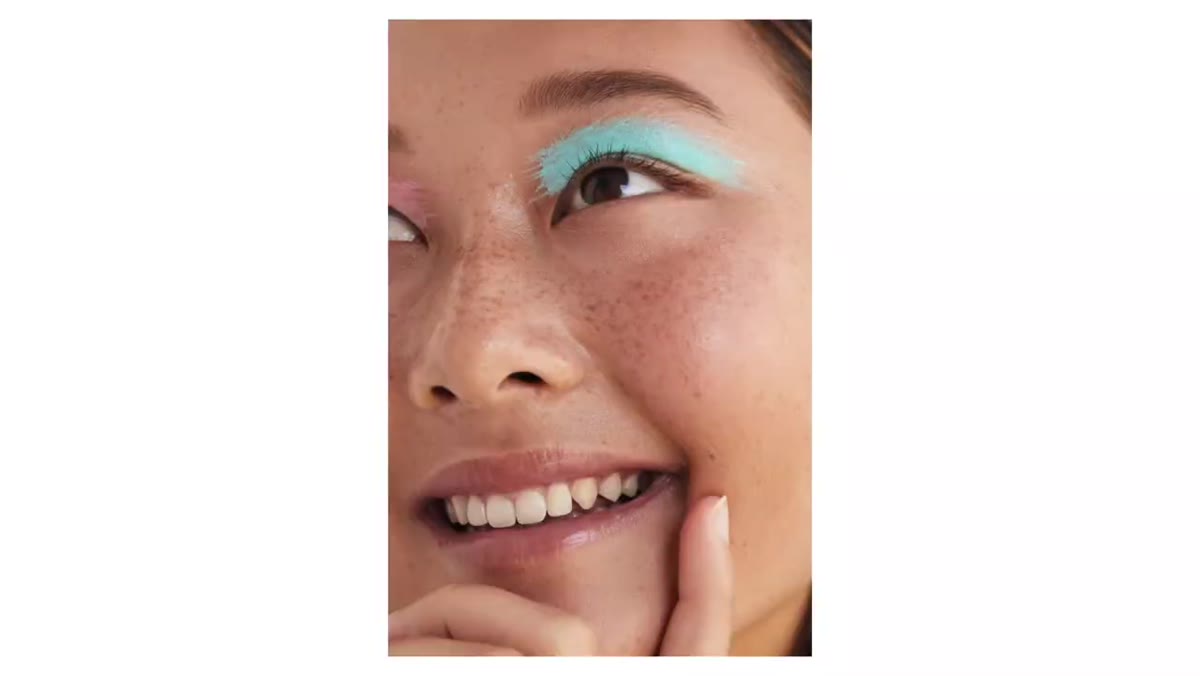
One of the clearest moments in the video is when Jessica, struggling to frame a beauty shot she’s never composed before, starts verbally directing her model more than she normally would. She’s calling out chin position, eye contact, head tilt, because she can’t rely on her own spatial instincts to get the shot. The model becomes a collaborator in working around the photographer’s uncertainty.
Jessica directing the model’s chin and head position for beauty framing
One of the clearest moments in the video is when Jessica, struggling to frame a beauty shot she’s never composed before, starts verbally directing her model more than she normally would. She’s calling out chin position, eye contact, head tilt, because she can’t rely on her own spatial instincts to get the shot. The model becomes a collaborator in working around the photographer’s uncertainty.
This is a legitimate technique, not a workaround. If you’re shooting a genre you’re less comfortable with, lean harder on communication with your subject. More specific direction often produces better results than silently hunting for the perfect angle.
Step 6: Look for What the “Wrong” Lens Actually Does Well
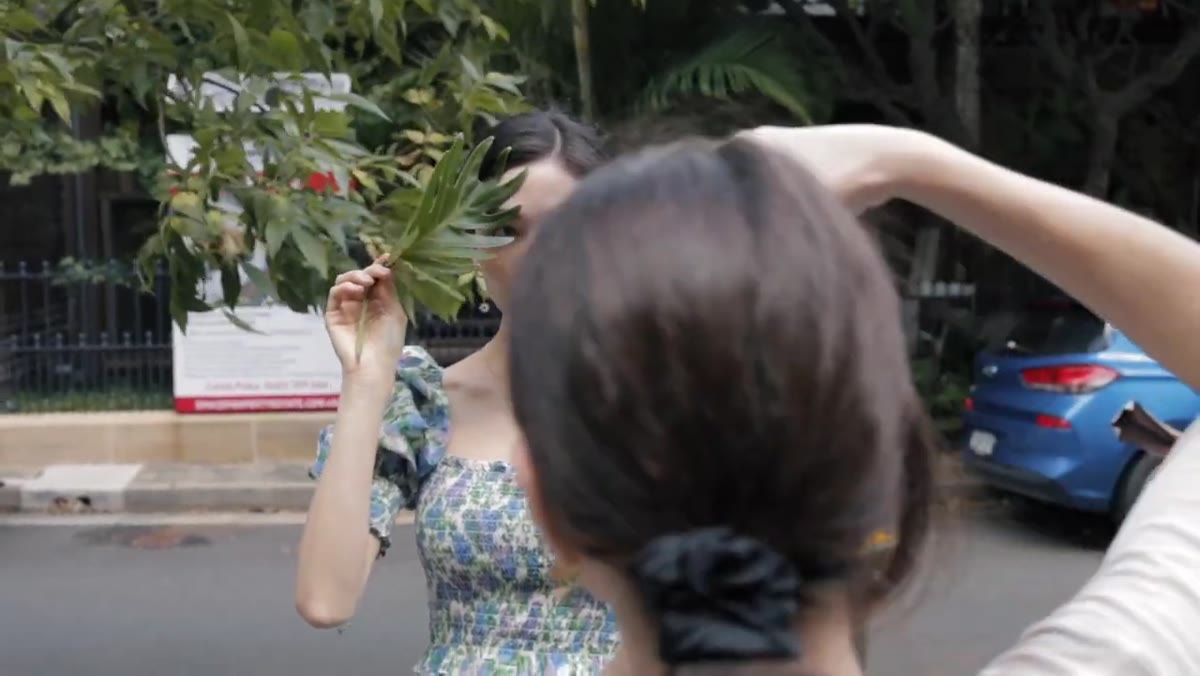 Kaylee reacting positively to an unexpected result from the macro lens
Late in the shoot, there’s a shift. The initial frustration starts giving way to genuine discovery. The macro lens, used for beauty in the hands of someone who shoots fashion, produces images with a quality of stillness and compression that’s different from what either photographer usually gets. The constraint forces a kind of considered, deliberate shooting that faster-paced work doesn’t require.
Kaylee reacting positively to an unexpected result from the macro lens
Late in the shoot, there’s a shift. The initial frustration starts giving way to genuine discovery. The macro lens, used for beauty in the hands of someone who shoots fashion, produces images with a quality of stillness and compression that’s different from what either photographer usually gets. The constraint forces a kind of considered, deliberate shooting that faster-paced work doesn’t require.
This is the payoff of the whole exercise. Every lens has capabilities that your habitual use of your own glass never surfaces. The 24-70 can do beauty work if you think carefully about distance and compression. The 100mm macro can create fashion-adjacent images if you get creative about using it at distances beyond its typical sweet spot. You just won’t find any of that out unless something forces you off your default.
My Take: The Budget Angle Nobody Mentions Here
I’ve tested enough lenses under $300 to know that most photographers are leaving real creative range on the table simply because they only own one or two focal lengths and never deliberately work against them. A Canon 100mm f/2.8 macro is not a cheap lens, but the principle in this video applies just as well to a $120 Yongnuo 100mm or a used 50mm macro from eBay. The exercise costs nothing. What it fixes is the tunnel vision that develops when you shoot the same focal length for the same subjects, shoot after shoot, until you’ve stopped making choices and started just operating on autopilot.
If your kit only has one lens right now, borrow a friend’s kit for an afternoon and do this exact challenge. The discomfort is the point. That’s where the actual learning is.
The single most useful thing this tutorial demonstrates is that your lens isn’t just a tool. It’s been quietly shaping what you think is possible in a frame, and you won’t know how much until it’s gone. Watch the full tutorial on YouTube to see both photographers work through that discomfort in real time. It’s worth every chaotic, fumbling minute of it.
Comments (2)
Bookmarked. Coming back to this one for sure.
Finally someone explains this in a way that actually makes sense.
Leave a Comment