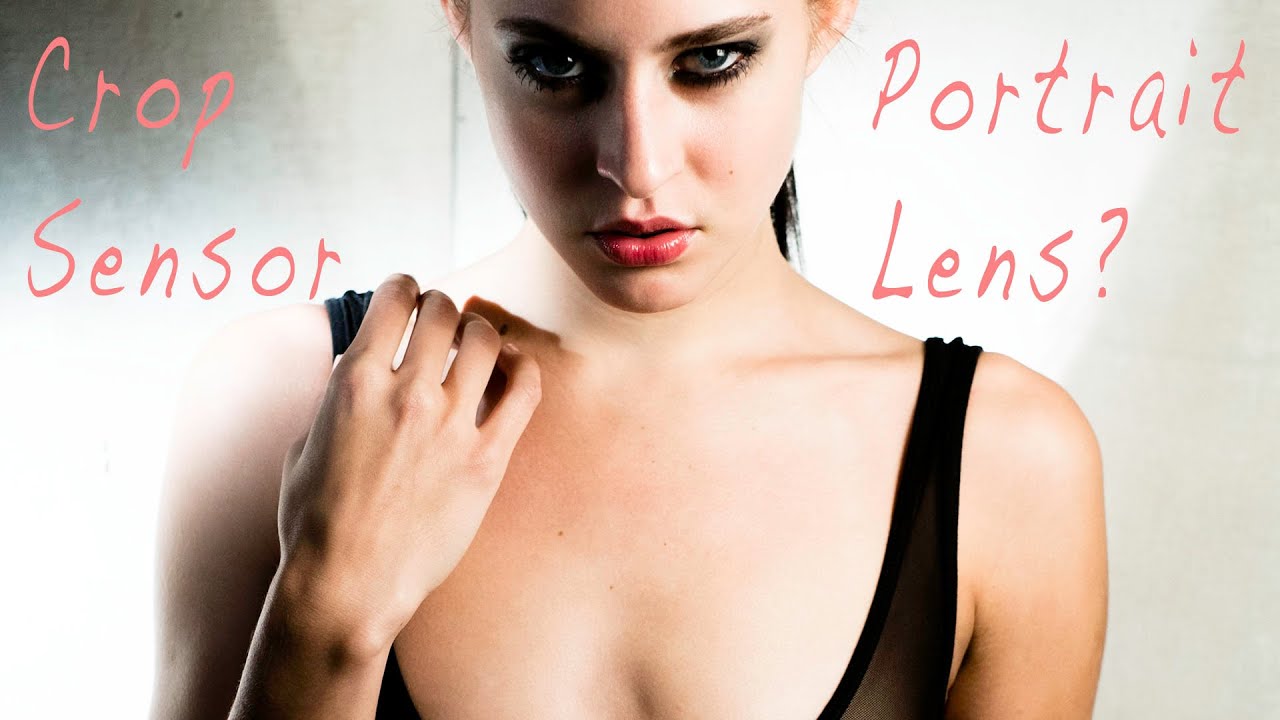
One question I kept seeing pop up in beginner photography groups — and honestly one I wrestled with myself when I was shooting on a crop sensor body — is whether a 50mm lens “counts” as a portrait lens when you’re not on full frame. It sounds like a simple question, but the answer touches on focal length compression, field of view, and how lens manufacturers actually design their glass. In this Daniel Norton Photographer tutorial, Watch the full tutorial on YouTube, Daniel works through the physics and the practical logic in about five minutes flat.
I’ve spent a lot of time comparing budget lenses across different sensor formats, and this question matters more than people think. If you’re shopping for a portrait lens and you’re on a crop sensor body, the answer changes what you should buy and how much you should spend. Getting this wrong means either spending money you don’t need to, or wondering why your headshots look slightly off and blaming your lighting when the real issue is where you’re standing relative to your subject.
What Daniel lays out is a clean, practical framework. No gear snobbery, no full-frame evangelism. Just optics.
Step 1: Understand Why Portrait Photographers Reach for Longer Focal Lengths
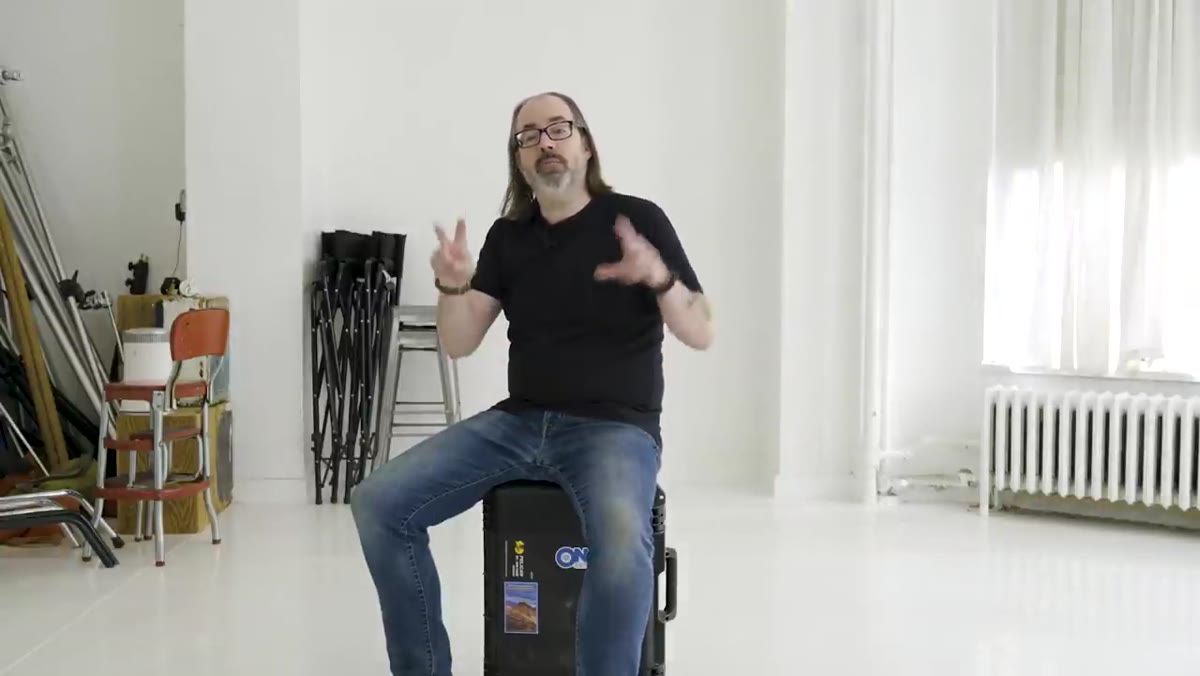 Daniel explaining compression and portrait framing in studio
The reason portrait photographers tend to gravitate toward longer lenses isn’t arbitrary. When you use a longer focal length, you have to stand farther back from your subject to get the same framing. That extra distance is what produces compression - a flattening effect that makes facial features look more proportional and flattering. Practically speaking, a nose looks less prominent, ears don’t appear pulled back, and the face takes on a slightly wider, more balanced look. At the extreme end, a 400mm shot from across a room can make someone look almost unrecognizable compared to a shot at 35mm from three feet away.
Daniel explaining compression and portrait framing in studio
The reason portrait photographers tend to gravitate toward longer lenses isn’t arbitrary. When you use a longer focal length, you have to stand farther back from your subject to get the same framing. That extra distance is what produces compression - a flattening effect that makes facial features look more proportional and flattering. Practically speaking, a nose looks less prominent, ears don’t appear pulled back, and the face takes on a slightly wider, more balanced look. At the extreme end, a 400mm shot from across a room can make someone look almost unrecognizable compared to a shot at 35mm from three feet away.
The sweet spot for most portrait work sits somewhere between 85mm and 135mm on a full-frame camera. That range gives you enough distance from your subject to get natural compression without the over-flattened, almost cartoonish look that comes from very long telephoto lenses. Keep that range in mind, because it’s the benchmark we’re measuring the 50mm crop sensor question against.
Step 2: Get Clear on What “Crop Sensor” Actually Changes
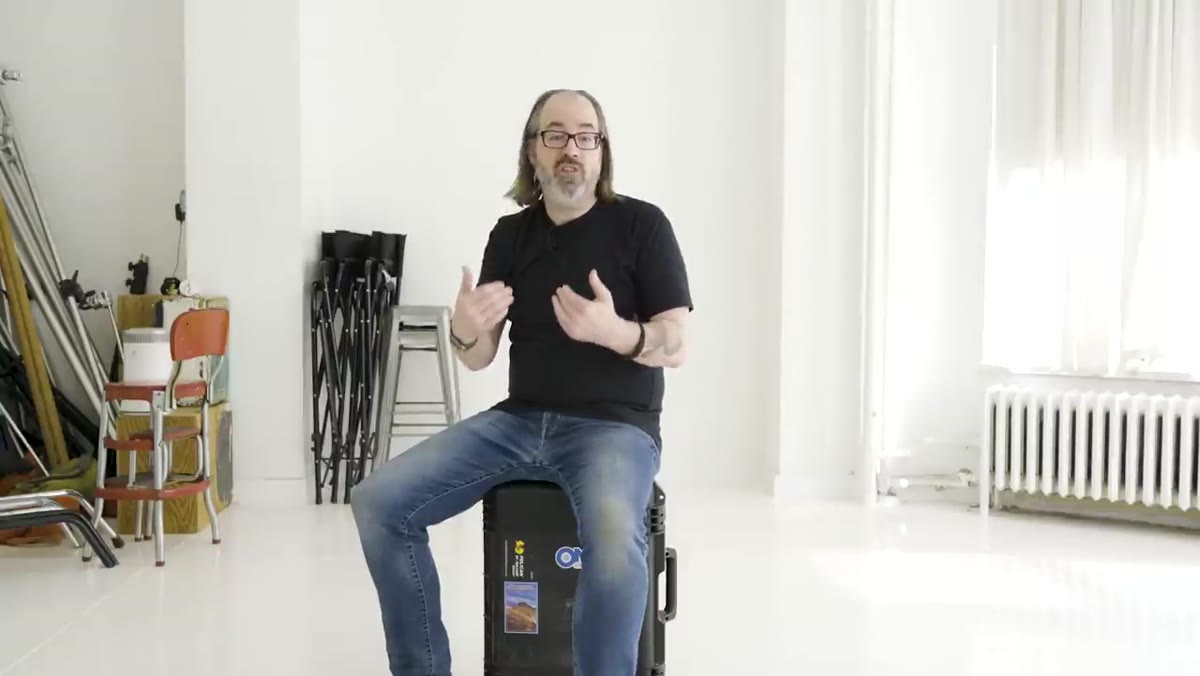 Daniel comparing full-frame vs crop sensor framing for the same subject
A crop sensor camera doesn’t change the focal length of your lens. A 50mm lens is still a 50mm lens. What changes is how much of the image circle the sensor captures. A crop sensor - typically with a 1.5x or 1.6x crop factor depending on the brand - captures a narrower slice of what the lens sees, which makes the image look as if it was shot with a longer lens. So a 50mm on a 1.5x crop body gives you a field of view roughly equivalent to a 75mm lens on full frame.
Daniel comparing full-frame vs crop sensor framing for the same subject
A crop sensor camera doesn’t change the focal length of your lens. A 50mm lens is still a 50mm lens. What changes is how much of the image circle the sensor captures. A crop sensor - typically with a 1.5x or 1.6x crop factor depending on the brand - captures a narrower slice of what the lens sees, which makes the image look as if it was shot with a longer lens. So a 50mm on a 1.5x crop body gives you a field of view roughly equivalent to a 75mm lens on full frame.
That equivalent field of view is what matters for the portrait question. If you were judging the 50mm as a portrait lens based on full-frame behavior, you’d have reasonable doubts. It’s a little short, it requires you to get close, and getting close introduces more distortion into facial features. On a crop sensor, the math shifts in your favor.
Step 3: See How Shooting Distance Changes the Compression Equation
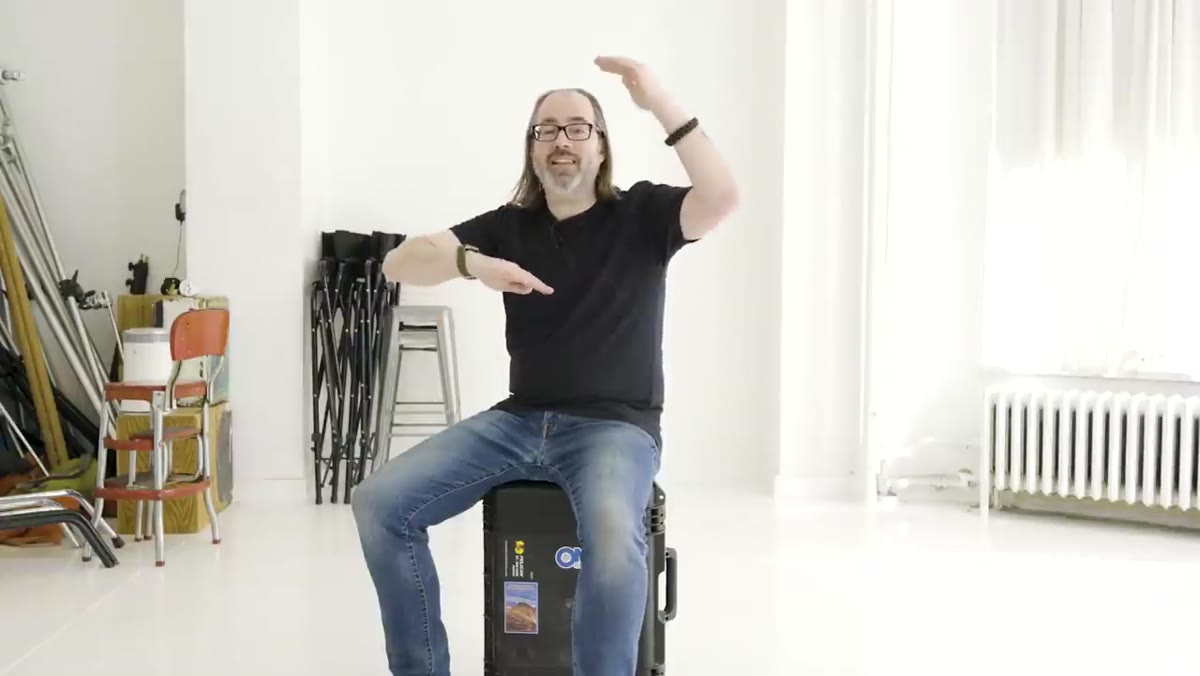 Daniel stepping back to reframe shot on crop sensor camera
Here’s where the crop sensor actually helps your portrait work. To get the same head-and-shoulders framing with a 50mm on your crop body that you’d get with a 50mm on full frame, you have to step back. That extra distance is the entire mechanism behind compression. You’re not changing the lens. You’re changing your position, and your position is what drives the flattering effect.
Daniel stepping back to reframe shot on crop sensor camera
Here’s where the crop sensor actually helps your portrait work. To get the same head-and-shoulders framing with a 50mm on your crop body that you’d get with a 50mm on full frame, you have to step back. That extra distance is the entire mechanism behind compression. You’re not changing the lens. You’re changing your position, and your position is what drives the flattering effect.
So counterintuitively, putting a 50mm on a crop sensor and stepping back to reframe gives you more compression than shooting that same lens on full frame from the same original distance. The sensor crop forces you into portrait-friendly behavior whether you planned it or not. That’s not magic. That’s just geometry working in your favor.
Step 4: Recognize That Lens Manufacturers Design With Use Cases in Mind
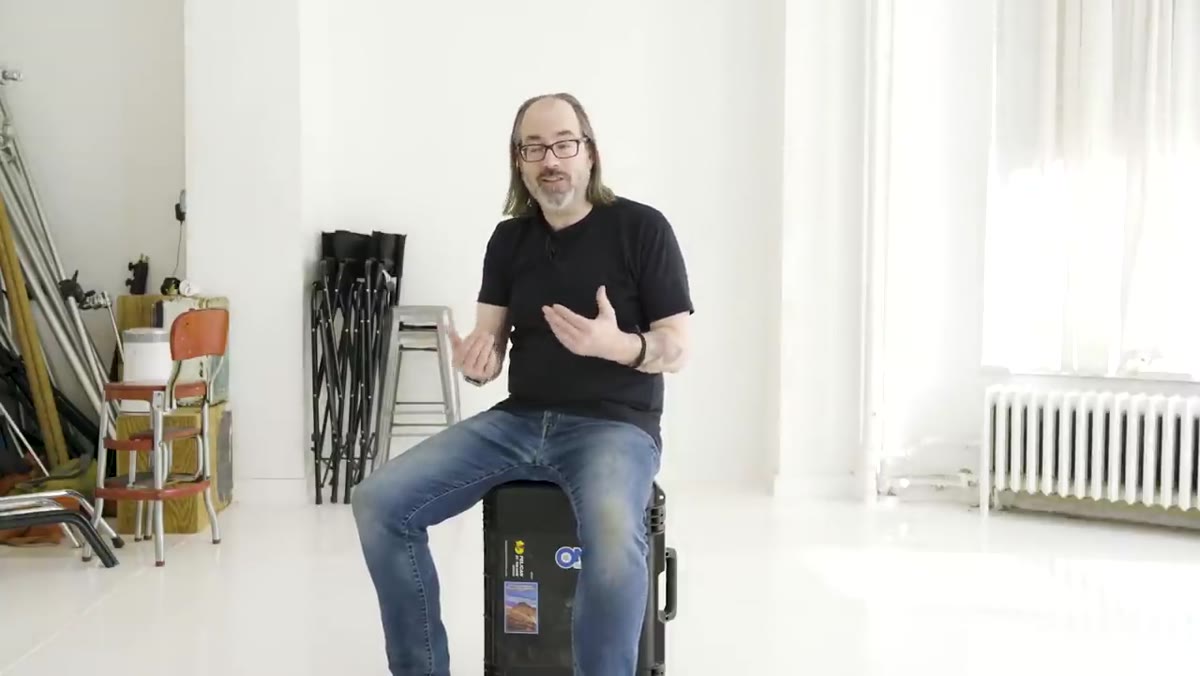 Daniel discussing lens design intent and optical characteristics
Daniel makes a point here that a lot of beginner guides skip entirely. Lens designers don’t just calculate focal lengths in a vacuum. They think about what the lens will actually be used for, and they tune the optics accordingly. A rectilinear wide-angle lens is engineered to keep straight lines straight - great for architecture, fine for landscapes, but that design priority doesn’t carry over into portrait flattery. The optical character of the glass is shaped by its intended purpose.
Daniel discussing lens design intent and optical characteristics
Daniel makes a point here that a lot of beginner guides skip entirely. Lens designers don’t just calculate focal lengths in a vacuum. They think about what the lens will actually be used for, and they tune the optics accordingly. A rectilinear wide-angle lens is engineered to keep straight lines straight - great for architecture, fine for landscapes, but that design priority doesn’t carry over into portrait flattery. The optical character of the glass is shaped by its intended purpose.
Some portrait-specific lenses are designed with particular attention to how the out-of-focus areas render, how micro-contrast behaves across the frame, and how the overall rendering flatters skin tones and facial structure. That’s not marketing language. That’s a real difference you can see in side-by-side tests. A 50mm kit lens and a 50mm lens designed around portrait use will behave differently even at the same aperture and distance.
Step 5: Apply the Practical Test - Does It Give You a Flattering Working Distance?
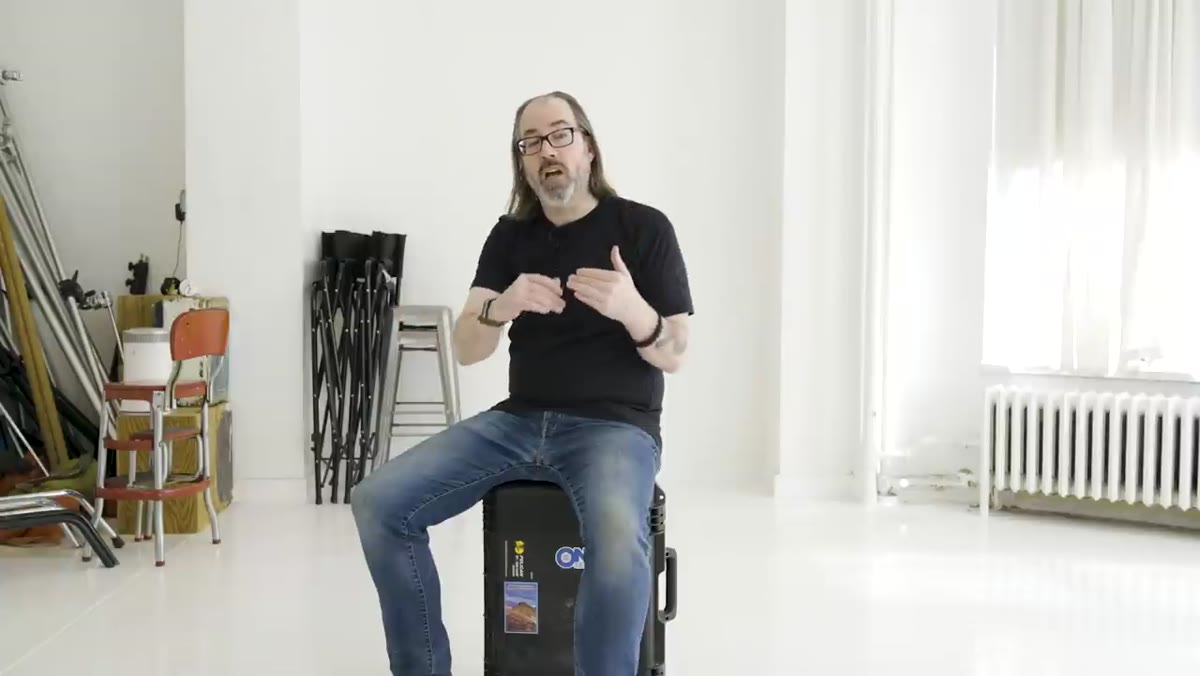 Daniel framing a portrait and noting distance from subject
The real-world test for whether any lens works as a portrait lens is simple: can you get a flattering framing without getting uncomfortably close to your subject? On a crop sensor body, a 50mm lens typically puts you at a working distance that naturally produces the compression you want. You’re not crowding your subject. You’re not so far back that the setup becomes awkward in a small studio or a tight indoor location.
Daniel framing a portrait and noting distance from subject
The real-world test for whether any lens works as a portrait lens is simple: can you get a flattering framing without getting uncomfortably close to your subject? On a crop sensor body, a 50mm lens typically puts you at a working distance that naturally produces the compression you want. You’re not crowding your subject. You’re not so far back that the setup becomes awkward in a small studio or a tight indoor location.
If you’re shooting in a cramped apartment or a home studio with limited space, this actually becomes a genuine advantage. A crop sensor with a 50mm gives you portrait-quality compression without needing the room that an 85mm or 105mm equivalent would require on full frame. For photographers working in tight spaces on a budget, that’s a real, practical win.
What I’d Add From My Own Testing
I’ve run budget 50mm lenses on crop sensor bodies more times than I can count, and the results consistently punch above their price point for portrait work. Where I’d push back slightly on framing any lens as automatically “portrait ready” is on the question of rendering quality. Two 50mm lenses at the same price point can produce noticeably different results in how they handle skin and out-of-focus backgrounds. If you’re comparing a $120 manual 50mm to a $300 AF 50mm designed with portrait use in mind, the field of view math is the same but the image character won’t be. Before buying, check actual portrait samples at the apertures you’ll be shooting. Field of view equivalence is one part of the equation. Optical rendering is the other part that budget guides often skip.
The bottom line is this: yes, a 50mm lens on a crop sensor camera is a legitimate portrait lens, and the physics of why that’s true are worth actually understanding rather than just memorizing. The crop factor forces a working distance that produces flattering compression, and that’s the same reason portrait photographers reach for longer lenses in the first place. Watch the full tutorial on YouTube to hear Daniel walk through the logic himself - it’s five minutes and it’ll change how you think about focal length recommendations for good.
Comments
Leave a Comment