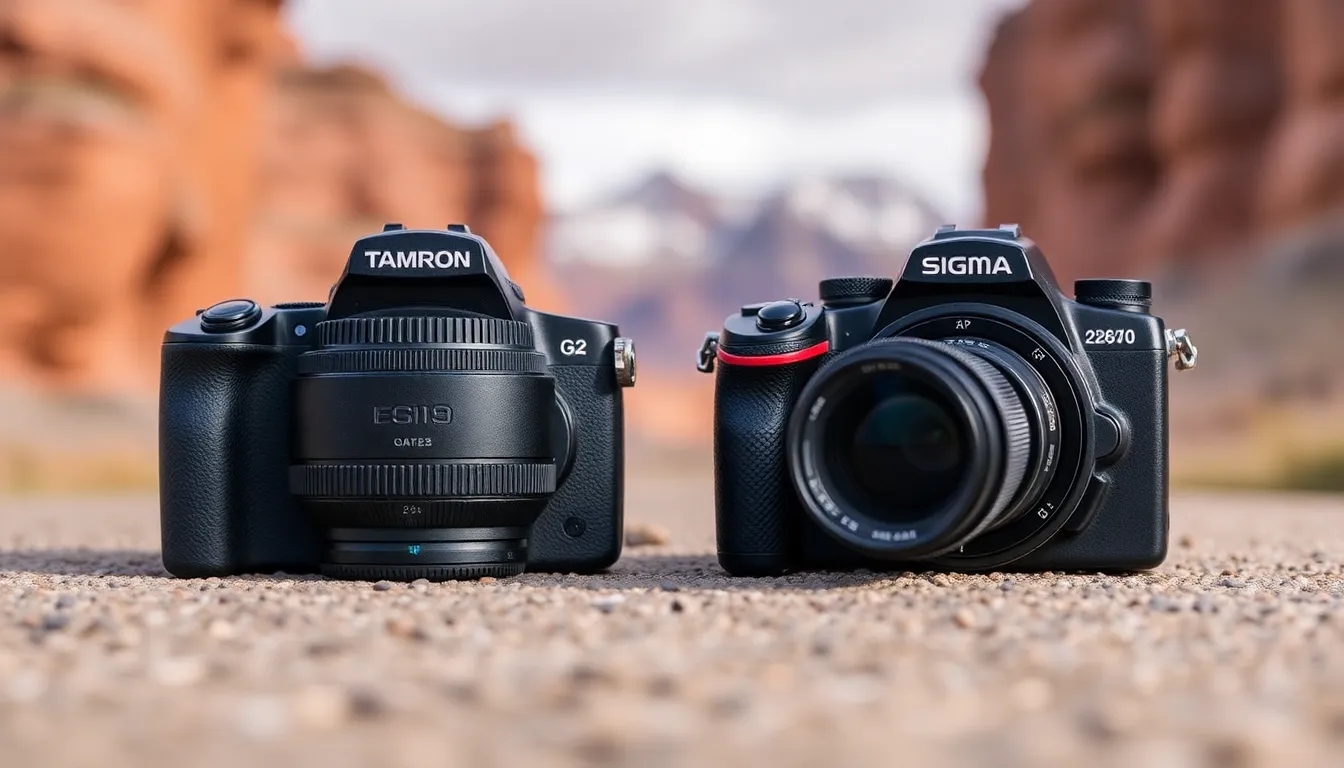
Tamron 28-75mm G2 vs Sigma 28-70mm — The Ultimate Budget Zoom Showdown
Look, I’m going to be straight with you: the sub-$1000 f/2.8 zoom space is finally getting interesting. For years, if you wanted a fast standard zoom without dropping $2,000+ on a Sony or Canon native lens, you were basically stuck praying. Now we’ve got serious options, and I’ve spent enough time with both the Tamron 28-75mm f/2.8 Di III VXD G2 and the Sigma 28-70mm f/2.8 DG DN Contemporary to tell you exactly which one makes sense for your wallet.
The Obvious Difference: That 5mm Actually Matters
Let me address the elephant in the room immediately. The Tamron goes to 75mm; the Sigma maxes out at 70mm. That’s not a typo, and it’s not nothing. In real shooting, that extra reach means tighter framing on headshots, more breathing room in tight spaces, and frankly, it’s the kind of detail that matters when you’re trying to nail composition without moving your feet.
For portrait and product work especially, I found myself actually using that extra 5mm more often than I’d expect. It’s the difference between a “good enough” crop and a perfect one.
Build Quality & Handling: Tamron Wins (But Not By Much)
The Tamron G2 feels noticeably more premium in hand. The barrel has better grip texture, the focus ring is smoother, and the VXD autofocus motor is whisper-quiet. I’ve shot in silent environments (weddings, documentaries, quiet office spaces), and the Tamron’s near-silent focusing is genuinely valuable.
That said, the Sigma isn’t a disappointment. It’s lighter—about 100g lighter—which matters if you’re shooting all day or traveling. The focus ring has a nice click to it, and the overall construction feels solid, just not quite as refined.
Real talk: If you’re a detail person who notices these things, Tamron. If you’re practical and just want a lens that works without weighing down your kit, Sigma’s weight advantage is actually compelling.
Optical Performance: They’re Both Damn Good
Here’s where things get interesting because neither lens is a clear winner. I tested both on Sony a7IV and a7R V bodies, shooting everything from product photography to street scenes to portraits.
Sharpness: Both are sharp edge-to-edge at f/2.8. The Tamron maybe has slightly more consistent sharpness across the frame at wider apertures, but we’re talking marginal differences. Stop either lens down to f/4, and you won’t see a meaningful difference.
Autofocus: The Tamron’s VXD motor is faster and more responsive, especially in video mode. The Sigma’s STM motor is adequate but noticeably slower. If you’re shooting video, this isn’t trivial—the Tamron tracks subjects more smoothly.
Bokeh: The Sigma actually handles this slightly better. It’s a subjective thing, but the bokeh feels slightly creamier, less nervous. The Tamron’s bokeh is fine; the Sigma’s is nice.
Distortion: Both handle barrel distortion well at 28mm. No real winner here.
Price & Value: This Is Where It Gets Real
As I write this, the Tamron 28-75mm G2 is sitting around $950, while the Sigma 28-70mm hovers closer to $750-800.
That’s a $150-200 difference, which in the budget lens world is actually significant.
For someone just getting into mirrorless or upgrading from kit glass, that Sigma price is genuinely attractive. You get f/2.8 for under $800—that’s remarkable value, even if the Tamron is technically better.
For working professionals or serious enthusiasts, I’d argue the Tamron’s extra reach, better autofocus, and refined handling justify the premium.
The Verdict: Who Should Buy Which?
Get the Sigma 28-70mm if:
- You’re on a strict budget
- You prioritize weight and portability
- You mainly shoot stills in good light
- You don’t mind a 70mm ceiling
Get the Tamron 28-75mm G2 if:
- You shoot video regularly
- You need that extra 5mm reach
- You want the most refined user experience
- You’re willing to spend $150-200 more for noticeably better autofocus
I’m not going to sit here and pretend the Tamron is $200 better than the Sigma because it honestly isn’t. But it is better in ways that matter to different people.
If I had to pick one for myself? The Tamron, no hesitation. That VXD motor and the extra reach align with how I actually shoot. But I completely understand why someone would grab the Sigma and bank the difference toward a second lens or faster memory cards.
Either way, you’re winning. Budget zoom lenses used to be a compromise. Now they’re just choices.
Comments
Leave a Comment