The Laowa 10mm f/2.8 in the Field: What a First Shoot Actually Teaches You About Ultra-Wide Composition

The Laowa 10mm f/2.8 in the Field: What a First Shoot Actually Teaches You About Ultra-Wide Composition

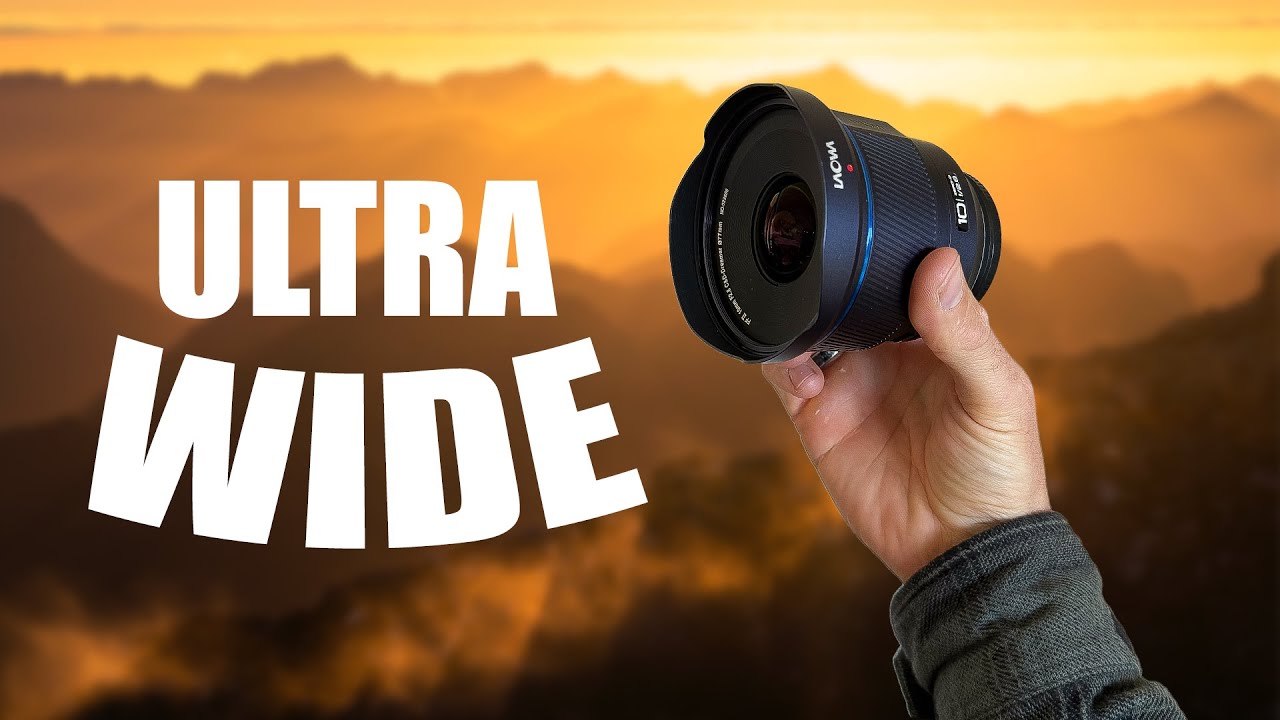
I’ve spent a embarrassing number of hours in spreadsheets comparing budget wide-angle lenses. Focal length, distortion, corner sharpness, price per millimeter of field of view - yes, I actually track that. So when I saw someone doing a genuine first-shoot field test of the Laowa 10mm f/2.8 full-frame lens with zero sponsorship attached, I stopped scrolling immediately. In this William Patino tutorial, he takes the lens out at golden hour in a forest and shoots through it in real time, talking through decisions as he makes them.

Why Your Ultra Wide Lens Is Collecting Dust (And How to Actually Use It for Landscapes)

Why Your Ultra Wide Lens Is Collecting Dust (And How to Actually Use It for Landscapes)

I’ve tested more budget lenses than I care to admit. I’ve got a spreadsheet to prove it. And one pattern shows up over and over in my notes: ultra wide lenses consistently get underused, not because they’re bad, but because photographers don’t change how they shoot when they put one on. They treat it like a regular lens with a wider field of view. It’s not. It’s a completely different compositional tool, and using it wrong produces flat, empty, weirdly distorted images that make you want to sell it immediately.

Viltrox's 16mm f/1.8 Z Just Hit Its Best Price Yet—Here's Why That Matters

Viltrox's 16mm f/1.8 Z Just Hit Its Best Price Yet—Here's Why That Matters

A Genuinely Affordable Ultra-Wide for Nikon Z Users I’ve been watching the Viltrox 16mm f/1.8 Z bounce around the pricing landscape for a while now, and I’ve got to say—this is the first time I’ve felt genuinely excited about recommending it to people. The lens just hit $464 on Amazon during their spring sale, and that’s a meaningful enough discount that it changes the conversation entirely. Let me be straight with you: ultra-wide primes aren’t cheap.