How to Stop Wasting Your Wide Angle Lens on Dead Foregrounds (Lessons from Nigel Danson)

How to Stop Wasting Your Wide Angle Lens on Dead Foregrounds (Lessons from Nigel Danson)

Wide angle lenses are the ones that separate photographers who “get it” from photographers who just think they do. I spent a solid year shooting wide and wondering why my images looked flat, boring, and weirdly empty despite having more of the scene in frame. More isn’t always more. The problem, almost every time, was the foreground. I was looking for something concrete to fix this, and I landed on a tutorial from Nigel Danson that clicked immediately.

The 3 Portrait Lenses Working Pros Actually Reach For (And What to Buy If You're on a Budget)

The 3 Portrait Lenses Working Pros Actually Reach For (And What to Buy If You're on a Budget)

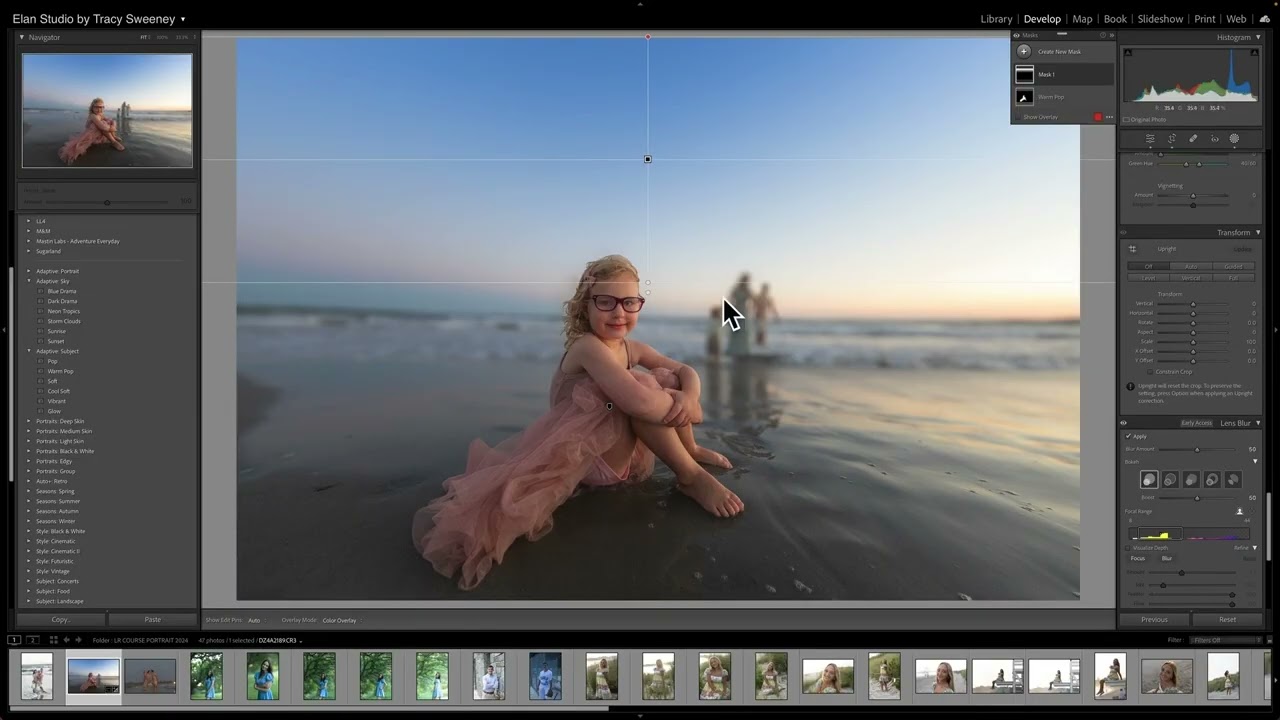
I used to think portrait photography was mostly about lighting and posing. Then I shot a friend’s engagement session with a kit zoom and spent two hours in Lightroom trying to fix flat, lifeless images that no amount of editing could fully save. The lens matters. Not because expensive glass makes you a better photographer, but because the wrong focal length, the wrong aperture, or a lens with bad contrast handling will cost you shots you can never reshoot.

What the Ricoh GR IVA Taught Me About Buying Into a Camera System, Not Just a Camera

What the Ricoh GR IVA Taught Me About Buying Into a Camera System, Not Just a Camera

I’ve always had a soft spot for the Ricoh GR line. Not because it’s the flashiest gear on the market, but because it represents something I genuinely believe in: a small, no-nonsense tool that gets out of your way and lets you shoot. When I started out with a $300 kit camera, I learned pretty fast that the camera you actually carry beats the one sitting at home in a padded bag.

Can AI Actually Critique Your Photos? Sean Tucker Put It to the Test So You Don't Have To

Can AI Actually Critique Your Photos? Sean Tucker Put It to the Test So You Don't Have To

Getting honest feedback on your photos is one of the hardest parts of improving as a photographer. Most working photographers don’t have time to review your portfolio for free, and the ones who charge for it aren’t always worth the cost. I’ve been shooting long enough to know that the gap between “I think this image is good” and “this image is actually good” can be enormous, and without someone experienced telling you which side of that gap you’re on, you can spin your wheels for years.

The Gear Paralysis Fix Nobody Talks About (And It Has Nothing to Do With Buying Better Stuff)

The Gear Paralysis Fix Nobody Talks About (And It Has Nothing to Do With Buying Better Stuff)

There’s an embarrassing irony in my line of work. I spend more time researching gear than actually using it. I’ve tested five tripods under $50 in a single month, I cross-reference price histories before my coffee cools, and I once bought three versions of the same budget lens just to find the sharpest copy. The gear side? I’ve got that wired. But for a long stretch last year, I kept running into the same wall: I had a bag full of capable cameras, a head full of YouTube tutorials, and absolutely no idea what to go shoot.

The MindShift Rotation 180° Panorama Pack Solves a Problem Every Field Photographer Has Hit

The MindShift Rotation 180° Panorama Pack Solves a Problem Every Field Photographer Has Hit

I’ve spent a lot of time watching photographers fumble with their packs at the worst possible moment. You’re at the edge of a tide pool, light is perfect, and there’s nowhere clean to set a bag down. Or you’re standing in a wildflower meadow and the only thing between you and the shot is the two minutes you’re about to spend unshouldering your pack and digging through it. I’ve been there more times than I want to count, and I’ve always just accepted it as part of the process.

Why Your Lens Choice Matters More Than Your Light Source (Joel Grimes Explains It Better Than I Did)

Why Your Lens Choice Matters More Than Your Light Source (Joel Grimes Explains It Better Than I Did)

I’ve been shooting portraits on budget glass long enough to have opinions about almost every sub-$300 lens on the market. I’ve got the spreadsheet to prove it. But I kept running into the same problem during outdoor shoots: two lenses, same aperture, same light source, wildly different results. One image had this soft, dimensional quality. The other looked flat. I kept blaming the light. Turns out I was blaming the wrong thing.

What a Year With the Fujifilm GFX 100 II Actually Teaches You (According to Joel Grimes)

What a Year With the Fujifilm GFX 100 II Actually Teaches You (According to Joel Grimes)

I’ll be straight with you: a $7,000+ medium format camera is not something I’m buying anytime soon. My whole thing is proving that great images don’t require a second mortgage. But I watch a lot of content from photographers who work at the top end of the market, because understanding what the ceiling looks like helps me explain what you’re actually giving up when you buy a $600 body instead. That context matters when I’m testing gear.

Sony 12-24mm f/2.8 GM: Is It Actually Worth the Pain of That Price Tag?

Sony 12-24mm f/2.8 GM: Is It Actually Worth the Pain of That Price Tag?

I’ll be upfront: I spend most of my time testing lenses that cost under $400. That’s my lane. But I keep a close eye on what working landscape photographers are actually using in the field, because understanding the top-tier options is the only way to know whether a budget alternative is actually worth your money or whether you’re just kidding yourself. That’s how I landed on this breakdown from William Patino, a landscape photographer who has owned and shot with the Sony 12-24mm f/2.

Why Your Woodland Photos Feel Flat (And What Nigel Danson's Composition Review Fixed For Me)

Why Your Woodland Photos Feel Flat (And What Nigel Danson's Composition Review Fixed For Me)

I used to think woodland photography was just about showing up when the light was good and pointing your camera at trees. Then I’d get home, pull the files into Lightroom, and wonder why half of them felt flat or chaotic despite looking great on the LCD. The problem wasn’t my gear. It was that I had no systematic way to evaluate what was actually working in a composition before I pressed the shutter.

The One-Hour Arches Shot List: What a Pro Actually Recommends (And Why It Works)

The One-Hour Arches Shot List: What a Pro Actually Recommends (And Why It Works)

If you’ve ever pulled into Arches National Park with a small window of time and absolutely no idea which direction to point your camera, you already know the problem. The park is massive, the light doesn’t wait, and driving around hoping to stumble onto something iconic is a real way to blow your entire golden hour. I’ve made that mistake in places like Rocky Mountain National Park, burned 45 minutes on a dirt road, and come back with nothing worth keeping.

Joel Grimes' 10-Step Lighting Formula: What It Actually Teaches You About Light Ratios

Joel Grimes' 10-Step Lighting Formula: What It Actually Teaches You About Light Ratios

I’ve been shooting portraits on a tight budget for years, and the single thing that separated my early work from anything worth showing was not the camera or the lens. It was having no real system for light. I’d move a softbox around until something looked “pretty good,” chimp the screen, adjust again. It worked sometimes. But I couldn’t repeat it, and I definitely couldn’t explain what I’d done after the fact.