What Focal Length Actually Does to a Face (And Why Your Kit Lens Is Lying to You)

What Focal Length Actually Does to a Face (And Why Your Kit Lens Is Lying to You)

I spent a long time convinced that bad portraits were a lighting problem. I’d move the softbox, try a reflector, mess with the angle, and still get shots that felt slightly off. Faces looked a little bloated, or the background felt weirdly compressed, or the whole image just didn’t match what I was seeing with my own eyes. The real culprit, most of the time, was the lens I was standing behind and how far away I was from the subject.

The 50mm f/1.4 Is the Only Lens Most Photographers Actually Need — Here's Why a Pro Agrees

The 50mm f/1.4 Is the Only Lens Most Photographers Actually Need — Here's Why a Pro Agrees

I’ve built most of my gear philosophy around one uncomfortable truth: photographers consistently overspend on glass they don’t need. I tracked my own lens usage for three months using a spreadsheet and found that roughly 80 percent of my keepers came from a single focal length. That didn’t surprise me. What surprised me was how many working photographers I talked to had the same result and still kept reaching for more exotic, more expensive glass out of habit or ego.

Sony 35mm f/1.8: The Street Lens That Actually Fits in Your Pocket (Pierre T. Lambert Hands-On Breakdown)

Sony 35mm f/1.8: The Street Lens That Actually Fits in Your Pocket (Pierre T. Lambert Hands-On Breakdown)

I have a simple test for any lens I’m considering for street work: does it fit in my jacket pocket with the hood on? If it doesn’t, it stays home. That might sound like a weird filter, but after years of reviewing budget gear and hunting down deals, I’ve learned that the best lens is the one you actually carry. Expensive glass sitting in a bag because it’s too bulky is just an expensive paperweight.

Your Lens Has a Sweet Spot — Here's How to Find It and Why It Changes Everything

Your Lens Has a Sweet Spot — Here's How to Find It and Why It Changes Everything

I used to think my budget lenses were the problem. I’d pixel-peep a shot, see soft corners or muddy detail, and immediately start shopping for something more expensive. Then I started actually learning how optics work, and I realized I’d been fighting my own gear by shooting at the wrong apertures. A lot of photographers, even experienced ones, skip this foundational knowledge because it feels too technical. It isn’t. Once it clicks, it changes how you make every exposure decision.

Stop Waiting Until Your Gear Is Good Enough — The World Needs Your Art Now

Stop Waiting Until Your Gear Is Good Enough — The World Needs Your Art Now

There is a specific kind of paralysis that hits a lot of photographers I know, and honestly, it hit me hard in my early years. You keep telling yourself you will start sharing your work when the lens is sharper, when the editing is cleaner, when you finally understand light the way the pros do. I shot a wedding on a $300 kit that ended up in a local magazine, and even after that, I still caught myself hesitating to post street shots because the noise at ISO 3200 bothered me.

What Ecstatic Dance Taught Me About Committing to Creative Work (And Why Mango Street's Vulnerability Is Worth Your Time)

What Ecstatic Dance Taught Me About Committing to Creative Work (And Why Mango Street's Vulnerability Is Worth Your Time)

I spend a lot of my working hours stress-testing budget lenses and refreshing deal aggregators before my coffee gets cold. That’s the job, and I love it. But every so often a video lands in my feed that has nothing to do with sensor size or aperture blades, and it stops me cold anyway. Watch the full tutorial on YouTube before you read on, because what Mango Street put together here is harder to summarize than a spec sheet.

Sony 24-70mm f/2.8 for Street Photography: What Pierre T. Lambert's Field Test Actually Tells You

Sony 24-70mm f/2.8 for Street Photography: What Pierre T. Lambert's Field Test Actually Tells You

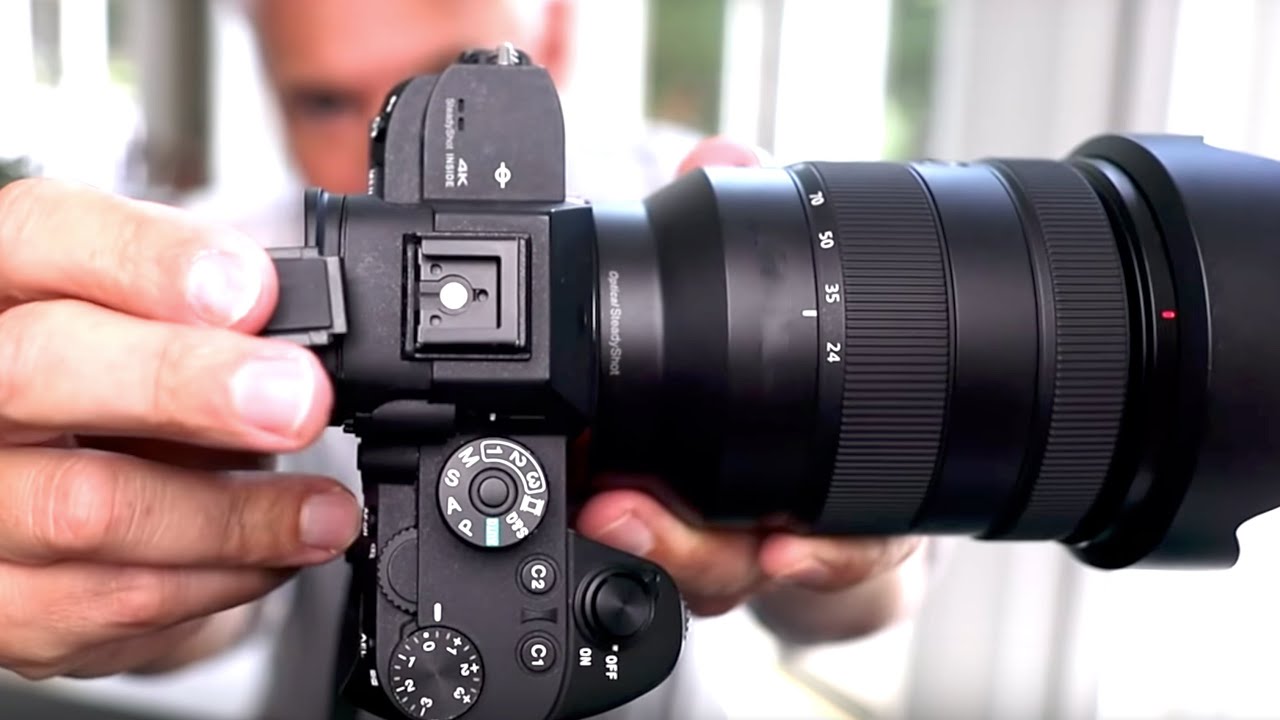
I’ll be straight with you: I’ve spent more hours than I’d like to admit building spreadsheets comparing prime lenses to zoom lenses for street shooting. The argument always circles back to the same tension. Primes give you a decisive focal length and force discipline. Zooms give you options. For street photography specifically, “options” sounds good on paper until you’re fumbling with a massive lens at 70mm while someone walks past with perfect light.

Why Your Ultra Wide Lens Is Collecting Dust (And How to Actually Use It for Landscapes)

Why Your Ultra Wide Lens Is Collecting Dust (And How to Actually Use It for Landscapes)

I’ve tested more budget lenses than I care to admit. I’ve got a spreadsheet to prove it. And one pattern shows up over and over in my notes: ultra wide lenses consistently get underused, not because they’re bad, but because photographers don’t change how they shoot when they put one on. They treat it like a regular lens with a wider field of view. It’s not. It’s a completely different compositional tool, and using it wrong produces flat, empty, weirdly distorted images that make you want to sell it immediately.

Tamron SP 35mm f/1.8 Di VC First Look: Is This Budget-Friendly Prime Worth Your Attention?

Tamron SP 35mm f/1.8 Di VC First Look: Is This Budget-Friendly Prime Worth Your Attention?

I’ll be honest with you. When Tamron started pushing into the prime lens market, I was skeptical. Zoom lenses had always been their bread and butter, and primes are where manufacturers live or die on optical quality alone. There’s nowhere to hide. So when a KelbyOne tutorial featuring Tamron representatives doing a first look at the SP 35mm f/1.8 Di VC landed in my feed, I watched it less as a fan and more as someone running quality control.

How to Shoot Panning Shots That Actually Look Intentional (Lessons from Death Valley's Race Track)

How to Shoot Panning Shots That Actually Look Intentional (Lessons from Death Valley's Race Track)

I’ve been chasing better panning shots for two years. Not race cars or sports, just moving subjects in landscape contexts, dust devils, tumbleweeds, the occasional cyclist cutting through a scene I’m already set up for. My keeper rate was embarrassing. I’d nail the blur on the background and get a subject that looked like it was shot through a shower door. Or I’d sharpen the subject and the background would look like I just had shaky hands.

Stop Blowing Your Gear Budget: What 9 Years of Landscape Photography Actually Taught One Pro

Stop Blowing Your Gear Budget: What 9 Years of Landscape Photography Actually Taught One Pro

I used to think the guys spending the least on gear just couldn’t afford better. Then I ran a blind test at a local photo meetup and nobody could tell which prints came from the $500 camera and which came from the $2,000 one. That was the moment I stopped chasing specs and started paying attention to what actually changes the image. So when I came across Hugo Korhonen’s video breaking down nearly a decade’s worth of gear mistakes, I watched it twice.

One Self-Assignment a Week Changed How I Think About Building a Photography Portfolio

One Self-Assignment a Week Changed How I Think About Building a Photography Portfolio

I got into deals content because I was spending more time researching prices than actually shooting. That’s a real problem, and I’ll own it. But there’s a second problem I didn’t talk about as much: even when I was shooting, most of it was reactive. Someone needed a headshot, a friend wanted product photos, a local business needed something quick. I was getting reps in, sure, but my portfolio looked like a grab bag of other people’s ideas.