The Sigma 10-18mm f/2.8 Is the Wide Angle Wake-Up Call APS-C Shooters Needed

The Sigma 10-18mm f/2.8 Is the Wide Angle Wake-Up Call APS-C Shooters Needed

I’ve spent an embarrassing number of hours building spreadsheets that compare budget lenses side by side. Fast apertures, corner sharpness, autofocus reliability - I track all of it. So when a single lens shows up that checks nearly every box for APS-C shooters, I pay attention. That lens right now is the Sigma 10-18mm f/2.8, and the clearest breakdown I’ve seen of why it matters comes from Tony and Chelsea Northrup.

What 7 Focal Lengths Actually Do to Your Photos (A Side-by-Side Breakdown)

What 7 Focal Lengths Actually Do to Your Photos (A Side-by-Side Breakdown)

Every time I’m about to buy a lens, I open a spreadsheet. I know how that sounds. But when you’ve tested as many budget lenses as I have, you stop trusting marketing copy and start trusting data. The problem is that most lens comparisons focus on sharpness charts and bokeh rendering, and they skip the one thing that actually changes how your photos feel - how focal length reshapes the relationship between your subject and the background.

How Different Focal Lengths Actually Change Your Shot (A Visual Breakdown)

How Different Focal Lengths Actually Change Your Shot (A Visual Breakdown)

Most photographers buy lenses based on specs and reviews. I used to do the same thing, cross-referencing MTF charts and pixel-peeping sample images before I’d even thought about what I actually needed the lens to do. What changed my thinking wasn’t a spec sheet. It was watching a photographer stand in the same spot and shoot the same scene across a full range of focal lengths, from ultra-wide to 400mm telephoto, so you could see exactly how the image transforms with each swap.

Can a Budget Superzoom Actually Deliver Print-Quality Shots? Here's What Nigel Danson Found Out

Can a Budget Superzoom Actually Deliver Print-Quality Shots? Here's What Nigel Danson Found Out

I’ve always had a complicated relationship with superzoom lenses. On paper, a 24-200mm range sounds like the answer to every “what lens should I bring?” argument I’ve ever had with myself at the trailhead. In practice, I’ve tested enough of these lenses to fill two rows of my comparison spreadsheet, and the results are almost always the same story: great convenience, soft edges, and print sizes that top out around 11x14 before you start making excuses.

Canon RF 100-500mm Review: Is a $2,900 Super Zoom Actually Worth It for Working Photographers?

Canon RF 100-500mm Review: Is a $2,900 Super Zoom Actually Worth It for Working Photographers?

Every few months I get an email asking me some version of the same question: “Tyler, should I just save up and buy the expensive lens?” My honest answer is usually no. But occasionally a piece of gear comes along that makes me actually stop and think through the math. Canon’s RF 100-500mm f/4.5-7.1L IS USM is one of those lenses. At $2,899, it sits in that painful middle zone where it’s too expensive to dismiss as a lifestyle purchase and too specialized to recommend broadly.

How a 70-200mm Lens Fixed My Worst Compositional Habit (Lessons from Nigel Danson)

How a 70-200mm Lens Fixed My Worst Compositional Habit (Lessons from Nigel Danson)

I have a problem with wide-angle lenses. I lean on them too hard, too fast, and too often. When I’m out shooting and the scene feels cluttered or I can’t find a strong composition, my default is to get closer and go wider, which usually makes things worse, not better. I’ve been aware of this habit for a while, but it took watching someone else work through the exact opposite approach to actually shift how I think about it.

Every Sony 50mm Autofocus Lens Ranked: What a 11-Lens Shootout Actually Taught Me

Every Sony 50mm Autofocus Lens Ranked: What a 11-Lens Shootout Actually Taught Me

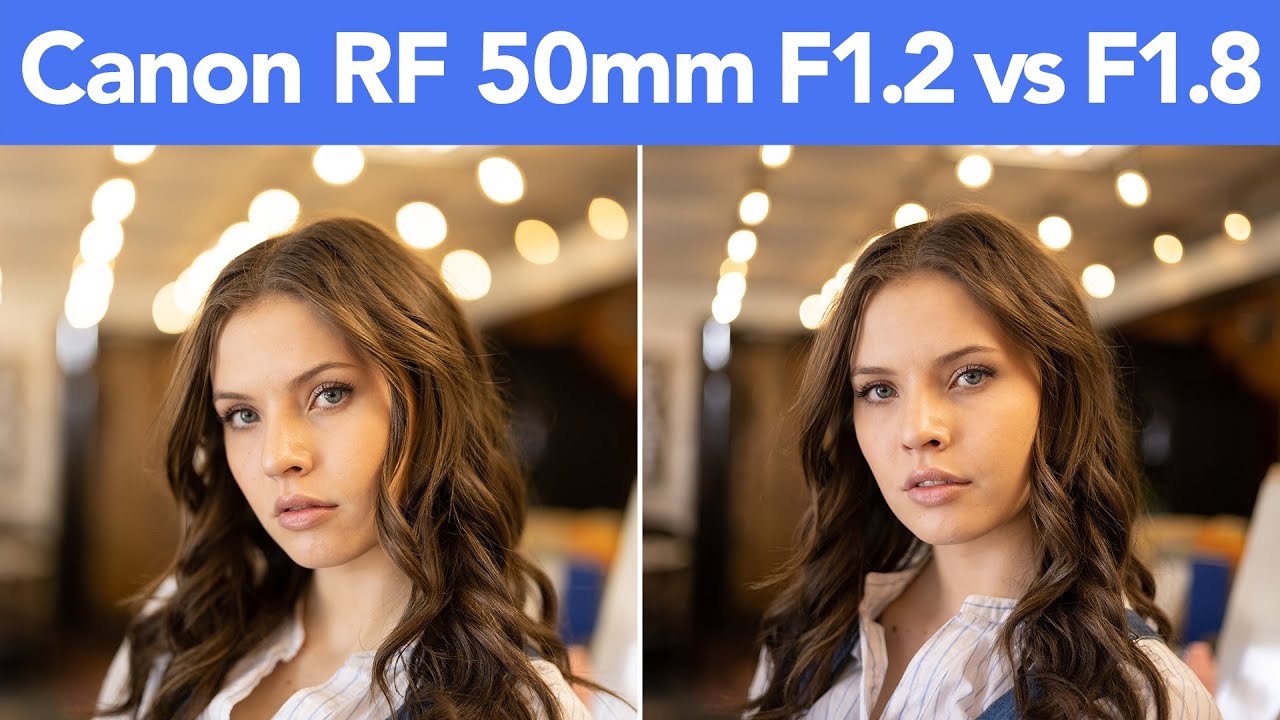
If you’re still shooting on the kit lens that came with your camera, I get it. That’s exactly where I started. But the single upgrade that changed how my images looked wasn’t a new camera body or a fancy flash. It was a fast 50mm prime. The subject separation alone, pulling your subject out of a cluttered background with a wide aperture, makes your photos look intentional rather than accidental. And in low light, a fast 50mm is the difference between a clean, usable shot and something grainy and soft that you’d never post.

Small Composition Fixes That Make a Big Difference (Lessons from Nigel Danson's Photo Critiques)

Small Composition Fixes That Make a Big Difference (Lessons from Nigel Danson's Photo Critiques)

I spend a lot of time hunting deals and testing budget gear, and my whole argument is that the camera isn’t what’s holding most people back. But after watching enough work from photographers at every price point, I’ll admit the honest truth: cheap gear isn’t holding people back either. Composition is. Cropping is. Knowing when to simplify is. Those are free skills, and most of us, myself included, are still building them.

Which Lens Actually Wins for One-Light Portraits? A Breakdown of The Slanted Lens Tutorial

Which Lens Actually Wins for One-Light Portraits? A Breakdown of The Slanted Lens Tutorial

I’ve tested more budget lenses than I care to admit - there’s literally a spreadsheet on my desktop right now with 34 entries. But for a long time, I defaulted to whatever was in my bag without really thinking hard about why a specific focal length was the right call for a portrait session. That changed when I started paying closer attention to how focal length shapes the face, not just the frame.

What Shooting Street With the Sigma 65mm F/2 Actually Teaches You About Focal Length Gaps

What Shooting Street With the Sigma 65mm F/2 Actually Teaches You About Focal Length Gaps

There’s a gap in most photographers’ kits that nobody talks about until they’re standing on a street corner wishing they had something between their 35mm and their 85mm. I’ve been there more times than I want to admit. My spreadsheet of tested lenses has columns for focal length, max aperture, price per millimeter of reach (yes, really), and “gap filler” potential. The 65mm focal length almost never shows up in that spreadsheet, because most manufacturers skip it entirely.

Stop Blowing Out Your Highlights: A Practical Lightroom Fix That Takes 10 Seconds

Stop Blowing Out Your Highlights: A Practical Lightroom Fix That Takes 10 Seconds

Blown-out highlights are one of those problems that can quietly ruin an otherwise great shot. You nail the composition, the light is interesting, and then you open the file in Lightroom and there’s a dead white patch eating through the brightest part of the frame. No detail. No texture. Just nothing. I’ve trashed more keepers than I’d like to admit because I didn’t have a clean, fast workflow for handling this, and I kept reaching for the wrong tool first.

How to Build Photography Kits That Actually Save You Time (and Money) on Every Shoot

How to Build Photography Kits That Actually Save You Time (and Money) on Every Shoot

I used to spend 45 minutes before every shoot hunting down the same USB-C cable I knew I owned. It wasn’t lost. It was just in the wrong bag, or on my desk, or charging something else. That kind of friction doesn’t sound like a big deal until you’re running late to a client job and your laptop is at 4% battery. The fix isn’t buying better gear. It’s building smarter kits.