Photography Subscription Services Worth Paying For

Photography Subscription Services Worth Paying For

Subscriptions add up fast. Between cloud storage, editing software, portfolio hosting, and stock libraries, a photographer can easily spend $100+ per month on recurring services. Some of these are essential. Others are nice-to-have. A few are money pits. Here’s an honest breakdown. Worth Every Penny Adobe Photography Plan ($10-20/month) This includes Lightroom, Lightroom Classic, and Photoshop with 20GB or 1TB of cloud storage. For $10-20 per month, you get the two most important editing tools in photography.

Photography Monitor Buying Guide: What Actually Matters

Photography Monitor Buying Guide: What Actually Matters

Your monitor is where you make every editing decision. If it’s showing you inaccurate colors, wrong brightness, or poor contrast, every adjustment you make is based on a lie. A good monitor is arguably more important than a good camera. Here’s what actually matters when buying one. The Specs That Matter Color Accuracy (Delta E) This is the most important specification for photography. Delta E measures how closely the displayed colors match the target colors.

The Photography Gear You Actually Need (And What's a Waste)

The Photography Gear You Actually Need (And What's a Waste)

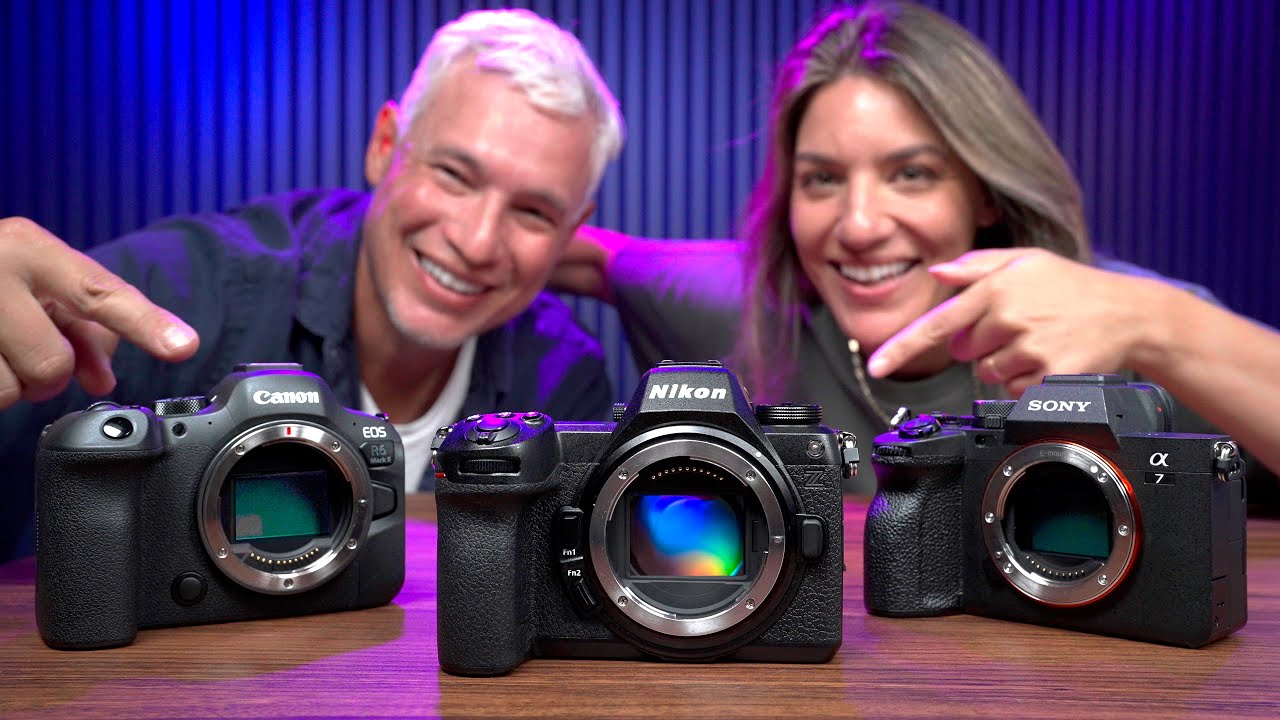
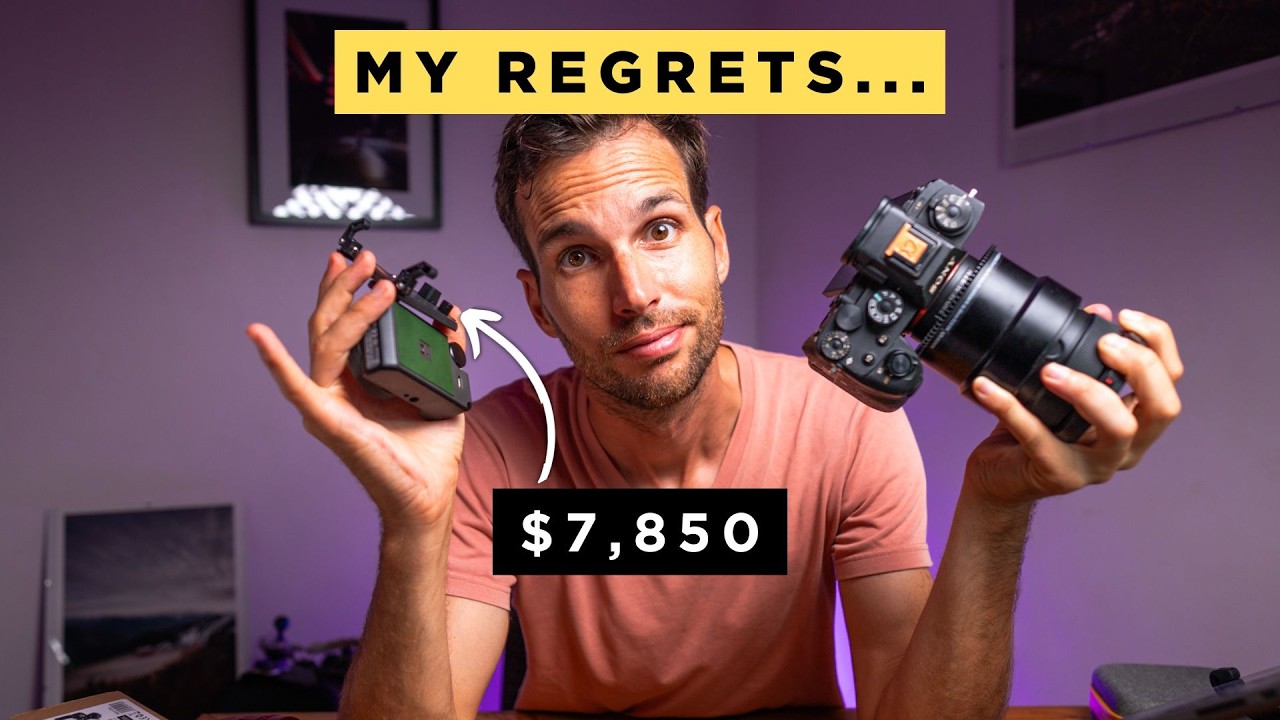
I’ve watched too many beginners drop $5,000 on gear they don’t need while skipping the $50 items that would actually improve their photos. Let’s fix that. What You Actually Need A Camera Body That Gets Out of Your Way Any modern mirrorless camera from Canon, Sony, Nikon, or Fuji made after 2020 is good enough. I mean that seriously. The differences between a $1,000 body and a $3,000 body matter far less than the differences between a photographer who practices and one who doesn’t.

Panasonic's New ZS300 Travel Zoom Drops the Viewfinder—And That's a Real Problem

Panasonic's New ZS300 Travel Zoom Drops the Viewfinder—And That's a Real Problem

Another Solid Zoom Lens, Another Questionable Design Choice Panasonic just dropped the Lumix DC-ZS300 (or TZ300 depending on your region), and on paper, it checks most of the boxes you’d want in a pocketable travel camera. A 15x zoom spanning 24-360mm equivalent, a decently-sized Type 1 BSI sensor, and the compact form factor people actually want to carry. So far, so good. But here’s where I have to pump the brakes: they’ve axed the electronic viewfinder that came standard on the previous generation.

Nikon's Quality Control Problem: What Z5II, Z6III, and ZR Owners Need to Know

Nikon's Quality Control Problem: What Z5II, Z6III, and ZR Owners Need to Know

Nikon’s Quality Control Problem: What Z5II, Z6III, and ZR Owners Need to Know I’ve got some frustrating news for Nikon mirrorless shooters. The company just publicly acknowledged a manufacturing defect affecting certain units of the Z5II, Z6III, and ZR camera lines. And here’s the kicker—it’s serious enough that affected cameras could become completely unusable. The Problem Nikon traced the issue to substandard components that somehow made it through their quality control process.

Netflix's Italian Loss Could Signal Bigger Changes for Subscription Services

Netflix's Italian Loss Could Signal Bigger Changes for Subscription Services

Netflix Gets Slapped Down in Italy—And It Matters More Than You Think Here’s something that actually made me sit up and pay attention this week: an Italian court just ruled that Netflix owes refunds to its subscribers for years of price increases dating back to 2017. We’re talking about a significant financial hit for the streaming giant, plus mandatory notifications to affected users about their refund rights. This wasn’t some random court decision either.

Meet the Traveler Using a Nikon Z9 to Capture Wildlife From Pole to Pole

Meet the Traveler Using a Nikon Z9 to Capture Wildlife From Pole to Pole

From Frozen Tundra to Golden Savannas: One Photographer’s Global Gear Story I recently stumbled across something refreshing in the photography community: a working professional who isn’t obsessing over the latest camera announcements or chasing specs on a spreadsheet. Instead, Shun Cheung has been quietly traveling the globe—from Antarctica’s ice shelves to Africa’s sprawling plains—with a camera bag that actually makes sense. What caught my attention wasn’t just the stunning shot of a Western Grebe performing its mating ritual on a California lake.

MacBook Air M5 13-inch: Finally a Laptop That Justifies the Price Tag for Creatives

MacBook Air M5 13-inch: Finally a Laptop That Justifies the Price Tag for Creatives

MacBook Air M5 13-inch: Finally a Laptop That Justifies the Price Tag for Creatives I’ll be honest—I’ve been skeptical of Apple’s “Air” lineup for years. The branding always felt like marketing speak for “less machine, same price.” But after spending serious time with the M5 13-inch model, I’m eating crow. This isn’t just another incremental update that Apple slaps a new number on. The M5 MacBook Air actually delivers something photographers and videographers have been waiting for: legitimate power without the premium price of a Pro machine.

Is the Sony A7IV Still Worth It in 2026?

Is the Sony A7IV Still Worth It in 2026?

The Sony A7IV came out in late 2021. In camera years, that’s ancient. Sony has released the A7V, the A7CR, and a pile of other bodies since then. So why are people still buying the A7IV? Because it’s a genuinely great camera that now costs hundreds less than launch price. What the A7IV Does Well The 33-megapixel sensor hits the sweet spot — enough resolution for large prints and heavy crops without the massive file sizes of 50+ megapixel bodies.

Is a Full Frame Camera Worth the Extra Cost?

Is a Full Frame Camera Worth the Extra Cost?

“Should I go full frame?” is the most common gear question I get. The marketing says full frame is better at everything. The reality is more nuanced. What Full Frame Actually Gives You Better Low-Light Performance This is the biggest real-world advantage. A full-frame sensor is roughly 2.5 times larger than an APS-C (crop) sensor. More surface area means more light captured, which means less noise at high ISO settings.

I Tested the Sigma 15mm F1.4 DC in Japan's Most Extreme Landscape—Here's What I Found

I Tested the Sigma 15mm F1.4 DC in Japan's Most Extreme Landscape—Here's What I Found

Taking the Scenic Route to Truth There’s something about pushing gear to its limits in actual shooting conditions that cuts through all the marketing noise. That’s exactly what I did recently when I traveled to Noboribetsu Jigokudani in Hokkaido, Japan—a geothermally active volcanic valley that’s basically nature’s stress test for camera equipment. The Sigma 15mm F1.4 DC Contemporary seemed like the perfect companion for this kind of demanding environment. A fast wide-angle at this focal length doesn’t come around often, especially at a price point that won’t require taking out a second mortgage.

Homture Magic Frame Adds AI Motion to Static Photos—But Should You Buy It?

Homture Magic Frame Adds AI Motion to Static Photos—But Should You Buy It?

I’ve spent the last couple weeks testing Homture’s Magic Frame, and I need to be straight with you: it’s one of those products that walks a fine line between genuinely impressive tech and unnecessarily complicated. What It Does The Magic Frame is a digital photo display that uses AI algorithms to add subtle motion to your static images. Think gentle wind blowing through trees, subtle pans across landscapes, or water that actually looks like it’s flowing.